L2 Chain Data Comparison: Who Benefits from Ecosystem Activity?
TechFlow Selected TechFlow Selected
L2 Chain Data Comparison: Who Benefits from Ecosystem Activity?
Starknet has the most active developers (515) among all Layer 2s.
 Navigating Web3 tides with focused insights
Written by: SPENCER NOON
Compiled by: TechFlow
Polygon zkEVM
Polygon’s CDK stack: usage has grown approximately 2x in the past 30 days.
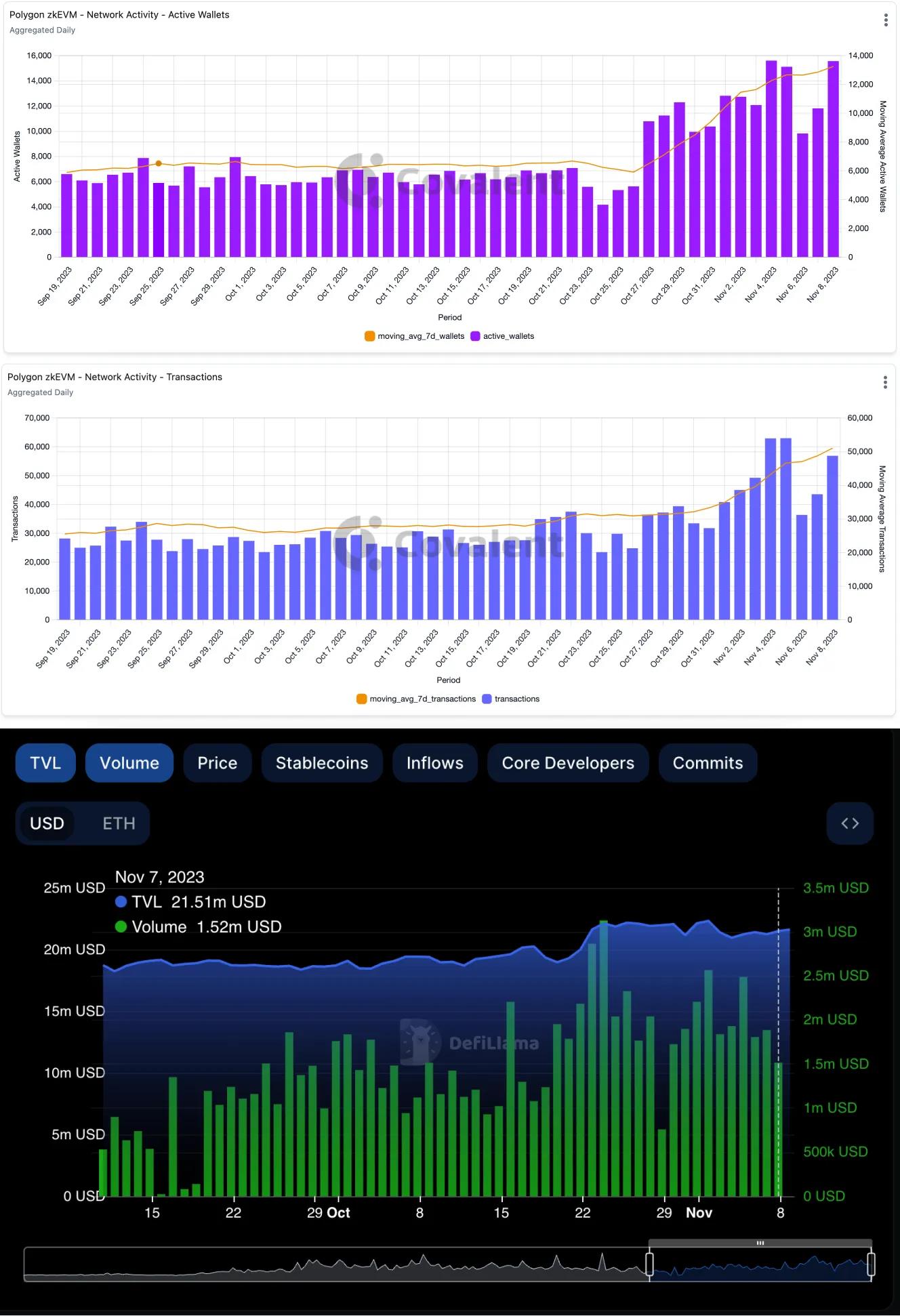
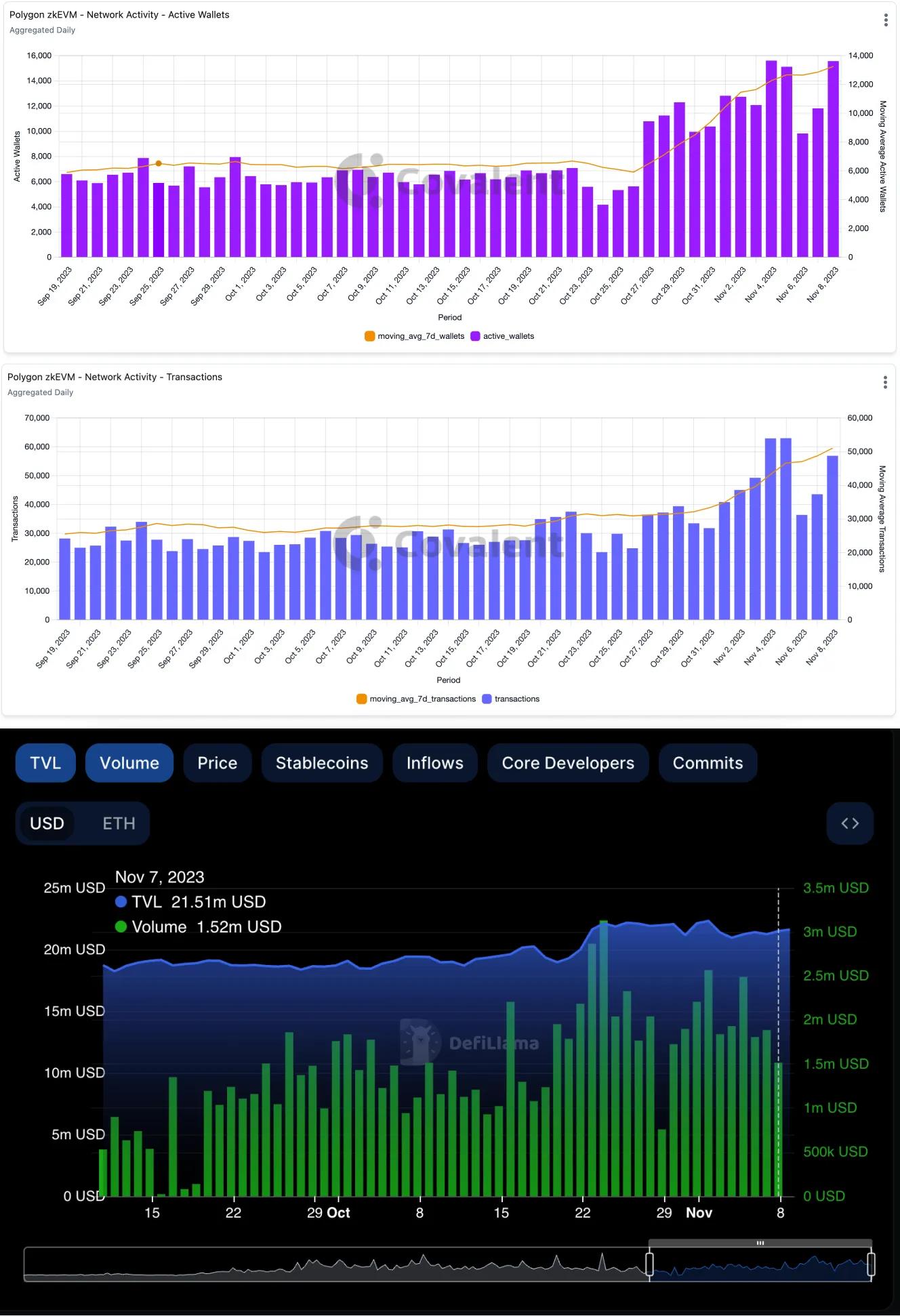
Polygon zkEVM is built on the Chain Development Kit (CDK), an open-source, modular suite of components for launching custom blockchains within the Polygon and Ethereum ecosystems. Polygon zkEVM (built on CDK) continues to grow across active wallets, transactions, and TVL. Compared to the prior 30-day period, the 7-day moving averages for active wallets and transactions have increased by 105% and 83%, respectively. Its TVL grew by 14% over a similar timeframe. As of November 8, Polygon’s zkEVM had 15,500 daily active wallets and 56,800 transactions per day.
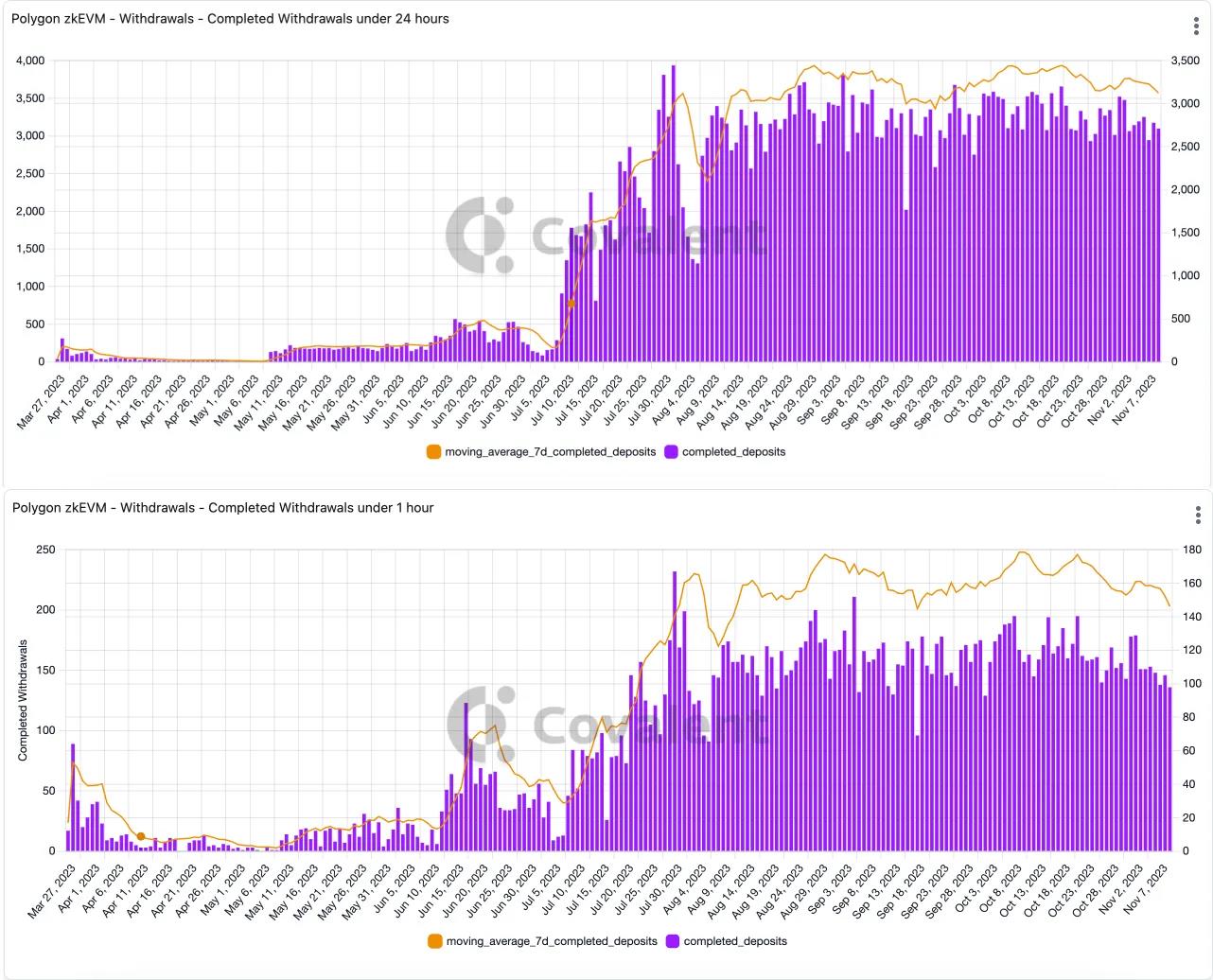
Within 24 hours of enabling withdrawals on Polygon zkEVM, 14,000 wallets completed 39,000 withdrawals of 101 different tokens. Since July 20, the number of withdrawals completed within 24 hours has significantly increased, making Polygon zkEVM one of the fastest native cross-chain bridges.
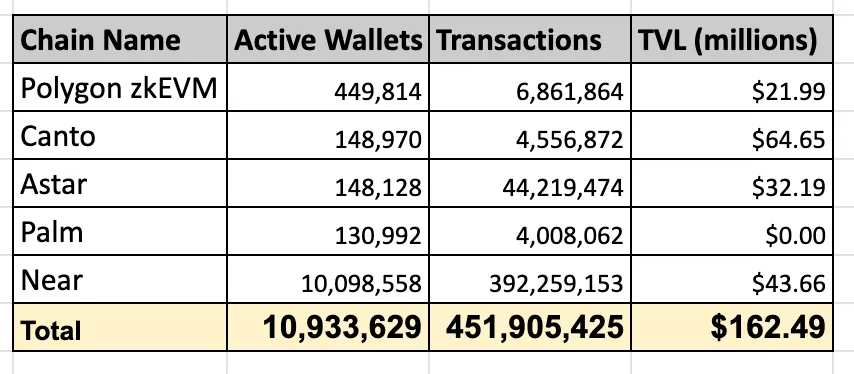
Chains leveraging the CDK stack include Astar, Canto, Near, and Palm. Collectively, these chains (including Polygon zkEVM) have accumulated nearly 11 million active wallets and 452 million transactions since 2022. They bring approximately $162 million in TVL to the CDK ecosystem.
Tx-Level Alpha: 35 minutes. This was the time it took this wallet to withdraw 105.77 ETH (worth $224,000) from Polygon zkEVM to Ethereum via the Polygon zkEVM native bridge. The capabilities of Polygon’s CDK allow near-instantaneous withdrawals, making Polygon zkEVM one of the fastest native bridges from L2 to Ethereum.
Scroll
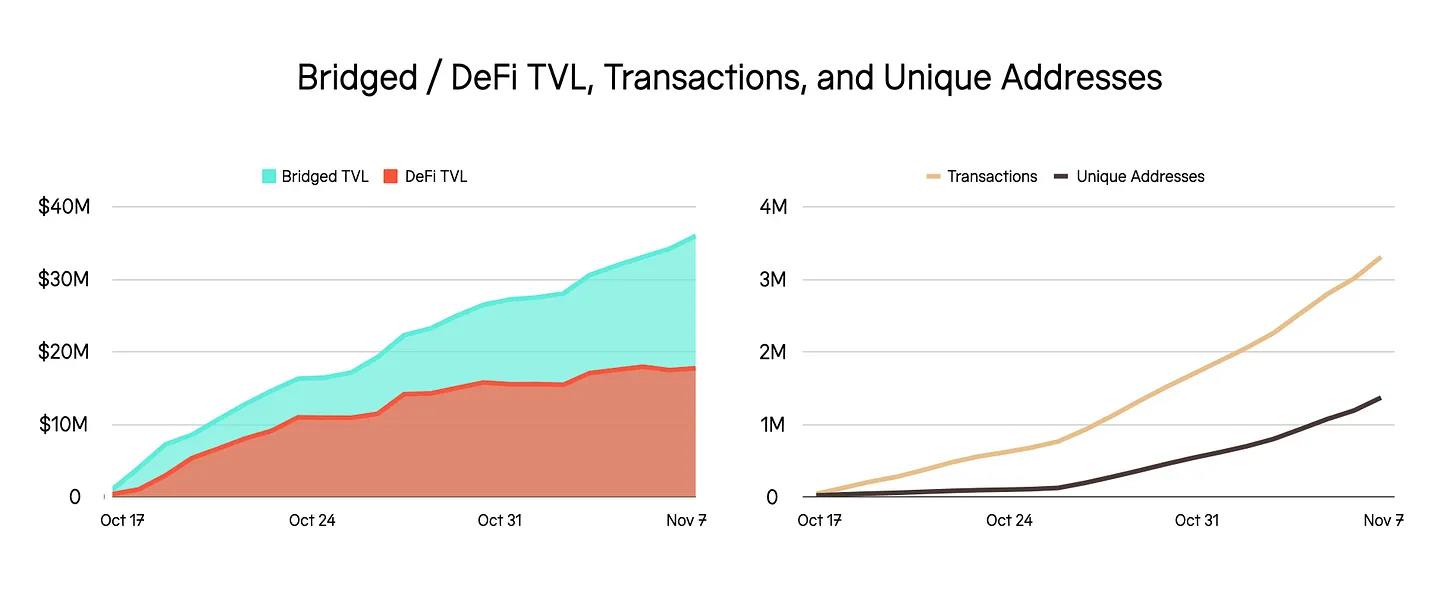
Scroll mainnet has accumulated over $36 million in TVL, more than 3 million transactions, and 1 million addresses within three weeks.
Scroll is a community-first, native zkEVM built on Ethereum, designed to scale without compromising security, developer experience, or user experience. Scroll officially launched its mainnet on October 17, 2023, and has since experienced rapid growth. The total value bridged has surpassed $36 million, with roughly half deployed into DeFi protocols (which may increase as more projects get indexed). Both transactions and unique addresses show clear upward trends, exceeding 3 million and 1 million respectively.
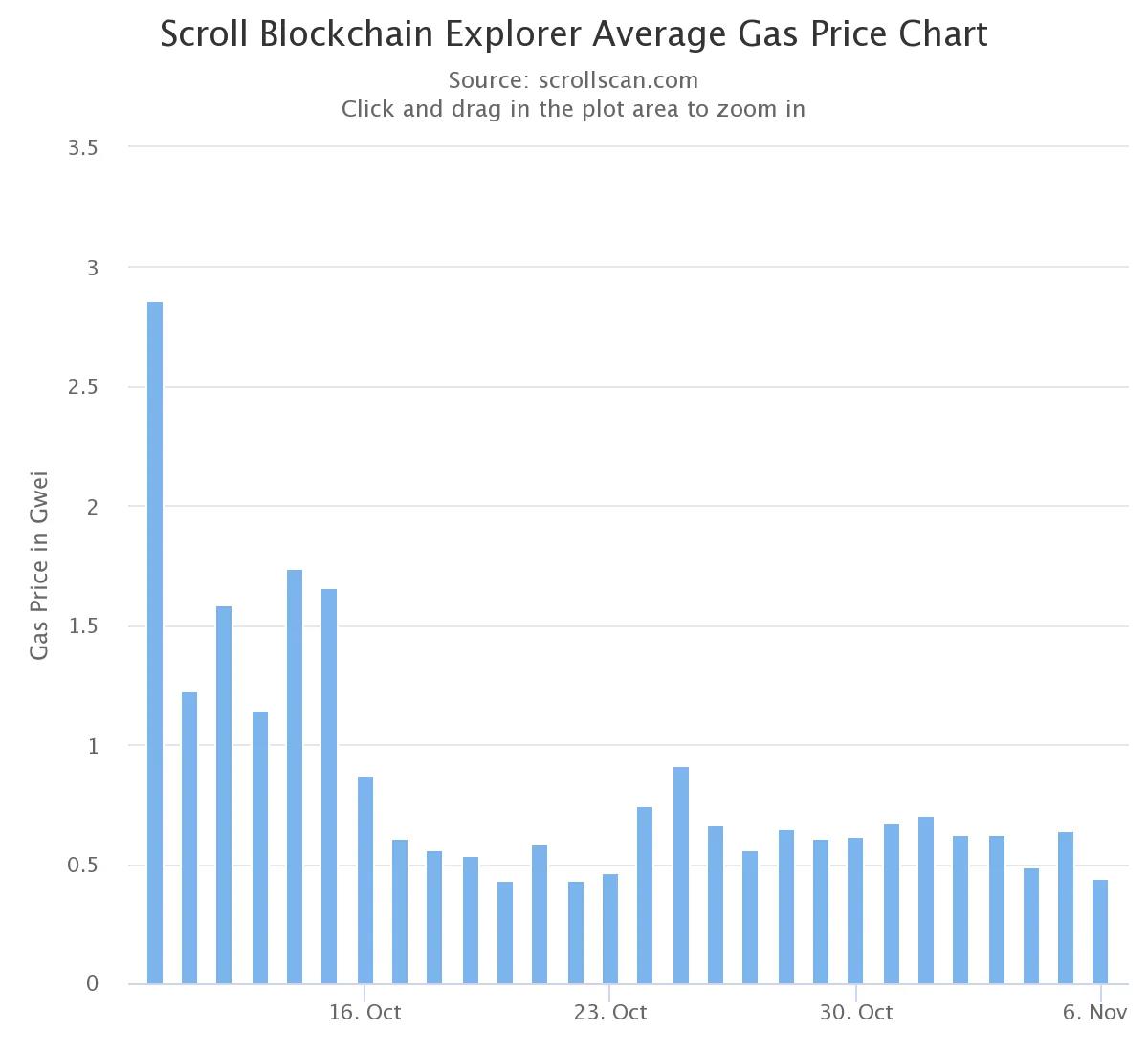
Since genesis, average daily gas fees have dropped by 84%. For an early-stage zkEVM, transaction costs have actually declined noticeably (and stabilized) as users and transactions increase—due to fixed proof costs being amortized across a larger user base.
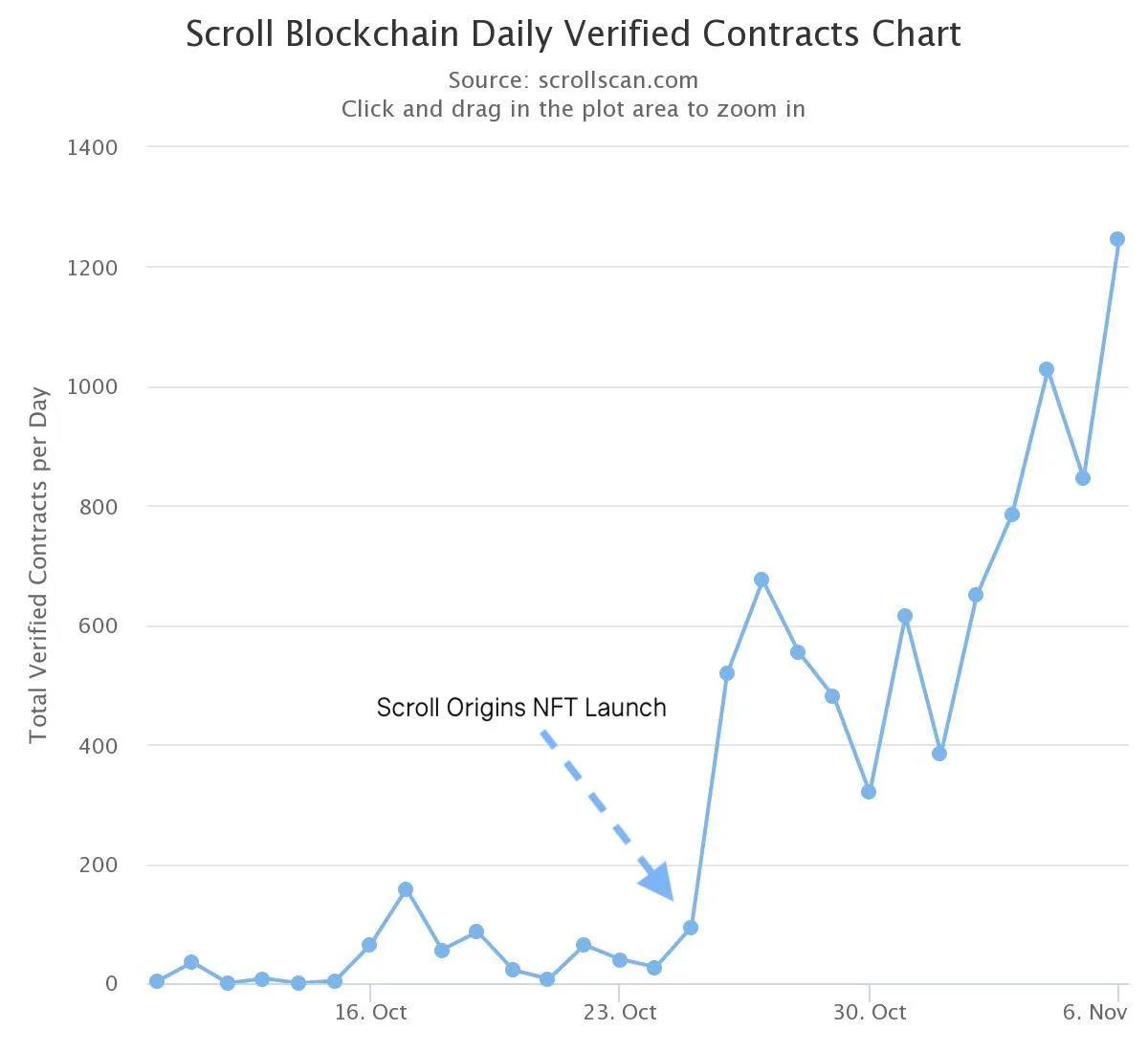
To celebrate the mainnet launch, Scroll announced Scroll Origins NFTs on October 26 for early smart contract deployers post-genesis. This campaign successfully boosted deployment activity on Scroll—since the announcement, the average number of verified contracts per day has increased by 92% (approximately 1,000 per day in recent days).
Tx-Level Alpha: This is the creation transaction of the L2ScrollMessenger contract. Observant users noticed its preloaded balance of 46 ETH and were puzzled. This uniquely designed contract works by having a preset ETH balance from genesis, meaning that when ETH is deposited on Ethereum, an equivalent amount is disbursed from this contract on Scroll—an approach akin to “minting ETH.” It’s a more optimized method that makes deposits both more cost-effective and technically simpler.
Base
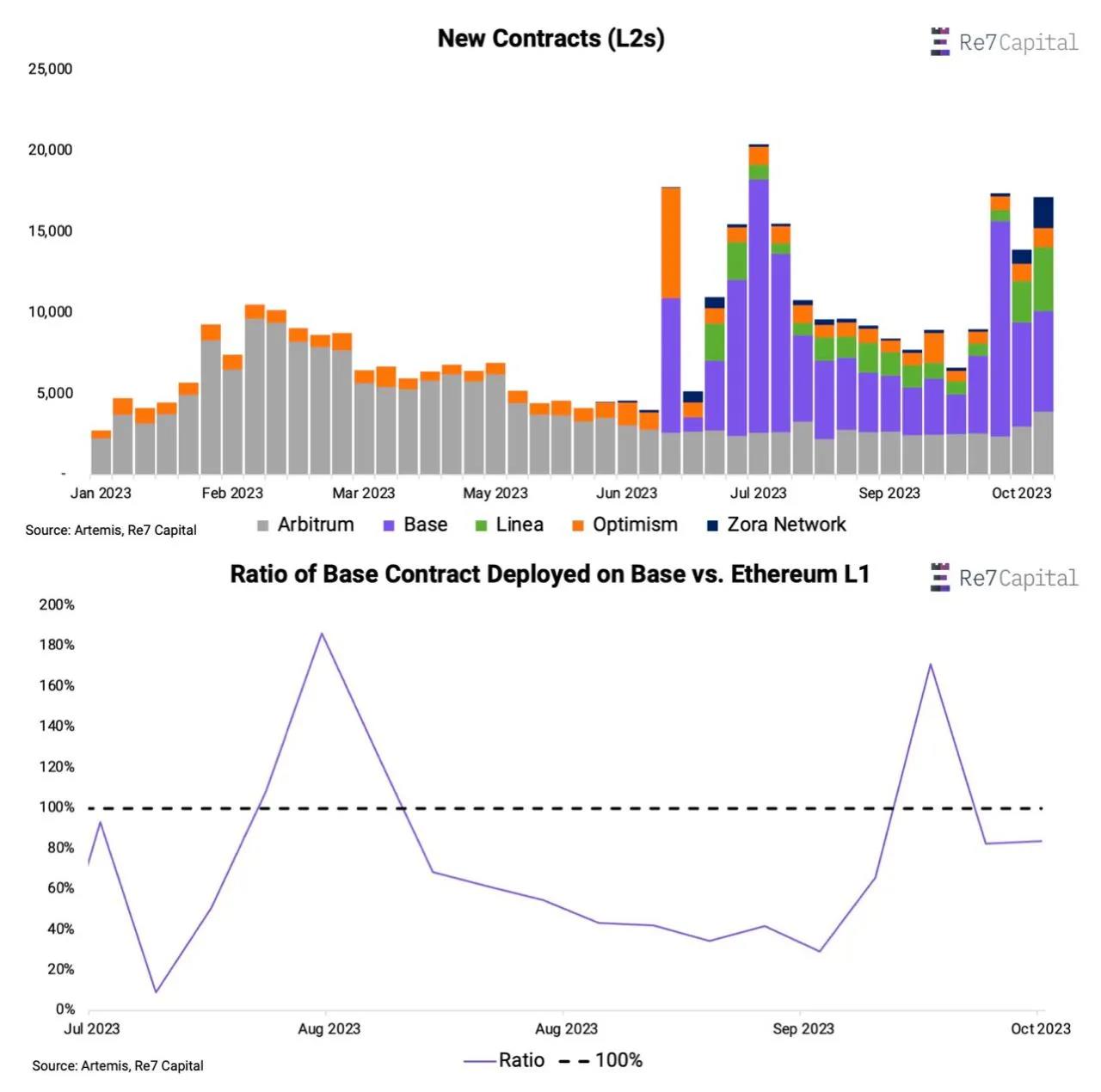
Base accounts for 40% of the contract deployment market share and over 80% of total ETH deployments.
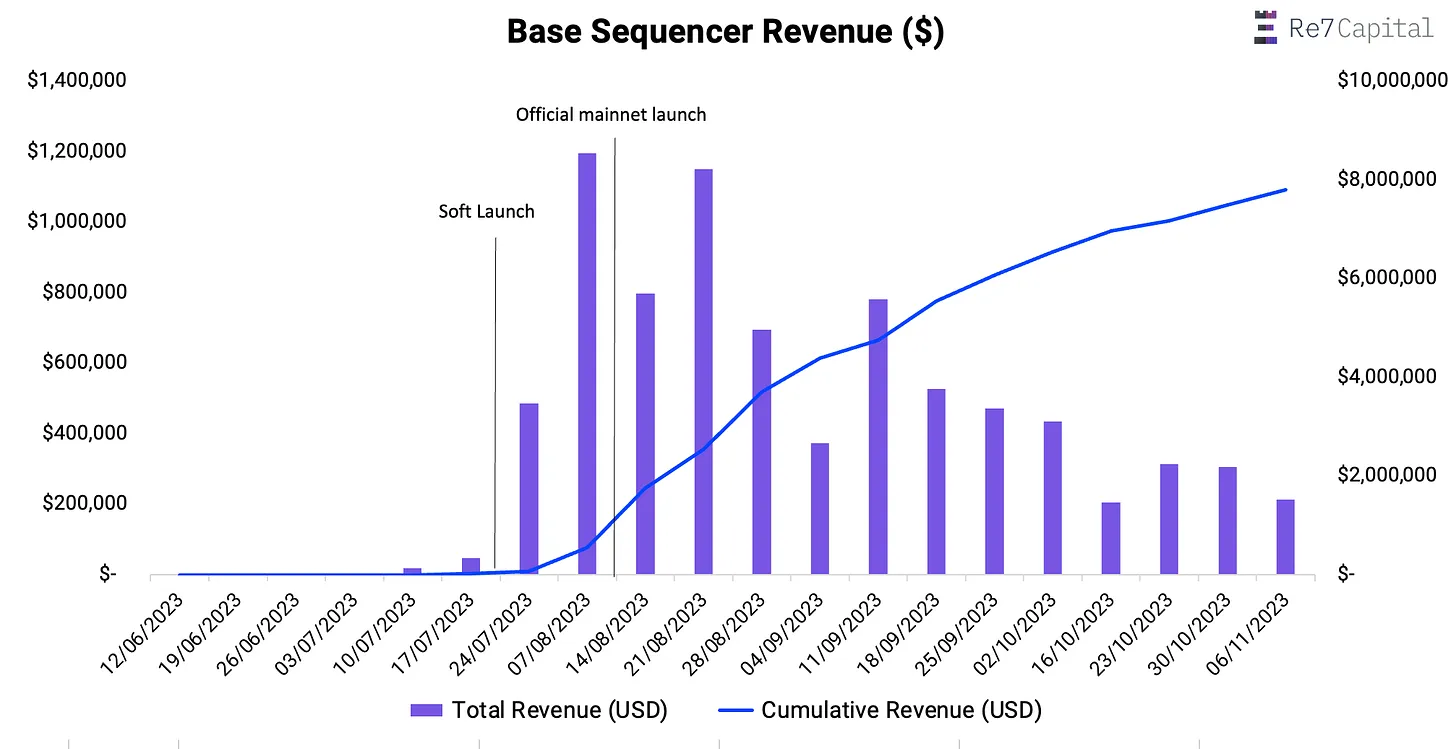
Base is an Ethereum Layer 2 network developed by Coinbase, built on top of Optimism—the second-largest L2 ecosystem by TVL after Arbitrum. Layer 2 sequencers bundle user transactions and submit them to Ethereum, functioning like air traffic controllers. Base’s sequencer likely generated $7 million in revenue for Coinbase during Q3, driven primarily by activity from the social finance platform Friend.tech. By the end of Q3, sequencer revenue had declined 74% from its August peak, now generating approximately $200,000–$300,000 weekly.
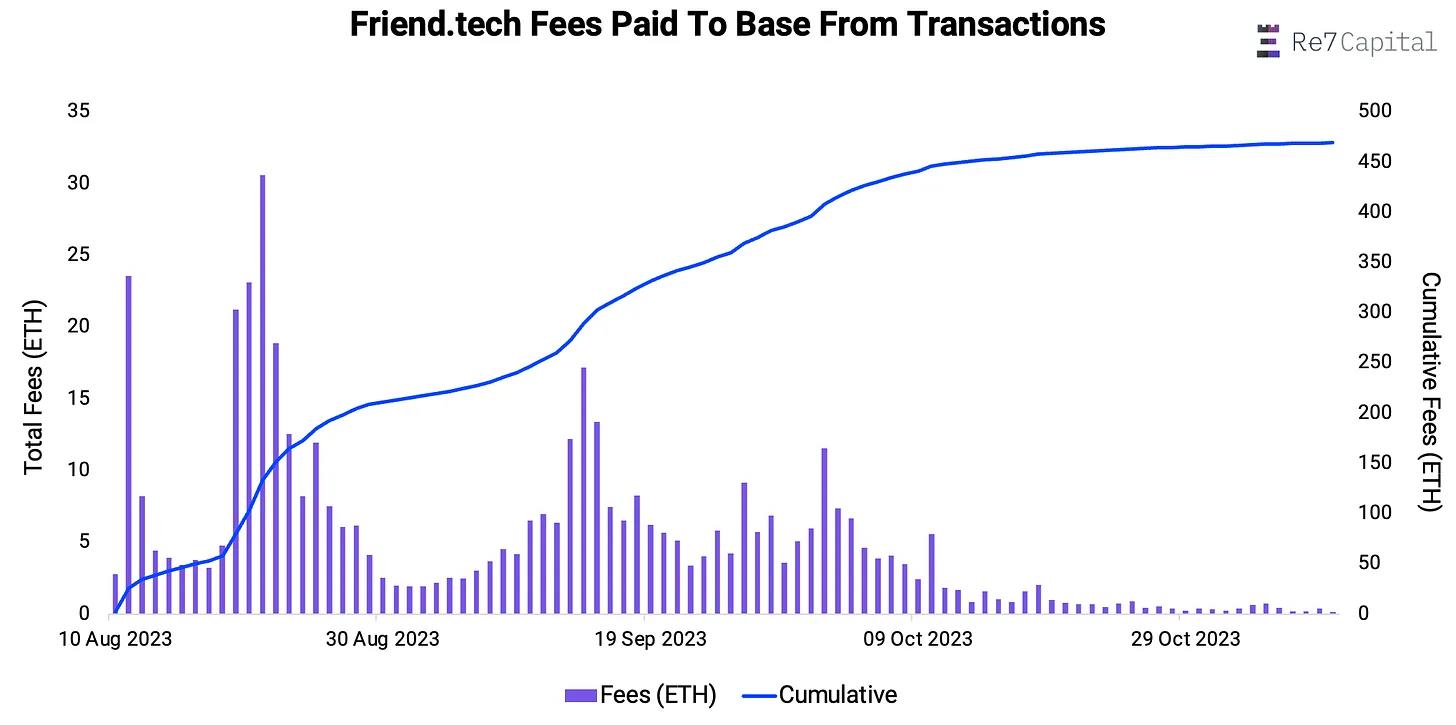
Since its inception, Friend.tech has paid fees to Base accounting for about 10–13% of the total monthly fees paid by users to the sequencer, peaking at over 20+ ETH. Since September, the app’s revenue has declined in line with sequencer fees, indicating broader ecosystem activity has cooled.
Despite declining sequencer revenue, since its June 2023 launch, Base has outpaced all other major L2s in contract deployments, averaging 40% of leading L2s’ weekly contract deployments. The number of contracts deployed on Base currently ranges between 80% and 180% of those deployed on Ethereum L1, signaling relatively strong developer activity within its ecosystem.
Tx-Level Alpha: This first transaction marks the inflow of $500,000 worth of USDC into Maple Finance’s pool. This occurred simultaneously with Maple’s announcement that they would launch their on-chain capital markets on Base on November 1. This is significant as it represents Base’s first credit market, potentially marking the beginning of institutional DeFi momentum on L2s.
zkSync
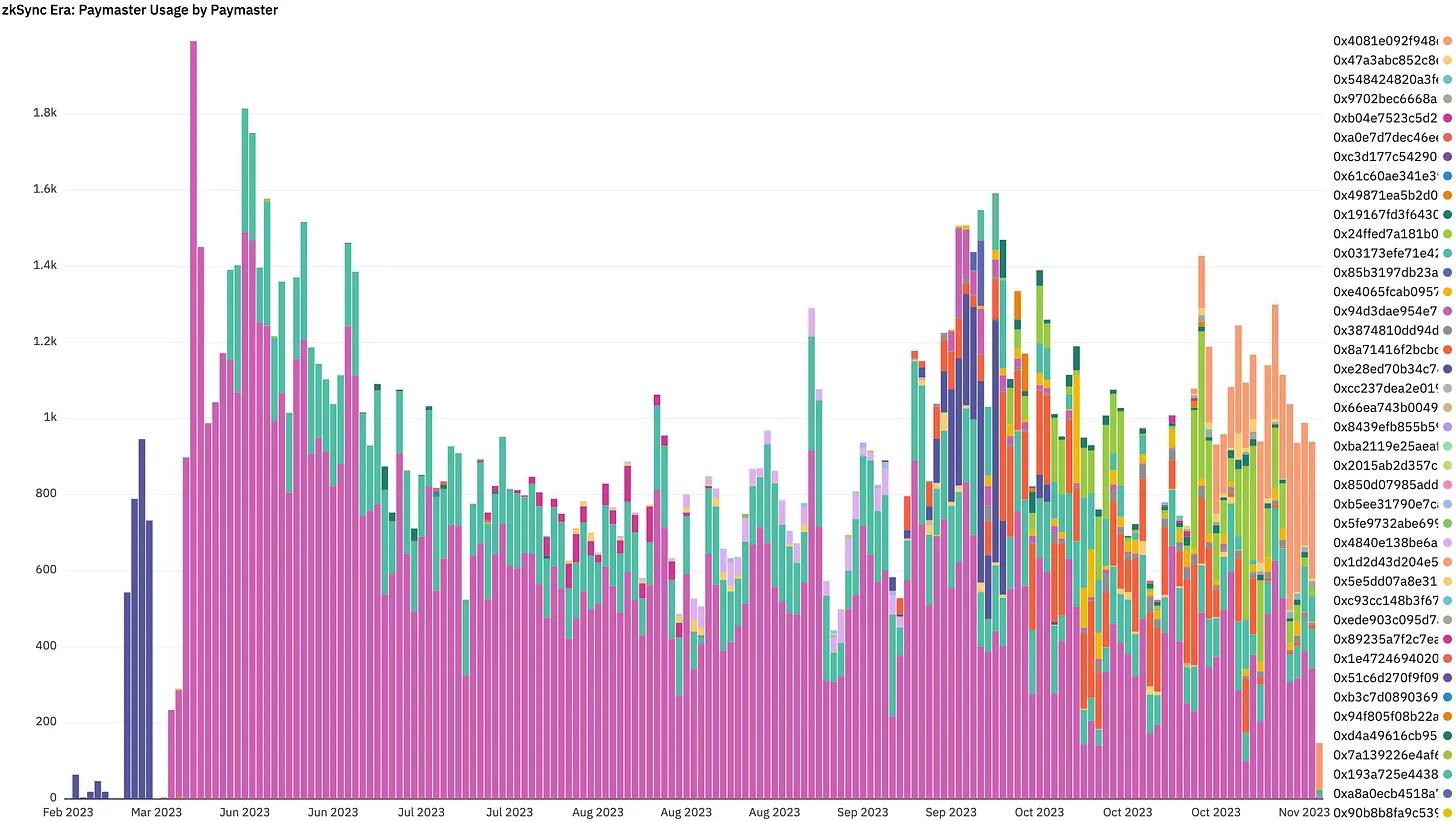
zkSync Era has reached 150,000 Paymaster transactions.
zkSync Era is a Layer 2 zkEVM created by Matter Labs to scale Ethereum, processing around 1,000 Paymaster transactions daily across a growing number of dApps. The Paymaster is a smart contract that enables dApps and wallets to sponsor user transactions and pay gas fees using any ERC-20 token, with customizable logic determining user eligibility. Paymaster functionality on zkSync Era is powered by native account abstraction built directly into the protocol, eliminating the need for third-party bundlers required by ERC-4337 implementations.
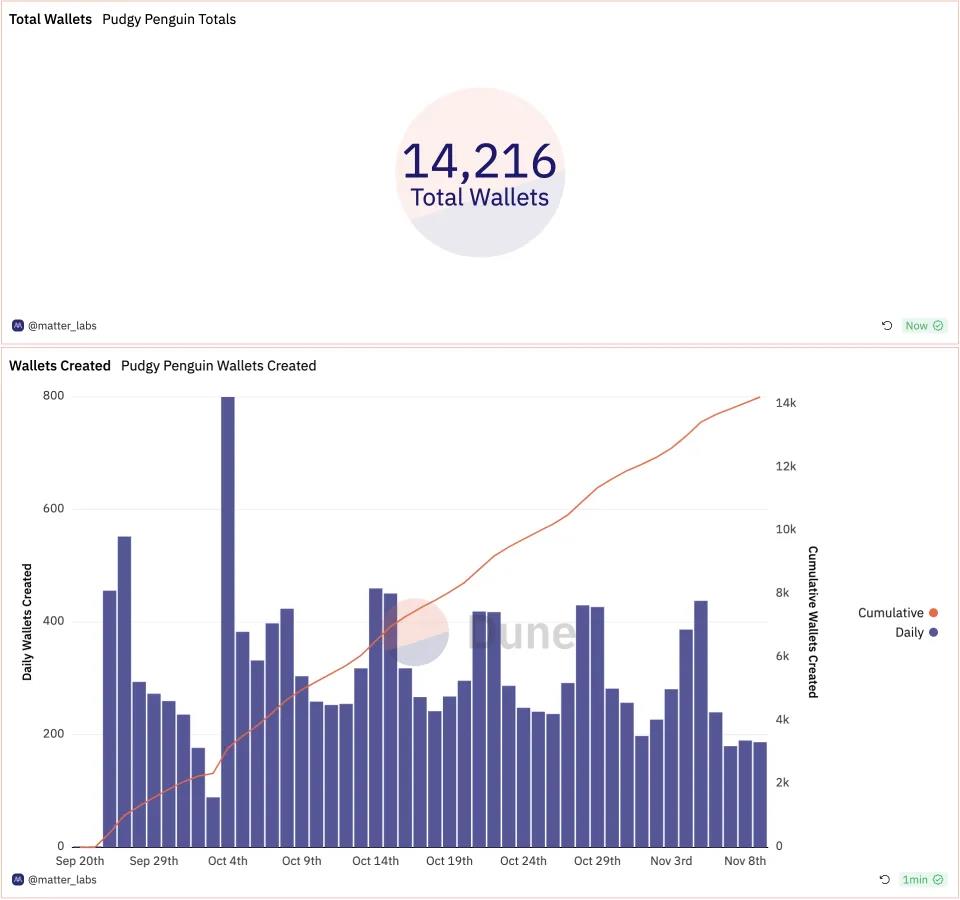
Pudgy Penguins entered physical retail through Pudgy Toys—a toy series featuring QR codes serving as entry points to the open digital player experience in Pudgy World on zkSync Era. Through QR codes included with Pudgy Toys, 14,216 wallets have already joined Pudgy World.
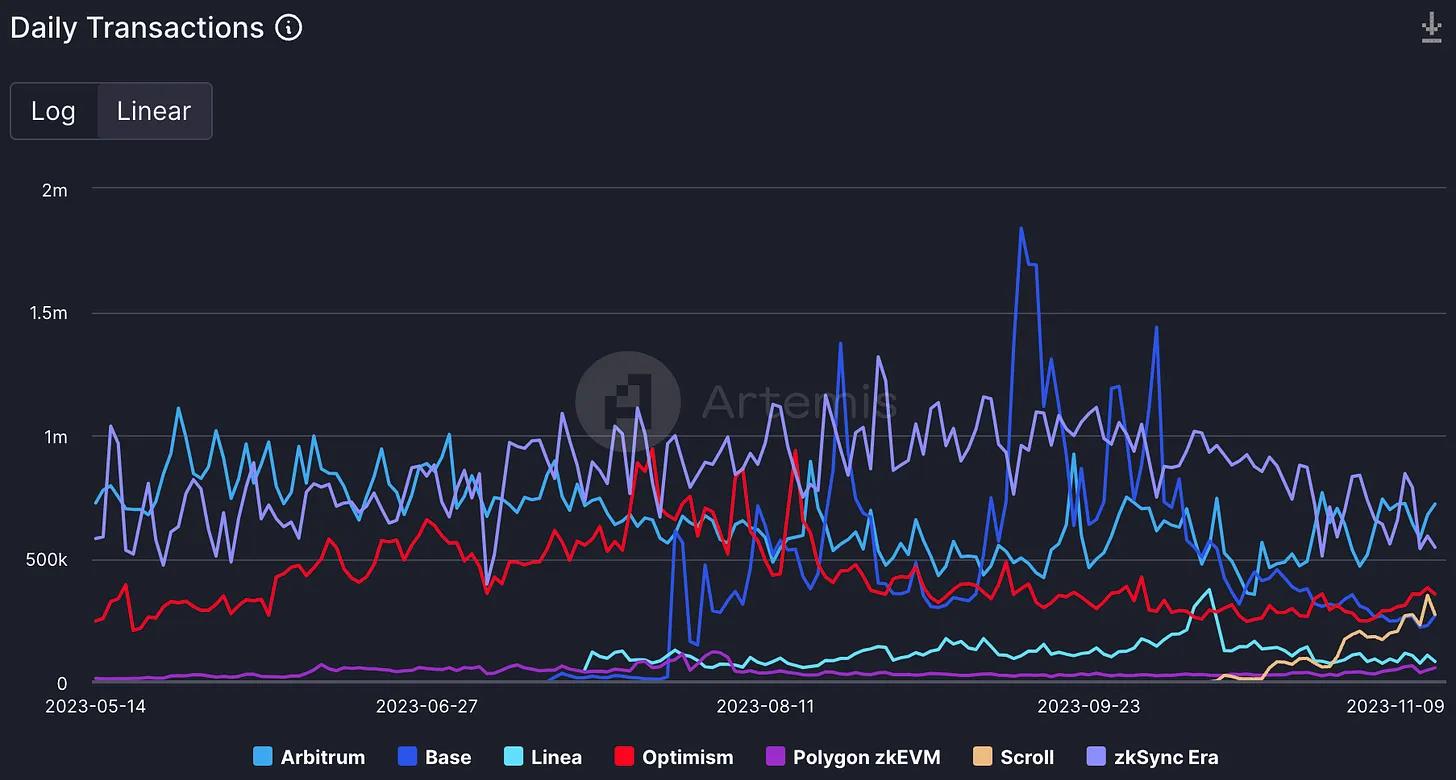
Over recent weeks, zkSync Era and Arbitrum have led in daily transaction volume, each processing between 500,000 and 800,000 transactions per day. In October, zkSync Era surpassed 150 million total transactions, establishing itself as one of the most battle-tested L2s.
Starknet
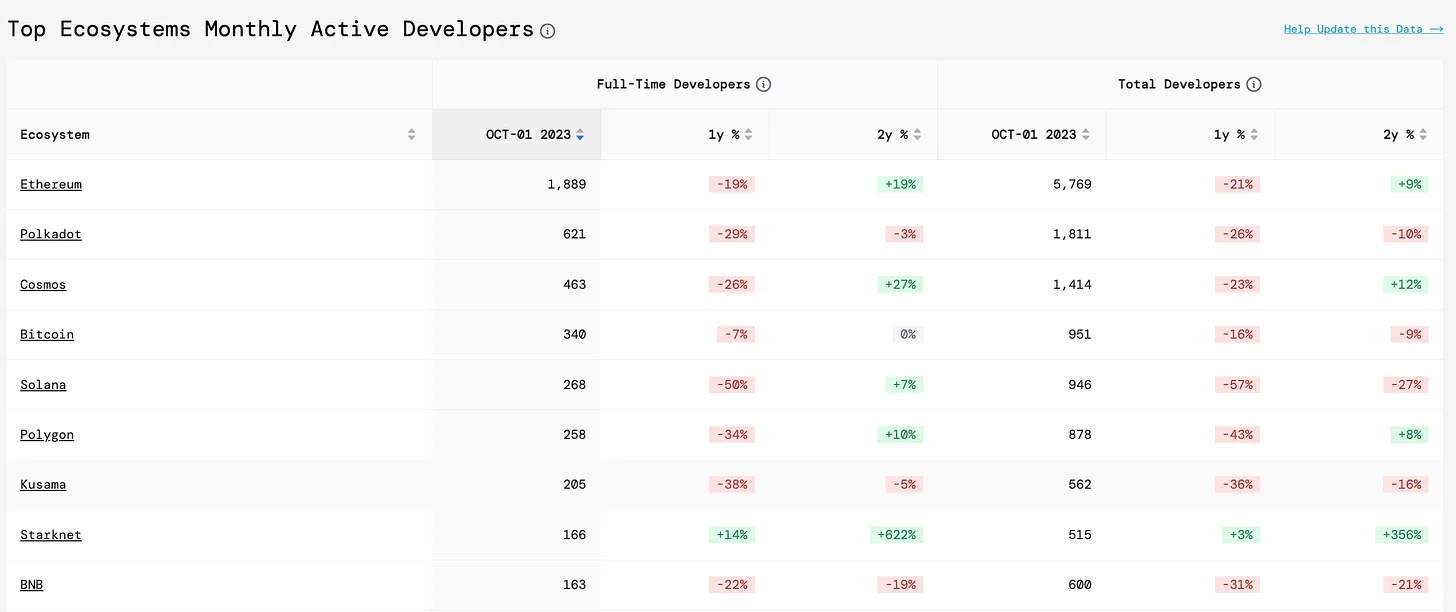
Starknet has the highest number of active developers (515) among all Layer 2 networks.
Starknet prides itself on having the largest number of developers and fastest adoption among new ecosystems, ranking 7th across all crypto ecosystems. Over 80% of projects are native to Starknet, with notable success in Onchain Gaming (Loot Survivor, Briq, Influence, Dojo) and Argent’s full-time adoption of Account Abstraction, alongside DeFi projects such as Ekubo and RabbitX.
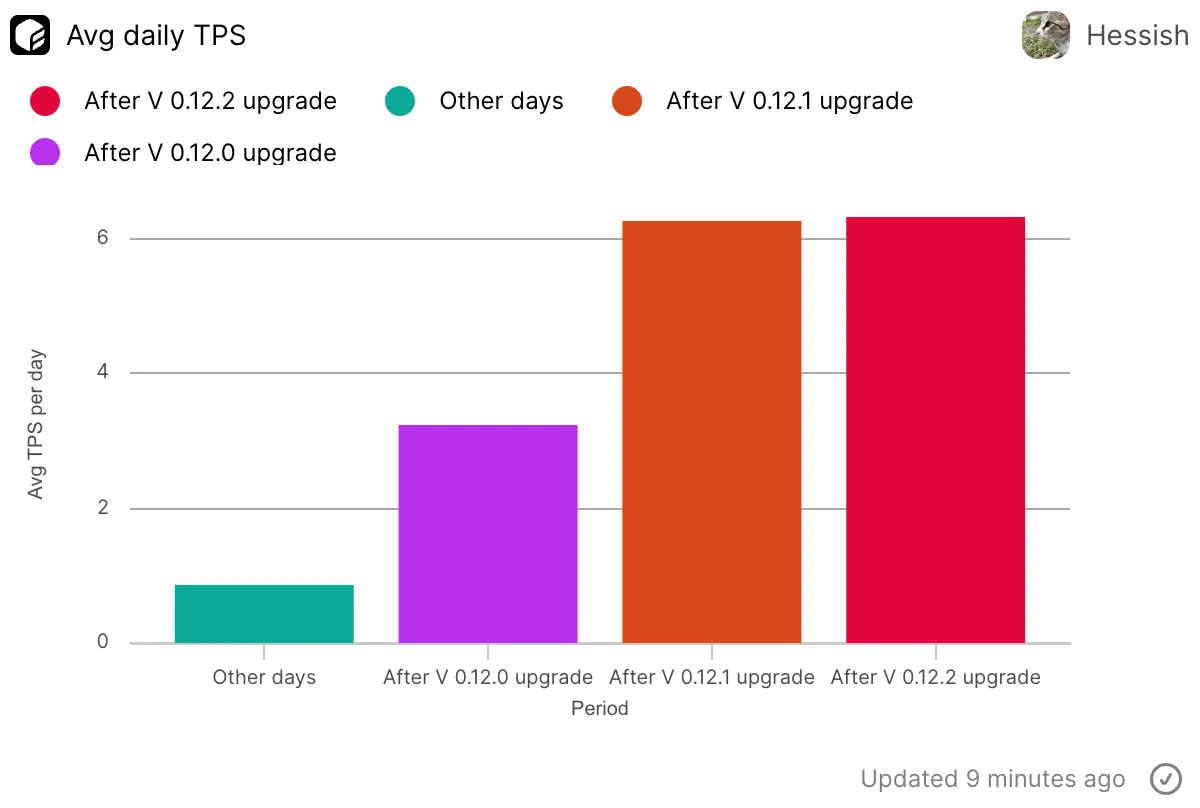
Starknet averages 8.2 TPS since August following the 0.12 upgrade (“Quantum Leap”). However, this doesn’t tell the full story: due to native Account Abstraction (AA), each Starknet transaction equates to 1.5 EVM transactions thanks to Multicall—a feature of AA that enhances both user experience and security.
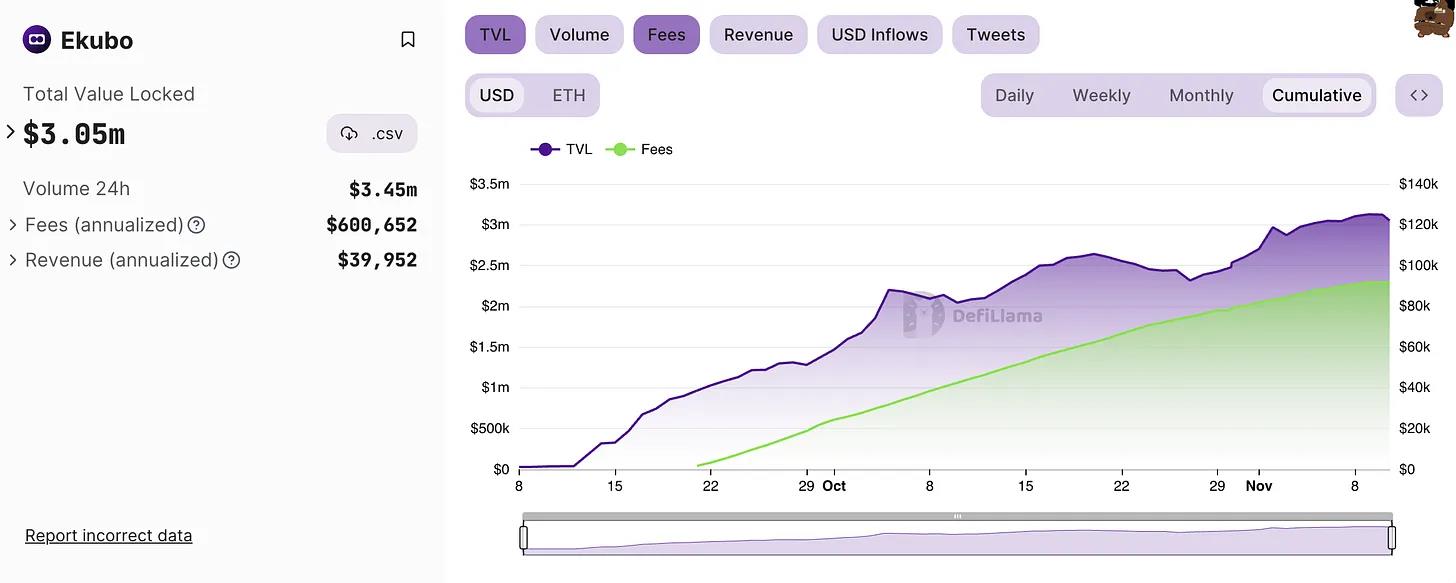
Starknet DeFi is on the rise: AVNU, a DEX aggregator, has processed $500 million in volume five months after launch, while Ekubo (created by Uniswap’s former lead engineer) is generating $600,000 annually in fees for LPs, with a current TLV of $3 million. Despite lacking incentives, DeFi TLV continues to grow.
Tx-Level Alpha: A random block on Starknet. This block consists of many Multicalls, as shown in the operations. These are a direct result of native Account Abstractions (also known as Smart Wallets). In a single transaction, users can approve and swap, greatly improving user experience and security by preventing withdrawal from compromised proxy contracts. This also means TPS is flawed, which is why L2Beat is advocating for UOPS (User Operations) as a new metric.
Join TechFlow official community to stay tuned
Telegram:https://t.me/TechFlowDaily
X (Twitter):https://x.com/TechFlowPost
X (Twitter) EN:https://x.com/BlockFlow_News
 @ournetwork__