








Rethinking the Integration of Web3 and Sports: Who Actually Needs Whom?
TechFlow Selected TechFlow Selected
Rethinking the Integration of Web3 and Sports: Who Actually Needs Whom?
Is it Web3 that needs sports fans, or sports fans that need Web3?
 Navigating Web3 tides with focused insights
Author: DefiOasis Editor: Faust
Introduction: The enthusiasm of Web3 companies for sports was perfectly exemplified by FTX. Previously, it spent $135 million to secure the naming rights for the Miami Heat's home arena for 19 years and enlisted Stephen Curry as a brand ambassador. Coinbase, FTX, Crypto.com, and others even ran advertisements during America’s premier sporting event—the Super Bowl.
In recent years, fan tokens, athlete NFTs, and Web3-based sports games have become popular among some fans. However, following the collapse of FTX and a series of other Web3-related scandals, the honeymoon between sports and Web3 appears to have ended quickly. Sports figures associated with FTX were dragged into controversy; the Miami Heat terminated their naming partnership with FTX, and the Super Bowl outright banned cryptocurrency-related ads in 2023. Meanwhile, the poor performance of Crawley Town Football Club—a team that adopted Web3 governance—further raised skepticism within the sports world about Web3 itself. At its core, does sports truly need Web3, or is it Web3 that needs sports?
Do native Web3 concepts like cryptocurrencies and DAO governance genuinely make sense when integrated into real-world domains such as sports? This article by DefiOasis critically examines this topic, presenting objective facts to illustrate why the forced marriage between sports and Web3 is simply “a bitter melon forced onto a vine.”
The Collision Between Sports and Web3
Historically, humans have had an instinctive attraction to competitive sports—an inclination even reflected in the Bible. When explaining the origin of “Israel,” it references how Jacob wrestled with an angel and earned recognition, thus being named “Israel,” meaning “one who struggles with God.”
In modern times, sports have evolved into mainstream entertainment with massive markets. In 2022 alone, the NBA generated over $10 billion in revenue, while the NFL brought in as much as $18.6 billion. According to Deloitte’s 2023 Football Finance Report, Europe’s top five football leagues earned more than €17.2 billion annually. FIFA’s financial report on the World Cup cycle showed that the 2022 Qatar World Cup generated $5.769 billion in revenue and attracted over 5 billion viewers—62.5% of the global population.
Given this immense appeal, Web3 companies naturally took notice. From OKX’s pitch-side branding at Manchester City’s Etihad Stadium and Crypto.com Arena hosting the Lakers, to partnerships such as Messi with Bitget and Suárez with Binance, these moves reflect Web3 firms’ determination to connect with athletes and their fanbases. Beyond celebrity endorsements, Web3 has introduced unique applications such as fan tokens and athlete NFTs.
Sports Fan Economy: From Collectible NFTs to Gamified NFTs and Fan Tokens
NFTs can be considered one of the best ways to tokenize sports IPs. Mainstream sports NFTs are primarily collectible or gamified, leveraging inherent social and trendy attributes that resonate strongly with younger audiences.
Deloitte once optimistically predicted that transactions involving sports-related NFTs would exceed $2 billion in 2022. However, according to data from LGDoucet, founder of TheFirstMint, the primary market for sports NFTs reached around $100 million in 2022, with secondary market volume at approximately $700 million—lower than 2021 levels.
The Decline of Collectible NFTs
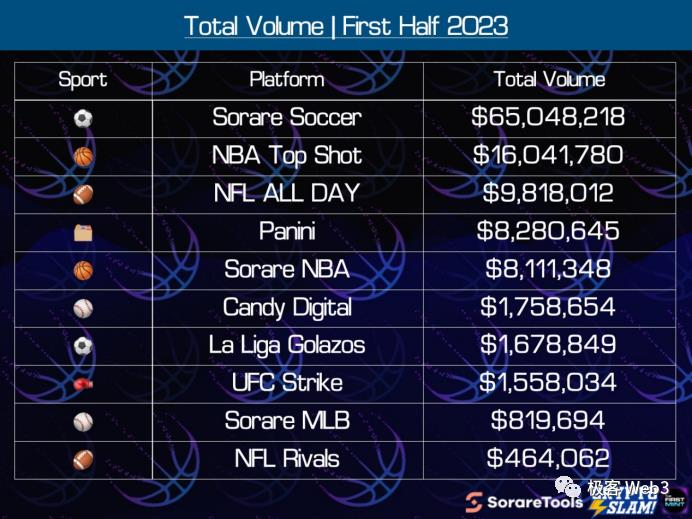
(Among leading sports platforms by transaction volume in early 2023, game-based NFTs represented by Sorare and collectible NFT platforms under DapperLabs remain dominant.) Collectible NFTs marked Web3’s first step into the sports world. For example, football star Cristiano Ronaldo previously collaborated with Binance to launch multiple personal NFT collections.
Even today, traces of collectible NFTs persist in traditional sports, such as trading cards. Whether physical or digital, including athlete-focused trading cards, their value hinges largely on the athlete's fame.
Physical trading cards auctioned for over $1 million often feature big names like Mickey Mantle, LeBron James, and Patrick Mahomes. Rarity and aesthetic design further enhance their value. When collectibles take video form, whether they depict iconic moments also determines their worth.
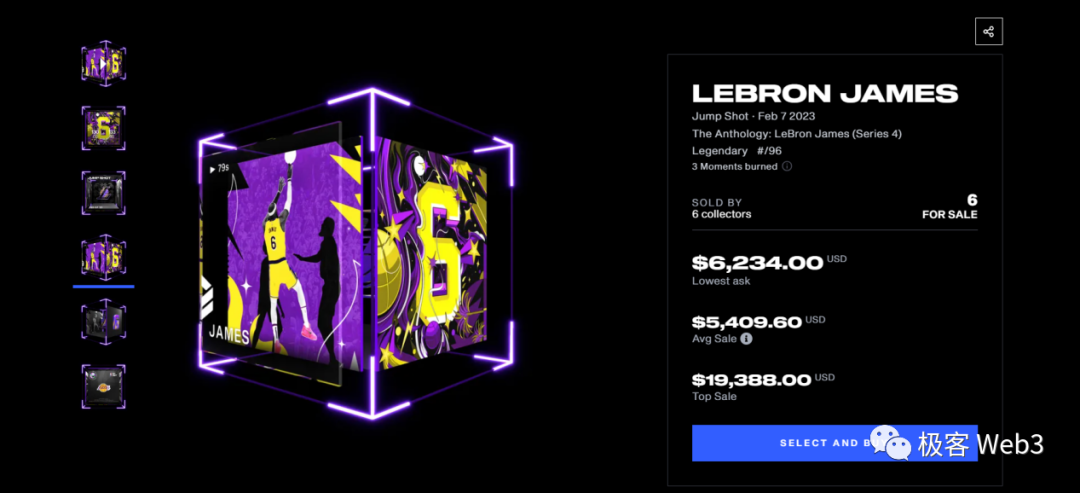
(Iconic moments add value: LeBron James’ shot breaking the all-time scoring record sold for nearly $20,000) DapperLabs is the undisputed leader in the sports collectibles NFT space, partnering with NBATopShot, NFLAllDay, LaLiga, UFCStrike, and others to meet fan demand across major sports leagues. In essence, DapperLabs and its affiliated products represent the pinnacle of Panini-style card collecting.
NBATopShot is the most popular, backed by official NBA endorsement and a strong fanbase. At its peak, it achieved daily trading volumes exceeding $40 million and remained consistently among the top five NFT projects. But its success was short-lived due to oversupply of player cards, limited focus on current players, and lawsuits against its parent company by the SEC.
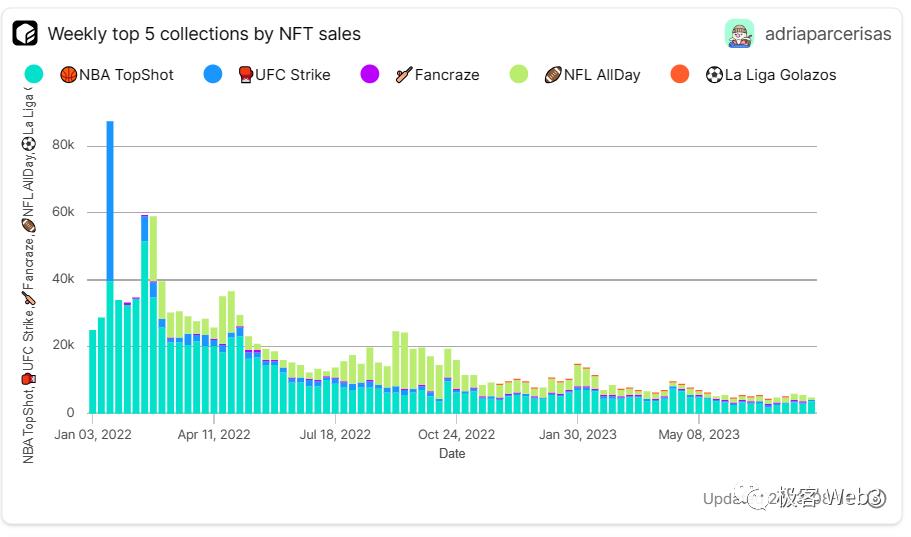
(The NBA leads in popularity for sports NFTs)
The decline of collectible NFTs was inevitable.
Similar to niche hobbies like stamp collecting, most participants in sports collectible NFTs are at the intersection of sports fans and Web3 users. As the NFT market cooled, without external interest, trading activity stagnated into a state of high prices but no buyers. Coupled with market downturns and questionable project decisions, NBATopShot’s engagement peaked in 2021 and has remained depressed ever since.
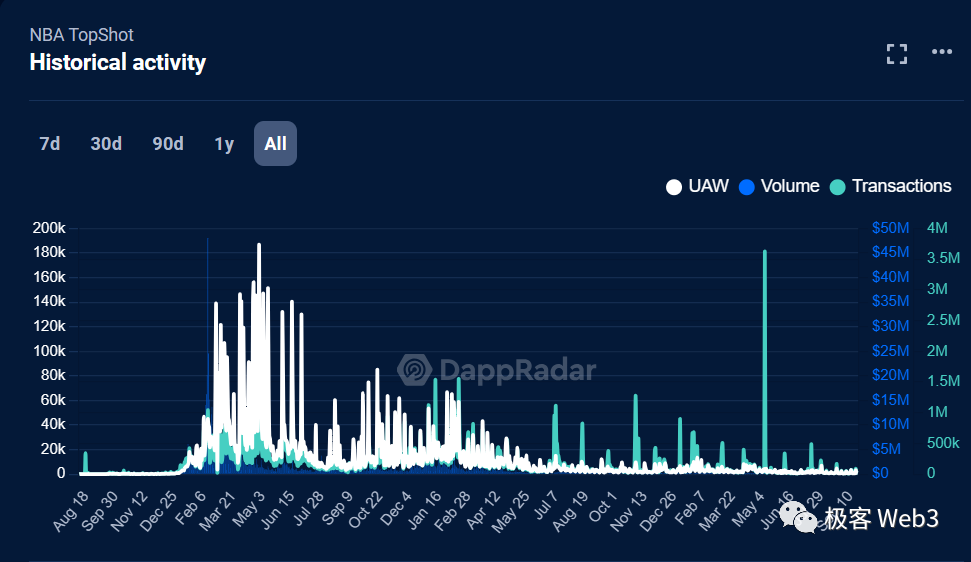
(Due to cooling NFT markets and controversial project decisions, NBATopShot’s activity peaked in 2021 and has stayed low)
Gamified NFTs in Fantasy Sports
Despite declining activity in collectible NFTs, sports still boast vast fanbases—especially global elite leagues. With new entrants like DraftKings Reignmakers and Sorare, sports NFT gameplay has evolved, incorporating more gamification elements.
It only takes one spark to reignite fan passion—from stagnant collectible NFTs to booming gamified versions.
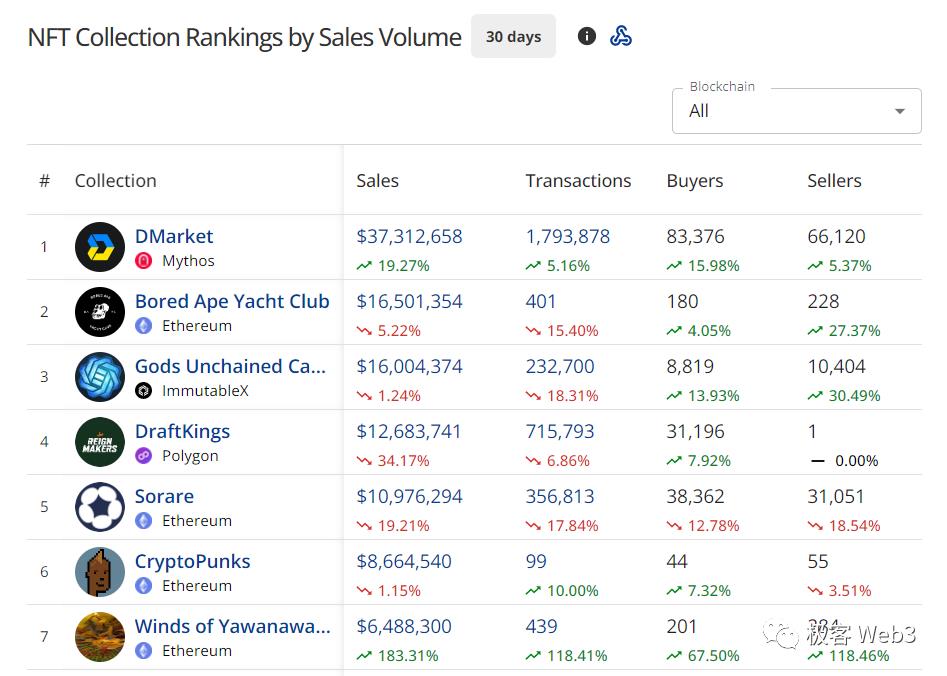
According to CryptoSlam data, in the month leading up to October 24 this year, NFT transactions clearly shifted from PFP (profile picture) projects toward gamified NFTs. Two sports-based gaming NFTs appeared in the top five, surpassing well-known projects like CryptoPunks and MAYC.
Web3 sports games typically emphasize simulation and management mechanics. However, current mainstream Web3 sports games center on NFT-driven “fantasy sports” management models. These allow players to manage virtual teams based on real-world athlete performance, partly because established simulation games like EAFC and F1 are already highly mature.
These traditional games enjoy broad acceptance among sports fans in terms of production quality, visuals, and gameplay maturity, dominating both PC and mobile platforms. Therefore, for Web3 sports games starting from scratch, competing in this space is particularly challenging.
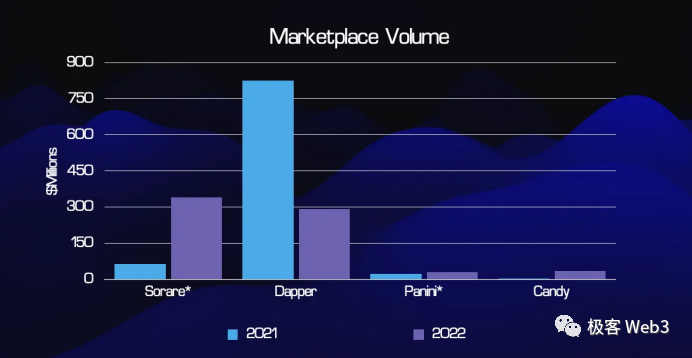
(Trends shown through changes in game NFTs led by Sorare versus collectible NFTs by DapperLabs over the past two years)
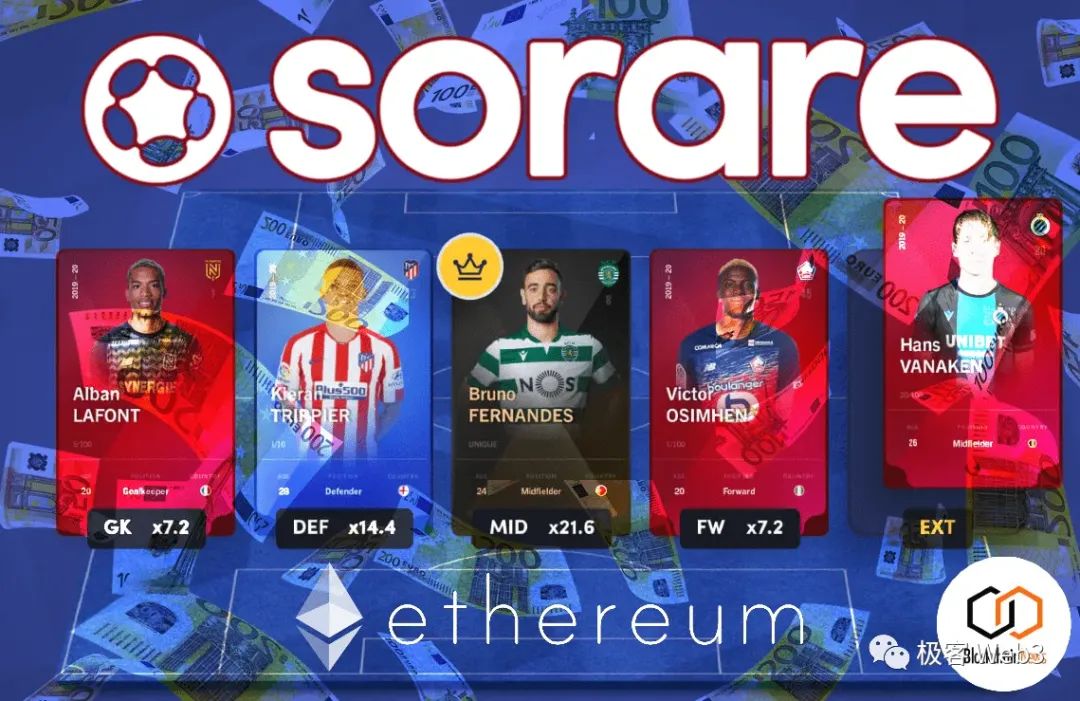
Platforms like DraftKings, Sorare, and UltimateChampions have found success with fantasy sports models, blending real-game outcomes with NFT mechanics—players build lineups based on predictions of athlete and team performance to compete in simulated matches. This isn't novel in gaming; titles like FM (Football Manager) and fantasy basketball have long-established systems.
What sets Web3 apart is that player cards are NFTs, tradable on secondary markets, turning them into financial assets that attract speculators. Interestingly, a player’s growth potential and card rarity directly influence pricing—rising stars offer greater speculative upside, whereas veterans nearing retirement do not. Earlier this year, NBA rising star Giannis Antetokounmpo’s NFT sold on Sorare for 113.888 ETH (about $186,000).
The long-term viability of “fantasy sports” rests on two pillars:
1. Timely Data Updates
Unlike general gamers, sports game enthusiasts are primarily existing sports fans. Hardcore sports game players overlap significantly with real-life sports followers.
From EAFC (formerly FIFA) to NBA2K, despite evolving from groundbreaking launches into repetitive annual releases criticized for lack of innovation, these franchises maintain strong monetization power. A key reason for their continued sales success is timely updates to in-game data.
In simulation games like DraftKings Reignmakers and Sorare, players must understand real player stats, tactics, and team dynamics—effectively drawing in passionate fans.
For such users, once engaged, regular data refreshes matter far more than improvements in graphics, animations, or gameplay variety.
Although most sports games receive only minor annual updates, fan tolerance remains high—they’re willing to pay for fresher, more relevant sports data. If player and team data aren’t kept current, the game’s appeal drops sharply.
2. Revenue Models Based on Rarity Preferences
Fantasy sports games draw inspiration from MyTEAM and UltimateTeam, where players favor rare cards. They generate income by dynamically adjusting card pools—raising caps on player ratings or salary limits, encouraging purchases of card packs via loot boxes, or enabling direct acquisition of desired players using in-game currency.
However, the prevailing “fantasy sports” model in Web3 sports games has flaws. For instance, long game cycles lead to weak continuity, making it hard to sustain fan engagement throughout an entire season. Moreover, the “entry fee + prize pool” mechanic is often seen as resembling gambling—paying entry fees, selecting players (akin to betting), and sharing prize pools mirror gambling behaviors.
While players are expected to rationally predict performance, luck plays a significant role. Additionally, the high barrier to entry makes these games unfriendly to new or casual fans.
Beyond Sorare and DraftKings, other blockchain sports games haven’t gained traction. After FIFA and EA split due to costly renewal disputes, four Web3 games with different mechanics were launched, yet failed to attract meaningful interest from fans.
Specifically, they fall short compared to mature Web2 sports games in gameplay, presentation, and athlete likeness rights. This may improve if AAA-level titles like Goals successfully enter the Web3 space.
New Directions for Sports NFTs
Beyond the above use cases, integrating NFTs with real-world sports offers promising experiments in grounding NFTs in tangible utility—one example being NFT tickets. Music events have already adopted ticket NFTs, mainly to prevent scalping and counterfeiting.
However, most ticket NFTs are single-use with short validity periods. Once used for entry, they retain only collectible value—which, aside from rare editions (e.g., debut performances or collaborations with celebrities), tends to be minimal. Sports events, however, offer longer-term utility—such as season tickets for home games. For clubs with large followings, season tickets are often extremely scarce.
Ticket NFTs could function as club POAPs (Proof of Attendance Protocols), enabling loyalty programs akin to “Odyssey”-style reward systems. For example: buying merchandise or verifying attendance frequency could determine retention or removal of season ticket holders and allocation of seats for next season.
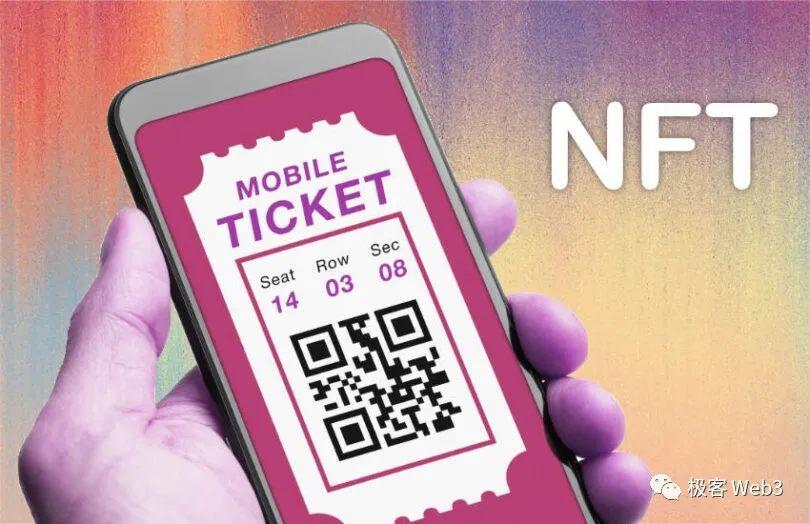
Clubs could also grant perks to high-tier NFT holders—player-signed gear, meet-and-greets, etc.
In July last year, Paris Saint-Germain sold three NFT tickets for over $220,000 each for a friendly tour in Japan, offering exclusive benefits. While NFT tickets present a solid solution, sports fandom spans all age groups, and many fans are older or conservative, slow to adopt new technologies. Currently, NFT tickets are better suited for limited-scale trials.
NFT-Based Governance
Web3’s decentralized nature enables democratic team decision-making. Last year, Chelsea’s former owner Roman Abramovich was forced to sell his stake due to political reasons. During the transitional period, some fans sought to protect the club’s interests by crowdfunding to buy 10% of shares and forming ChelseaDAO, hoping to participate in future key decisions.
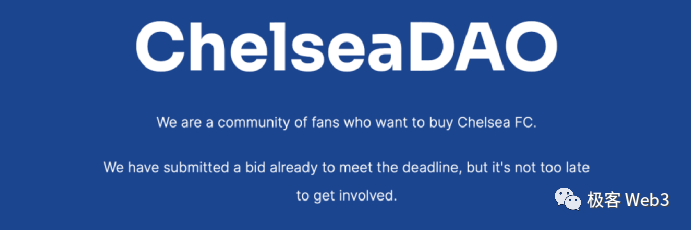
(During Chelsea’s turbulent transition, fans attempted to raise funds to establish a DAO to manage part of the club)
Though ChelseaDAO ultimately failed, just across the English Channel, Crawley Town Football Club has initiated a small-scale democratic “revolution” through NFTs: A Web3 group called WAGMI United acquired this League Two club, allowing fans to participate in team-building via Web3 governance centered on NFTs—voting on recruitment targets and letting season ticket holders and NFT owners jointly vote on decisions. While democratic, this approach seems disconnected from on-field results. Crawley struggled throughout the season, changed managers multiple times, and barely avoided relegation, finishing 22nd.
Crawley’s poor performance may stem from fans lacking professional expertise in sports management—a common flaw in DAO governance. Community voting relies more on common sense than specialized knowledge. Furthermore, information asymmetry means operational details like locker-room dynamics remain inaccessible to outsiders. It’s foreseeable that handing full decision-making power to fan DAOs will likely result in management that lacks innovation and long-term vision, failing to improve team performance.
Fan Tokens: A New Attempt at Empowering Supporters
Beyond NFTs, fan tokens represent another business model tied to sports fandom. Unlike illiquid NFTs subject to passive price swings, fan tokens actively confer governance rights. There have been prior attempts by fan groups aiming to run clubs via “DAO + Token” models.
Fan tokens provide opportunities for supporters to engage in minor governance activities—deciding matchday captain armbands, team bus designs, warm-up music—giving fans a voice. Clubs benefit too.
Chiliz, the leading Web3 sports fan platform, has launched fan tokens for clubs including AC Milan (ACM), Atlético Madrid (ATM), and Tottenham Hotspur (SPURS). Chiliz’s incentive platform Socios.com generated $12 million in revenue in 2021 through fan tokens, sharing proceeds with partner clubs and opening new revenue streams.
For example, Barcelona’s fan token sold out on launch day in 2020, generating $1.3 million in sales, part of which went to the club, boosting its finances.
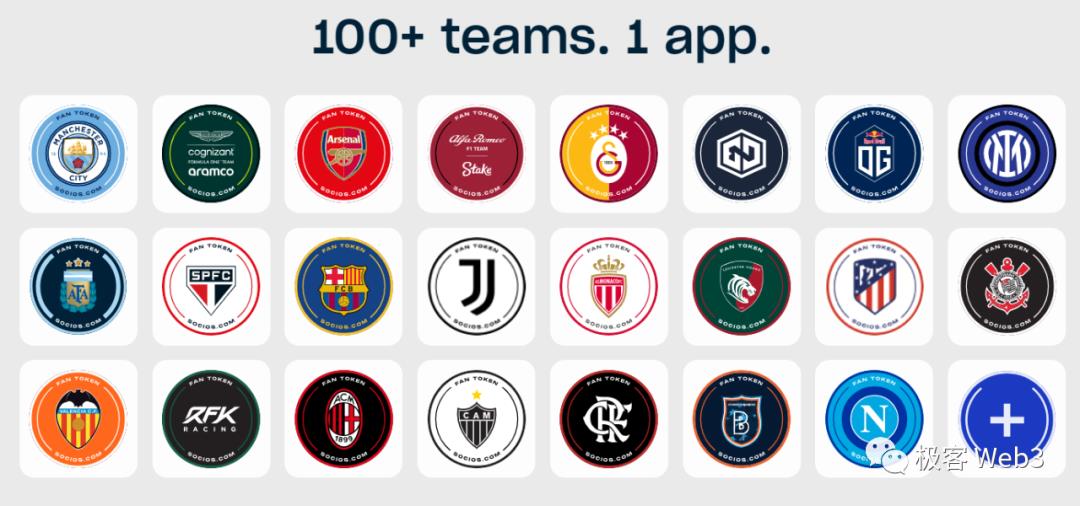
(Socios.com has partnered with numerous sports clubs)
Yet, fan token revenues offer limited financial relief to clubs. Broadcasting rights, matchday income, and commercial activities remain the primary revenue sources.
Take financially struggling Barcelona: According to Deloitte’s Football Money League, the club earned nearly €640 million in 2022. By comparison, even Socios.com’s total earnings across all partner clubs in 2021 were negligible.
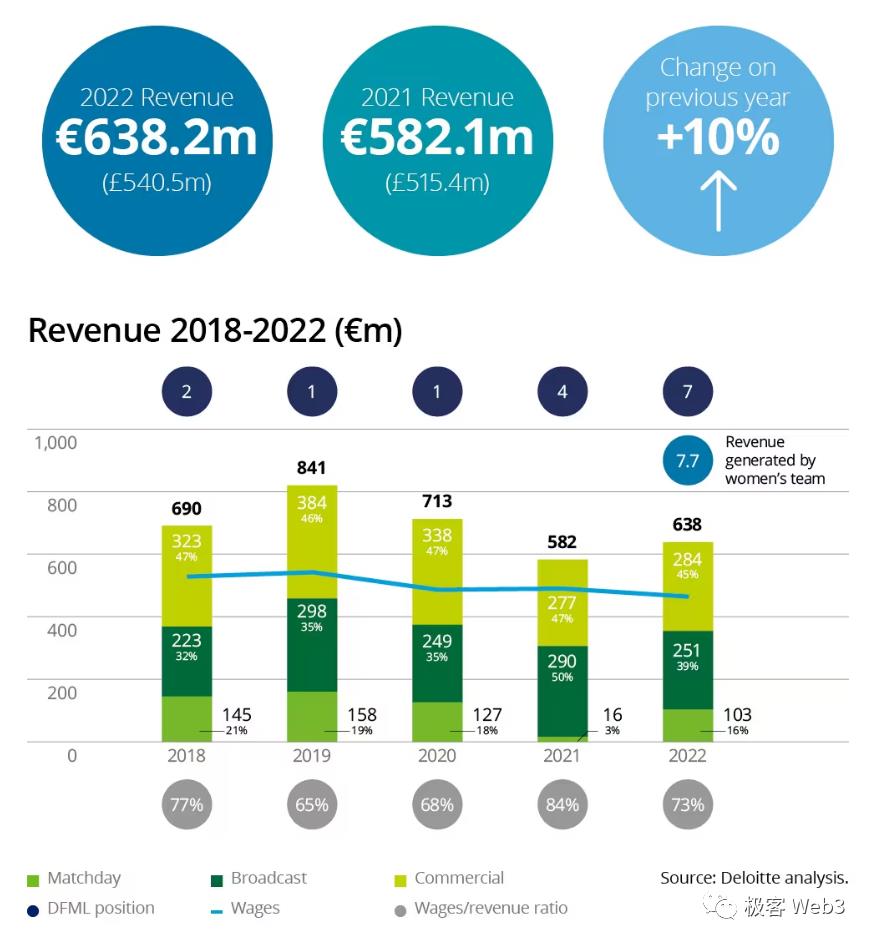
(Barcelona FC’s 2022 revenue breakdown — Source: Deloitte Football Money League 2023)
Moreover, fan tokens have devolved into “fans paying out of love, non-fans speculating.”
-
Token holders have limited influence—few decisions per season, mostly trivial matters, while major decisions remain firmly in club executives’ hands.
-
Fan tokens lack long-term investment value and increasingly resemble gambling venues. While collectible athlete NFTs might retain value due to scarcity, fan tokens lack intrinsic anchors—their prices fluctuate wildly based on club standings and match outcomes.
During Euro 2021 and the 2022 World Cup, various national team fan tokens saw sharp price swings throughout the tournaments. Even during off-seasons, transfer news or departures of star players impacted token prices.
In effect, these meme-like fan tokens are driven primarily by fan sentiment.
Web3 and Sports IP Amid the Crypto Winter
Previously, Web3 sports projects aggressively promoted advertising, NFTs, fan tokens, and metaverse games—all centered around fans. While these initiatives offered perceived benefits, they failed to win widespread acceptance.
First, the fan demographic itself is complex. Sports fans span all ages and educational backgrounds. Convincing the majority to embrace new concepts takes time.
Second, after witnessing foreign capital entering豪门 like Manchester United and AC Milan, applying corporate management models that led to years—or decades—of instability, traditional European fans are wary of outside investment. Web3 capital, still poorly understood, faces even greater resistance.
This doesn’t mean Web3 investment in sports will inevitably fail, but Crawley Town’s failure left a lasting impression on fans. Still, sports clubs command massive followings—precisely why Web3 investors refuse to abandon the sector. Yet for Web3 to gain fan approval, it must not only deliver real benefits but first prove its own legitimacy.
During the 2021–2022 season, crypto firms contributed about $130 million in NBA sponsorships, ranking second among sponsor categories. Adidas, Nike, and other sportswear giants have also recently entered Web3. Just as Web3 and sports entered a golden era, FTX’s collapse and related scandals dragged down endorsers like Tom Brady and Stephen Curry, and the Miami Heat severed its naming rights deal with FTX. Adding insult to injury, Voyager’s bankruptcy ended its partnership with the Dallas Mavericks, further tarnishing Web3’s reputation in sports and deepening mutual distrust.
Crypto firms aim to build vast commercial empires via sports, but repeated negative headlines have damaged their image and pulled some sports figures down with them. As a result, the sports industry now approaches Web3 capital cautiously, widening the gap between the two worlds.
Does Web3 need sports fans, or do sports fans need Web3? While integration is said to bring clubs new revenue, it pales in comparison to ticketing, broadcasting, and merchandise—the mainstays. In terms of visibility, Web3 capital arguably depends more on sports for exposure.
Neither in impact nor revenue has Web3 achieved a synergistic “1+1 > 2” effect with sports IP. Moreover, from an investor perspective, traditional sports clubs clearly prefer conventional capital, while Web3 entities like FTX lack the stability required.
Join TechFlow official community to stay tuned
Telegram:https://t.me/TechFlowDaily
X (Twitter):https://x.com/TechFlowPost
X (Twitter) EN:https://x.com/BlockFlow_News
 @godrealmx






