"The Fat dApp Chain" Theory: The Evolution Path of Application-Specific Blockchains
TechFlow Selected TechFlow Selected
"The Fat dApp Chain" Theory: The Evolution Path of Application-Specific Blockchains
Applying the valuation multiples of standalone applications to appchains is unfair, but it's difficult to argue that appchains should trade at the same multiples as the base layer due to clear differences in value accrual mechanisms.
 Navigating Web3 tides with focused insights
Author: HOPYDOC
Translation: MarsBit, MK
Evaluating app chains has long been one of the trickier tasks for investment analysts, as app chains function at a fundamental level like standalone applications, yet inherit characteristics from protocols—or what we now refer to as base layers—such as security and data availability.
Therefore, applying standalone application trading multiples to app chains is unfair; yet simultaneously, due to clear differences in value accrual mechanisms, it's difficult to argue that app chains should trade at base-layer multiples. Take Injective’s rally this year as an example, widely seen as a re-rating event. When the team announced an ecosystem fund backed by Pantera Capital and Jump Crypto to support building additional applications atop its application-specific layer, the market began viewing the app chain as a protocol.
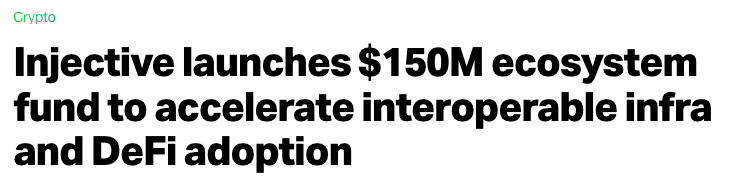
Injective's announced $150 million ecosystem fund
This reignited my interest in the first-generation "Fat Protocol Thesis," as I believe understanding how the market's perception of blockchain value has evolved could provide insights into how to assess current app chain valuations—or more specifically, app chains with ecosystems.
"Fat Protocol Thesis"
The "Fat Protocol Thesis" was originally proposed by Joel Monegro in August 2016 while at Union Square Ventures. It argues that crypto protocols should theoretically capture more value than the applications built on top of them.
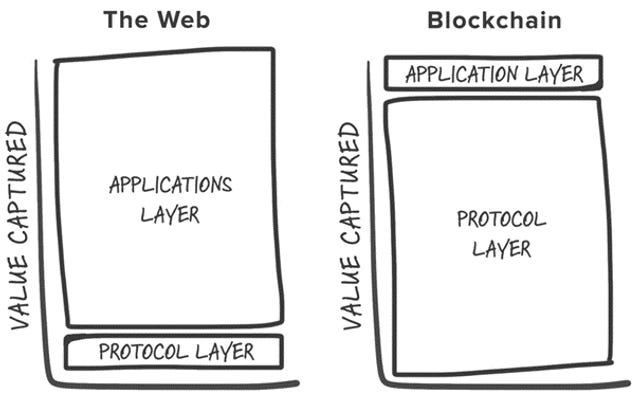
In short, the argument suggests that what we now call base-layer protocols offer two distinct core value propositions or sources of value accrual, and thus should always be considered more valuable than applications—or simply justify some astronomically high valuations. These are:
-
Permissionless shared data layer: Blockchains effectively lower the barrier to entry for new players, resulting in fiercer competitive dynamics within the system, and more importantly, enabling composability between participants, which drives protocol growth.
-
A positive feedback loop driving speculative value of native network tokens: Rising token prices attract developer and investor attention, converting into human or capital investment in the ecosystem and kickstarting a speculative flywheel.
-
As an extension, protocols can capture value created at the application layer through increased demand for native tokens, typically in the form of fees. Thus, theoretically, the more transactions applications bring to the protocol layer, the more value the protocol captures.
Why the "Fat Protocol" is No Longer Relevant
The "Fat Protocol Thesis" subsequently faced numerous debates about its timeliness, as it was formulated during the maximization era when modularity and the concept of application-specific chains didn't even exist.
The market later concluded that the "Fat Protocol Thesis" no longer fully applies to the current market structure, for the following reasons:
-
Overwhelming abundance of blockspace: Given the number of newly minted alternative Layer 1s from the previous cycle, protocol layers can no longer retain value created by applications, as abundant blockspace compresses the price users pay for equivalent transaction volume.
-
Rise of modular blockchains: Effectively breaking down blockchain functions into execution, data availability, and settlement, producing cheaper data availability solutions, further compressing fees users pay for the shared data layer described in the original thesis.
-
Convenience of multi-chain deployment: Applications can easily launch across multiple chains and even interact cross-chain using interoperability tools like LayerZero, significantly weakening dependence on any single protocol and thus undermining the positive feedback loop described in the original paper.
"App Chain Thesis"
With the emergence of the "App Chain Thesis," the decline of the "Fat Protocol Thesis" arrived. App chains are blockchains built for specific use cases, offering several design advantages, including:
-
Better value accrual mechanisms: Native network tokens can be used for security purposes, leading to token supply reduction, and can also extract value from the blockchain's business model.
-
Customizability: Developers have the freedom to customize any configuration in the tech stack for specific purposes—such as throughput and finality—and make trade-offs based on application needs.
For example, the latest dYdX v4 is implemented on a Cosmos-SDK-powered chain; this ensures traders no longer need to pay gas fees for trades. Instead, fees are charged based on trade size, mimicking the experience of trading on centralized exchanges.

Chorus One research on dYdX v4
That said, app chains inherently carry some disadvantages, which is why the concept hasn't fully taken off yet, due to:
Liquidity fragmentation and composability: Native assets only exist within specific app chains unless they are highly sought-after and supported by interoperability products, making interaction with assets on other chains impossible.
Limited security: Theoretically, an app chain's security is only guaranteed by a portion of its fully diluted valuation, depending on the consensus mechanism; however, reduced token value linearly impacts the blockchain's security level.
Protocol Business Models
If we consider the business model of protocols or base layers, users are essentially paying gas fees to the protocol to correctly store transaction data via consensus and settle their transactions.
Although the original thesis may no longer be timely, the merit of the "fat protocol" era lies in the clear division of labor between protocols and applications:
-
Protocols are essentially searching for ways to get users to pay for security and data availability, and work to retain users and applications within their respective ecosystems to maximize composability and direct value accumulation (in the form of gas fees).
-
Even with the rise of Layer 2s, protocols have merely shifted from customer-centric to business-centric models—aiming to extract as much value as possible from rollups paying for data availability and consensus.
-
On the other hand, applications compete for anything that gives their business a competitive edge—sometimes leading to lack of value accrual, such as how Uniswap maximizes liquidity depth without a clear revenue channel.
This division of labor has given rise to many billion-dollar applications like Uniswap and OpenSea. For applications, they effectively outsource other critical aspects of blockchain infrastructure to the protocol layer, allowing them to focus solely on what makes the application functional and successful.
However, for the protocols themselves, with the emergence of modular blockchains and abundant blockspace, the current business model is gradually and inevitably collapsing—thus, protocols are becoming "thinner."
App Chain Business Models
The business model of application-specific chains is vastly different. Although on the surface both protocols and app chains operate as base layers:
-
App chains do not require users to pay for transaction data storage in the form of gas fees. Instead, users are effectively paying for the application itself. For instance, Osmosis implements a protocol fee recipient mechanism, ultimately flowing revenues to token holders.
-
Yet, app chains also deliver everything that protocols should do—from providing a shared data layer to settling transactions and ensuring appropriate blockchain security levels. Most importantly, applications remain highly competitive with each other.
The advantage of this business model design is a hybrid of several factors, which should be considered more sustainable and defensible—even under future market evolutions and expansions:
-
Users are actually paying for services at prices agreed upon by the market. For example, Injective takes a cut from trading fees on its perpetual futures exchange, and markets generally accept that perpetual exchanges should charge fees. Some exchanges even charge higher fees, such as GMX and Gains Network.
-
Unlike the market consensus that providing shared data and consensus should not incur fees—and consistently competes to offer cheaper solutions, effectively turning it into a zero-cost race.
-
Value accrual is not linearly tied to transaction count but rather to other variables that drive application success. For example, Injective's value accrual is a function of perpetual futures trading volume, while Osmosis’ is a function of spot trading volume.
In short, the app chain business model, in hindsight, aligns very well with the current market structure—because protocols are accumulating value from more sustainable sources. Extending this point, it leads me to wonder: what if app chains go further and amplify the strengths of the protocol layer?
"Fat App Chain Thesis"
Changing times and market dynamics have given rise to what I call the "Fat App Chain Thesis." We're witnessing app chains like Injective and Osmosis actively building their own ecosystems, aiming for a win-win scenario.
-
App chains are no longer competing against other base layers or protocols with lower gas fees. Instead, they've found a more defensible and sustainable business model—one the market recognizes—that effectively solves the value accrual issues present in the first-generation "Fat Protocol Thesis."
-
On the other hand, when more applications choose to build atop app chains, those chains enjoy positive feedback loops—effectively resolving the liquidity fragmentation and limited composability issues stemming from app chain architecture.
-
Meanwhile, app chains provide a shared data layer, enabling other applications to deploy directly on the app chain itself, driving ecosystem prosperity, which in turn attracts developer and investor interest and potentially boosts network price performance.
-
Most importantly, it resolves the cold-start problem faced by many other Layer 1s or rollups—since many app chains initially started as applications seeking better composability.
Thus, app chains attempting to build ecosystems are not becoming "thin"—they demonstrate a clear path to becoming "fat" and staying "fat." If justified, this could present an attractive investment case.
Post-Mortem on Injective
As mentioned earlier, Injective’s strong performance this year validates the "Fat App Chain Thesis." Starting as a standalone perpetual futures app chain, Injective runs a classic order book model and pioneered zero gas fees to avoid malicious MEV such as frontrunning.
In terms of value accrual, Injective burns 60% of all trading fees managed by a community-led auction, creating deflationary pressure across the entire token supply. The remaining 40% goes to relayers, incentivizing exchange liquidity depth. In other words, $INJ token value accrual is a function of trading volume—not transaction count, as seen with other alternative protocols.
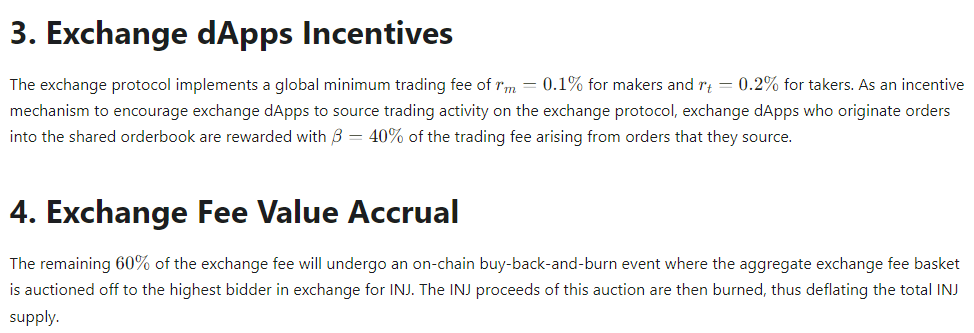
Illustration from Injective documentation
The native $INJ token can also serve as collateral backing for derivatives, acting as an alternative to stablecoins in other derivative markets. Additionally, Injective integrated with Skip Protocol in February this year to return MEV revenue to stakeholders, further strengthening its early value accrual narrative.
At the beginning of 2023, Injective traded at a valuation of $130 million. After the announcement of the Injective Ecosystem Fund, the market re-rated the token upward—recognizing efforts by prominent VCs to support building an entire ecosystem atop its order book.
As of writing, Injective trades above $1.3 billion, up over 10x year-to-date, outperforming most other tokens in the market. That said, since expansion, metrics haven’t improved dramatically—Injective’s daily trading volume remains around $10 million, resulting in approximately $4 million annualized value accrual via token burns.
Not a major shift, but the "Fat Protocol Thesis" fundamentally converges with this evolved "App Chain Thesis." Injective enjoys the dual advantages of both base layers and app chains, while avoiding the main drawbacks of either.
-
The positive feedback loop still holds: Investors fund ecosystem development, attracting developers and projects, kickstarting speculative value of the native network token—which indirectly resolves prior concerns about security levels for app chain valuations.
-
The value accrual component is immune to fee competition: Injective doesn’t start by charging gas fees but profits from trading volume—and adds value by providing security and a shared data layer.
-
Liquidity fragmentation and composability issues are resolved: Native assets on the chain now have more use cases within the app chain ecosystem.
Overall, Injective’s attempt to build an ecosystem has found a clear path to becoming and remaining "fat"—and thus, even over the long term, may present an attractive investment case.
What About Sei?
It’s hard to replicate Injective’s miracle again. Sei is widely considered the closest comparable to Injective in the industry, but may not see a similar trajectory. Both operate as order books; however, $SEI’s native token does not generate value like Injective’s—but instead serves as the network’s native gas token.
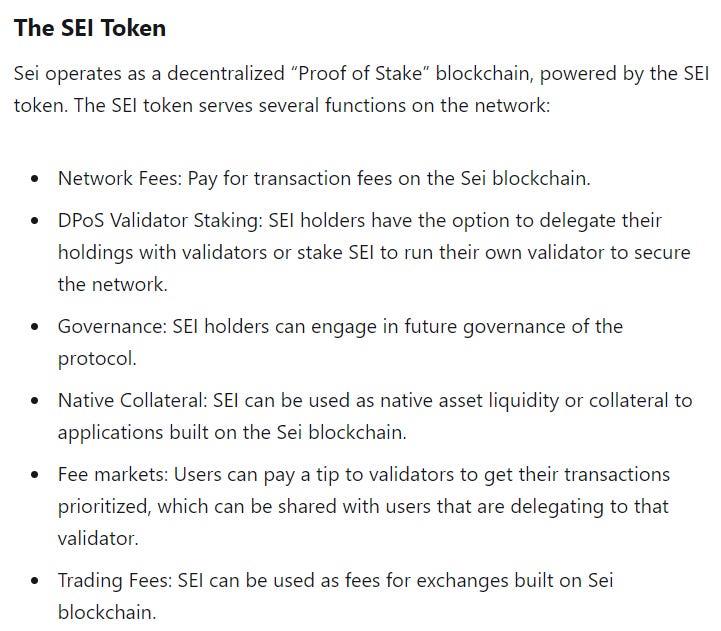
Sei’s tokenomics
This small difference essentially inherits the legacy issues of the "Fat Protocol Thesis" and places Sei on the same battlefield as other alternative Layer 1s.
-
The positive feedback loop exists and applies—Sei enjoys support from many well-known investors in the industry, but injected capital has yet to attract developers to grow the network.
-
Value accrual remains an unresolved legacy pain point that Sei inherits: The blockchain provides a shared data layer and security level but fails to effectively extract any meaningful revenue from gas fees.
-
Liquidity fragmentation and composability issues are less relevant, as the app chain positions itself as a standalone ecosystem—not required to interact with other chains in the Cosmos ecosystem.
Osmosis might be the next candidate.
The "Fat App Chain Thesis" received its first market validation through Injective’s success. Now it’s time to look for another project following similar logic to replicate this playbook.
Osmosis might be the next candidate, as the team has slowly built an ecosystem around AMM-based applications on its app chain—such as Mars Protocol offering a money market, and Levana Protocol providing a perpetual futures exchange. The protocol also introduced market maker fees from its spot trading volume, effectively delivering value accrual to token holders for the first time.
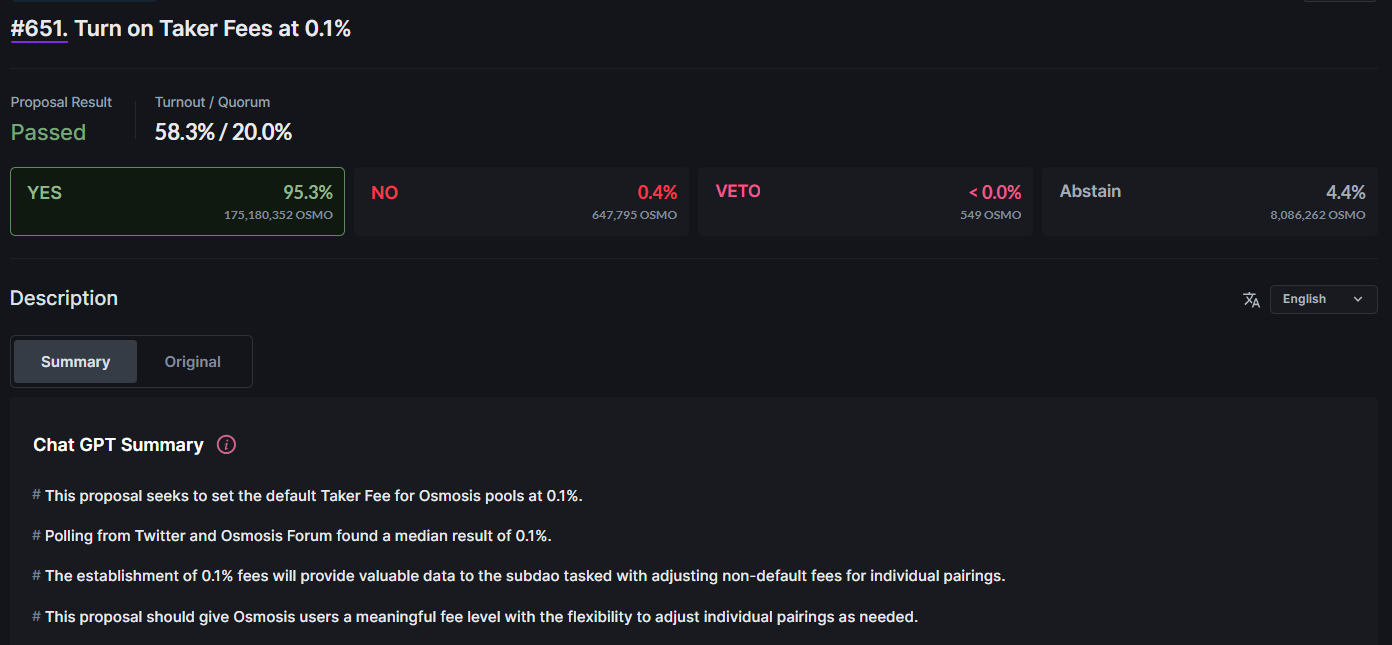
As an app chain and liquidity hub on Cosmos, Osmosis has an average daily spot trading volume of $6 million—a number that isn’t impressive. Partly due to declining DeFi activity across Cosmos; $OSMO’s price has trended downward since年初, falling from a high of $1.10 to its current $0.30.
Again, the "Fat Protocol Thesis" gradually converges with the "App Chain Thesis" in Osmosis’ case—but more validation is needed to ignite a full price rally, as outlined below:
-
The positive feedback loop is still lacking: The Osmosis community is strong and strategically aligned with the broader Cosmos ecosystem to attract teams to deploy apps on the chain—but investors have yet to inject capital into the ecosystem.
-
Value accrual again avoids fee competition: Osmosis implemented a 10 bps protocol market maker fee, profiting from spot trading volume, while adding value by providing security and a shared data layer.
-
The caveat is that protocol market maker fees may erode unit economics for traders and arbitrageurs—potentially impacting spot trading volume in the long run, unless Osmosis manages to build a sustainable moat around protocol liquidity.
-
Liquidity fragmentation and composability issues are being addressed: Native assets on the chain can now be used across other DeFi primitives on-chain.
Conclusion
When $INJ rebounded earlier this year, I thought it was a one-off event—the market was essentially re-rating the token, applying perpetual exchange trading multiples to the protocol layer—and that the token price would stall after adjustment.
It turned out to be one of my biggest mistakes this year. Upon reflecting on the underlying logic, combining "Fat Protocol" and "App Chain" elements actually creates the most compelling rebound, as it resolves legacy issues on both sides—and speculative value, along with institutional capital, is injected into the system to kickstart the flywheel.
I believe more app chains will adopt this approach in the coming months, as most seek to diversify product offerings and retain value within their systems rather than compete purely at the application layer. The "Fat App Chain Thesis" may create more miracles in public markets.
Join TechFlow official community to stay tuned
Telegram:https://t.me/TechFlowDaily
X (Twitter):https://x.com/TechFlowPost
X (Twitter) EN:https://x.com/BlockFlow_News
 hopydoc