








Forbes: Persevering Through Repeated Failures: An 8-Year Quest for Asset Tokenization
TechFlow Selected TechFlow Selected
Forbes: Persevering Through Repeated Failures: An 8-Year Quest for Asset Tokenization
As long as there is distrust in the crypto market, tokenization experiments will never succeed.
 Navigating Web3 tides with focused insights
By Steven Ehrlich, Forbes
Translated by Luffy, Foresight News
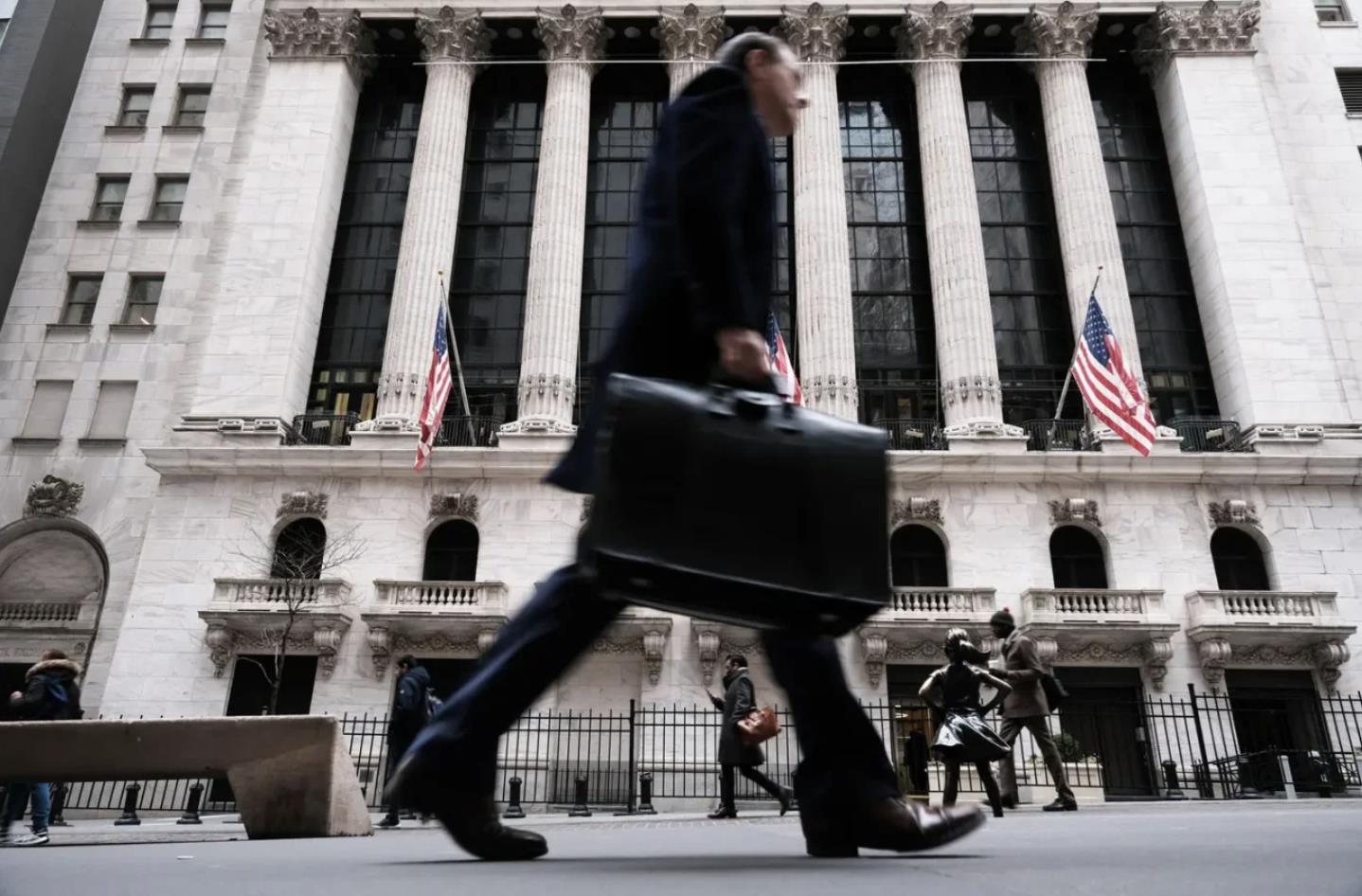
Despite blockchain’s disruptive promise, the New York Stock Exchange carries on as usual.
On July 17, 2023, two partners from consulting firm McKinsey took the stage at the New York Stock Exchange to pitch blockchain’s potential to dozens of government regulators and financial executives, insisting its utility extended far beyond the scandal-plagued cryptocurrency markets.
Bitcoin, Ethereum, Solana, and tens of thousands of other cryptocurrencies have fallen 60% from their November 2021 peak, wiping out $2 trillion in market value. Crypto platforms are frequently hacked, and major crypto firms face regulatory crackdowns. Yet evangelists still insist the technology behind crypto remains viable—and has a bright future.
“This is about blockchain, not crypto,” said McKinsey partner Julian Sevillano. “It has real utility.”
The evangelists walked through the basics—defining crypto terms like “smart contracts” (transactions that automatically execute when certain conditions are met)—and explained how traditional financial assets such as stocks, bonds, and real estate could be “tokenized.” Blockchain code could enable them to move globally in seconds, rather than the hours or days it currently takes.
But despite talk of “improving capital efficiency,” “reducing operational costs,” and “enhancing compliance and transparency,” their presentation felt hollow. Without mentioning last year’s catastrophic collapse in crypto prices, the speech could have been delivered in 2015, when the first tokenization platforms like R3CEV were announced. But since then, few enterprises have adopted the technology, and many projects still face the same challenges and debates as before. Tokenization may be the future of financial services—but it still seems distant.
To see why, consider a report presented shortly afterward to the Commodity Futures Trading Commission’s Global Markets Advisory Committee. Per von Zelowitz of the New York Fed’s Innovation Center told attendees that a pilot project involving bulk deposits, run jointly with banks including Wells Fargo and Citigroup on a private network, remained a “scientific experiment” within a “theoretical financial market infrastructure.”
During the Q&A, another speaker, Sandy Kaul of Franklin Templeton—a $1.5 trillion asset manager—asked whether the Fed had considered testing on an open system to leverage the advantages offered by blockchain-like technologies.
“Such as what?” Zelowitz replied.
Since Halloween night in 2008, when Satoshi Nakamoto’s Bitcoin whitepaper went viral, crypto has cycled through a series of proclaimed killer applications: instant payments anywhere in the world; tools to protect identity and personal data from prying governments and corporations; hedges against inflationary government policies.
Now spinning on this carousel is the tokenization of real-world assets—digital receipts for things like real estate, art, bonds, and even intellectual property. Early tokenization efforts focused largely on private ledgers—blockchains controlled by single entities or corporate consortia, without public validation. This alternative ostensibly offers blockchain’s efficiency and transparency without the risk of criminals exploiting the platform for illicit purposes.
Things really kicked off in 2015, when a wave of high-profile permissioned ledgers launched with grand ambitions. Often backed by major banks, they aimed to streamline everything from payments to back-office settlements using blockchain. IBM also bet heavily on blockchain, launching flashy marketing campaigns (before later pivoting to promote its AI business).
Meanwhile, Nasdaq launched a project using a permissioned blockchain to facilitate sales of “tokenized” private securities. A 2015 report from Santander’s venture arm predicted, “By 2022, distributed ledger technology could reduce banks’ costs by $15–20 billion annually across cross-border payments, securities trading, and regulatory compliance.” The year came and went—with no visible impact.
One of the most notable early tokenization ventures began in March 2015, when New York startup Digital Asset Holdings (DAH) hired Blythe Masters as CEO. In the early 2000s, the 28-year-old Masters was a JPMorgan executive who conceived credit default swaps—an ingenious tool for bond investors to hedge against borrowers defaulting, which became infamous during the 2008 financial crisis. Masters wanted to drive widespread adoption of blockchain to revolutionize financial markets. In a 2015 Bloomberg interview, she said, “You should take this technology seriously, just as you should have taken the internet seriously in the early 1990s.”
Masters and DAH achieved initial success in 2017 when the company won a contract to replace the Australian Securities Exchange’s outdated clearing and settlement system. But plagued by delays over stability, scalability, governance, and overall project management, the deal faltered and was ultimately canceled in late 2022. The exchange wrote off $165 million, and chairman Damian Roche said, “We initiated this project with the best available information at the time, determined to deliver a safe, reliable post-trade solution balancing innovation and advanced technology for the Australian market.” However, upon further review, we concluded the path we were on would not meet the ASX’s and market’s high standards.
Amid all the industry hype around tokenizing everything over the past decade, perhaps the most memorable project was an $18 million sale of shares in a Colorado ski lodge—the Aspen Ridge Hotel—widely regarded in the industry as a joke. “Nobody actually wants to hold a floor of a hotel or one-thousandth of a painting in tokenized form,” said WisdomTree Investments’ Will Peck.
Even today, tokenization advocates struggle to make the concept stick. Projects range from European bond issuances worth hundreds of millions of dollars to Robinhood-style investment apps that let couch potatoes easily buy tokenized U.S. Treasury securities with less effort than changing TV channels. At best, these work in small doses and controlled environments—but haven’t cracked the code for broad demand.
Take institutional markets. In November 2022, Goldman Sachs launched a tokenization platform that, together with Santander and Société Générale, processed a $100 million eurobond issuance for the European Investment Bank (EIB). Managing director Matthew McDermott called the platform “groundbreaking in many ways.” Settlement took 60 seconds instead of the EIB’s traditional five days, reduced the risk of clerical errors, and made the asset more liquid.
The system could even handle interest payments on the bond. “We actually represented derivative cash flows on-chain and proved interoperability with payment rails from French and Luxembourgish banks, both of which minted batches of digital currency for the project,” McDermott said. But so far, only two small transactions have been completed.
McDermott told Forbes the bank is exploring bundling EIB-style issuances with other companies to create a liquid secondary market. Easier said than done—such an effort would require more infrastructure and getting industry players aligned around a single tech stack, a major hurdle given that it demands cooperation among competitors.
“Everyone—from BlackRock to Goldman, Citi, and JPMorgan—is saying tokenization is the future,” said Nadine Chakar, former CEO of tokenization firm Securrency and ex-head of digital assets at BNY Mellon. Her company was recently acquired by the Depository Trust & Clearing Corporation (DTCC) for $50 million—half its valuation at its last venture funding round in March 2021. “The problem is interoperability and liquidity,” Chakar said in July. “Banks partner with Company XYZ, do an issuance, and issue a press release. Then what? Nothing happens. They become pet rocks because they can’t go anywhere.”
Before its acquisition, Securrency took a different approach. It partnered with WisdomTree to launch a series of tokenized funds and an app called WisdomTree Prime on public blockchains like Ethereum, offering low-cost, widely accessible investment options in stock index-tracking funds and Treasuries. These funds had a minimum investment of $25 and a fee rate of 0.05%. While still more expensive than zero-fee trading on platforms like Robinhood—which benefits from the controversial payment-for-order-flow model—WisdomTree believed customers were seeking alternatives. As of now, the funds remain active, but the nine funds collectively manage just $12 million in assets. Neither WisdomTree’s Chakar nor Peck responded to questions about their future.
Franklin Templeton offers a similar service through its retail investing app Benji, which includes investments in money market funds backed by U.S. government securities alongside digital assets. Franklin Templeton’s product manages $295 million in assets.
Private credit and equity may offer the greatest hope for tokenization. CFTC commissioner Caroline Pham says private credit is expected to become a $10 trillion market over the next decade.
Some early tests have shown success in speeding up issuance and lowering investment barriers—for example, KKR partnering with tokenization firm Securitize to issue part of its $4 billion Healthcare Strategic Growth Fund II (HCSG II) on the Avalanche blockchain, though the firm won’t disclose the size of investments.
Avalanche appears to be pushing into tokenization, teaming up with asset managers T. Rowe Price, WisdomTree, Wellington Management, and Cumberland DRW to launch a testnet allowing traditional financial firms to experiment with clearing and settling trades on a public blockchain in a sandbox environment.
But the plan still has a long way to go before gaining traction with established players who see no need for tokenization. iCapital, for instance, has built a suite of mutual funds with $25,000 minimums to fund alternative investments—but sees no need to use blockchain in the process. “Our business has scaled, but we haven’t tokenized anything,” CEO Lawrence Calcano said. “The idea that firms must tokenize to grow is incorrect—but they aren’t mutually exclusive.”
So far, stablecoins are the only application to achieve meaningful success in tokenization. The global stablecoin market has ballooned to $127 billion in just a few years. But the primary use of these tokens—typically backed 1:1 with reserves and designed to maintain a $1 value—has been facilitating speculative trading on unregulated crypto exchanges worldwide, especially where traditional currencies aren’t accepted. Moreover, the market is dominated by Tether, a shadowy firm operating outside regulatory scrutiny. Tether holds $84 billion in stablecoin assets, has never undergone an audit, and refuses to disclose the names of the banks storing its funds.
Still, tokenization pilots and announcements continue. Just in recent weeks, payments messaging service Swift released results from experiments with BNP Paribas, DTCC, BNY Mellon, and Lloyds Banking Group to determine whether their back-end systems can connect with public and private blockchains supporting tokenized assets. Meanwhile, Citigroup announced plans to begin tokenizing customer deposits so clients can instantly send money anywhere in the world. The initial pilot is being conducted with shipping giant Maersk, one of the bank’s clients.
The London Stock Exchange also aims to launch a tokenized trading business, initially focusing on opaque private equity. Echoing comments made years ago by the Australian Securities Exchange, Murray Roos, head of capital markets at LSEG, declared the technology has reached a “tipping point.” “Our goal is to use digital technology to build a smoother, cheaper, more transparent, and better-regulated process,” he said.
“We have to make some changes in the next 18 to 24 months,” said Securrency CEO Chakar.
It’s maddening—doing the same thing over and over again while expecting different results. Technically, the future of tokenizing trillions in real-world assets via blockchain is within reach. But as long as trust in crypto markets remains absent, it will never happen.
Join TechFlow official community to stay tuned
Telegram:https://t.me/TechFlowDaily
X (Twitter):https://x.com/TechFlowPost
X (Twitter) EN:https://x.com/BlockFlow_News
 Forbes











