Analyzing Jito Network: Solana's First Staking Product Including MEV Rewards
TechFlow Selected TechFlow Selected
Analyzing Jito Network: Solana's First Staking Product Including MEV Rewards
Through the Jito-Solana architecture, it will be possible to effectively capture MEV revenue within the Solana network and reduce spam transaction attacks, thereby decreasing the likelihood of network-wide outages on Solana.
 Navigating Web3 tides with focused insights
Author: dt, DODO Research
This week, with news around Bitcoin spot ETFs driving market sentiment, the overall blockchain market has turned bullish. Among the top ten cryptocurrencies by market cap, after BTC—the central narrative this week—the biggest gainer has been Solana’s native token $SOL.

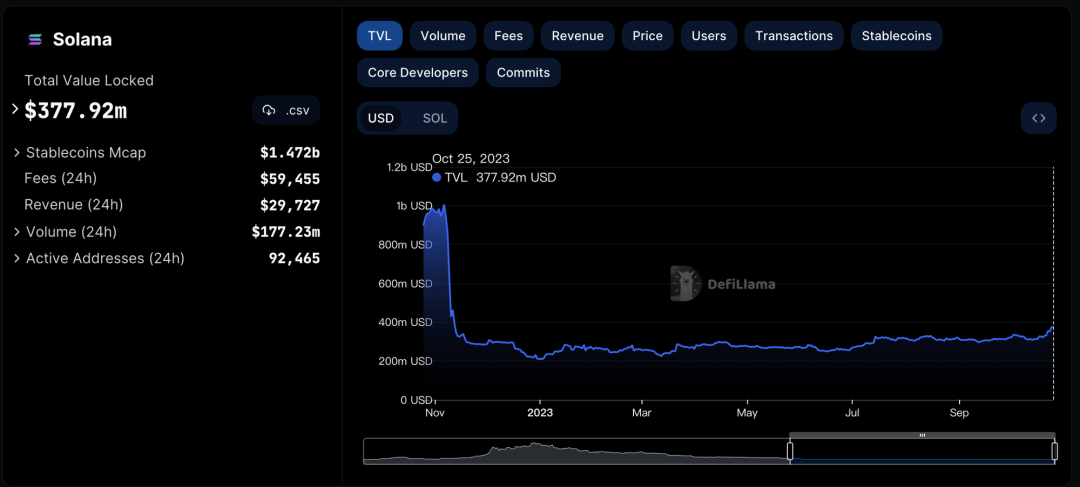
Last year's FTX collapse dealt a severe blow to Solana—not only due to the sharp drop in $SOL’s price, but also because key on-chain infrastructure such as liquidity pools and bridged assets like soBTC and soETH, along with core DeFi protocols such as the DEX Serum, were backed or sponsored by FTX. The implosion led to mass capital outflows, the devaluation of bridged tokens, and raised serious concerns about Serum’s security. As a result, Solana’s total value locked (TVL) plummeted from over $1 billion before the crash to a low of just $200 million.
However, thanks to unwavering support from the Solana community and continuous development efforts by the foundation, nearly one year after the FTX collapse, Solana has made a strong recovery. Not only has $SOL rebounded close to its pre-crash levels, but the chain’s TVL has also increased by nearly 90% since its年初 lows—rising from $200 million to $380 million today.
In this challenging year, the standout performer in the Solana ecosystem is undoubtedly Jito. Launched on mainnet in November 2022—right in the aftermath of the FTX disaster—Jito started with a modest TVL of $4 million. A year later, it has surpassed $100 million in TVL, ranking second on Solana behind only Marinade Finance, the leading liquid staking protocol.

This week, CryptoSnap Dr.DODO introduces you to Jito—the current hottest rising star in Solana’s DeFi landscape, exploring what gives Jito the magic to perform so exceptionally despite unfavorable broader crypto conditions and the additional challenges facing Solana.
What is Jito?
Jito is a liquid staking protocol developed by Jito Labs. In August 2022, Jito Labs raised $10 million in a Series A round led by Multicoin Capital and Framework Ventures, with participation from Solana Ventures and Anatoly Yakovenko, co-founder of Solana Labs.
Jito describes itself as Solana’s first staking product that includes MEV rewards. Unlike other liquid staking protocols, Jito offers stakers not only standard staking yields but also additional MEV rewards. Beyond liquid staking, Jito Labs is deeply involved in the MEV space and was the first team on Solana to launch a third-party validator client called Jito-Solana. This client’s architecture enables efficient capture of MEV revenue across the Solana network while reducing spammy "tx dust" attacks that can cause network congestion and outages.
The Jito-Solana client introduces an auction mechanism similar to Flashbots on Ethereum. Traders submit bids for profitable transaction bundles, which are then processed by a third-party block engine that runs complex simulations to identify the highest-value transaction sequences. These winning bundles are then assigned to validators and stakers (holding JitoSOL), eliminating tx dust attacks while increasing rewards for token holders.

Flashbots + Lido = Jito
According to Solana Foundation’s recently released “Blockchain Validator Health Report – October 2023,” since its initial launch in August 2022, Jito Labs’ client Jito-Solana has grown its network share from 0% to 31%, making it currently the only third-party validator client on Solana. The auction mechanism introduced by Jito-Solana successfully differentiates it from the official validator client and has attracted significant adoption among stakers.
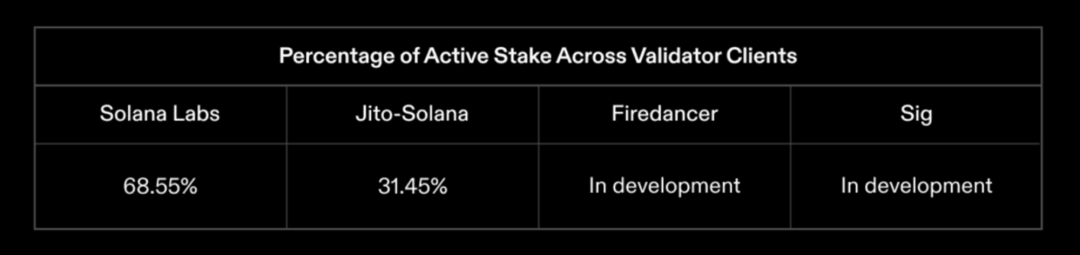
Jito’s emergence has not only addressed the long-standing MEV issue on Solana but also helped reduce network congestion and downtime. With Lido announcing its exit from Solana-based staking, Jito is well-positioned to capture even more of the liquid staking market share.
Additionally, the fact that Jito has not yet launched a governance token has attracted many airdrop hunters. Jito is currently running a points campaign where users earn points by holding JitoSOL, depositing JitoSOL into lending platforms, or providing liquidity. There’s also a referral program—users who invite more participants earn higher points.
Author’s View
The author believes the Solana ecosystem is absolutely an area worth watching closely. After a year-long downturn, projects without strong community support or active development have already been weeded out. The protocols that remain standing today are those with robust communities and teams consistently delivering updates and improvements. Among these, projects that haven’t yet issued a token are especially worth participating in.
That’s precisely why the author chose to spotlight Jito—it checks all three boxes above. In the author’s view, Jito is a game-changer on Solana with tremendous potential. Beyond Jito, other protocols like Kamino and Marginfi are also on the author’s radar, sharing the same three key characteristics and equally deserving of attention and participation.
Join TechFlow official community to stay tuned
Telegram:https://t.me/TechFlowDaily
X (Twitter):https://x.com/TechFlowPost
X (Twitter) EN:https://x.com/BlockFlow_News
 Dr.DODO