









2023 Hong Kong Policy Address Released: A Guide to Hong Kong's Talent Attraction Policies
TechFlow Selected TechFlow Selected
2023 Hong Kong Policy Address Released: A Guide to Hong Kong's Talent Attraction Policies
This article provides an interpretation of the policies related to talent attraction programs such as the Quality Migrant Admission Scheme, the High Talent Pass Scheme, and further studies initiatives, as outlined in the latest Hong Kong policy address.
 Navigating Web3 tides with focused insights
The long-awaited Hong Kong Policy Address has finally been released, including adjustments to Hong Kong's talent attraction policies!
This article shares key updates from the 2023 Hong Kong Policy Address regarding talent immigration schemes such as the Quality Migrant Admission Scheme (QMAS), Top Talent Pass Scheme (TTPS), and study-to-settle pathways. If you're considering settling in Hong Kong, pay close attention.
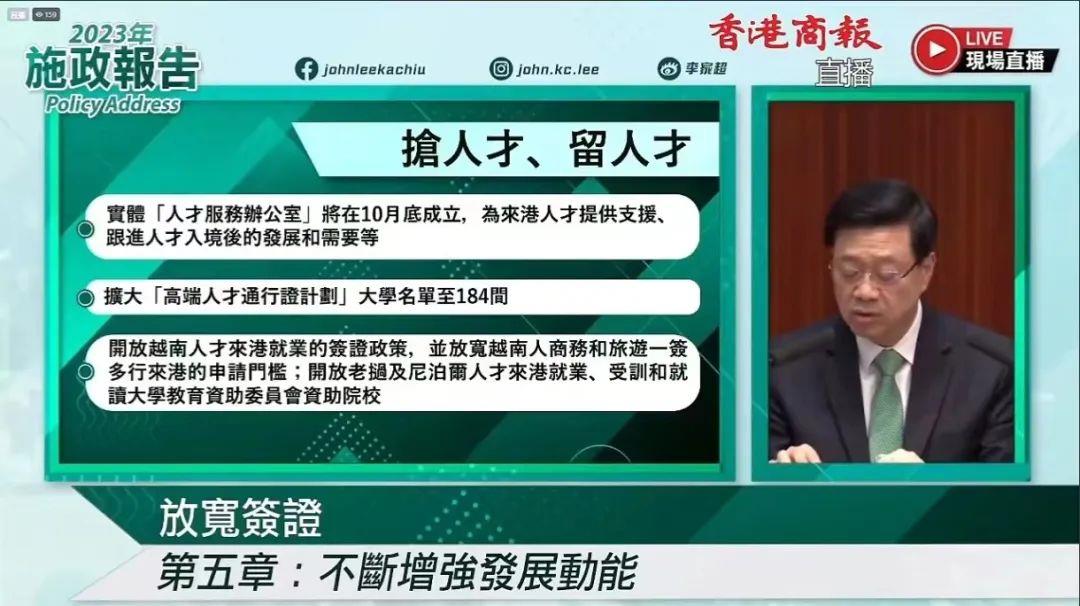
Hong Kong Policy Address — Attracting and Retaining Talent
The government is intensifying efforts to attract and retain global talent through the following measures:
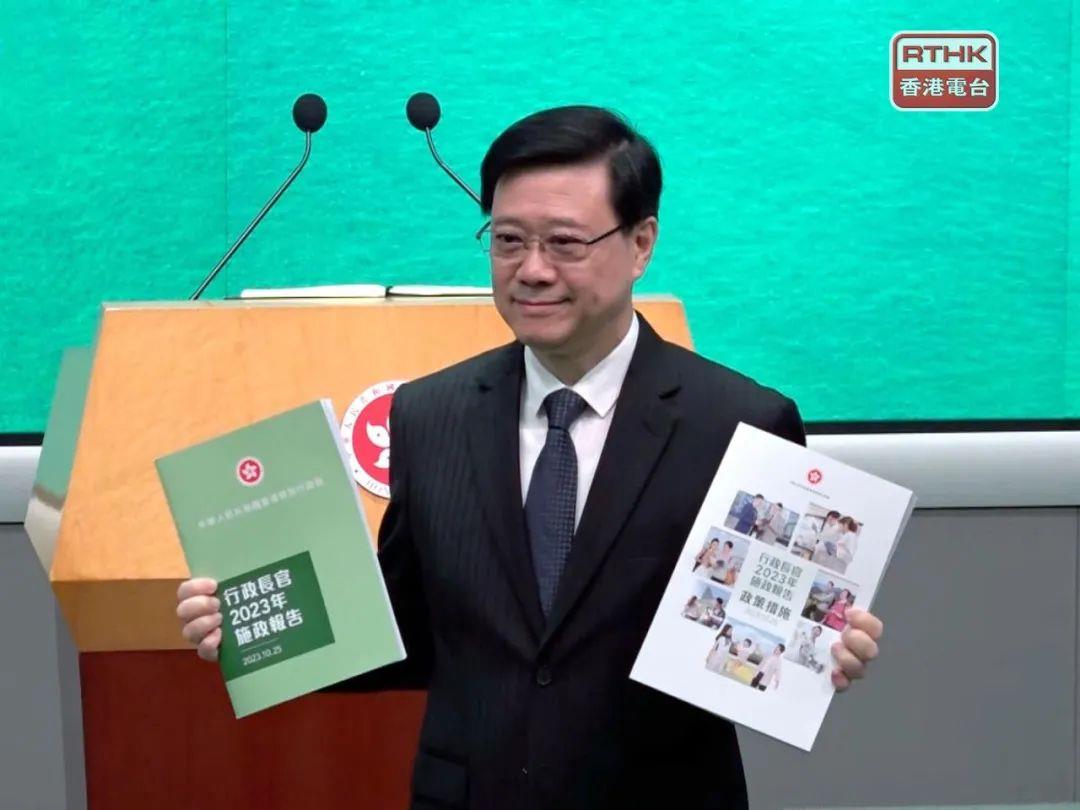
Establishment of a "Talent Services Office" — Following last year’s launch of the online “Talent Entry Gateway,” a physical “Talent Services Office” will officially open by the end of this month to support incoming talent and assist with post-arrival integration. In 2024, Hong Kong will host the “Global Talent Summit and Greater Bay Area High-Quality Talent Development Conference” to strengthen regional collaboration on talent acquisition.
Expansion of the Top Talent Pass Scheme’s Eligible University List — Starting November, the list of eligible institutions will expand by eight leading mainland and overseas universities, bringing the total to 184, broadening Hong Kong’s global talent network.
Visa Relaxations — Effective immediately, employment visa policies for Vietnamese nationals are now open, and eligibility criteria for multiple-entry business and tourism visas for Vietnamese visitors have been relaxed. Additionally, professionals, trainees, and students from Laos and Nepal will be allowed to work, train, or study at UGC-funded universities in Hong Kong.
Reintroduction of the Capital Investment Entrant Scheme — Qualified investors who invest HK$30 million or more in designated assets such as stocks, funds, and bonds (excluding real estate) may apply to reside in Hong Kong. This aims to boost Hong Kong’s advantages in asset and wealth management, financial services, and related professional sectors. Further details will be announced before year-end.
Vocational Graduate Stay Scheme — To alleviate manpower shortages in technical industries, non-local students enrolled in specified full-time Higher Diploma programs at the Vocational Training Council (VTC) from the 2024/25 academic year onward can stay in Hong Kong for one year after graduation to seek relevant employment. The scheme will be piloted for two years before review.
Establishment of the Hong Kong International Legal Talent Institute — A dedicated office and expert committee will be set up within the year to establish the institute, leveraging Hong Kong’s bilingual common law system and international connectivity. It will regularly organize practical legal training, seminars, and international exchange programs, promoting talent exchanges along the Belt and Road and cultivating legal professionals proficient in international law, common law, civil law, and Chinese legal systems.
Establishment of the Hong Kong International Academy for Integrity — The Independent Commission Against Corruption (ICAC) will launch the academy in the first quarter of next year to provide professional anti-corruption training for personnel from public and private sectors locally and globally. It will facilitate knowledge exchange among integrity experts worldwide, reinforcing Hong Kong’s international standing in anti-corruption governance.
As seen above, current talent initiatives largely continue previous frameworks. There are no changes to the QMAS for now; the main update to the TTPS is the expansion of the university list by eight institutions—though the specific names have not yet been disclosed.
The capital investment immigration scheme will be relaunched later this year, and visa restrictions for non-local graduates have been eased.
Below is a summary of the latest policy updates and application requirements for Hong Kong’s major talent admission routes—QMAS, TTPS, ASMTP, and study-based pathways. If you meet the criteria, consider applying soon!
I. Top Talent Pass Scheme (TTPS)
The Hong Kong Top Talent Pass Scheme (TTPS), launched in late 2022, aims to attract high-caliber global talent to Hong Kong, including high-income individuals and graduates from world-renowned universities.
1. Eligibility Criteria
■ Category A: Annual income of HK$2.5 million or more (or equivalent in foreign currency) in the year preceding application
■ Category B: Bachelor’s degree from a globally top 100 university, with at least 3 years of work experience within the 5 years preceding application
■ Category C: Bachelor’s degree from a globally top 100 university within the past 5 years, with less than 3 years of work experience (annual quota: 10,000)
2. Quotas
No quota for Categories A and B. Category C is capped at 10,000 per year.
3. Processing Time
Typically 4 weeks, but due to high demand, many applications now take 1–2 months, especially for Category A due to more complex documentation.
4. Policy Updates
① Reduced deadline for payment and visa activation from 6 months to 3 months.
② Criminal record certificate required.
③ Adult higher education degrees no longer accepted for Categories B and C, including but not limited to top-up degrees, online education, correspondence courses, distance learning, and evening programs.
④ Application form updates: Two new mandatory fields added—“Sector” (for Category A) and “Major Subject” (for Categories B/C).
⑤ Consent letter for entry into Hong Kong must be stamped by the applicant’s current employer. Unemployed applicants may use a stamp from a talent center.
Given that the TTPS is subject to ongoing review, early planning is recommended.
II. Quality Migrant Admission Scheme (QMAS)
Launched in June 2006, the QMAS previously had an annual quota. However, starting in 2023, the quota has been suspended for two years, meaning there is currently no cap on approvals. As long as you qualify as talent needed by Hong Kong, you are welcome!
1. Basic Eligibility
Age: 18 or above;
Financial capacity: Proof of personal assets of HK$200,000 or family assets of HK$300,000;
Character: No criminal record or adverse immigration history;
Language: Proficiency in spoken and written Mandarin, Cantonese, or English;
Education: Bachelor’s degree or higher.
2. Scoring Systems (Choose One)
After meeting basic criteria, applicants choose between two scoring systems:
Attained Achievement Points Test: Full score of 245 points if either of the following is met; otherwise, ineligible:
-
Applicant has received outstanding awards (e.g., Olympic medals, Nobel Prize, national/international honors);
-
Applicant can demonstrate peer recognition or substantial contribution to their field (e.g., lifetime achievement award).
-
General Points Test: Scored based on age (max 30), educational qualifications (max 70), work experience (max 75), presence on the talent list (max 30), language ability (max 20), and family background (max 20). Total possible: 245 points. Minimum qualifying score: 80.
3. Quota
No quota from January 1, 2023, for two years. Future policy remains under review—this is a golden window for eligible candidates.
4. Processing Time
5–9 months. The QMAS application and approval process has been streamlined, resulting in faster processing.
5. Policy Updates
-
Quota removed: Previously capped at 4,000 annually; now unlimited for two years.
-
Maximum score increased from 225 to 245, though minimum threshold remains 80.
-
Bonus of 20 points for work experience at renowned companies (e.g., Fortune 500 or listed firms) of 3+ years.
-
Renewal pattern changed from 2+3+3 to 3+3+2—first visa now valid for 3 years.
-
Document requirements updated: Overseas transcripts no longer need to be sealed; no criminal record certificate required.
-
Processing time shortened to 5–9 months.
-
Interview requirement eliminated.
-
Expanded talent list from 13 to 51 professions.
-
Enhanced online application system: Applicants cannot submit unless they meet basic eligibility and minimum score thresholds.
III. Admission of Mainland Talents & Professionals Scheme (ASMTP)
Mainland residents seeking employment in Hong Kong may apply under this scheme, which covers all industries. The ASMTP is exclusively for mainland Chinese citizens.
Unlike the QMAS, the ASMTP does not use a points system but requires a confirmed job offer from a Hong Kong company.
The ASMTP is essentially a work visa, ideal for those transferred from a mainland office to a Hong Kong branch or those who have secured a job offer and plan to settle in Hong Kong.
1. Eligibility Requirements:
No criminal record;
Good educational background, typically a bachelor’s degree in the relevant field. In exceptional cases, strong technical qualifications, proven professional competence, or documented experience and achievements may suffice;
A genuine job vacancy exists;
Applicant has secured a job offer in a role related to their qualifications or experience that cannot easily be filled by a local candidate;
Remuneration and benefits (including salary, housing, medical, and other perks) must be comparable to market levels for similar roles in Hong Kong.
2. Relaxed Application Conditions
If the position is on the list of 51 shortage occupations or offers an annual salary (including housing allowance and other benefits) of HK$2 million or more, the employer is exempt from proving local recruitment difficulties and may apply directly.
3. Processing Time
2–4 months. With accelerated processing, some cases are approved within 4 weeks.
4. Quota
No limit.
5. Policy Updates
Minor changes to the ASMTP:
① Exemption from proving local recruitment difficulty if:
1. Annual salary is HK$2 million or above;
2. Role falls within the 51 shortage occupations;
② Renewal pattern changed from 2+3+3 to 3+3+2—first visa now valid for 3 years.
IV. Study and Settle Pathway (Further Studies)
Non-local graduates may apply to stay or return to Hong Kong for up to two years under the IANG (Immigration Arrangements for Non-local Graduates) scheme to seek employment.
1. Eligibility
Age: 18 or above;
Education: Bachelor’s degree;
Language: Demonstrated English proficiency;
Character: No criminal record or adverse immigration history.
2. Suitable Candidates
Young individuals, parents of children born in Hong Kong (“double non-local” families), entrepreneurs, homemakers, and experienced professionals.
3. Processing Time
1–3 months, depending on university admission timelines.
4. Quota
No limit.
5. Policy Updates
① Extension of IANG visa duration from 12 months to 24 months;
② IANG eligibility expanded to graduates from Hong Kong universities’ campuses in the Greater Bay Area.
Currently, all major Hong Kong talent schemes—TTPS, QMAS, ASMTP, and study pathways—have no quotas (except for TTPS Category C, capped at 10,000/year). Hong Kong’s 2023 target was to attract 35,000 talents; over 60,000 have already arrived, surpassing the goal.
Join TechFlow official community to stay tuned
Telegram:https://t.me/TechFlowDaily
X (Twitter):https://x.com/TechFlowPost
X (Twitter) EN:https://x.com/BlockFlow_News












