









Game of Power: Could Bitcoin and Ethereum Become Irrelevant to Most Ordinary People in the Future?
TechFlow Selected TechFlow Selected
Game of Power: Could Bitcoin and Ethereum Become Irrelevant to Most Ordinary People in the Future?
Major native crypto assets such as Bitcoin and Ethereum will become special resources, like gold and oil, contested by the wealthy.
 Navigating Web3 tides with focused insights
Author | Mu Mu
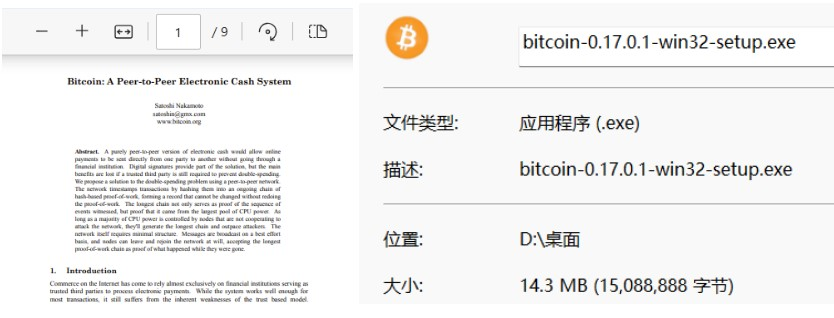
Over a decade ago, almost no one could have predicted that a mere 9-page document and a small 14MB software would unleash such massive waves. To many, Bitcoin's rise from nothing resembles the mythical "turning stones into gold"—a surreal transformation that still hasn't fully sunk in for countless people, yet it undeniably happened.
Today, Bitcoin has evolved from an intangible "air" asset into one of the major global financial powerhouses—something now out of reach for most. In the future, the gap between average individuals and assets like Bitcoin and its successor Ethereum may continue to widen...
More Large Institutions Are Entering and Accumulating, Leading to Tighter Future Supply-Demand Dynamics
As shown in previous articles by Baifa Blockchain titled What Has Happened to the Bitcoin “Whales” on the Billionaire List?, beyond crypto-native players, many corporate giants are now visible among known Bitcoin whales. Despite being in a bear market cycle for crypto assets, traditional financial titans remain determined to establish positions. In recent years, institutions such as BlackRock, Fidelity, VanEck, WisdomTree, and Invesco have filed applications with the U.S. SEC for spot Bitcoin and Ethereum ETFs. These financial behemoths, managing assets worth tens of trillions of dollars, signal that cryptocurrencies like Bitcoin and Ethereum have matured into "alternative assets" that global investors can no longer ignore—and have become essential components of their global multi-asset allocation strategies.
Of course, the application process for crypto spot ETFs on U.S. stock exchanges is also closely watched within the crypto industry, as it carries significant implications for the broader crypto market.
An increasing number of institutions—including listed companies, private enterprises, and asset management giants—are entering the space and accumulating tokens. In short, institutional interest—and that of their deep-pocketed clients—is growing steadily, while Bitcoin’s supply is capped and Ethereum has entered a deflationary supply regime. The future imbalance in supply and demand is evident.
The rules of the game are changing, and market influence is gradually shifting toward the hands of whales. As these whales battle for dominance, ordinary individuals appear increasingly powerless.
Public Chain Node Entry Barriers Are Rising Continuously
As Bitcoin’s total network hash rate hits new highs, the barrier to becoming a block producer keeps rising—this is undeniable. Bitcoin mining has escalated into a semiconductor technology arms race, and the competition for hash power continues to push chip innovation forward. And then there's one of humanity’s most fiercely contested resources: energy. Bitcoin’s energy consumption already rivals that of entire nations.
On Ethereum’s side, despite transitioning to the energy-efficient PoS consensus mechanism, the node entry threshold hasn’t actually decreased. Recently, Ethereum developers discussed raising the validator staking cap to 2048 ETH, citing two main reasons:
1) Excessive growth in the size of the validator set negatively impacts the Ethereum network (specifically, efficiency in finality);
2) Reducing the operational burden on large node operators (such as Lido and Coinbase, which manage tens of thousands of nodes). In short, PoS validators on Ethereum can begin lowering costs by increasing their stake amounts. Validators with smaller stakes face poor cost-to-return ratios and will thus be incentivized to increase their stakes—effectively raising the overall participation threshold.
Much like how Bitcoin miners compete via computing power and ever-upgraded chips to raise barriers, Ethereum PoS validators are directly increasing capital requirements, making it harder for ordinary users to achieve full yield returns.
On-chain Costs Soar, Users Shift to Layer 2, 3, 4…
With future widespread adoption of Web3—encompassing micro-payments, gaming, metaverse, social apps, and other high-frequency use cases—Bitcoin and Ethereum mainnets could easily become congested. Everyday activities like small swaps, social interactions, or gameplay already incur expensive on-chain transaction fees for regular users.
Meanwhile, competition among emerging Layer 2, Layer 3, and even higher-layer solutions will intensify. In the future, most routine user interactions and on-chain operations will likely occur on lower-cost Layer 2 or higher layers without sacrificing too much security. Ultimately, these upper-layer chains or major Web3 applications will batch-process transactions and pay the high fees required to settle on Bitcoin or Ethereum mainnets, thereby indirectly distributing the cost burden across everyday users.
Moreover, Layer 2 platforms and Web3 applications may not necessarily charge fees in native BTC or ETH. They might instead use their own tokens, USDT, or even fiat currencies to serve end users—meaning average users won’t need to hold BTC or ETH directly, avoiding exposure to price volatility.
Account Abstraction: Users May No Longer Need to Participate in On-chain Interactions
For most ordinary people, in an era of mass Web3 adoption, high-barrier crypto wallets won’t be mandatory. To address usability issues, the crypto community has recently advanced the concept of account abstraction. In the future, end users will primarily interact with Web3 and metaverse applications. Complex processes like on-chain transactions and interactions will be automatically handled ("outsourced") by these applications through protocols and cryptographic algorithms, while users’ assets and privacy data remain securely protected via encryption technologies.
This way, most individuals won’t even need to understand underlying blockchain technology—they’ll only care that services are reliable and secure.
Summary
With more giants entering the space, the rules of the crypto market are changing. Public blockchains—especially those with vast ecosystems like Bitcoin and Ethereum—are becoming increasingly difficult to access. Beyond the rising node operation costs, on-chain usage expenses are climbing too, making it extremely challenging for developers to build and compete within these ecosystems.
As foundational public infrastructure for Web3, major native crypto assets like Bitcoin and Ethereum are becoming scarce resources akin to gold or oil—fiercely contested by the wealthy elite. For the majority of ordinary people, direct participation may soon become unattainable.
Join TechFlow official community to stay tuned
Telegram:https://t.me/TechFlowDaily
X (Twitter):https://x.com/TechFlowPost
X (Twitter) EN:https://x.com/BlockFlow_News
 白话区块链
白话区块链











