Stanford Blockchain Research: Incorporating Bureaucracy into DAOs—How Traditional Governance Principles Are Reshaping New Organizations?
TechFlow Selected TechFlow Selected
Stanford Blockchain Research: Incorporating Bureaucracy into DAOs—How Traditional Governance Principles Are Reshaping New Organizations?
This article explores a theoretical and conceptual framework suggesting that integrating certain bureaucratic principles into DAO governance could address some of the challenges currently facing DAOs.
 Navigating Web3 tides with focused insights
Author: Poramin Insom
Translation: TechFlow
Note: This article is from the Stanford Blockchain Review. TechFlow is an official partner of the Stanford Blockchain Review and has been granted exclusive authorization to translate and republish this content.
Decentralized autonomous organizations (DAOs) are among the most fascinating innovations in blockchain-enabled collective organization. As interest in and adoption of DAOs grows, these leaderless digital communities must continuously prove their effectiveness and sustainability.
While DAOs are inherently decentralized by design, valuable lessons can be drawn from traditional bureaucratic governance models—known for stability, efficiency, and accountability. In this article, we explore a theoretical and conceptual framework showing how integrating certain bureaucratic principles into DAO governance could address some of the key challenges facing DAOs today.
The Structure of DAOs
DAOs, or decentralized autonomous organizations, enable groups to self-organize and make collective decisions through smart contracts on blockchains. DAOs lack centralized leadership—governance and operations are managed through pre-coded rules enforced on-chain.
To facilitate governance operations, DAOs typically issue tokens, granting users voting rights in exchange. These tokens can often also be traded on secondary markets and exchanges. For example, the Uniswap protocol has a UNI token that allows holders to vote on governance proposals.
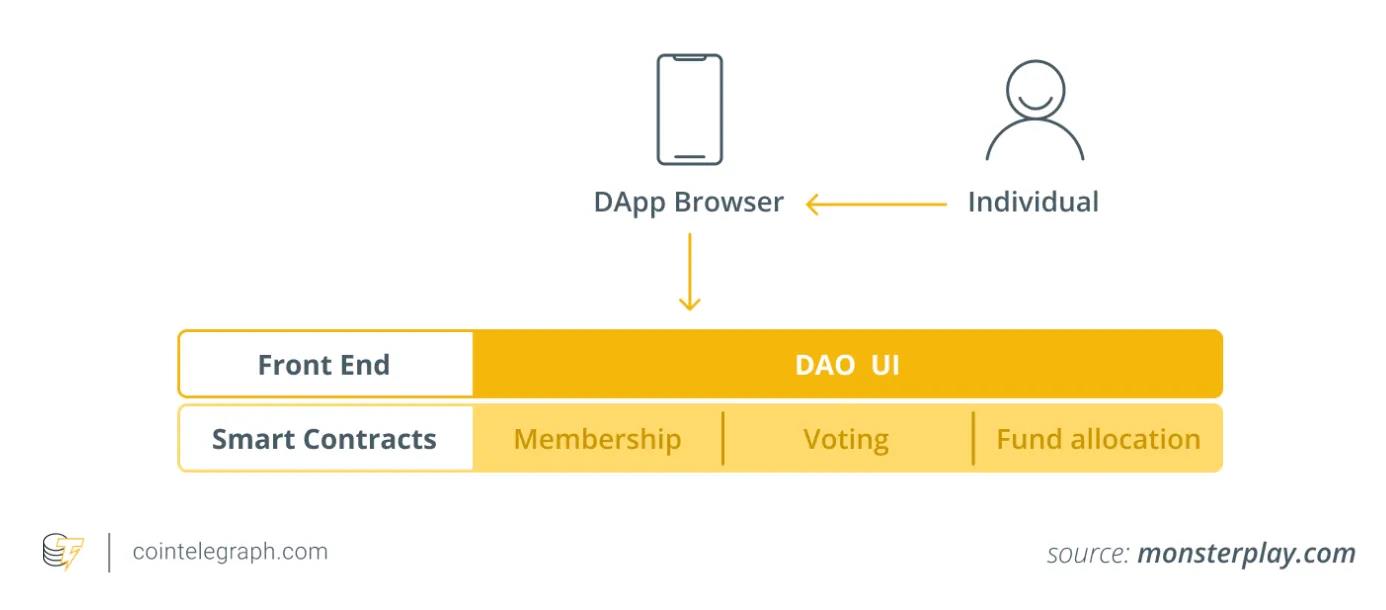
In governance processes, proposers typically present ideas on internal forums or tools like Snapshot, conducting temperature checks and gathering feedback from other voters. Once finalized, proposals move to on-chain voting, during which all DAO members holding governance tokens can express their preferences.
Despite the wide variety of DAOs in the blockchain space—from protocol DAOs like MakerDAO, to NFT DAOs like NounsDAO, to grant DAOs like GitcoinDAO—many decentralized governance systems face common issues.
One major responsibility of DAOs is ensuring the stewardship of collective assets. As user bases and financial resources grow—whether through token sales or successful protocol operations—DAOs need to manage their capital like companies to achieve long-term success. Moreover, because DAO balance sheets often consist of volatile assets such as tokens, NFTs, and other digital assets, they must implement risk management practices to maintain solvency and operational viability. A third area of governance commonly found in DAOs is asset curation, as seen in PleasrDAO, where members act as curators of digital art and culture. Essentially, DAO members vote on whether new items should be added to the collection or existing assets removed.
Despite their increasing importance in blockchain decision-making, today’s DAOs face challenges such as decision deadlocks, lack of accountability, and difficulty resolving conflicts. Exploring how traditional bureaucratic governance principles can help us better understand how to make DAOs more efficient and effective as decentralized governance entities—both within the blockchain space and beyond—is therefore essential.
An Overview of Weberian Bureaucracy Theory
To understand how bureaucratic principles can enhance DAOs, we must first grasp the defining characteristics of bureaucracy. In this regard, German sociologist Max Weber was one of the first to formalize the study of bureaucracy and define its core features.
In Weber’s ideal bureaucracy, there is a clear hierarchy, specialized roles, established procedures, and a well-defined system of control and command. This enables bureaucracies to efficiently execute complex tasks.
Key principles of bureaucratic governance include:
-
Hierarchy — A clear chain of command where higher levels supervise and guide lower ones.
-
Division of labor — Breaking down activities into specialized, routine tasks assigned to distinct positions.
-
Formal rules and procedures — Operations follow predefined, written protocols.
-
Merit-based hiring and promotion — Selection and advancement based on technical qualifications assessed through standardized criteria.
-
Impartiality — Rules applied uniformly, without bias or favoritism.
-
Regulation — All relevant decisions and authorities must comply with established regulations.
Today, bureaucratic structures are widespread in organizations coordinating large-scale entities—including governments, militaries, and multinational corporations—due to their ability to establish highly ordered operational systems.
As DAOs grow in both scale and complexity, integrating these bureaucratic governance and organizational principles may enable them to effectively coordinate more people and resources. However, bureaucracies also suffer from rigidity, red tape, and difficulty adapting to change. Therefore, we must carefully consider which elements of bureaucratic operation can be integrated into decentralized governance processes.
Integrating Bureaucracy into DAOs
Integrating bureaucratic principles into decentralized organizations may seem counterintuitive at first glance, but closer examination reveals targeted opportunities for adaptation. Through careful implementation, certain bureaucratic elements can enhance DAO governance and operations. While the principles below are not exhaustive, they represent a starting point for exploring how DAOs might integrate bureaucratic governance to improve operational efficiency.
Implementing Merit-Based Reputation Systems
Bureaucratic organizations often use merit-based systems for promotions. Similarly, DAOs can develop more nuanced reputation systems to reward value creators.
For instance, reputation could be earned through long-term participation, technical contributions, or well-reasoned governance proposals. Higher reputation could confer greater voting influence. This would incentivize committed members while reducing apathy and governance dominance by small factions.
Formalizing Conflict Resolution Procedures
Conflicts often paralyze DAOs lacking structured resolution frameworks. Introducing a tiered conflict resolution process can alleviate deadlocks.
DAOs offer a new form of accountability through transparency and immutable records of actions on the blockchain. In dispute resolution, on-chain activity and records can serve as evidence for arbitration.
Initially, disputes could undergo structured mediation between involved parties. If unresolved, community voting could follow. For more serious conflicts, cryptographically secured arbitration could provide a final remedy.
Such a multi-stage framework would maintain community engagement while introducing procedural formality. It resembles bureaucratic structures that balance hierarchy with shared governance.
Balancing Structure and Decentralization
Integrating the above elements risks over-bureaucratizing DAO governance. Therefore, decentralization must remain fundamental. Bureaucracy can serve as scaffolding to support DAO scaling, avoiding rigid centralization incompatible with DAO principles.
For example, working groups could form organically based on community-identified needs rather than being imposed top-down. Merit-based reputation should not entirely override equal standing among members. The community should retain the power to approve and modify conflict resolution procedures.
By thoughtfully balancing bureaucratic integration with decentralization, DAOs can evolve governance systems that draw on the best of both paradigms. This hybrid approach promises greater scalability and versatility for DAOs while preserving their core ethos.
Open Questions and Societal Implications for DAOs
Combining bureaucratic principles with decentralized organizations ventures into uncharted territory. It will require experimentation and may produce unforeseen challenges.
Crucially, adapting bureaucratic practices must not undermine the foundational decentralization and transparency of DAOs. Imposing rigid, top-down structures contradicts the spirit of DAOs and would be counterproductive. The goal should be to prudently supplement DAO governance—not replace it.
The legal recognition of DAOs requires careful consideration. Regulators may be more inclined to recognize DAOs that demonstrate mature governance through identifiable bureaucratic forms. Yet legal enforceability around issues like dispute resolution and contract execution remains challenging, as these areas remain relatively unexplored legally.
More broadly, integrating bureaucratic principles into DAO governance has several potential philosophical and societal implications. This includes theoretical discussions in organizational theory about how organizational forms adapt to technological innovations like blockchain, as well as practical applications involving the integration of blockchain into existing bureaucratic systems such as public administration and corporate governance at scale.
DAOs and their decentralized nature raise fundamental questions about how we organize and govern collective action. By studying how bureaucratic principles apply to DAOs, we may open broader conversations about the future of governance in a digital, decentralized world.
The expanding landscape of DAOs provides an ideal testbed for pioneering new organizational systems. It invites us to rethink how traditional governance principles can be reshaped within the context of digital communities, virtual worlds, and the metaverse. This could yield critical insights into how accountability, fairness, and democratic participation can be ensured in these emerging digital environments.
Join TechFlow official community to stay tuned
Telegram:https://t.me/TechFlowDaily
X (Twitter):https://x.com/TechFlowPost
X (Twitter) EN:https://x.com/BlockFlow_News
 Stanford Blockchain Club