MARA CEO: The Bitcoin halving narrative is a fantasy, but Bitcoin is the best Layer 1
TechFlow Selected TechFlow Selected
MARA CEO: The Bitcoin halving narrative is a fantasy, but Bitcoin is the best Layer 1
We must recognize that Bitcoin's network effect is a double-edged sword.
 Navigating Web3 tides with focused insights
By: ZK
Fred Thiel, CEO of Marathon Digital Holdings—one of the largest Bitcoin mining companies—recently stated in an interview that he does not believe in the so-called "halving bull market," calling it a "fantasy."

Marathon Digital Holdings is one of the largest, most energy-efficient, and technologically advanced Bitcoin mining firms. It is also among the biggest publicly listed holders of Bitcoin in North America, founded in February 2010.
Bitcoin Halving and Miner Survival

On September 6, Fred Thiel, CEO of Marathon Digital Holdings, appeared on Brave New Coin’s online interview program. When asked how miners should navigate the halving, Thiel said: “We can’t control Bitcoin’s price or global mining hash rate—we can only focus on our own mining efficiency and financials. We hold about 39,000 BTC and $1 million in cash. If prices don’t improve significantly post-halving, we will continue selling our mined Bitcoin until 2026. If prices rise as they did during the previous two halvings, that would be favorable for miners. But I don’t think this will happen. Bitcoin’s price is more closely tied to trading activity and liquidity cycles than to halving events. Perhaps the U.S. dollar will collapse and save us; otherwise, we’ll be selling off our Bitcoin reserves for a while.”
Thiel explained: “A reduction in block rewards from 9 BTC to 4 BTC doesn’t have a major impact on the trading market. However, if prices don’t rise, many miners will exit due to unprofitability, leading to a drop in network hash rate. At that point, mining efficiency becomes the key factor. Over the next decade, Bitcoin will undergo two more halvings, reducing block rewards to less than 2 BTC per block. I hope Bitcoin gains wider adoption during this time, boosting transaction fee revenue for miners.”
Thiel’s view largely reflects the broader miner sentiment: without profitability, miners are forced to sell and eventually leave Bitcoin.
This also hints at another looming scenario: if more profitable opportunities arise, miners may abandon the Bitcoin network altogether—such as migrating to networks like Ethereum.
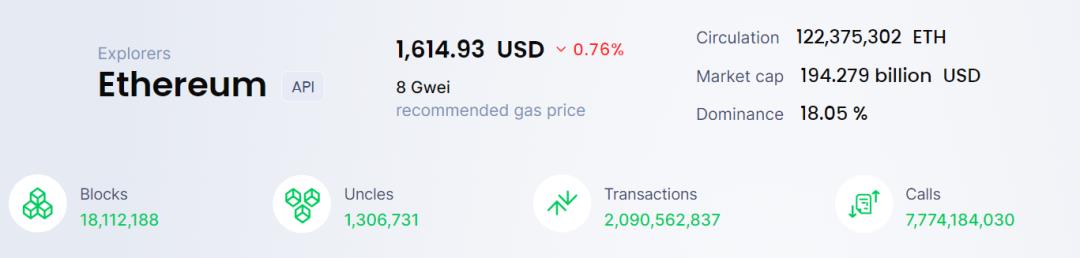
Bitcoin emerged nearly eight years before Ethereum, yet its on-chain transaction volume is less than half of Ethereum’s.
How Significant Are These Earnings?
Running an Ethereum validator requires staking 32 ETH. With liquid staking platforms like Lido, the effective cost for validators can be reduced to just 1 ETH, plus minimal hardware expenses, yielding annual returns between 5% and 20% in crypto terms. Lowering validator costs also enhances network decentralization.

Coinbase, a U.S. exchange, built its Base chain using Ethereum’s Layer 2 Optimism OP Stack technology. The transaction fees generated by social applications like Friend.tech on Base already exceed the total transaction fees of the entire Bitcoin network.
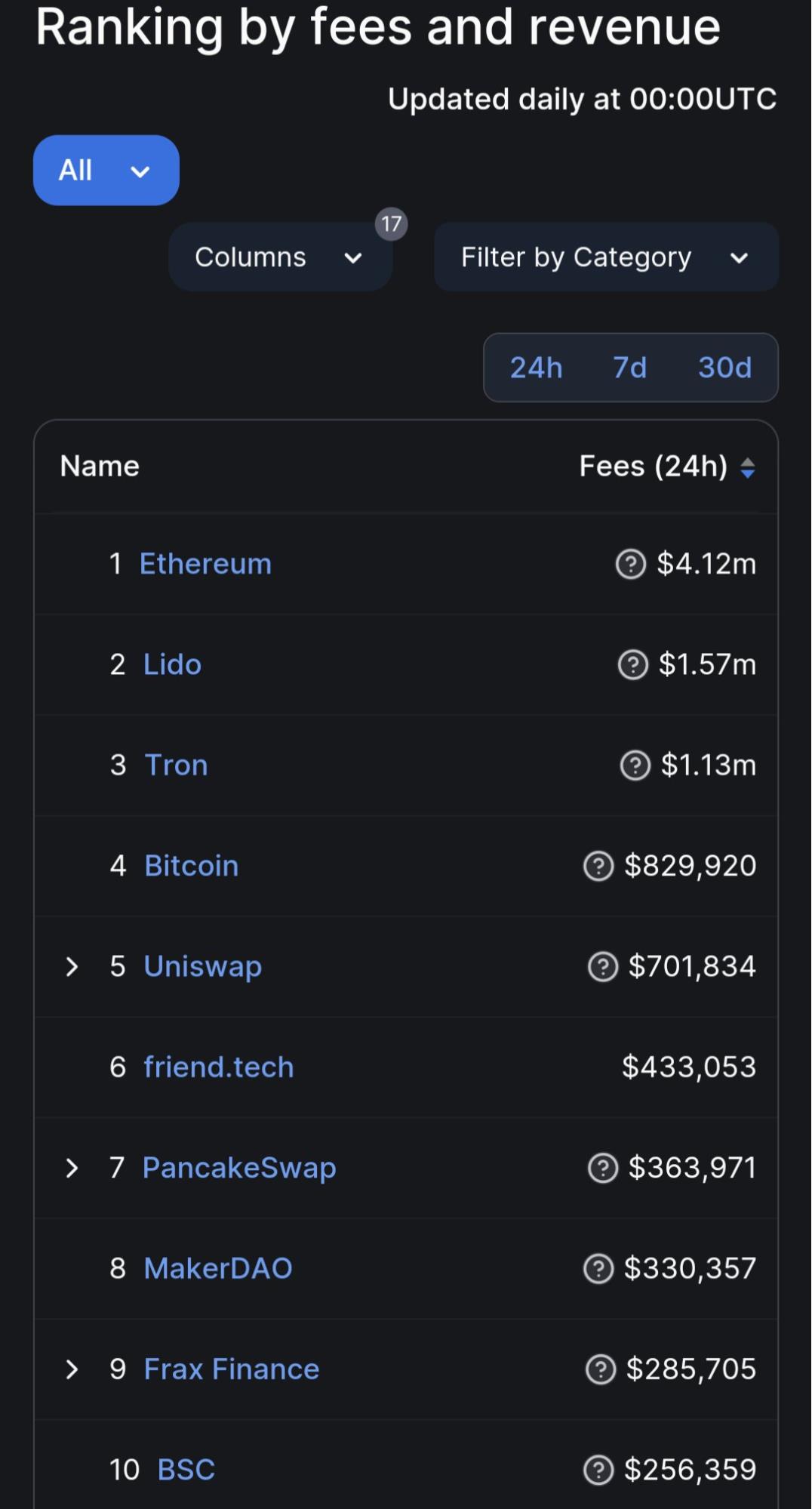
More comparisons can be found at https://cryptofees.info/, where Ethereum’s ecosystem clearly outperforms Bitcoin in revenue generation.
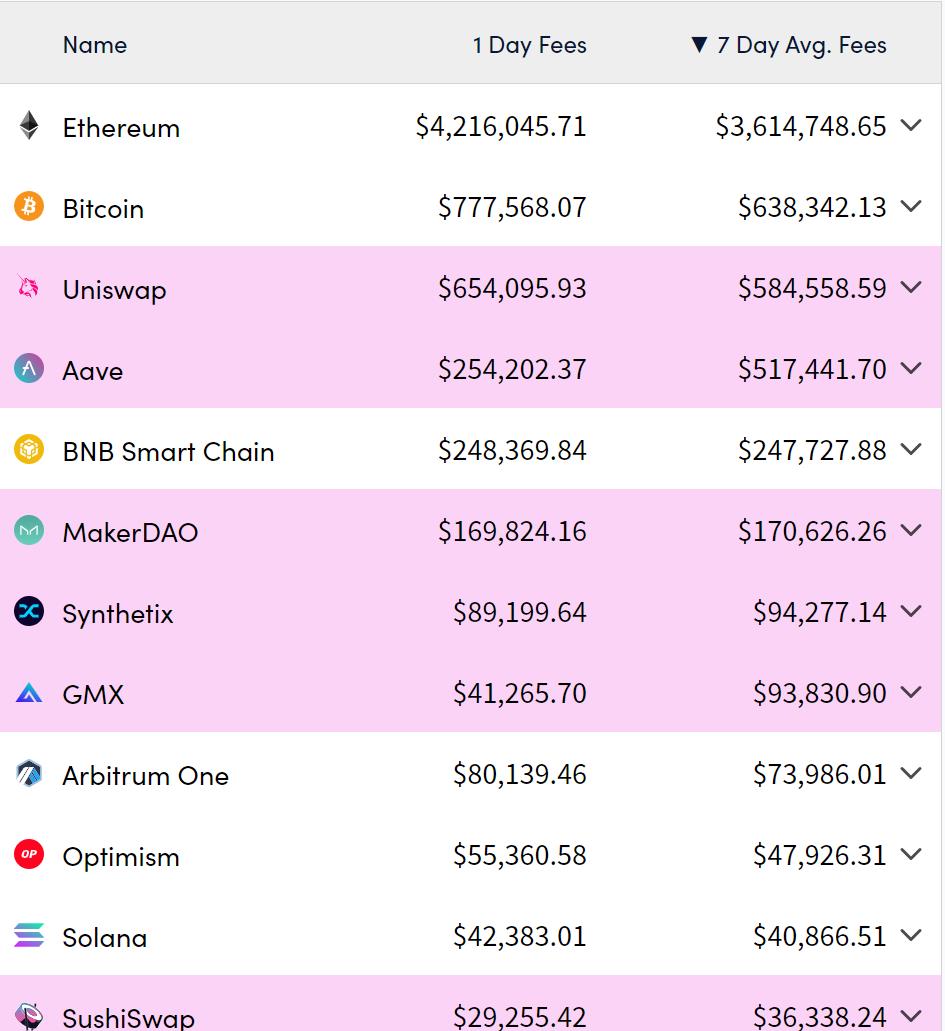
Bitcoin-based transactions are too few and are further diminished by CEXs and the Lightning Network. In contrast, while Ethereum’s ecosystem thrives, Bitcoin miners face imminent reward halving. Faced with such data—low investment and high returns on one side, high investment and declining rewards on the other—it’s hard to prevent miners from wavering.
Crypto users eagerly anticipate the Bitcoin halving, while miners can only hope for a collapsing U.S. dollar to save them. This is ironic: a decentralized cryptocurrency isn’t striving to improve itself but instead waiting for its competitor to weaken.
Bitcoin Is the Best Layer 1
Bitcoin isn’t without solutions. In the same interview, Fred Thiel expressed this view: “I believe Bitcoin is the best Layer 1, capable of supporting various innovative applications on top of it.”
This reflects a common belief among miners: increased Bitcoin-based transactions will benefit miners, whose core role remains mining and transaction validation.
Bitcoin being the best Layer 1 depends on one premise: it must remain the most secure network to serve as the ultimate settlement layer. Network security is directly proportional to hash rate and miner profitability. Therefore, scaling Bitcoin is the only viable solution.
Network scaling → Higher miner revenue → More miners join → Improved security → Increased user adoption → Higher miner revenue
Just as network security must be preserved, scaling cannot rely on horizontal expansion methods like Web 2—such as larger blocks—because these increase the cost of running Bitcoin nodes, undermining decentralization and security.
Where there is Layer 1, there must be Layer 2. Vertical, layered scaling is the effective way to address blockchain’s trilemma: Layer 1 ensures security and decentralization, while Layer 2 delivers scalability and performance, providing the economic incentives necessary for long-term network security.
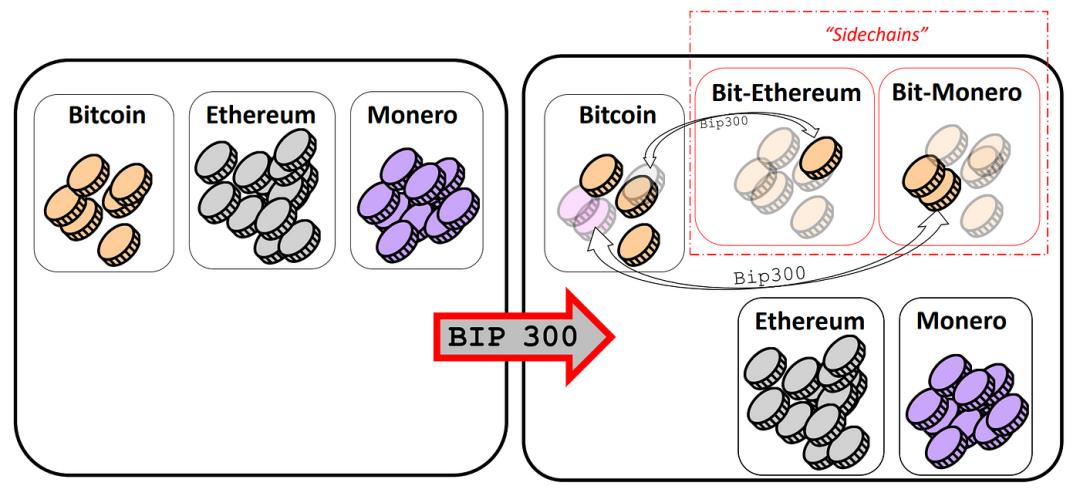
BIP-300/301 enables DriveChain to unlock Bitcoin’s full potential as the optimal Layer 1. Satoshi Nakamoto himself designed such functionality back in 2010—merge mining is an implicit endorsement of sidechains.
Bitcoin as the best Layer 1, combined with layered and sidechain-based scaling, forms a symbiotic ecosystem—where all parts thrive or suffer together.
DriveChain Unlocks Bitcoin’s Value
DriveChain offers a secure and simple method for layered scaling of Bitcoin, meeting diverse needs across the ecosystem.
For developers, DriveChain provides access to Bitcoin’s immense value and network effects at minimal cost, with full design autonomy.
For Bitcoin holders, DriveChain unlocks greater utility and appreciation potential, fully realizing Bitcoin’s monetary and asset properties.
Bitcoin miners gain sustainable and substantial income from a thriving sidechain ecosystem, ensuring the long-term health and stability of the Bitcoin network.
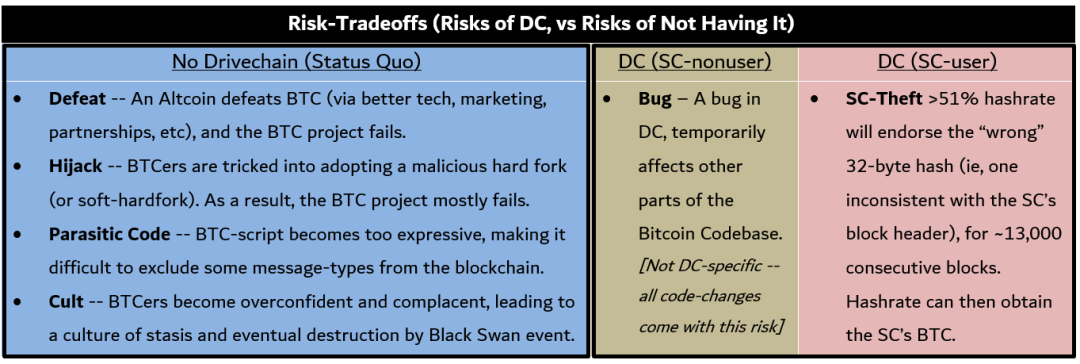
We must recognize that Bitcoin’s network effect is a double-edged sword. After Bitcoin’s success, maximalists became known for their almost religious fervor—this enthusiasm fueled strong network effects but also blinded some: long-term exposure to powerful network effects has instilled in some holders a sense of superiority, making them dismissive of criticism and blind to Bitcoin’s shortcomings.

Compared to miners who monitor Bitcoin usage data daily, these maximalists are out of touch. They believe nothing needs to change—that challenges will simply vanish under the weight of network effects—and lack urgency or motivation to drive innovation. Worse, they fear change, worried that any misstep could damage the network’s reputation.
When innovation meets network effects, their combined impact expands rapidly—like suppressed desires finally finding release. This explosive energy must be channeled properly. Bitcoin’s immense value deserves to be used wisely.
Join TechFlow official community to stay tuned
Telegram:https://t.me/TechFlowDaily
X (Twitter):https://x.com/TechFlowPost
X (Twitter) EN:https://x.com/BlockFlow_News
 LayerTwo Labs