








Token2049 Observations: The East Rises as the West Falls, Industry Gossip, and the Business of Hosting Conferences
TechFlow Selected TechFlow Selected
Token2049 Observations: The East Rises as the West Falls, Industry Gossip, and the Business of Hosting Conferences
How much money did the Token2049 organizers actually make?
 Navigating Web3 tides with focused insights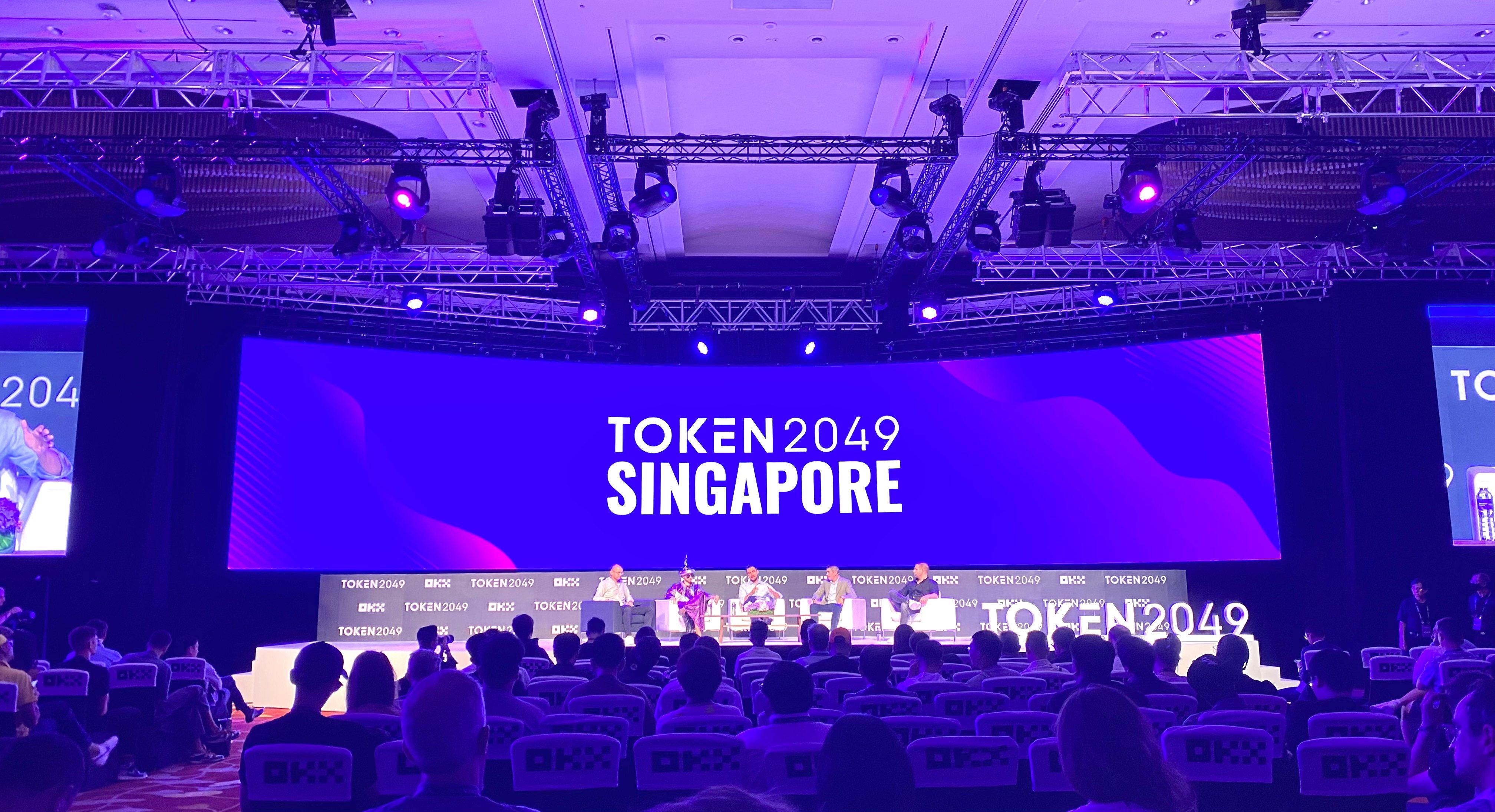
Author: Xiao Ming, a post-00s founder of TechFlow
Token2049 Singapore has ended—this might be the most information-packed short essay you'll read.
How much money did the organizers actually make? What juicy gossip came out of this Singapore event? And what do crypto heavyweights think about next year’s market outlook?
Let's go!
East Rising, West Declining
"People everywhere…"
Token2049 was packed—whether it was the main venue or various side events, every corner was overflowing. You couldn’t help but say “WTF, is this really a bear market?”
It wasn't just Chinese, Koreans, Japanese, and Southeast Asians—the event also attracted large numbers of top-tier project teams, VCs, and KOLs from Europe and the U.S. Compared to Hong Kong’s events, Singapore truly deserves the label "international."
We randomly chatted with some overseas attendees. The consensus? U.S. regulators are cracking down hard on crypto, dramatically increasing policy risks. The Asia-Pacific region has become a new frontier of freedom—everyone’s here chasing capital and users.
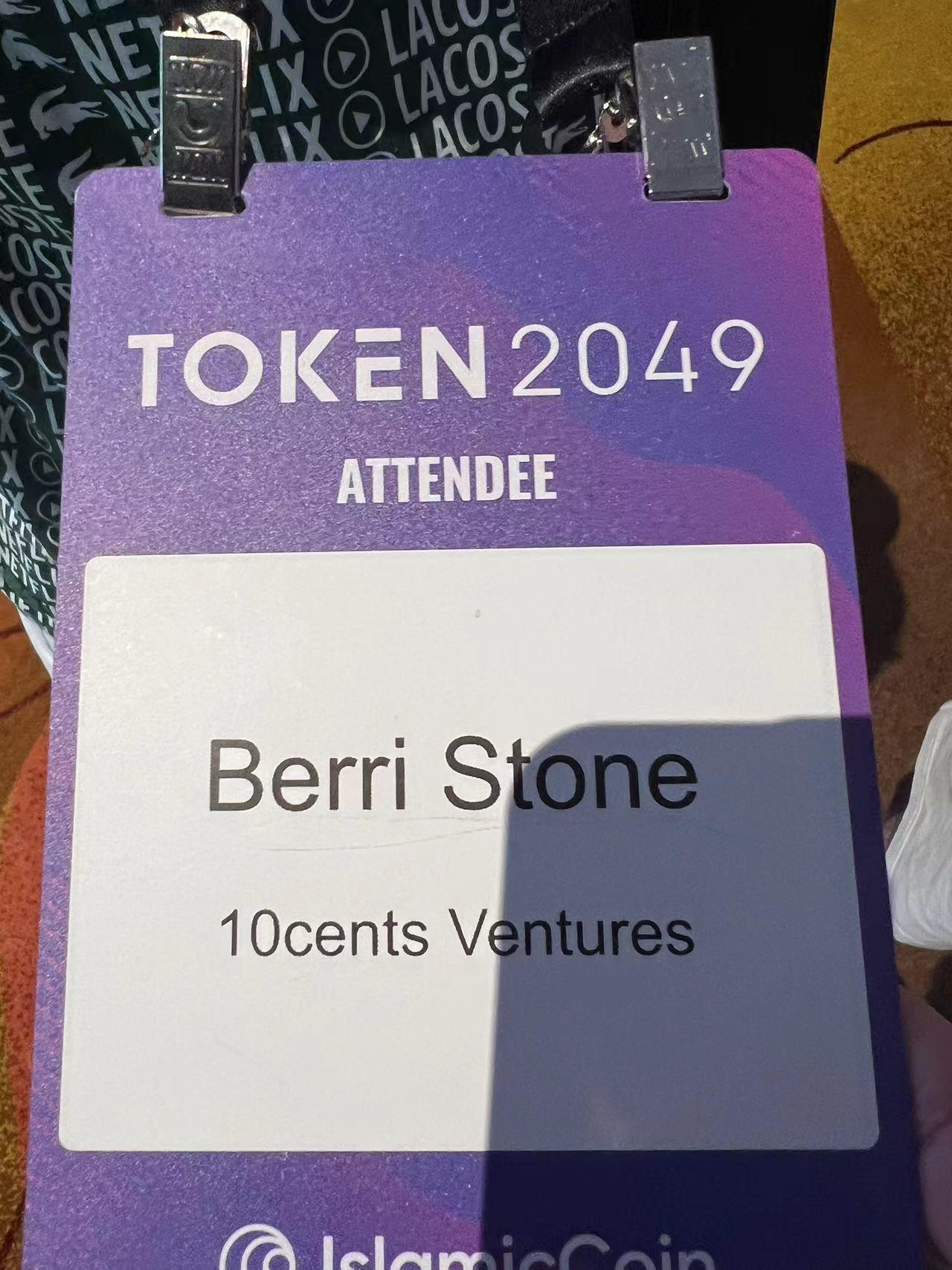
Here’s a funny anecdote: A friend runs a crypto VC named “10Cents Ventures.” To his surprise, numerous overseas startup founders approached him pitching their projects, hoping for investment—because they mistook “10Cents” for “Tencent Ventures.”
Just months ago, anyone talking about an “east rising, west declining” trend in crypto would’ve been mocked. But Token2049 clearly positioned Singapore as the global capital of cryptocurrency.
While the industry’s top VCs and projects still originate in the U.S., more and more teams are now looking outward, actively expanding into Asia-Pacific markets.
Token2049 was so massive that Permissionless II, held simultaneously in the U.S., felt awkwardly underwhelming. Friends attending reported that Permissionless saw significantly fewer attendees, leaving some sponsors visibly unhappy.

An unconfirmed rumor from a well-known project team suggests that major conferences like Consensus may soon consider moving to Asia. Back in 2018, CoinDesk even attempted to host a Consensus Singapore edition.
Devcon 2024 will choose between Thailand and Vietnam. It’s clear that the world’s most important blockchain conferences will increasingly center in Asia.
How Much Did the Organizers Earn?
While attending, I kept marveling at the crowd size and wondering: “Just how much money did the organizers make?”
The main event had over 10,000 registered attendees and more than 400 sponsors…
While visiting booths, I tried to find out sponsorship pricing—it varied widely. Depending on booth size and location, prices ranged from $10,000 to $30,000, $50,000, $70,000, and beyond. Prime naming rights and large-scale banners cost astronomical sums.
After the event, I heard different figures from multiple sources—one claimed the organizers made $30 million; another said around $15 million. The latter seems more accurate, and still highly impressive.
The first Token2049 in 2018 had only about 1,000 attendees. In five years, attendance grew tenfold, now surpassing long-standing U.S. and China-based crypto conferences like Consensus and Wanxiang Blockchain Summit in popularity.
Behind this success lies not just individual effort, but historical momentum. The real turning point was 2022, when Singapore leapt ahead as the Asia-Pacific Web3 hub.
In 2023, the U.S. regulatory crackdown intensified, pushing many Web3 projects to consider relocating. This conference saw over 15% of registrants coming from the U.S.
Token2049 Singapore’s rise is tightly linked to the nation itself—benefiting directly from the crypto regulatory divide and geopolitical shifts between China and the U.S.
Like the rise of many exchanges, Token2049 succeeded by waiting for competitors to falter, seizing the opportunity, and essentially winning by default.
Next year, Token2049 will expand beyond Singapore to Dubai. Originally, the UK was supposed to host the second location, but after the 2022 London edition flopped, it was canceled for this year.
Dubai is another growing Web3 hub, and offers visa-free entry for Chinese citizens. To make money hosting events, you still need the Chinese community.
Awkward Speakers
What’s the real purpose of attending blockchain conferences around the world all year round?
Some come to raise funds, others for marketing or business development, some just for travel and social media posts, or to meet old friends—but probably very few are actually there to listen to talks.
This creates an awkward scene common to all blockchain conferences: a crowd chatting socially outside the main hall, while only a few people inside are half-listening to speeches while playing on their phones. When the outdoor crowd gets tired, they drift in to sit and rest—the speaker onstage reduced to background noise.
Before Token2049 officially kicked off, I attended an event where the panelists were exceptionally high-caliber—founders from top industry projects. Yet the audience was sparse, with only one-third of seats filled. Most people weren’t even inside—they were outside networking.
In that moment, my social anxiety kicked in. I quickly rushed to the front row, stared intently at the speaker, pretending to listen carefully—even though I didn’t fully understand—just to avoid making him feel too awkward. I wanted to give him some emotional support.
A special shoutout to our media peers at BlockBeats, who sent over 10 reporters and editors to cover Token2049, diligently recording speeches, translating them into Chinese in real time, and distributing content immediately.
Even though we all know these events eventually turn into pure networking, we still wanted to create something meaningful. Together with QuestN and imToken, we hosted a Web3 growth event called “GM Singapore,” featuring distinguished guests including Liang Xinjun, co-founder of Fosun Group, and Amanda, former CMO of ConsenSys and Ethereum’s first-ever marketing lead.
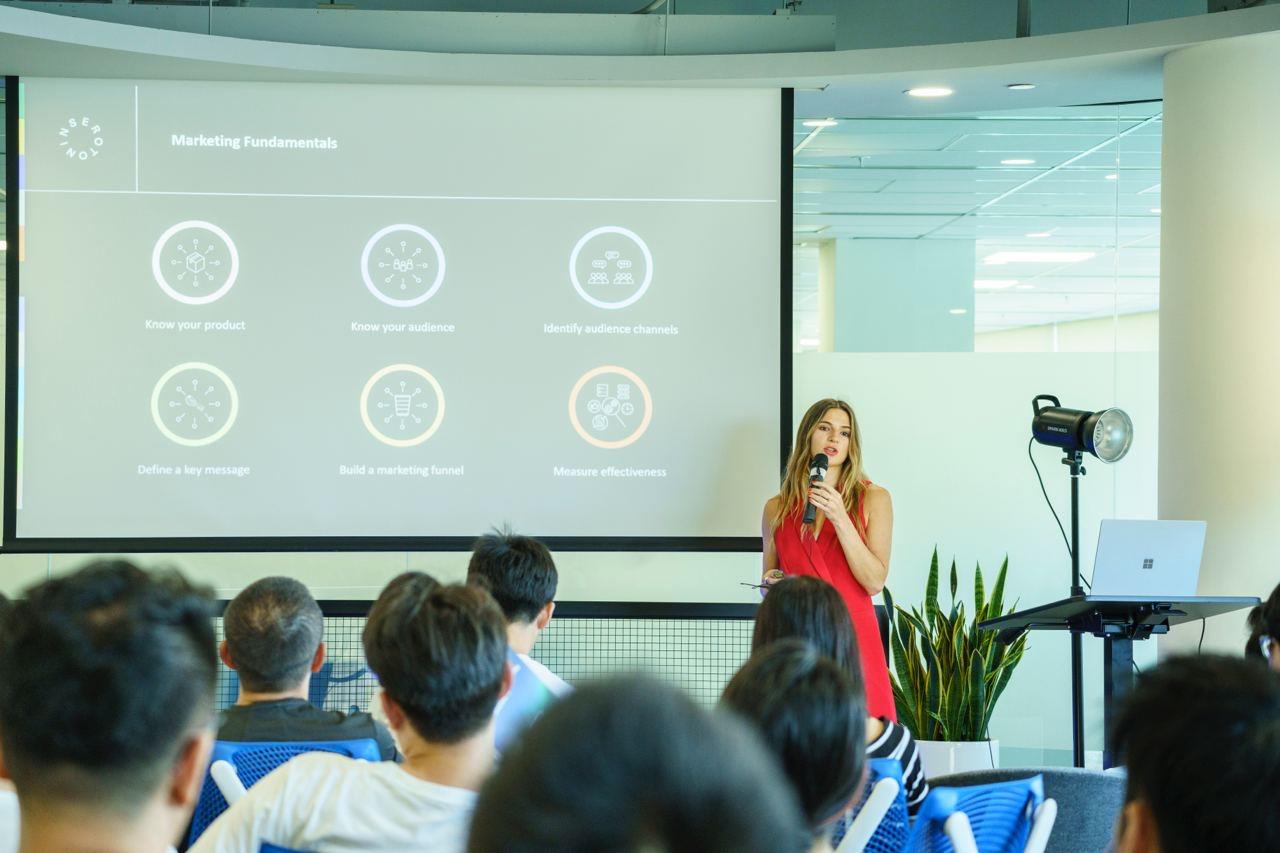
Originally planned for around 100 people, we received over 1,000 registrations. Due to space limits, we approved less than half, but still had to implement temporary crowd control mid-event to stop further entry.
During the event, we couldn’t prevent plenty of attendees from chatting, nor did we want to. But a significant number stayed through all four hours—ten presentations and two panels. To them, we say: Respect!
Industry Gossip
Wherever people gather, there’s drama. Where there’s drama, there’s gossip.
For an industry largely built on remote work, in-person conferences naturally become the best venues for sharing insider news.
Compared to Shanghai or Hong Kong, where gossip circles remain mostly within the Chinese community, Singapore offers a far more international flavor—ranging from massive regulatory fines to underground romances and scandals among staff at major overseas VCs.
Chinese-centric gossip tends to be more traditional: who got arrested and how much it cost to get out; how much another fund lost in secondary markets; internal power struggles; two partners at a VC suddenly quitting together…
Friends based in Singapore agree: staying there long-term can get boring, and local gossip is scarce.
Despite being surrounded by crypto elites, deep down many of these leaders harbor a “dream of returning home”—hoping one day to return honorably to Beijing, the place where it all began, and finally gain recognition.
Compared to last year, Singapore’s热度 has cooled slightly. One clear indicator? Rent prices in Singapore have dropped.
One possible reason: Singapore cracked down heavily on the “Fujian Gang” money laundering case, prompting many to leave abruptly—even local drivers reported showing up to work only to find their bosses and coworkers had vanished overnight.
Bear Markets Build Assets
"Build assets in bear markets, sell in bull markets" has almost become industry dogma.
So what kind of assets are people building during this bear market?
From my limited observations, the most common projects focus on fiat on/off ramps, payment solutions, stablecoins, RWA, GameFi, ZK… especially RWA, which has become a favorite among startups. Several new stablecoins are also launching—some from fresh teams, others from established crypto financial platforms.
One standout project at the event was The Open Network (TON). Riding on Telegram Bot’s popularity, many believe leveraging Telegram’s massive user base could drive true “mass adoption.”
Another notable trend: many teams that have already launched crypto assets are now quietly building new projects. Same team, new narrative, new fundraising, new token launch. Multiple teams are independently pivoting toward ZK-related infrastructure.
Old narratives often hit dead ends or bottlenecks. Rebranding and seeking new paths has become commonplace.
In the Chinese crypto community, being a “token factory” isn’t necessarily an insult. Investors often prefer serial entrepreneurs with prior token issuance experience—the logic being, if you succeeded once, you’re more likely to succeed again.
When Will the Bull Market Return?
Token2049 was lively, yet beneath the noise lingered “anxiety” and “uncertainty”: When will the bull market return? What will be the dominant narrative of the next cycle?
With both primary and secondary markets deep in bear territory, many early-stage projects are struggling. Some major exchanges are considering high-valuation fundraising rounds; some legacy projects are contemplating full exits…
On September 12, I moderated a roundtable forum titled “2023 Asia Digital Asset Institutional Investor Summit,” hosted by Antalpha, with participants including Shen Yu, co-founder of Cobo, CEO of ANTPOOL, and Bitmain’s marketing director. Regarding the “2024 halving cycle,” all guests expressed cautious optimism, viewing it as the last Bitcoin halving with major market impact. They collectively hold hope for next year’s market. In a space driven by “consensus and expectations,” confidence is more valuable than gold.
Shen Yu boldly predicted that Bitcoin will trade between $40,000 and $60,000 this time next year. All forecasts may end up wrong, but we still hope his prediction comes true.
(PS: In crypto, those brave enough to make direct calls without fear of being proven wrong deserve respect—much better than endlessly hedging or saying both sides to become a “perpetual winner blogger.”)
Amid a sea of ZK and infrastructure projects, we’re all waiting for a true killer app. New people and new money are needed to fuel the next bull run. Friend.tech and Telegram Bots are particularly worth watching. Achieving organic Web3 growth from zero is extremely difficult. My personal bet is on parasitic models that leverage and financialize Web2 social graphs and user bases.
Looking forward to seeing fresh surprises at next year’s Token2049.
All of the above is just my drunken rambling after half a glass of Singapore Sling—highly subjective. Thanks for reading.
Join TechFlow official community to stay tuned
Telegram:https://t.me/TechFlowDaily
X (Twitter):https://x.com/TechFlowPost
X (Twitter) EN:https://x.com/BlockFlow_News
 深潮TechFlow






