








Podcast Notes | Talking with Polygon Co-founder: Deep Dive into Polygon 2.0, Understanding the L2 Wars and Business Models
TechFlow Selected TechFlow Selected
Podcast Notes | Talking with Polygon Co-founder: Deep Dive into Polygon 2.0, Understanding the L2 Wars and Business Models
Polygon 2.0 aims to create an infinitely scalable blockchain infrastructure where developers can build and scale trustless applications.
 Navigating Web3 tides with focused insights
Compiled & Organized by: TechFlow
In this episode of Empire, Sandeep Nailwal, co-founder of Polygon, dives into Polygon 2.0’s ambitious approach to achieving infinite scalability within blockchain networks. The conversation covers various components of Polygon 2.0, including innovations in zk EVM and the pillars of governance. Nailwal also outlines the vision presented in the Polygon whitepaper—positioning Polygon 2.0 not merely as a scalability solution but as a foundational “value layer for the internet.”
A 5-minute read of podcast notes—saving you 60 minutes.
Below are the key takeaways from the discussion, transcribed and organized by TechFlow:
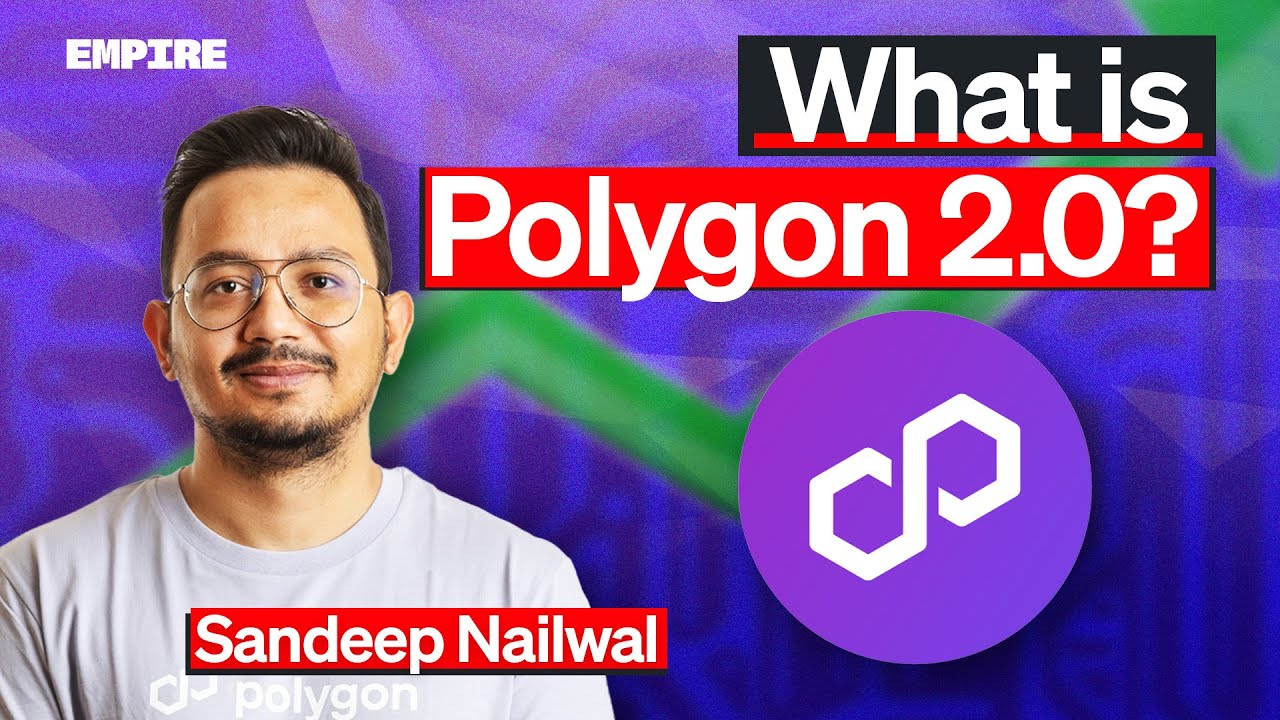
Host: Jason, Empire Podcast
Guest: Sandeep Nailwal, Co-founder of Polygon
Source: Empire Podcast
Episode: Link
Original Title: Inside Polygon 2.0: Sandeep on L2 Wars and Business Model
Release Date: September 5
Polygon's Vision and the Importance of Web3
-
Nailwal emphasizes that Polygon has always aimed to build robust infrastructure for widespread Web3 adoption. He points out that current blockchain applications have not yet achieved true scalability—no application or chain can handle millions of daily active users without crashing.
-
He argues that in the past, people’s digital lives were controlled by centralized intermediaries, which over the last decade have lost public trust, creating a low-trust environment. Web3 aims to provide a trustless alternative, where digital life is based on decentralized trust mechanisms rather than intermediary control. Achieving this requires infrastructure capable of supporting hundreds of millions of daily users.
-
According to Nailwal, the goal of Polygon 2.0 is to create an infinitely scalable blockchain infrastructure where developers can build and scale trustless applications. While Web2 is described as the “internet of information,” focused on sharing data, Web3 is envisioned as the “internet of value,” centered on creating and exchanging value in a decentralized setting.
-
Although Polygon 2.0 allows for unlimited chains and scalability, liquidity is still settled through Ethereum’s settlement layer. Multiple chains can run in parallel, but all transactions and liquidity are ultimately settled on Ethereum.
-
Nailwal traces the evolution of Polygon’s technology. It began with Plasma, an early scaling solution, then explored state channels before shifting toward more advanced approaches, ultimately settling on ZK technology.
-
He explains that ZK technology enables you to prove computations with a constant-sized proof, without revealing all transaction data. Each verification requires the same computational effort, making ZK highly efficient and scalable.
-
Nailwal and many industry researchers believe ZK is the ultimate solution for scalability and security in blockchains and decentralized systems, while optimistic rollups are seen as a short-term alternative.
-
He explains that optimistic rollups operate under an optimistic assumption—that all transactions on-chain are valid unless challenged. This model is technically simpler but comes with drawbacks. For example, when users withdraw funds from a rollup back to the main chain, they face a seven-day withdrawal period, during which anyone can audit transactions and challenge fraudulent activity.
-
The core idea behind optimistic rollups is to perform computation off-chain, enabling higher throughput compared to the main chain. Although computation happens off-chain, all transaction data and state transition proofs must be submitted to the main chain, ensuring correctness and transparency of off-chain operations.
Polygon’s Vision for a Multi-Chain Future
-
Nailwal envisions a future with tens of thousands of chains operating within a single system, using diverse technologies and architectures—including Layer 1s, validiums, and rollups. This multi-chain structure offers greater flexibility and choice for developers and users, allowing them to select the most suitable chain for their needs.
-
He clarifies the key difference between validiums and rollups: rollups post their data back to the main chain (e.g., Ethereum), while validiums keep data off-chain. Both have trade-offs, but crucially, they can interoperate within the same ecosystem.
-
Nailwal stresses that while decentralization is often discussed, the real goal is trustless computation. Users and developers should be able to trust the outcome of computations without relying on any third party. In this context, decentralization is a means to achieve trustlessness—not the end goal itself.
-
Different chains like Bitcoin and Ethereum offer solutions for different types of trustless computation. Bitcoin provides trustless payments, while Ethereum enables execution of general-purpose programs.
-
Nailwal believes any platform offering trustless computation is a competitor—whether it’s ZK, optimistic rollups, or emerging technologies. His focus is on empowering builders in DeFi, gaming, and other domains with trustless computation capabilities.
-
For startups, he advises choosing the chain best suited to their use case: those building DeFi should opt for chains with high liquidity, while game developers should choose chains with strong gaming communities.
-
To support a multi-chain environment, Polygon 2.0’s architecture will support validiums, rollups, and even external chains like Cosmos—all interoperable within a unified framework.
-
Polygon will shift from a fixed supply of 10 billion tokens to an inflationary model, increasing supply by 1% annually to incentivize validators and fund community initiatives. Additionally, another 1% treasury allocation over the next 5–10 years is reserved for ecosystem growth.
Polygon’s Three Pillars of Governance
-
Nailwal details Polygon’s governance structure:
-
Protocol Governance involves decisions about core protocol and client development. Unlike Ethereum and Bitcoin, core protocol and client development on Polygon are not governed by the community. For critical technical decisions, Polygon does not fully rely on token holder votes or community consensus.
-
Nailwal praises the governance models of Ethereum and Bitcoin, noting their success in managing technical details and core development. This model allows engineering teams to make decisions with minimal external interference, ensuring protocol stability and security.
-
System Smart Contract Governance governs smart contracts running on the Polygon network. This model enables broader community scrutiny and decision-making, ensuring transparency and fairness. Since smart contracts are fundamental to blockchain functionality, their behavior must be trusted and supported by the community.
-
Community Treasury Governance oversees the management and distribution of Polygon’s community funds. Community members vote on how these funds are used, ensuring transparent and equitable allocation. Proper stewardship of treasury resources is essential for the long-term growth and sustainability of the Polygon ecosystem.
-
Nailwal acknowledges that despite significant growth in NFTs and DeFi in recent years, Polygon still faces intense competition from other blockchain projects.
-
One major challenge, he notes, is narrative-building within the community. While Polygon has succeeded technically and in real-world adoption, it continues to compete with other, more influential blockchains in shaping public perception and storytelling.
Polygon’s Business Model
-
Nailwal stresses that Polygon is a protocol, not a company. Polygon Labs, the organization supporting the protocol, operates as a non-profit and does not generate profits.
-
He highlights Polygon’s core function: providing trustless computing services to third-party developers, who can execute operations on the Polygon network without fear of interference or malicious behavior from intermediaries.
-
When developers perform operations on the Polygon network, they pay transaction fees. These fees compensate validators who maintain and secure the network. Validators play a crucial role by verifying and confirming transactions to ensure network integrity.
-
To participate in the network and earn transaction fees, validators must stake—or lock up—tokens. The amount staked determines their share of transaction fee rewards.
-
Tokens serve not only as a mechanism for earning fees but also as an incentive for honest behavior. If validators act poorly or maliciously, their staked tokens may be penalized or slashed.
-
Nailwal expresses appreciation for traditional business models based on real capital and revenue, which he views as more stable and reliable compared to the speculative nature prevalent in crypto.
-
While efforts are being made to build a decentralized ecosystem in crypto, he observes that most community members remain focused on speculation rather than genuine value creation. He warns that if, five years from now, the crypto space is still primarily focused on infrastructure instead of real applications, it would represent a failure.
Join TechFlow official community to stay tuned
Telegram:https://t.me/TechFlowDaily
X (Twitter):https://x.com/TechFlowPost
X (Twitter) EN:https://x.com/BlockFlow_News
 深潮TechFlow






