Bitcoin Hard Fork History: Both a Split and a Growth
TechFlow Selected TechFlow Selected
Bitcoin Hard Fork History: Both a Split and a Growth
A hard fork is a split, but a split is also a form of growth—seeking opportunities through different paths.
 Navigating Web3 tides with focused insights
Author: ZT
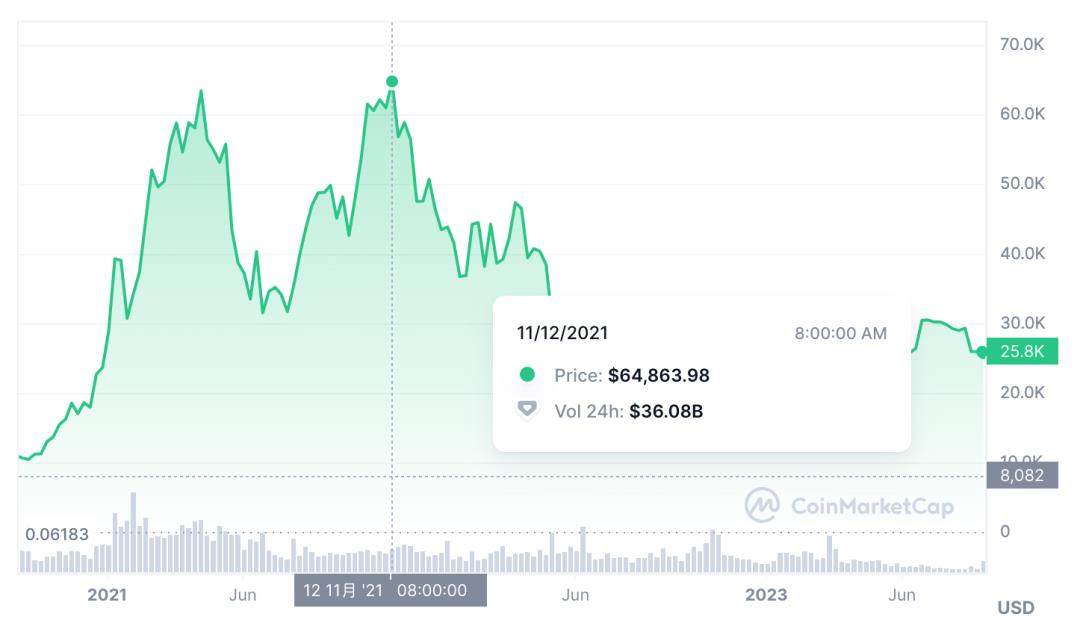
After falling from a high of $69,000, the entire cryptocurrency market has entered a bear market lasting nearly two years, following Bitcoin's trajectory.
As 2023 approaches the Bitcoin halving event, people are again expecting that in 2024, the crypto market will enter another bull run led by Bitcoin—just like the previous three bull cycles.
However, history does not simply repeat itself. Bitcoin’s growth curve has already entered a flattening phase and requires new catalysts to surge upward.
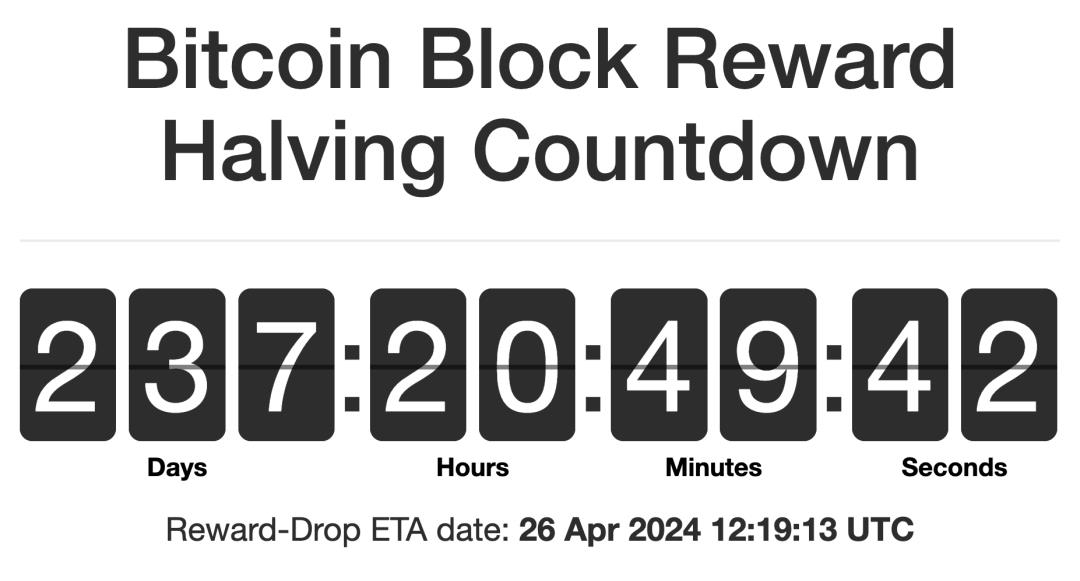
The fourth Bitcoin halving is expected in April 2024[1]
Miners’ block rewards will drop from the current 6.25 BTC to 3.125 BTC. Under the current reward of 6.25 BTC per block, according to data from BTC.com, the shutdown price for mainstream Bitcoin mining machines ranges between $14,000 and $20,000. After the halving, assuming no increase in hash rate and no significant change in transaction fee income, the Bitcoin price must exceed $40,000 for miners to remain profitable and maintain incentive to secure the Bitcoin network.
Each subsequent bull market sees smaller Bitcoin gains, while hash rate continues to grow. In fact, since 2018, Bitcoin has underperformed many major U.S. stocks—its returns are comparable only to Amazon and Netflix. Apple’s return is triple that of Bitcoin, while Tesla’s exceeds it by more than eightfold.
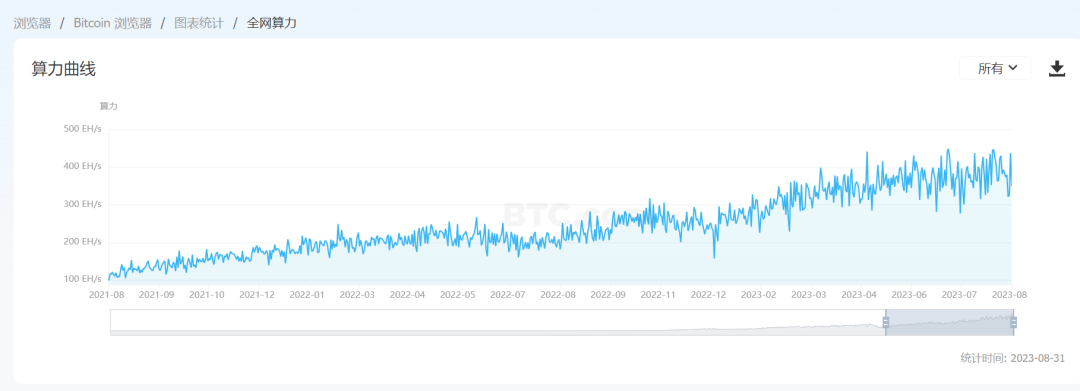
Even during bear markets, Bitcoin's hash rate continues to rise
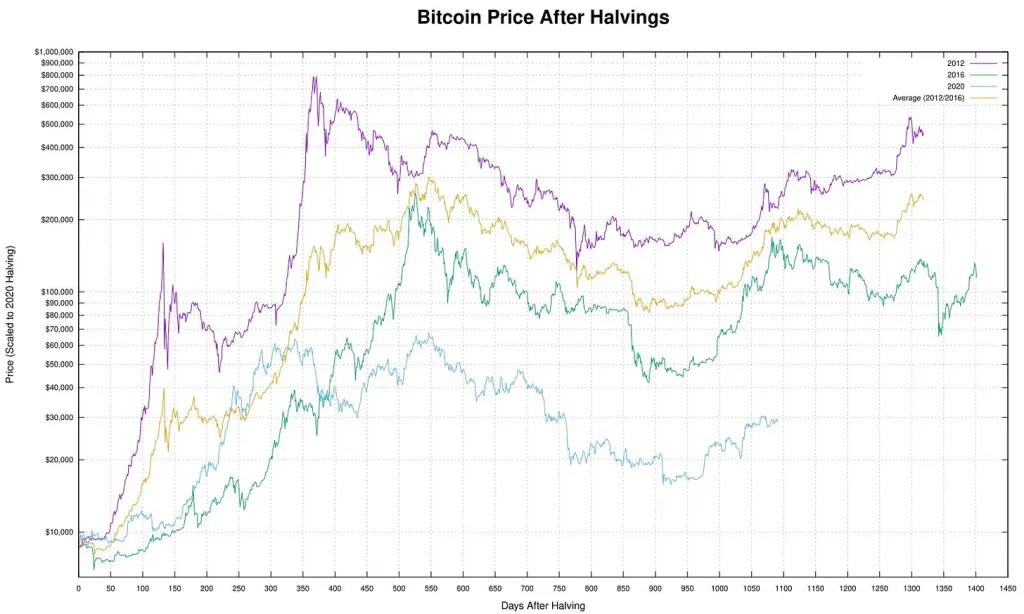
Bitcoin price movements after the first three halvings
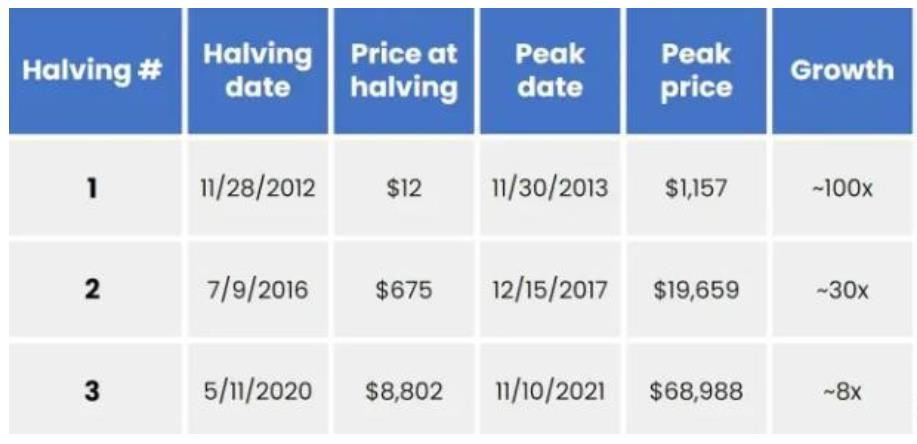
With each halving, Bitcoin’s price increase has been smaller than the previous cycle
Shortly after Bitcoin’s creation, questions arose about how to keep miners in the network to maintain Bitcoin’s security once block rewards end. Increasing transaction fees is clearly impractical, so boosting transaction volume to increase miner revenue is the only viable path. As such, efforts to scale Bitcoin have never ceased, and hard forks have continuously occurred as a way to “search for a better Bitcoin.”
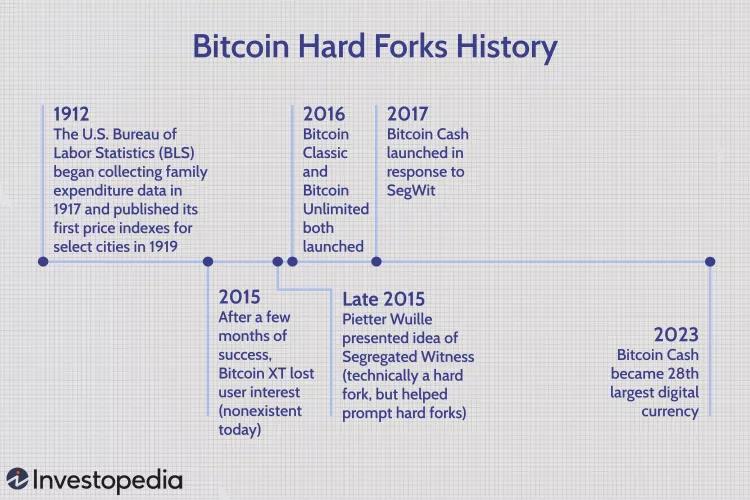
History of Bitcoin hard forks
A Bitcoin fork is defined as a change in the Bitcoin network protocol or "a situation where two or more blocks share the same block height." Forks are typically implemented to add new features to the blockchain or to reverse the effects of hacks or catastrophic errors. Forks affect the validity of network rules, and consensus is required to resolve them; otherwise, a permanent split occurs, resulting in a hard fork.
Depending on the target and purpose of the hard fork, they can be categorized into several types.
1. Hard Forks of the Bitcoin Client
1. Bitcoin XT
Bitcoin XT was one of the earliest notable hard forks of Bitcoin, initiated by Mike Hearn. Before the actual fork, Mike Hearn released BIP 64[2] on June 10, 2014, proposing "a small P2P protocol extension to perform UTXO lookups given a set of outputs." On December 27, 2014, Hearn released version 0.10 of the forked client XT, which included changes from BIP 64.
In August 2015, Bitcoin XT adopted Gavin Andresen’s BIP 101[3], increasing the block size limit to 8 MB per block, raising Bitcoin XT’s TPS to 24. Bitcoin XT initially succeeded, with 30,000 to over 40,000 nodes running its software by late summer 2015. However, just months later, the project lost user interest and was essentially abandoned.
2. Bitcoin Classic
As Bitcoin XT declined, some community members still wanted larger block sizes. In response, a group of developers launched Bitcoin Classic in early 2016. Unlike XT, which proposed increasing block size to 8 MB, Classic aimed for a more modest 2 MB.
Like Bitcoin XT, Bitcoin Classic initially attracted interest, with node counts ranging from approximately 27,000 to 200,000 during several months in 2016. The project still exists today, with some developers continuing to support Bitcoin Classic.
3. Bitcoin Unlimited
Since its launch in early 2016, Bitcoin Unlimited has remained enigmatic. The project’s developers released code but did not specify what kind of fork it required. Bitcoin Unlimited’s distinguishing feature was allowing miners to decide their own block size, with nodes and miners setting limits up to 16 megabytes. In November 2016, the project shifted toward a solution that transferred rule-setting authority to miners and nodes. The complexity of these rule changes prevented Bitcoin Unlimited from gaining widespread acceptance.
2. Hard Forks of Bitcoin (BTC)
This is the most common type of Bitcoin hard fork—creating a new blockchain network by changing network rules and sharing transaction history up to a specific point in time with Bitcoin.
Below are listed Bitcoin-splitting hard forks by date/block:
-
BCH - Bitcoin Cash original chain, fork block: 478558, date: August 1, 2017, users receive 1 BCH for every 1 BTC held
-
BTG - Bitcoin Gold, fork block: 491407, date: October 24, 2017, users receive 1 BTG for every 1 BTC held
-
BSV - Bitcoin SV, fork block: 556766, date: November 15, 2018, users receive 1 BSV for every 1 BCH held
-
XEC, fork block: 661648, date: November 15, 2020, users receive 1 XEC for every 1 BCH held
1. Bitcoin Cash (BCH)
The first hard fork of Bitcoin occurred on August 1, 2017, giving birth to BCH. Initiated by the Bitcoin Unlimited team mentioned above and backed by Bitmain, the world’s largest mining hardware manufacturer, this fork created out of thin air a cryptocurrency that ranked fourth in market cap at the time.
BCH supports the large-block scaling approach and currently allows blocks up to 32 MB. Bitcoin Cash remains Bitcoin’s most successful hard fork and, as of June 2023, ranks as the 28th largest cryptocurrency by market cap.
2. Bitcoin Satoshi Vision (BSV)
On November 16, 2018, Craig Wright (CSW), an Australian businessman who long claimed to be Satoshi Nakamoto, initiated a fork of BCH. A new chain named BSV (Bitcoin Satoshi Vision) was thus born. In CSW’s view, this chain represented the “Satoshi Vision.”
Similar to how BCH originally forked from BTC, this split within BCH reflected a strategic divide between two factions: Wu Jihan advocated gradual improvement, while CSW pushed for radical revolution—immediately adopting 128 MB ultra-large blocks and “locking” the client to Bitcoin’s 0.1 version from the Satoshi era.
3. Bitcoin Gold (BTG)
BTG was a hard fork in October 2017 that differed from Bitcoin in the POW algorithm required by miners. Its creators aimed to restore GPU mining, arguing that mining equipment had become overly specialized.
Bitcoin’s growing mining difficulty and the emergence of ASICs dedicated to Bitcoin mining made it nearly impossible for ordinary individuals to participate. BTG supporters believed this harmed Bitcoin’s security.
BTG introduced a pre-mine feature, allocating a certain number of BTG directly to the team’s address—a move that later sparked controversy. To many investors, BTG became a textbook example of a project team exploiting a hard fork to harvest retail investors.
Since August 1, 2017, when BCH became Bitcoin’s first hard fork, such fork attempts have continued unabated. Statistics show that in just one month—December 2018—over ten Bitcoin fork projects emerged. According to https://forkdrop.io/, there are as many as 78 such forked coins, many of which are speculative or fraudulent schemes exploiting the concept of hard forks.
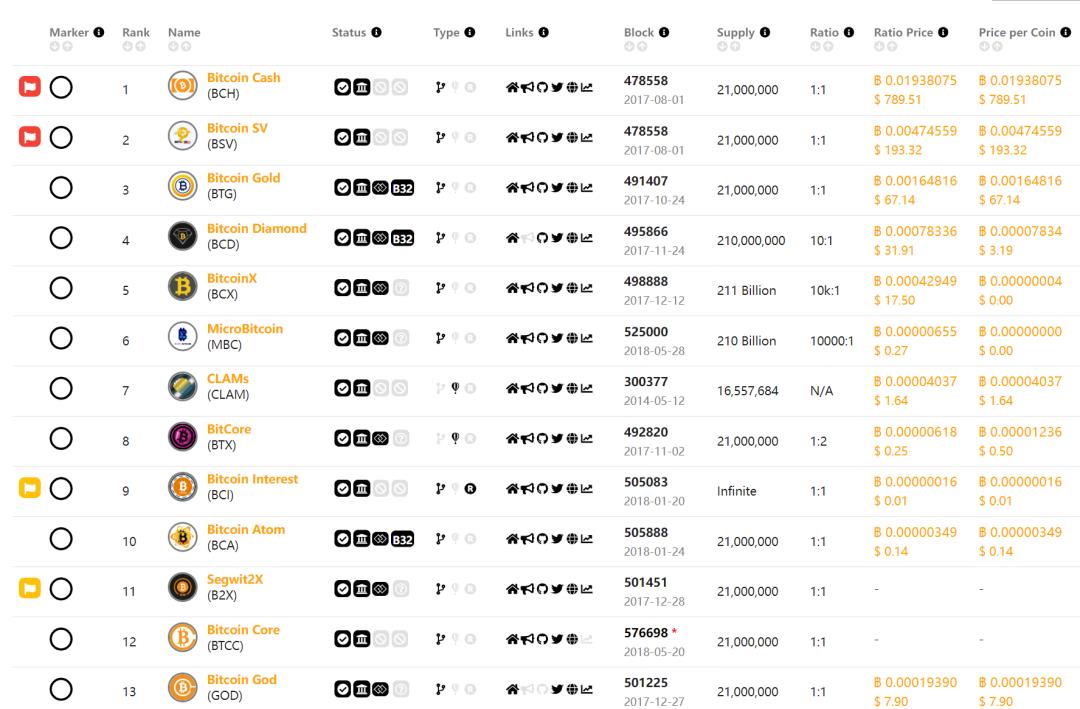
As many as 78 forked coins [4]
Beyond these two categories, there is also a third type: experimental hard forks for Bitcoin. You might think of LTC, but going forward you’ll hear about LayerTwoLabs, MainChain, and DriveChain.
LayerTwoLabs’ Planned Experimental Hard Fork
This is a type of last-resort hard fork, similar to the origins of Monero and Ethereum, and akin to LayerTwoLabs’ planned hard fork.

Due to the increasingly conservative stance of the Bitcoin Core team and BTC ecosystem, and the critical importance of Bitcoin’s network security budget (Part 1, Part 2), any major changes require extreme caution. Soft fork upgrades on Bitcoin have occurred only every 2–3 years in recent times. Despite broad community support, BIP-300/301 has yet to be implemented. Meanwhile, miner loyalty issues are becoming increasingly apparent as the halving nears. Measures to address this problem must accelerate. LayerTwoLabs plans to conduct a hard fork of Bitcoin this year as an experiment and interim step toward finding solutions.
However, LayerTwoLabs’ planned hard fork differs from those of Monero and Ethereum. The latter two were launched because their proponents’ improvements were rejected by the Bitcoin Core team. LayerTwoLabs, instead, aims to validate the feasibility and effectiveness of its DriveChain proposal through a hard fork, thereby persuading the Bitcoin Core team and skeptics to upgrade the Bitcoin network with BIP-300/301, enabling Bitcoin to scale and enhancing its long-term security and utility.
BIP300 Miner Sentiment
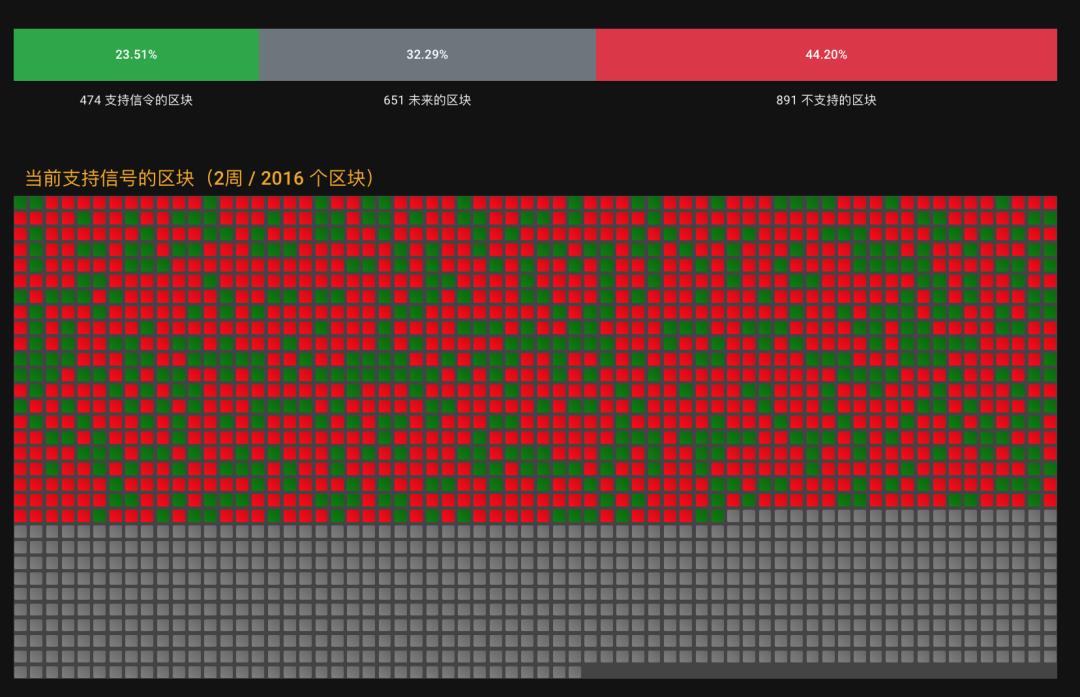
BIP300 enables decentralized sidechains, such as EthSide or zSide, even large-block sidechains. This makes BTC development more competitive. Users may distrust BIP300, rendering it ineffective. Additionally, miners would be responsible for adding/removing sidechains, which they might find burdensome. BIP300 appears to harm no other BTC use cases, so it should likely be activated.
New Species Drivechain Miner Sentiment
`BTCv25+BIP118/118/300/301/345=?`[5]

BIP301 Miner Sentiment
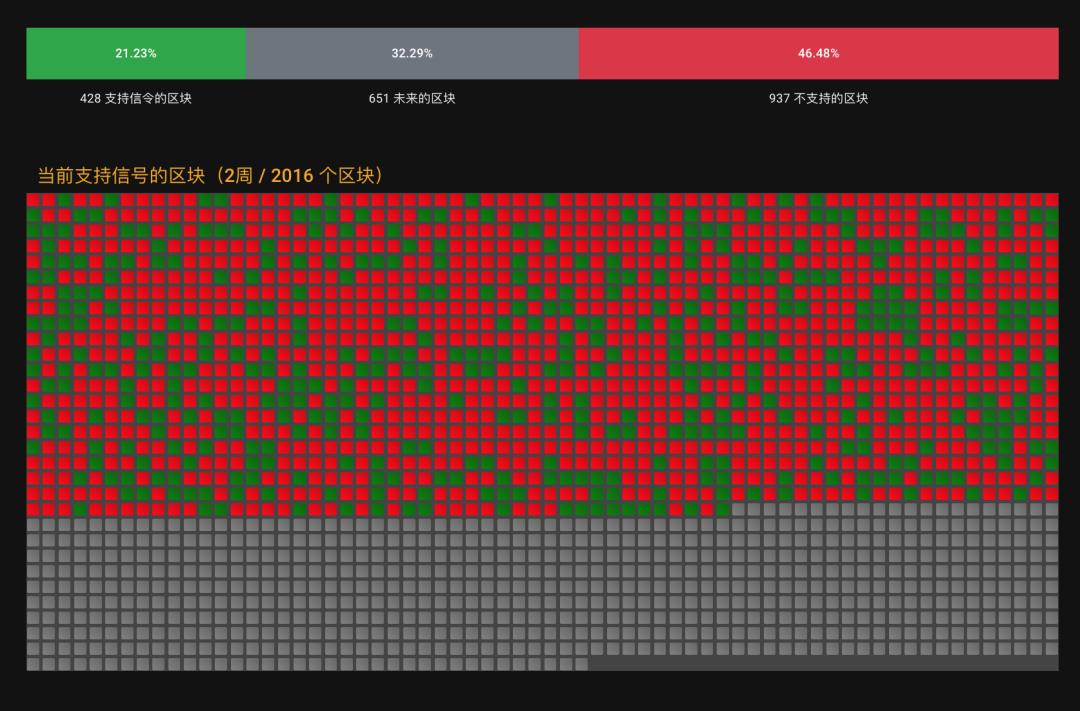
BMM (Blind Merge Mining) improves merge mining by eliminating the need for miners to run alternative chain software. BIP301 can be used by altcoins (e.g., Namecoin) or BIP300 sidechains (known as "Drivechains"). There appear to be no technical objections to BIP301. Merge mining has been successfully used for over a decade. On the other hand, there are currently few technical reviews of BIP301. BIP301 appears to harm no other BTC use cases, so it should likely be activated.
LayerTwoLabs’ hard fork also differs from those like BCH/BSV. BCH/BSV diverged from the Core team on scaling philosophy, requiring changes to Bitcoin’s底层 code and trending toward greater centralization, potentially compromising Bitcoin’s network security. LayerTwoLabs advocates small blocks; its DriveChain scaling solution does not require changes at the Bitcoin consensus level, and sidechain security issues do not affect the main chain. Current opposition mainly concerns cross-chain asset security and whether miners can be trusted not to act maliciously under concentrated hash power. However, under BIP-300’s pegging mechanism, miner cheating is both a short-sighted and self-defeating act, as well as a blatantly immoral and illegal behavior easily countered by honest participants.
For years, the DriveChain community—led by figures like Paul Sztorc and fiatjaf—has persistently promoted and popularized DriveChain, proposing an optimized merge-mining format (BIP-301), designing seven functionally diverse sidechains, and integrating miner and developer resources, now poised to boldly explore Bitcoin’s future path.
Hard Forks: Both Split and Growth
Having only one voice within a community is dangerous—the consequences of stagnation are unbearable. A hard fork is a split, but splitting is also a form of growth—seeking opportunities through different paths. Bitcoin has always faced strategic divergence. For its supporters and enthusiasts, hard fork experiments represent explorations of solutions, not ruptures.
To some extent, every new Bitcoin fork creates fertile ground for the development of blockchain technology and the broader crypto ecosystem, whether driven by genuine innovators or narrative-driven speculators. As the most popular crypto project in the market, Bitcoin has long served as a magnet for novel and promising ideas leveraging its open-source blockchain code, spawning numerous exciting cryptocurrencies and innovations such as GameFi, NFTs, DeFi, Metaverse, and more.
DriveChain offers a simple, effective, and secure method to integrate these use cases into the Bitcoin network and address the fundamental network security issue caused by declining miner revenues. LayerTwoLabs and its community will now explore its real-world impact.
References
[1] The fourth Bitcoin halving is expected in April 2024: https://www.bitcoinblockhalf.com/
[2] Mike Hearn released BIP 64 on June 10, 2014: https://github.com/bitcoin/bips/blob/master/bip-0064.mediawiki
[3] In August 2015, Bitcoin XT adopted Gavin Andresen’s BIP 101: https://github.com/bitcoin/bips/blob/master/bip-0067.mediawiki
[4] As many as 78 forked coins: https://forkdrop.io/
[5] BTCv25+BIP118/118/300/301/345=?: https://github.com/LayerTwo-Labs
Join TechFlow official community to stay tuned
Telegram:https://t.me/TechFlowDaily
X (Twitter):https://x.com/TechFlowPost
X (Twitter) EN:https://x.com/BlockFlow_News
 LayerTwo Labs