Podcast Notes | Interview with MakerDAO Co-Founder: Can the Broken State of DAO Governance Be Fixed?
TechFlow Selected TechFlow Selected
Podcast Notes | Interview with MakerDAO Co-Founder: Can the Broken State of DAO Governance Be Fixed?
Will MakerDAO's ambitious "Endgame Plan," designed to overcome the core issue of voter apathy, succeed—or is the DAO destined to fail?
 Navigating Web3 tides with focused insights
Compiled & Translated by TechFlow
The peak of the last bull market was when Rune Christensen felt most disillusioned with DeFi and DAOs. In a recent episode of the Unchained podcast, Christensen said, "I didn't even know how MakerDAO would survive." Now, Christensen is helping DAOs climb out of the trough of disillusionment. He says MakerDAO’s ambitious “Endgame Plan” aims to overcome the “core problem of voter apathy.” Will it work—or are DAOs destined to fail?
Save 90 minutes with these 5-minute podcast notes.
Below are the key takeaways from the conversation, transcribed and compiled by TechFlow:
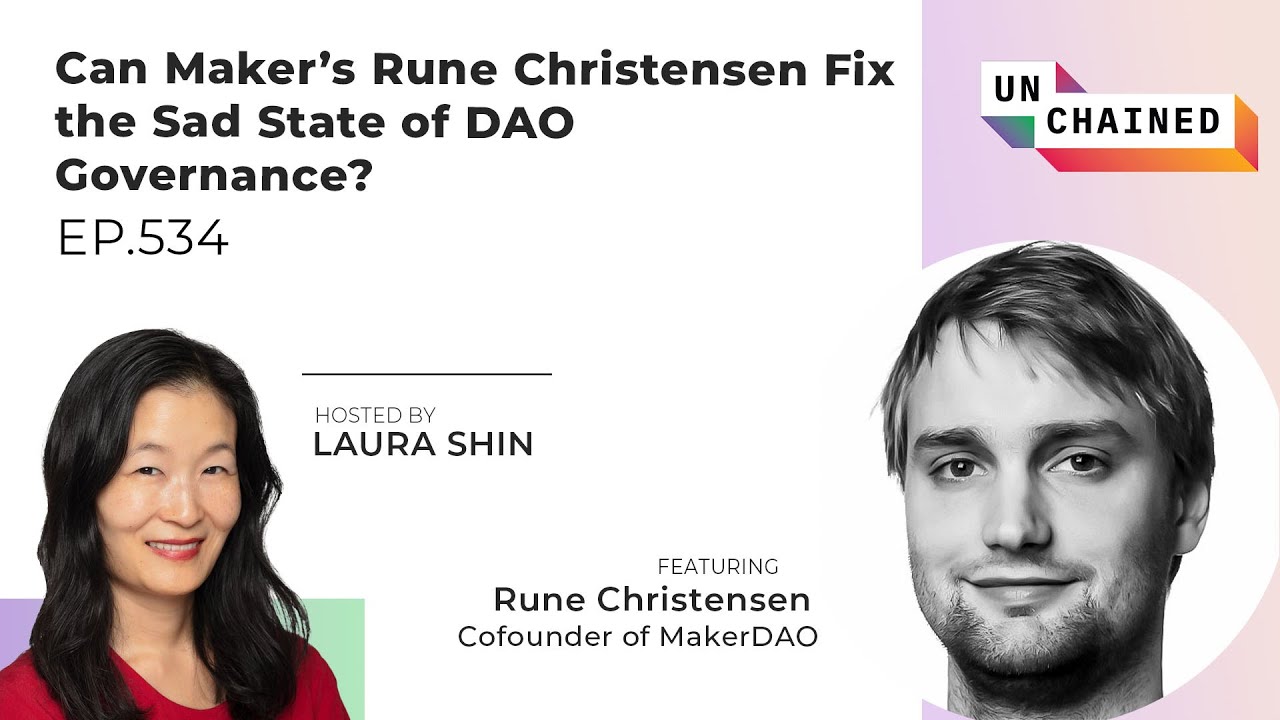
Host: Laura Shin, Unchained Podcast
Guest: Rune Christensen, Co-founder of MakerDAO
Video Credit: Unchained Podcast
Original Title: Can Maker's Rune Christensen Fix the Sad State of DAO Governance?
Episode Link: Link
Release Date: August 23
Why Does MakerDAO Need Major Change?
-
Christensen has proposed major changes to MakerDAO that are likely to be adopted. Laura asks why he wants to implement such changes, especially since MakerDAO is already stable.
-
Christensen explains MakerDAO’s history and vision, emphasizing that it emerged in the early days of Bitcoin and Ethereum. MakerDAO aimed to create a decentralized stablecoin immune to traditional financial systems, offering global users stable value. Despite several crypto bull markets in recent years, progress in DeFi has stagnated—meaning innovation and application development haven’t kept pace with capital and interest.
-
Christensen believes part of DeFi’s stagnation stems from challenges faced by DAOs (decentralized autonomous organizations). While DAOs were designed for decentralized decision-making—a true democratic system where every member has a voice—in practice, this process is often inefficient and easily influenced by large token holders (“whales”) who may vote based on self-interest rather than community benefit. Additionally, many DAO members exhibit voter apathy, leading to decisions made without broad community participation.
-
Christensen points out that despite being the oldest DAO, MakerDAO faces significant difficulties managing its operational expenses—such as tech development, marketing, and community management. Poor expense management leads to internal coordination issues, making decision-making complex and inefficient due to disagreements among teams and community members.
-
Christensen argues that as MakerDAO and other DAOs grow, the ideal of harmonious, collective decision-making begins to break down. With more members, consensus becomes harder, and conflicting interests and strategic disagreements increase.
Introducing MakerDAO’s “Endgame Plan”
-
Christensen details his envisioned “Endgame Plan” for MakerDAO, outlining four phases. The core goal is ensuring MakerDAO’s long-term stability, sustained growth, and continuous innovation.
-
Rebranding: To better communicate with the community and market, MakerDAO needs a rebrand—not just visual identity, but clearer communication of its core values and vision.
-
Sub-DAOs: Smaller, focused DAOs operating within the MakerDAO framework, each with specific goals—like handling certain loans or assets. This structure enables faster, more flexible decisions while maintaining overall alignment.
-
Voting Rewards: An incentive mechanism to encourage broader participation in governance, strengthening DAO democracy and decentralization.
-
Governance AI Tools: AI tools to assist members in decision-making by analyzing vast data and providing insights into potential impacts of proposals.
-
-
Christensen explains the choice of the name “Endgame,” noting they want MakerDAO to achieve a state similar to Bitcoin—one of high certainty and reliability.
-
Laura mentions that prominent VC firm a16z opposed Christensen’s “Endgame Plan,” asking why the MakerDAO community still chose to adopt it.
-
In response, Christensen says he is one of the most active large token holders in MakerDAO. More importantly, he emphasizes he is a true volunteer—his decisions and proposals stem from genuine belief in the project and commitment to its long-term success. He proposed the plan because he sincerely believes it benefits MakerDAO; otherwise, he wouldn’t have suggested it.
-
Laura Shin notes Christensen holds a large amount of MKR tokens and asks whether a single large holder could pose a governance risk, potentially creating imbalance or bias.
-
Christensen replies this relates directly to the fourth phase of their “Endgame Plan.” He states the goal is to address the core issue of voter apathy—once all other elements are in place, they will tackle this. They recognize the risks posed by a single large holder and plan to resolve it in the final stage of the Endgame Plan.
Phase One of the “Endgame Plan”: Rebranding
-
Christensen describes Phase One of MakerDAO’s “Endgame Plan,” centered on token rebranding—making significant adjustments to better reflect market value and positioning.
-
Laura Shin asks why not simply rename MKR and DAI to resolve branding confusion.
-
Christensen explains renaming tokens is technically difficult. On blockchains, each token has a fixed identifier—renaming disrupts technical uniqueness and established community/market identity. Sudden brand changes could trigger user panic or confusion; in crypto, major changes often provoke negative market reactions, harming stability and credibility.
-
Christensen emphasizes no need to disturb users already familiar and loyal to DAI and MKR. These users trust the brands—abrupt changes could erode that trust. Users should retain the right to choose between new stablecoins and original DAI.
-
He proposes allowing seamless switching between new stablecoins and original DAI. As crypto evolves and user needs diversify, such flexibility becomes increasingly important.
-
Different users have different needs—some may prefer new stablecoins for enhanced stability, others may favor original DAI due to familiarity or perceived reliability. Allowing free switching ensures diverse needs are met and empowers users with greater control.
-
Christensen stresses the importance of flexibility. It enhances user trust and satisfaction and encourages broader platform engagement. Forcing users into a single option risks losing confidence or driving them to alternatives.
-
He also highlights the need for a risk-free transition. To earn trust, users must feel safe switching—processes must be simple, secure, and reliable.
-
While more choices are beneficial, they must be easy to understand. Any changes—technical or branding—should be transparent so users clearly understand what’s happening, why, and how it affects them.
-
Communication and education are crucial. When introducing new features, thorough outreach ensures users understand changes—preventing confusion and empowering informed use.
Phase Two of the “Endgame Plan”: The Big Launch
-
Christensen introduces Phase Two—the “Big Launch.” This isn’t a minor update but a comprehensive strategy aiming to transform both MakerDAO and the broader crypto industry. If executed well, it could redefine the entire sector.
-
Christensen emphasizes MakerDAO isn’t just meeting current demand—it’s building a sustainable, innovative ecosystem. Their goal is unprecedented: setting new standards instead of following trends.
-
To maintain leadership, continuous innovation is key. Phase Two introduces groundbreaking features and strategies to boost efficiency, security, and usability—offering fresh direction for the entire industry.
-
Christensen remains optimistic about MakerDAO’s future. He believes Phase Two will solidify its industry leadership and deliver greater value and opportunities to users.
-
He outlines plans to launch six new DAOs and six new governance tokens—a strategy to decentralize and optimize governance. Simplifying MakerDAO’s core structure improves efficiency and user experience, while new governance tokens incentivize deeper community involvement.
-
Advanced functions and innovations will be distributed across sub-DAOs, each focusing on specific tasks like stablecoin management, risk assessment, or marketing. This specialization allows each sub-DAO to operate more flexibly and efficiently.
Phase Three of the “Endgame Plan”: Community Incentives
-
Christensen discusses using sub-DAOs to drive user engagement. Each sub-DAO can design tailored incentives—token rewards, reputation systems, or other mechanisms—to attract and sustain active participation.
-
He highlights sub-DAOs’ potential to combat user apathy. By offering concrete, relevant projects aligned with user interests, engagement increases. Meaningful opportunities and incentives are essential for sustained involvement.
-
Christensen stresses the importance of long-term engagement. Sustained community support is vital for MakerDAO’s stability and success. While short-term rewards attract attention, the goal is fostering deep understanding and alignment with MakerDAO’s vision.
-
He details strategies to encourage long-term participation:
-
Token Rewards: Distributing tokens with long-term appreciation potential to incentivize holding and ongoing involvement.
-
Reputation System: Users earn reputation through contributions, unlocking special rights or rewards.
-
Education & Training: Providing resources to help users understand how MakerDAO works and how to participate effectively.
-
-
Building trust and relationships is key to long-term engagement. Transparent information, timely feedback, and consistent support strengthen these bonds.
Phase Four of the “Endgame Plan”: Governance AI Tools
-
Christensen introduces Phase Four, centered on deploying governance AI tools.
-
As DAO complexity grows, manual governance becomes unsustainable. Governance AI automates routine tasks—voting, proposal reviews, decision-making—accelerating processes and ensuring outcomes are data-driven and rule-based, not biased by emotion or personal interest.
-
Christensen emphasizes governance AI isn’t static—it learns and adapts. Using historical data, it optimizes future decisions, enabling continuous improvement. By minimizing human intervention, it reduces conflicts and ensures fairer, more transparent, and impartial governance.
-
Governance AI enhances system reliability and stability. With decisions rooted in predefined rules and data, errors and inconsistencies decrease, supporting smoother operations.
-
Finally, Christensen mentions Atlas, an AI project under development. Atlas consolidates all MakerDAO-related data into one hub, simplifying information retrieval and empowering participants with easier access to critical insights.
Join TechFlow official community to stay tuned
Telegram:https://t.me/TechFlowDaily
X (Twitter):https://x.com/TechFlowPost
X (Twitter) EN:https://x.com/BlockFlow_News
 深潮TechFlow