








After ChinaJoy: Reflections from GameFi to Web3 Games—What Are We Actually Expecting?
TechFlow Selected TechFlow Selected
After ChinaJoy: Reflections from GameFi to Web3 Games—What Are We Actually Expecting?
I think it's an expectation of a fair model.
 Navigating Web3 tides with focused insights
During this year's ChinaJoy discussions, various stakeholders have made a conscious effort to move away from terms like X2E or GameFi, instead referring to our on-chain games as Web3 Games—a clear step forward. This indicates that many institutions and game developers finally recognize the core of Web3 Games not as get-rich-quick Ponzi schemes, but as legitimate entertainment experiences centered around gameplay. While the allure of rapid wealth accumulation hasn't been entirely abandoned, there has indeed been a noticeable de-emphasis on financial speculation within Web3 Games.
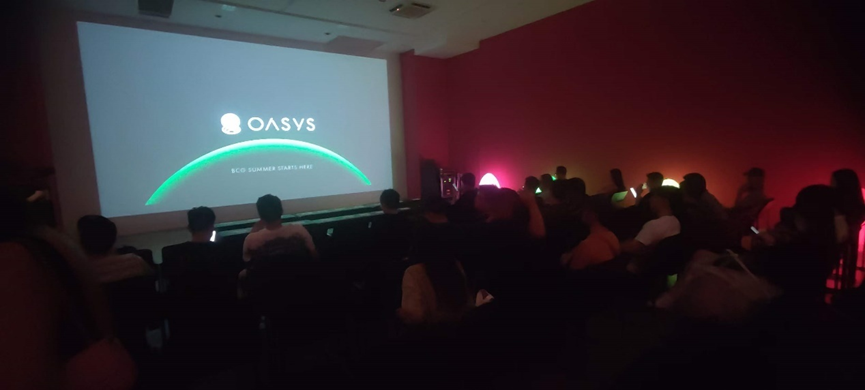
Recently, Go2Mars participated in ChinaJoy 2023 in Shanghai, where conversations about Web3 gaming were prominent even at this traditional game industry event. After attending several gatherings focused on traditional game globalization and Web3 gaming, it became evident that both overseas giants like Ubisoft and domestic leaders such as Dao Feng Interactive are making deeper strategic moves into Web3 gaming. For instance, Bandai Namco and Sega have jointly launched Oasys, a blockchain platform dedicated to gaming. Across regions, different game genres—including card games (e.g., Mahjong Meta, Immortal Games), shooter titles (e.g., Matr1x)—are being explored in their tokenized forms.
Of course, what’s different this time is that during these thematic discussions, participants have largely avoided using terms like X2E or GameFi, opting instead for "Web3 Game" to describe blockchain-based gaming—undoubtedly a positive evolution. It shows growing recognition among institutions and creators that the essence of Web3 Games lies not in speculative Ponzi schemes, but in genuine, game-first entertainment. While no one has completely walked away from the lucrative potential of fast-profit models, there's now a real effort to downplay financial speculation in Web3 gaming.

In this article, I do not treat games merely as simple entertainment tools. On the contrary, games represent shifts in trends—whether it’s a transformation in interaction paradigms (like Fruit Ninja pioneering touch-screen gameplay) or serving as testing grounds for new financial products (such as GameFi).
Games are leading indicators of emerging technologies.
Tokenomics: The Stigmatization of Blockchain Gaming
If we rewind to early 2022 when StepN was booming, members of every runner community weren’t discussing how far they’d run, but rather calculating their investment payback period—how quickly could they recoup costs and maximize profits? That was the central concern for most players at the time, which is why blockchain games were primarily labeled X2E or GameFi. At their core, these functioned as alternative mining mechanisms: users staked valuable tokens to obtain NFTs or in-game tokens with the aim of generating high returns. Of course, this is all well-trodden ground. Anyone who lived through that era understands such models aren’t sustainable—the tulip bubble bursts faster than commercialization can take hold, which is precisely why most GameFi projects eventually collapse into Ponzi-like failures.
When reflecting on what games truly offer us, one explanation has stayed with me:
Addictive mechanism = dopamine-driven positive feedback from gameplay + joy derived from social interactions within the game
I strongly agree. In traditional gaming worlds, aside from professional bounty hunters, gamers-for-hire, or studio operations, people play games purely for enjoyment and social connection. This explains why so many genuine players have grown critical of blockchain games in recent years. Crypto natives often care little about whether a game is fun—they focus solely on calculating profit margins and replicating strategies for exponential gains, showing minimal concern for actual game quality.
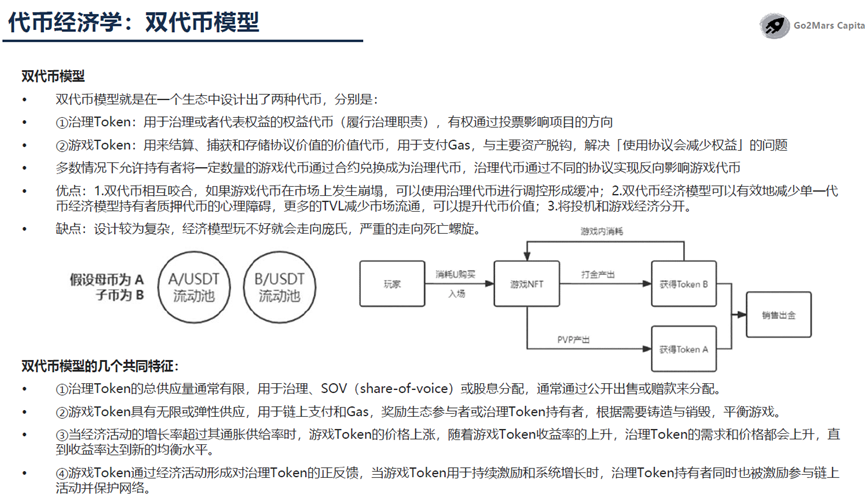
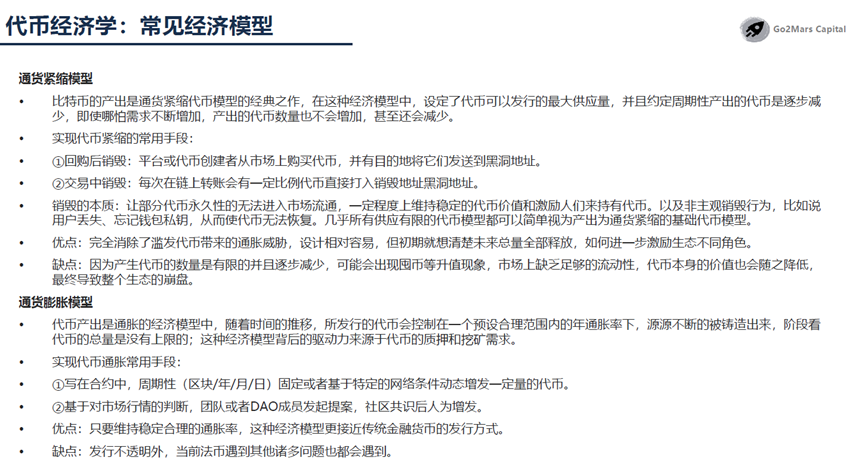
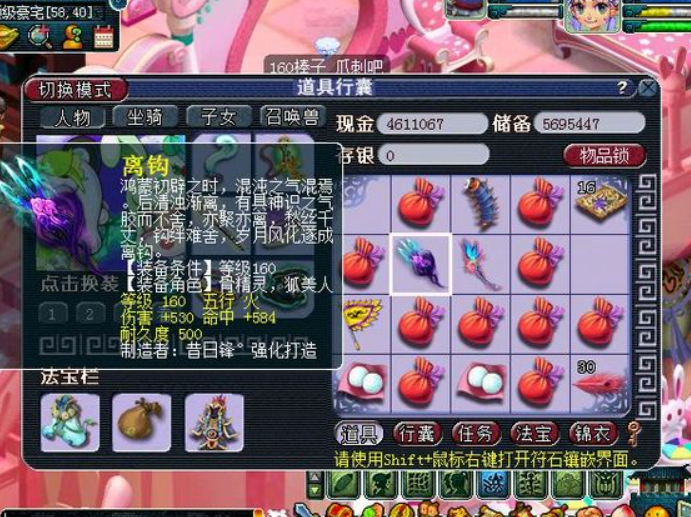
When analyzing game economies, the economic systems of titles like *Fantasy Westward Journey* and *World of Warcraft* offer invaluable lessons for any Web3 Game entrepreneur. Only when we stop obsessing over tokenomics, when games generate strong positive externalities, and when players engage for fun rather than speculation, can we meaningfully discuss what Web3 Games are really about—and why we should build them.
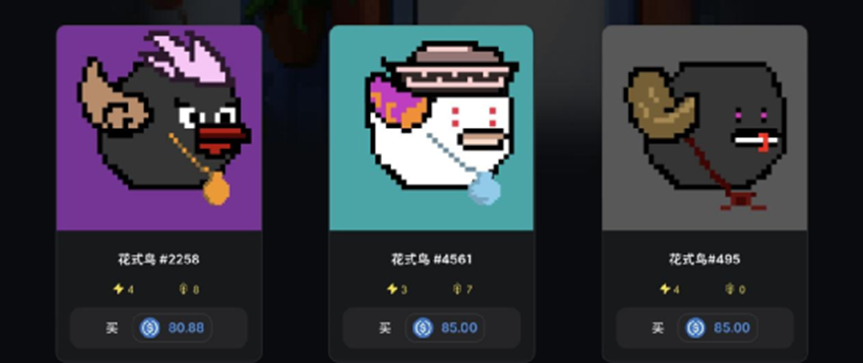
Casual games constitute one category of Web3 Games. In 2022, PlayStudios—the developer behind *Tetris*—established a blockchain division and announced its entry into the Web3 market. Similarly, we can envision simple casual games such as match-three puzzles, *Plants vs. Zombies*, *Angry Birds*, and *Fishing Master* transitioning into Web3 through economic system upgrades on the blockchain.
Web3 casual games based on match-three mechanics and similar formats are already abundant. Though easy to develop and simple to tokenize, casual games face an awkward challenge: their need for blockchain integration is inherently low. More bluntly, if competitive or skill-based casual games lose their financial incentives, player demand plummets rapidly, often reducing the experience to gambling. These games typically rely on token rewards to attract users quickly, but most inevitably end in Ponzi collapses or fade into obscurity due to lack of sustained engagement.
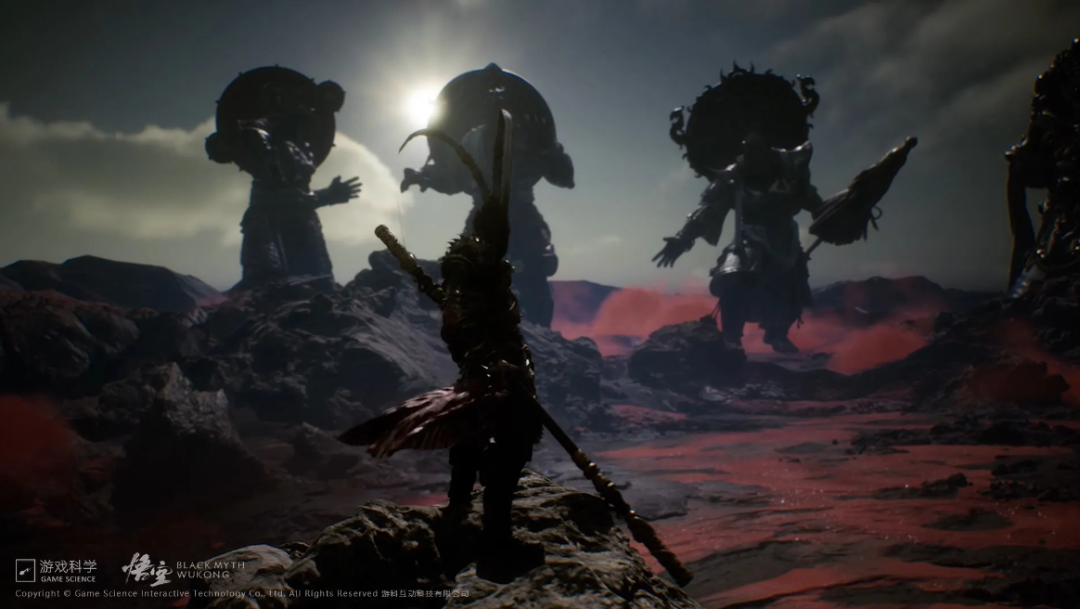
In contrast, another frequently discussed type of Web3 Game is AAA titles. Personally, I’m eagerly awaiting the release of *Black Myth: Wukong*, though its launch date remains uncertain. Developing such high-end games presents significant technical and financial challenges. However, AAA games tend to naturally distance themselves from the speculative traits common in casual games—after all, players investing substantial time into AAA experiences generally prioritize quality over profit, implying they’re less financially desperate. As such, they’re better positioned to embrace innovative Web3 features enabled by blockchain integration. Indeed, enhanced use of Web3 elements—be it NFTs, token circulation, or rule enforcement via smart contracts—can significantly elevate gameplay when implemented appropriately.
Of course, there are numerous other Web3 Game categories beyond these two examples—collectible card games, simulation management, competitive esports, RPGs, MMORPGs, and more. By contrasting casual games with AAA blockbusters, we highlight a fundamental divide: the former leans heavily on financial speculation and airdrop-driven traffic acquisition, while the latter focuses on enhancing gameplay through structural innovation. The distinction between them couldn't be clearer.
What should we expect from blockchain games? I believe it shouldn't be "-Fi", but "Game".
Fully On-Chain Games: How Important Are Rules?
For native crypto games (crypto-native games), let’s adopt a widely accepted definition: A native crypto game is one that fully embraces the architectural patterns and philosophy of blockchain application development.
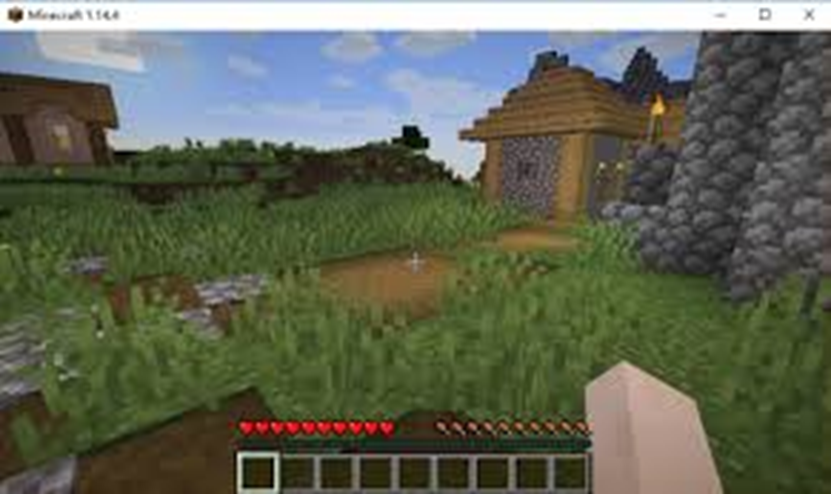
Under this definition, fully on-chain games represent the ideal path forward:
-
Blockchain is not merely used as auxiliary data storage, nor is ownership of assets the only element stored on-chain (semi-on-chain games with on-chain assets). Instead, all meaningful game data should reside on the blockchain
-
All game logic and rules must be implemented via smart contracts
-
Games should be developed according to principles of open ecosystems
-
The game itself should be independent of any specific client (i.e., players can interact directly with smart contracts without relying on developer-provided clients)
-
Support for RWA (real-world assets)
Based on this framework, most current games fall into the semi-on-chain category—storing only player assets on-chain while actual gameplay occurs off-chain. Nearly every GameFi title you’ve played operates this way.
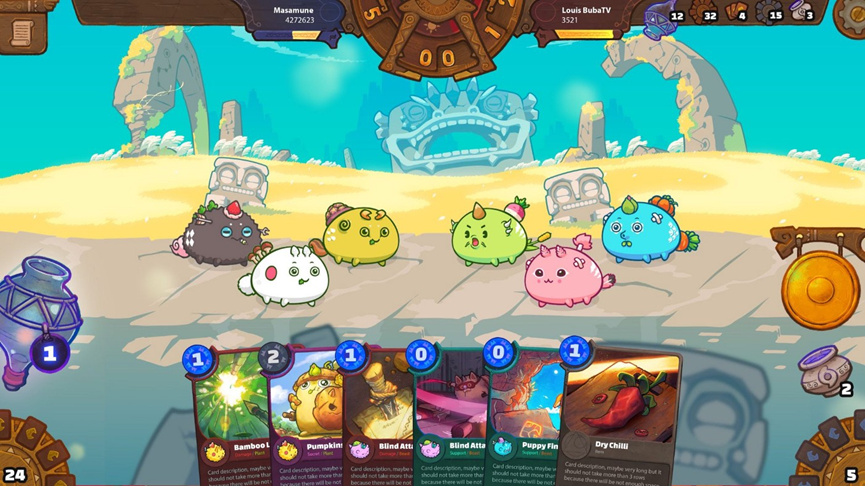
The key difference with fully on-chain games is that all game data—directly or indirectly—is recorded on the blockchain, and all game logic is executed through smart contracts. Of course, placing every single action directly on-chain poses scalability issues regarding processing speed and volume. Current solutions include Layer2-style batching, encryption, and delayed verification, or designing game mechanics to avoid high-frequency interactions altogether. While these implementation details aren't the main focus here, approaches like decentralized storage, ephemeral chains, and app-specific precompiles are also being explored.
What I appreciate most about fully on-chain games is their pursuit of fairness—ensuring all game logic runs via transparent smart contracts. This is especially crucial for online collectible card games (TCGs). As a long-time devoted player (for twelve years now) of a certain Three Kingdoms-themed digital card game, I’ve witnessed countless questionable incidents—from suspicious card draws at critical moments to gacha mechanics rigged so that guaranteed rewards only appear at the very last pull. These well-documented flaws reveal how developers or operators can exploit players without restraint. Fully on-chain games offer a solution to this systemic problem.

"I came to Hangzhou for three things: fairness, fairness, and damn fairness." Rules live in people’s hearts—but trust alone isn’t enough. Rules require enforceable guarantees.
What do we hope for from blockchain games? I believe it’s a longing for fairer systems.
From Web3 Game to Web3 Society: Where Is the Future Heading?
RWA, AR/VR, metaverse, Web3… As mentioned at the beginning of this article—I don’t see games simply as entertainment tools. Quite the opposite: games signal broader societal and technological shifts.
Today, we're seeing increasing convergence between on-chain and off-chain behaviors. Game rules can now be codified via smart contracts; our digital assets are nothing more than strings of data on a blockchain. Cryptocurrency has already changed many aspects of our lives—but not nearly enough.
I won’t speculate endlessly about where the future leads. But Web3 Games may well serve as society’s first playful experiment with Web3 principles. So then—what comes next?
Join TechFlow official community to stay tuned
Telegram:https://t.me/TechFlowDaily
X (Twitter):https://x.com/TechFlowPost
X (Twitter) EN:https://x.com/BlockFlow_News
 Go2Mars Capital






