After the approval of BlackRock's Bitcoin ETF, which projects might benefit from this?
TechFlow Selected TechFlow Selected
After the approval of BlackRock's Bitcoin ETF, which projects might benefit from this?
This article will introduce some projects that could potentially benefit directly from BlackRock's spot Bitcoin ETF.
 Navigating Web3 tides with focused insights
Author | Heimi@Baize Research Institute
If BlackRock's spot Bitcoin ETF application is approved, it could trigger a new wave of cryptocurrency enthusiasm, with trillions of dollars in institutional capital flooding into the market and significantly driving up the prices of BTC and altcoins.
This article will introduce some projects that may directly benefit from BlackRock’s spot Bitcoin ETF.
Note: This article is for informational purposes only. The author has no financial interest in any of the mentioned projects and does not endorse them. Do your own research (DYOR).
Why Can BlackRock Exert Such Massive Influence?
BlackRock is the world’s largest asset management company, currently managing approximately $9 trillion in assets.
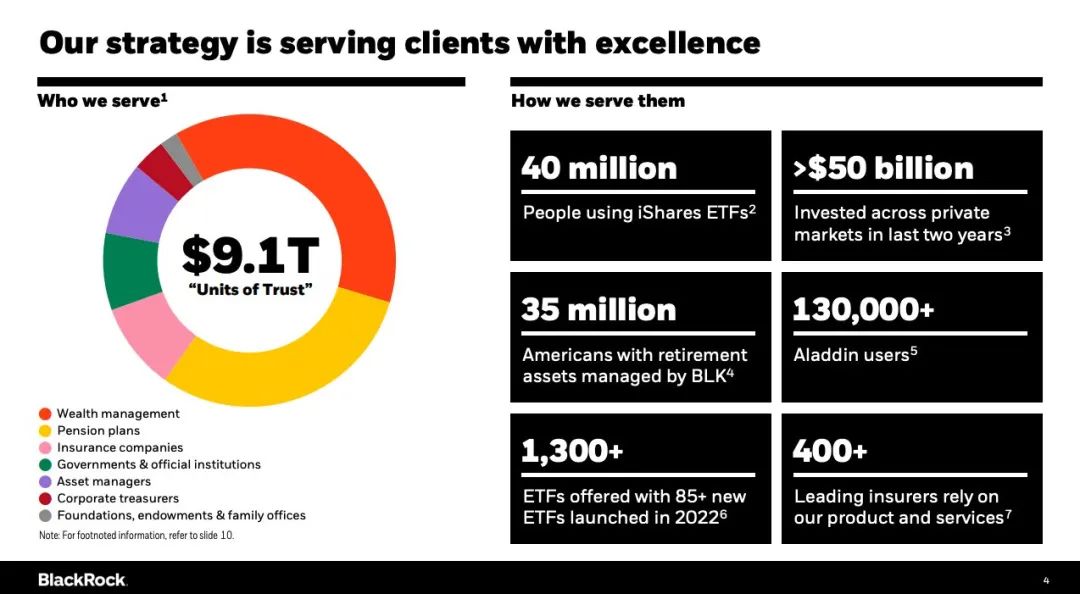
This month, BlackRock’s counter-trend filing for a spot Bitcoin ETF was seen as proof of “institutions re-entering the crypto market.”
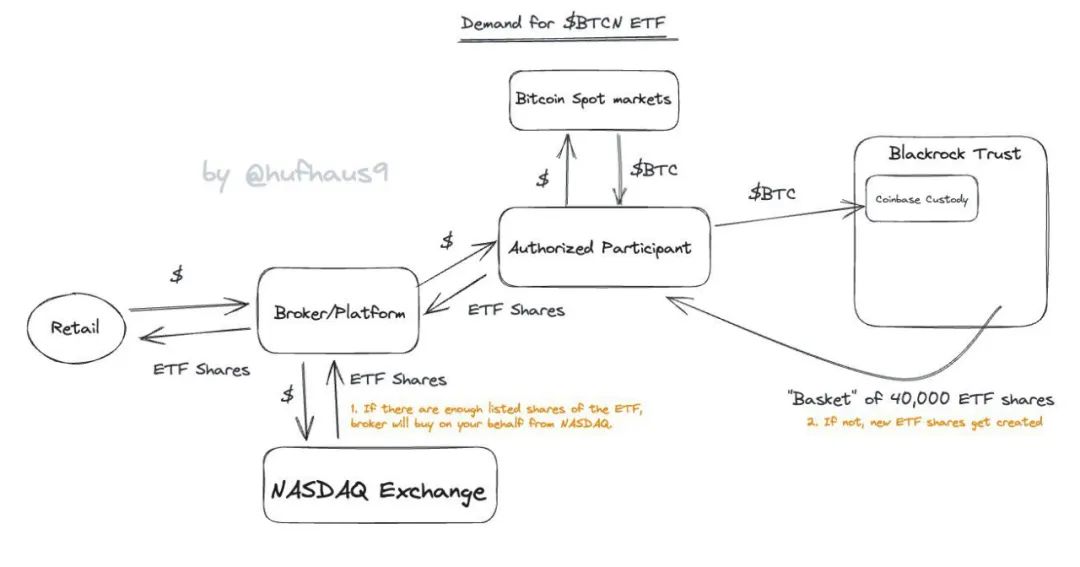
Simply put, suppose you want to invest in Bitcoin. Instead of registering on a crypto exchange, depositing funds, buying Bitcoin, and paying taxes on each transaction, you can purchase BlackRock’s spot Bitcoin ETF, which handles all these processes for you. You receive a receipt proving your ownership of the ETF and gain exposure to Bitcoin’s value and performance. Aside from using Coinbase’s custodial account to manage the underlying Bitcoin, BlackRock cannot misuse your Bitcoin—they simply provide a more cost-effective service.
However, what’s truly fascinating is BlackRock’s relationship with the U.S. government and the Federal Reserve.
In 2008, who did the Federal Reserve appoint to manage the troubled assets it acquired from Bear Stearns?
Answer: BlackRock.
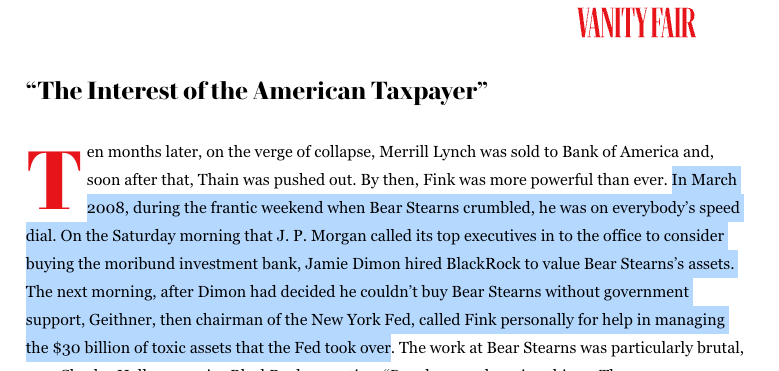
In 2020, when the Federal Reserve sought help purchasing corporate bonds to support the economy, who did they turn to?
Answer: BlackRock.
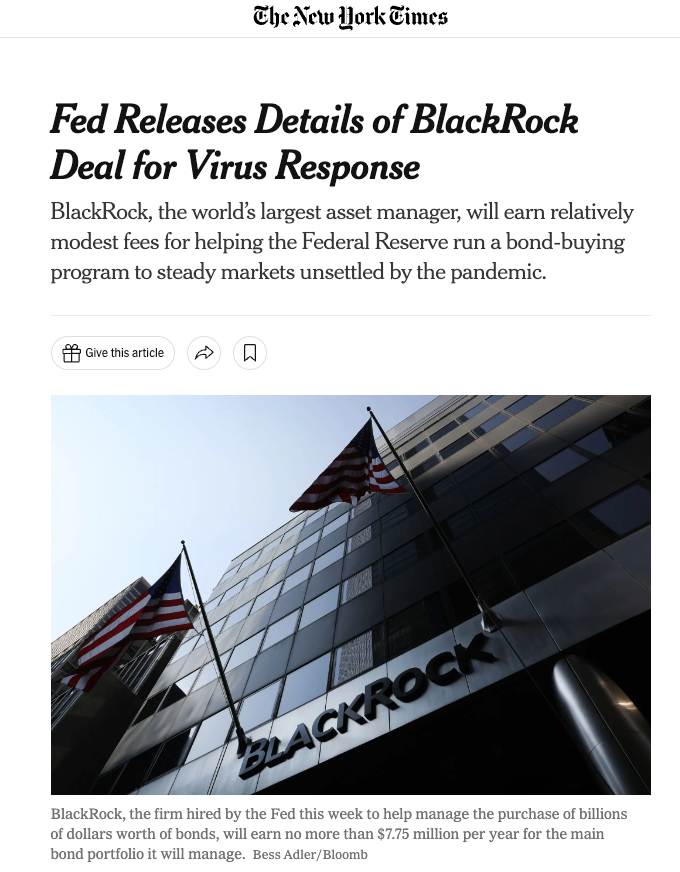
In 2023, who did the Federal Deposit Insurance Corporation (FDIC) call upon to help inventory the assets of Signature Bank and Silicon Valley Bank?
Answer: BlackRock.
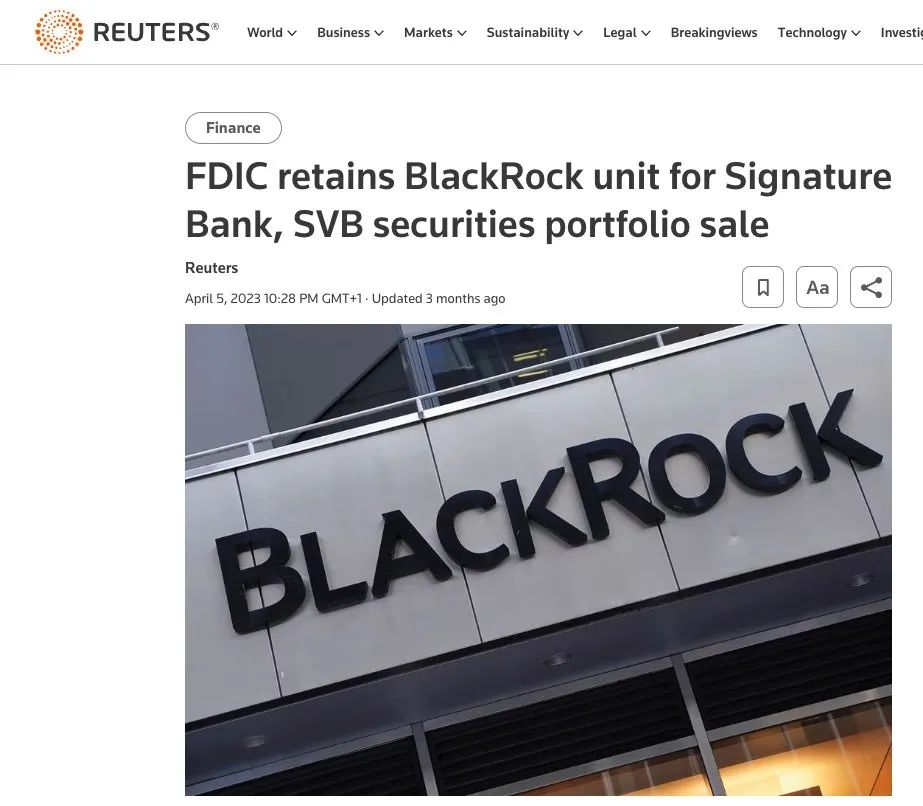
This is why Bloomberg senior ETF analyst Eric Balchunas described BlackRock’s spot Bitcoin ETF application as “a big deal” for the entire crypto market.
Beyond entering the crypto market via a spot Bitcoin ETF and capturing trading volume and fee revenue, BlackRock’s annual report also reveals its interest in tokenizing real-world assets (RWA), particularly stocks and securities.
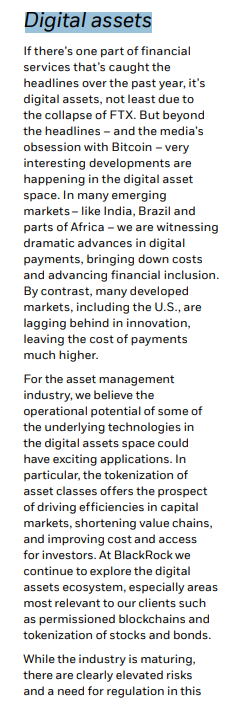
Which Projects Might Benefit?
1. Bitcoin L2 Ecosystem Led by Stacks
Stacks is arguably the most vibrant Bitcoin L2 ecosystem today.
Similar to Ethereum Rollup L2 networks designed to scale Ethereum, Stacks bundles multiple transactions into batches and submits them to the Bitcoin network for validation, effectively reducing the number of transactions on Bitcoin and improving overall performance.
Stacks uses a Proof-of-Transfer (PoX) consensus mechanism, where miners spend Bitcoin to mine the native STX token, allowing Stacks to leverage Bitcoin’s security while enabling Bitcoin to be used within dApps on the Stacks ecosystem. (Notably, STX was the first token approved by the U.S. Securities and Exchange Commission in 2019.)
With the emergence of the Bitcoin NFT protocol Ordinals kickstarting the explosion of the Bitcoin ecosystem, transaction fees surged, bringing Stacks back into the spotlight. Over the past two months, its popularity has steadily increased, and the price of STX rose over fourfold within just over a month.
Therefore, approval of BlackRock’s spot Bitcoin ETF could further boost STX and the broader Bitcoin L2 ecosystem.
Additionally, Stacks’ upcoming Nakamoto upgrade in Q4 2023 will introduce five major features, potentially acting as additional catalysts for STX’s price, including shared security with Bitcoin and the creation of a decentralized Bitcoin-pegged token, SBTC.
2. Project Mentioned by BlackRock: Energy Web
Energy Web is an organization dedicated to accelerating global economic decarbonization through open-source software and blockchain solutions. It primarily addresses two key challenges: leveraging distributed assets like solar systems, batteries, electric vehicles, and charging stations to achieve more efficient and sustainable grid balancing; and enhancing transparency in emerging green product supply chains such as sustainable aviation fuel. Over the years, the organization has partnered with several large energy producers and fossil fuel companies, including publicly listed Shell and Volkswagen.
Its mainnet, Energy Web Chain, launched in 2019, is an enterprise-grade EVM-compatible public chain using a Proof-of-Authority (PoA) consensus mechanism, where blocks and transactions are validated by pre-approved participants—typically partner enterprises—who act as system administrators. However, both enterprises and individual developers can deploy dApps on this network, such as energy-themed DeFi applications, accessible to all users. Yet, its native token EWT serves only as a basic validator reward and gas token, lacking broader utility.
This month, the organization announced the launch of an Energy Web X parachain on Polkadot. In simple terms, the two blockchains will share a single token. The idea behind Energy Web X is straightforward: add utility to EWT by allowing anyone to stake tokens, become a trusted node, run computational tasks for energy companies, and earn token rewards. Small token holders can delegate their stakes to trusted nodes to earn yield.
Notably, when BlackRock launched its private Bitcoin trust last year, it mentioned that Energy Web was helping improve transparency in green Bitcoin mining. Following the press release, the EWT token price immediately surged by 24%. Therefore, approval of BlackRock’s spot Bitcoin ETF could positively impact Energy Web—the largest decentralized energy ecosystem—and increased adoption by energy firms could further drive EWT’s price.
3. RWA Sector That Interests BlackRock: Polymesh, Realio Network
As discussed in the first section, BlackRock shows interest in RWA tokenization.
Polymesh is an institutional-grade Layer 1 network specifically designed for regulated assets such as security tokens. Its token standard, inspired by ERC-1400, offers enhanced functionality and security to facilitate the issuance and management of on-chain assets. Transparency and compliance are among the network’s highlights—all issuers, investors, stakers, and node operators must complete identity verification.
POLYX is Polymesh’s native token. Guided by Switzerland’s financial regulator FINMA and classified under Swiss law, POLYX is categorized as a utility token. It supports staking, governance, and the creation and management of security tokens.
Realio Network was formerly a P2P digital asset issuance and trading platform focused on private equity real estate investments. It now operates a Cosmos SDK-based, interoperable, and scalable Layer 1 network focused on issuing and managing tokenized RWAs, offering tools such as KYC/AML compliance and investor accreditation to meet regulatory requirements.
Currently, its flagship investment platform Realio.fund is live, providing multi-chain token issuance tools, fully automated compliance workflows, and enabling users to invest in cryptocurrencies more securely.
Realio Network employs a dual-token proof-of-stake model with RIO and RST, supporting staking, governance, key management, and other utilities.
As two of the strongest projects in the RWA space, Polymesh and Realio Network are poised to benefit from the momentum generated by the potential approval of BlackRock’s spot Bitcoin ETF.
4. The Strong Get Stronger: Render, GMX as Examples
If BlackRock’s spot Bitcoin ETF application is approved, it could spark a new wave of crypto enthusiasm, benefiting high-performing projects this year, such as Render and GMX.
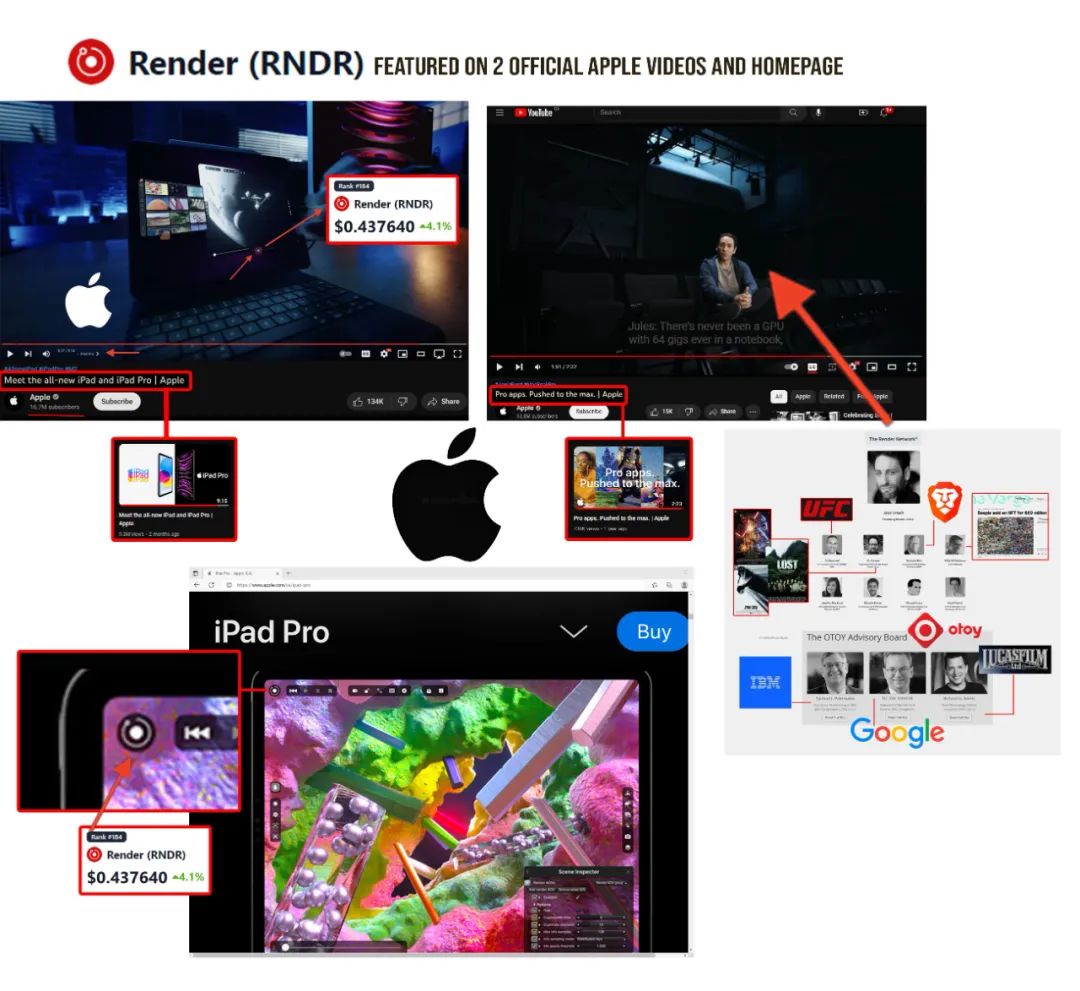
Render Network is a blockchain-based GPU rendering network connecting creators needing extra GPU power with individuals offering idle GPU capacity, maximizing resource utilization. As critical infrastructure, rendering has vast scalability and is part of the AI and metaverse narratives, making it a benchmark project in the DePIN (Decentralized Physical Infrastructure Networks) sector.
Its native token RNDR is one of the best-performing tokens this year, rebounding strongly even during bear markets—possibly due to its parent company OTOY’s partnership with Apple, whose official promotional videos have featured the Render Network logo multiple times. Recently, RNDR adopted a new "Burn-and-Mint Equilibrium" (BME) tokenomics model, making it highly deflationary, which could serve as a catalyst for future price appreciation.
Following the U.S. SEC’s lawsuits this month against centralized crypto exchanges Coinbase and Binance, perpetual DEXs are gaining more users. Traders seeking to escape CEXs and KYC are finding a “new home” in the perpetual DEX sector.
GMX, the leading project with over $133 billion in total trading volume, is likely to continue growing as a result.
Join TechFlow official community to stay tuned
Telegram:https://t.me/TechFlowDaily
X (Twitter):https://x.com/TechFlowPost
X (Twitter) EN:https://x.com/BlockFlow_News
 Baize Research