Consensys Global Survey: How Much Do People Know About Web3?
TechFlow Selected TechFlow Selected
Consensys Global Survey: How Much Do People Know About Web3?
Trust and understanding of Web3's potential need to be built by appropriately understanding the public's perceptions and attitudes toward Tech Crypto.
 Navigating Web3 tides with focused insights
Author | Consensys&YouGov
Translation | HuoHuo
Since Bitcoin's inception in 2009, discussions around the crypto industry have remained active, primarily centered on "Money Crypto." This includes price fluctuations of Ethereum (ETH), Litecoin (LTC), and regulatory and legal issues concerning CEXs like FTX.
Consensys and YouGov jointly conducted a global survey on crypto and Web3, aiming to understand perspectives and insights on crypto and web3 across different regions worldwide. Beyond typical questions about investment in crypto assets, the survey also explored topics such as data privacy, digital ownership, and recent crypto news cycles. The report presents findings based on interviews with 15,158 individuals aged 18 to 65 across 15 countries in North and South America, Europe, Africa, and Asia.
01 Data Privacy, Value Creation, and the Current Financial System
(1) Data Privacy
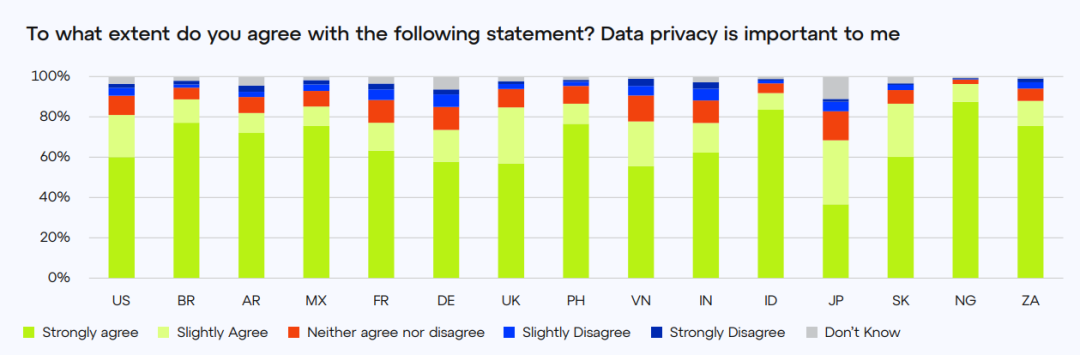
Are people concerned about their data privacy? Globally, 83% believe data privacy is important. However, in countries with strong data protection laws—such as Germany (58%), the UK (57%), and France (63%)—where protections are already robust, people are somewhat ambivalent about whether further emphasis on data privacy is necessary.
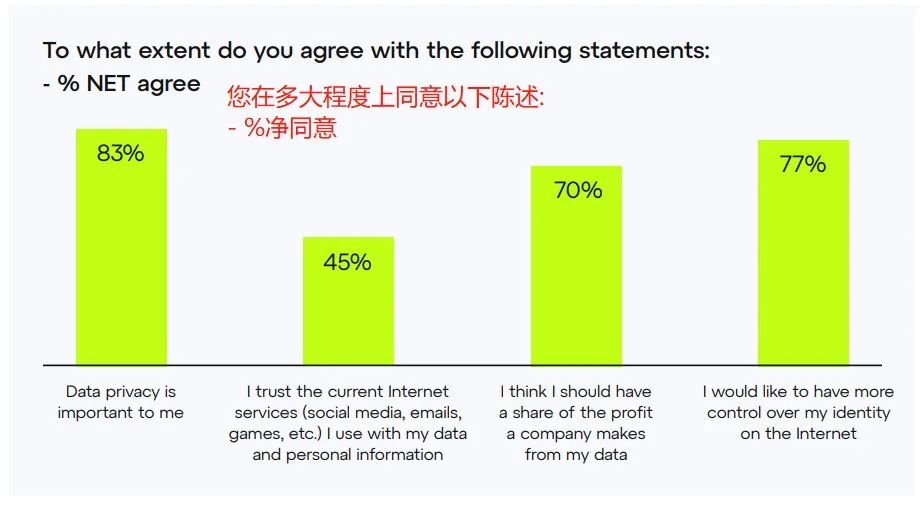
While data privacy is important to most respondents, only 45% fully trust current internet services (social media, email, gaming, etc.) to securely use their data and personal information. Meanwhile, 79% want greater control over their online identities, and 70% believe they should share in the profits companies make from their data.
Respondents in Nigeria and Indonesia show higher trust in how their data is used, yet they are also more likely to desire better control over their online identities and have high expectations for sharing in profits generated from their data.
To what extent do you agree with the following statement? Data privacy is important to me.
(2) Views on Creating Value on the Internet
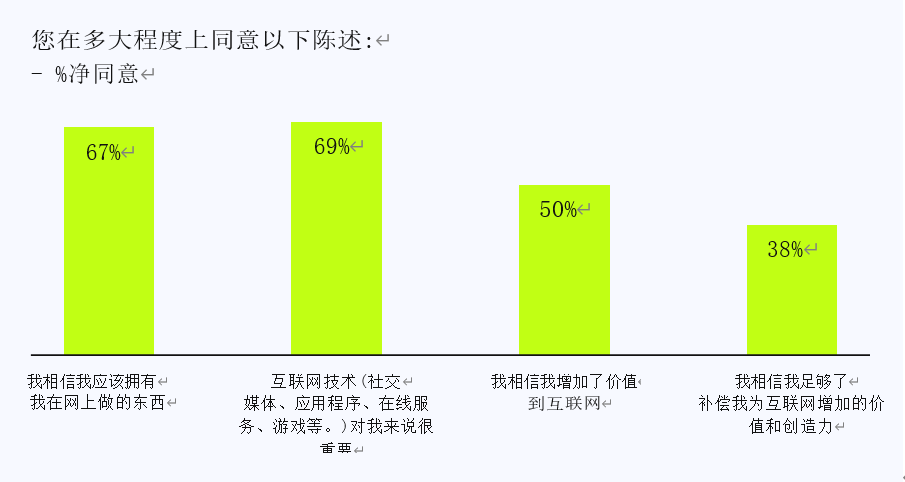
There is a strong sense of value and ownership among respondents: 50% believe they add value to the internet, and 67% assert their right to own what they create online. However, only 38% feel their creative contributions are adequately compensated. Respondents in France, Germany, and Japan express lower levels of perceived value and ownership regarding their online creations, along with a stronger sense that their contributions are undercompensated.
(3) Perceptions of the Current Financial System
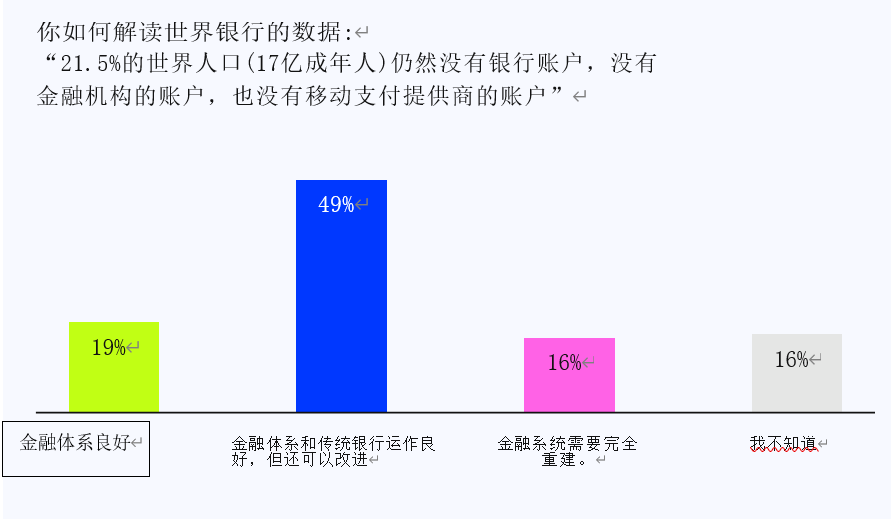
Most believe the current financial system can be improved—a view particularly strong in Nigeria. Moreover, a majority agree that Tech Crypto could help transform or rebuild the ecosystem. Countries including Nigeria, South Africa, Brazil, Vietnam, the Philippines, India, and Indonesia show higher agreement in this regard.
02 Adoption of Crypto Applications Worldwide: Public Awareness, Crypto Ownership, and Barriers to Entry
Despite frequent media coverage and public discourse on crypto assets, do people actually know what they are? Do they own or plan to own crypto assets in the near future? What are people’s associations with crypto assets around the world?
(1) Public Awareness
Overall, a large majority (approximately 92% globally) have heard of crypto assets. Among them, 50% claim to understand what they are. Understanding is notably higher in Nigeria (78%), South Korea (63%), South Africa (61%), Brazil (59%), and India (56%). In contrast, in Indonesia and Japan, only about one-third say they understand what crypto is.
Have you heard of cryptocurrency? (Green=Yes / Blue=No)
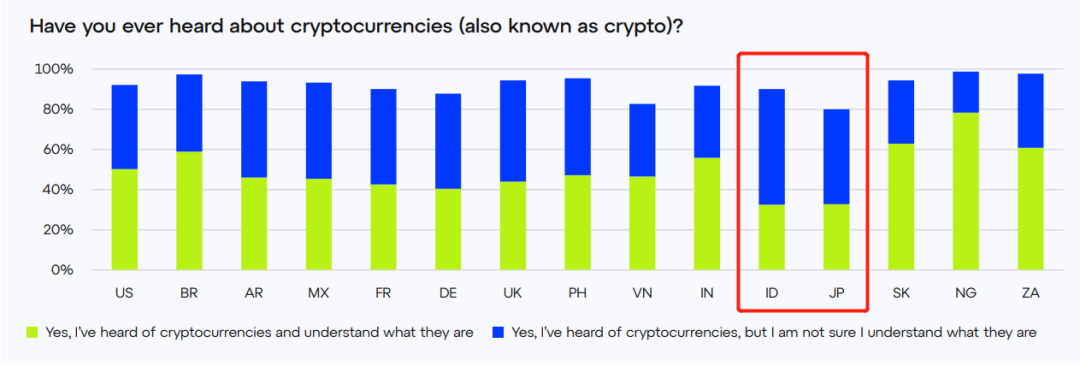
Consistent with global digital divides by age and gender, there are significant differences in understanding of crypto assets across demographic groups. Men aged 25–34 represent the demographic group most knowledgeable about this financial technology, while women and older respondents tend to know less—a trend observed across most analyzed countries, albeit with varying intensity.
(2) Crypto Asset Ownership
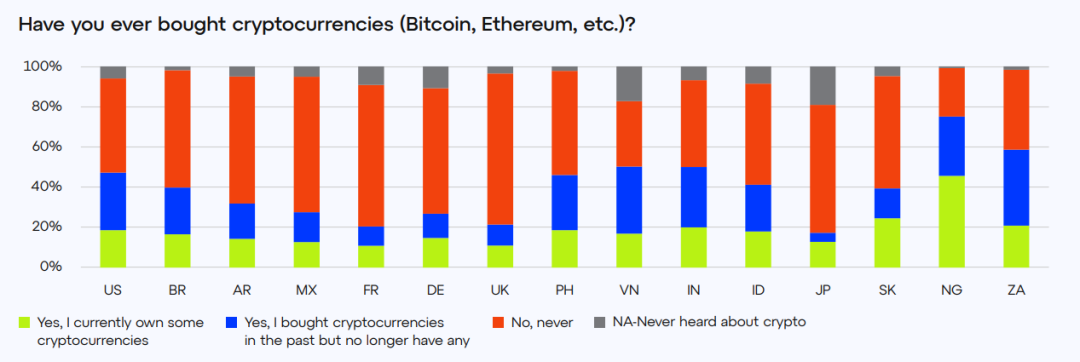
Globally, 40% of respondents currently own or have previously purchased crypto assets. The highest rates of past or present ownership are found in the United States, the Philippines, Vietnam, India, Nigeria, and South Africa. Conversely, Japan, Argentina, Mexico, and European countries (France, Germany, UK) lag significantly, with higher likelihoods of never having bought any crypto assets. Nigeria stands out with exceptionally high ownership—seven in ten confirm owning or having owned crypto assets.
Have you ever purchased cryptocurrency (Bitcoin, Ethereum, etc.)?
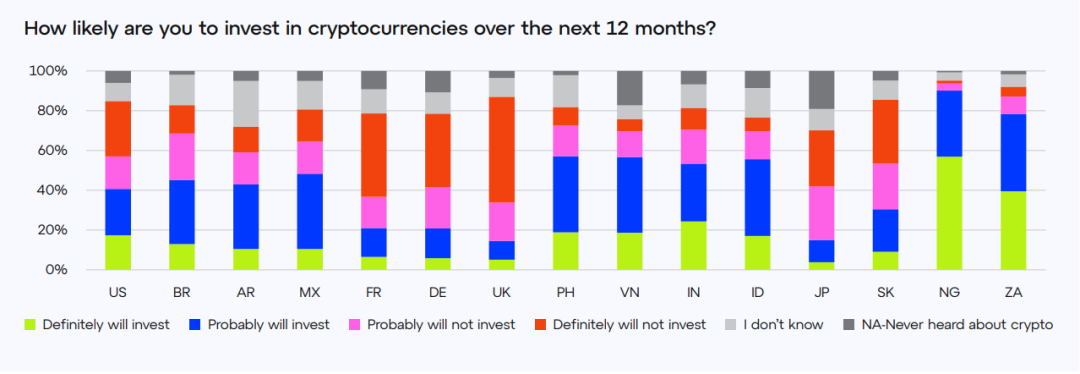
Looking ahead, willingness to invest in crypto assets is generally higher in Asia and Africa: Nigeria (90% definitely or probably will invest), South Africa (78%), the Philippines (57%), Vietnam (57%), Indonesia (56%), and India (53%). This contrasts sharply with much lower willingness in Europe and Japan, where a large proportion explicitly state they definitely will not invest.
How likely are you to invest in cryptocurrency in the next 12 months?
(3) Barriers to Entry
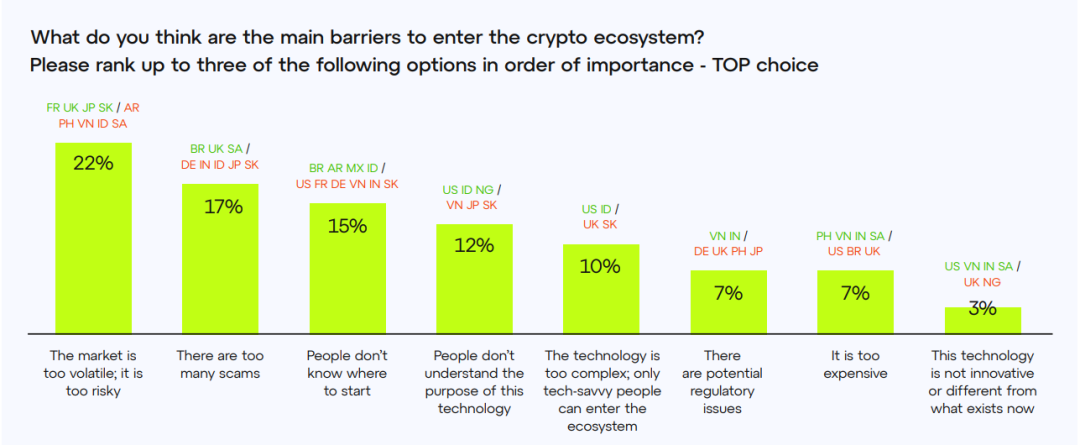
The crypto ecosystem faces challenges in increasing adoption, as respondents often perceive the market as too volatile and risky, or express concerns about potential fraud. These concerns are especially pronounced in Brazil, the Philippines, and South Africa.
More education on how to securely enter the web3 space could benefit countries like Nigeria and South Africa, where investment intent is highest despite associated risks. When respondents are willing to engage with the ecosystem, they often don’t know where to begin or how to protect themselves—particularly true in Latin America (Brazil 18%, Argentina 19%, Mexico 20%) and the Philippines (17%), as well as India (21%).
What do you think are the main barriers to entering the crypto ecosystem?
Please rank the top three from the following options—most important first
03 Recent Crypto Cycle: Impact of Centralized Crypto Company Bankruptcies
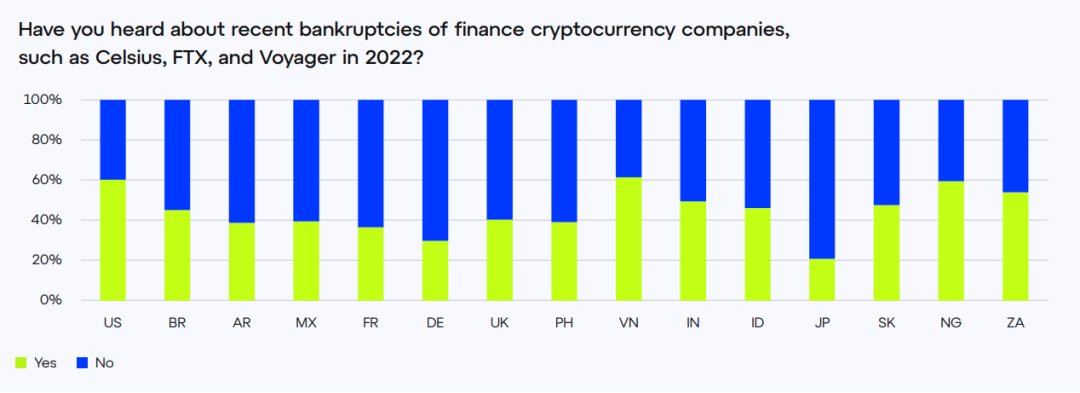
2022 was marked by the collapse of major centralized exchanges (CEXs) like FTX and Celsius—but did the public notice?
Globally, about two-thirds of respondents had heard of these CEX failures, though there are significant country-level differences. Awareness is higher in the US, Vietnam, India, Nigeria, and South Africa, where over half the population is aware. In contrast, only one-fifth of respondents in Japan had heard of them.
Have you heard of recent bankruptcies of financial crypto companies?
For example, Celsius, FTX, Voyager in 2022?
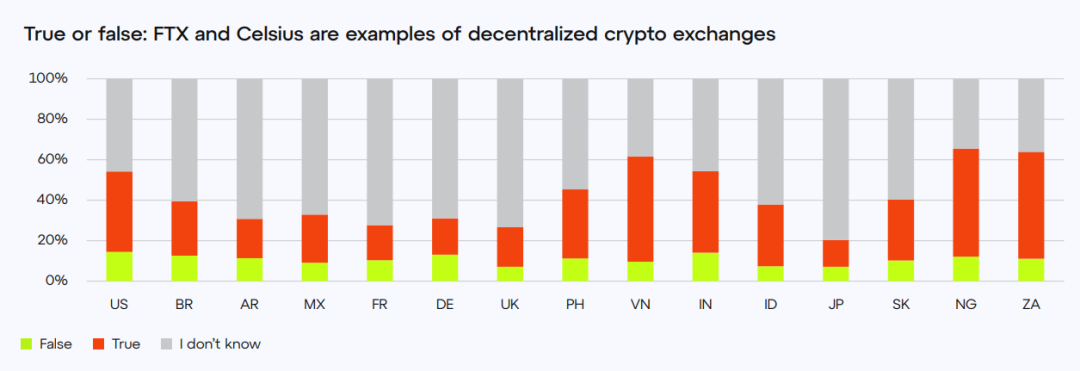
Most respondents incorrectly believed FTX and Celsius were DEXs. This misconception is especially common in Nigeria (53%), South Africa (53%), and Vietnam (52%). Respondents in the US and India were more likely to correctly identify FTX and Celsius as non-DEXs, but even in those countries, correct identification barely reached 14%.
True or False: Are FTX and Celsius DEXs?
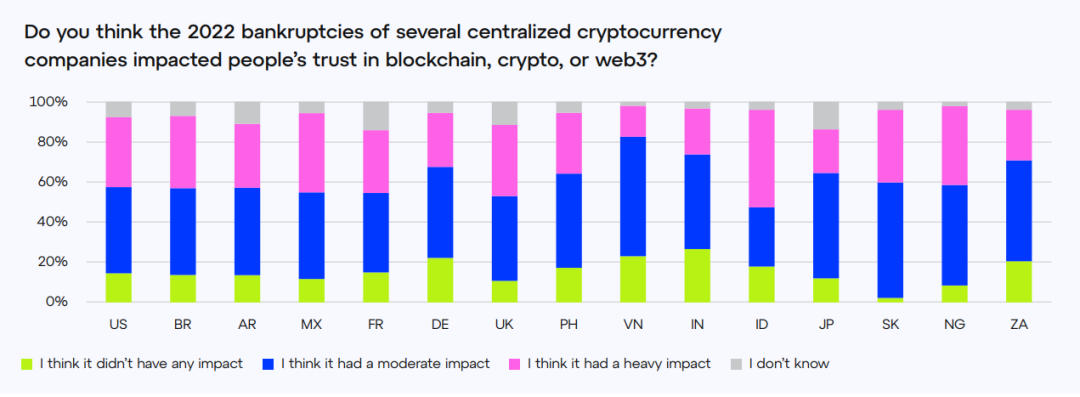
The series of CEX collapses impacted overall trust in blockchain, crypto, and web3. However, respondents in Germany, Vietnam, India, and South Africa were more likely to say it did not affect their trust in the ecosystem.
Do you think the collapse of several CEXs in 2022 affected people's trust in blockchain, crypto, or web3?
How to Rebuild Trust?
All countries agree that improving security measures and transparency should be the primary actions taken to restore trust in the industry. South Korea and Vietnam favor intervention through better regulatory frameworks by government agencies. Accountability is also seen as crucial in Asia, particularly in Japan and Indonesia. Nigeria and Argentina lean toward educating users about risks and best practices.
04 Opportunities in Web3: NFTs and the Metaverse
From NFTs to the metaverse built on blockchain technology, web3 encompasses several distinct concepts. Do people know what blockchain is? Have they heard of NFTs? Do they plan to acquire some in the future?
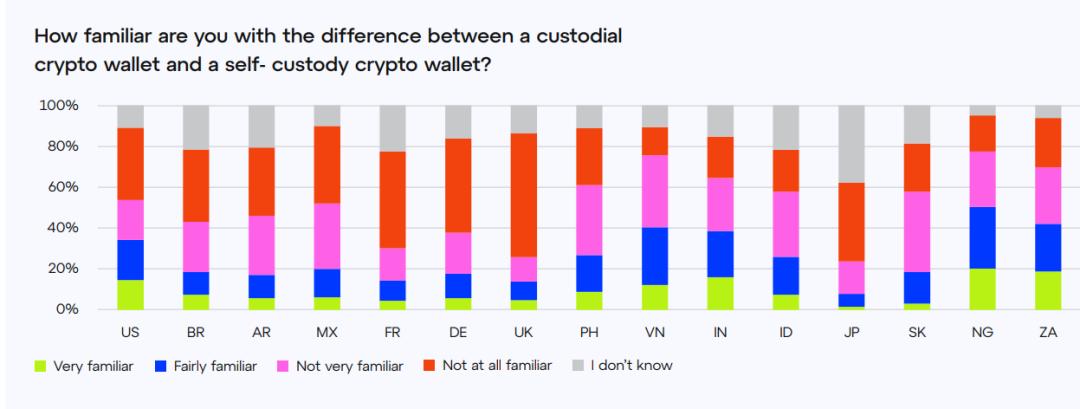
Globally, most respondents are unfamiliar with the difference between custodial and self-custody crypto wallets. This lack of familiarity is especially pronounced in the UK (72% somewhat or completely unfamiliar) and Mexico (70%). However, awareness is higher in Nigeria (50% very or fairly familiar), South Africa (42%), Vietnam (40%), and India (39%).
How familiar are you with custodial crypto wallets and self-custody crypto wallets?
Globally, most respondents are familiar with all the concepts tested in the survey. However, notable differences exist: the metaverse (36%) and NFTs (34%) are the most recognized, while web3 is the least known concept, with only 24% of respondents familiar with it.
How familiar are you with the following concepts?
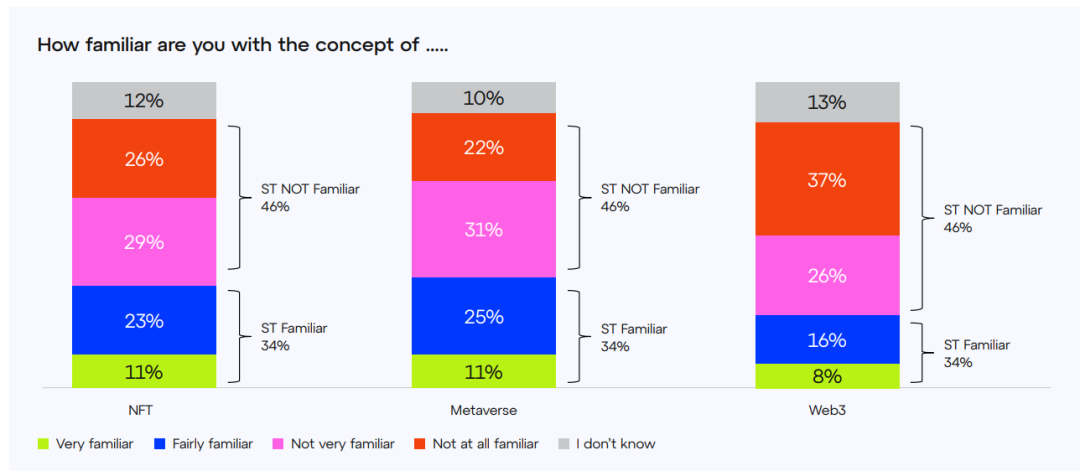
ST = Net percentage (e.g., ST family = “Very familiar” + “Fairly familiar”)
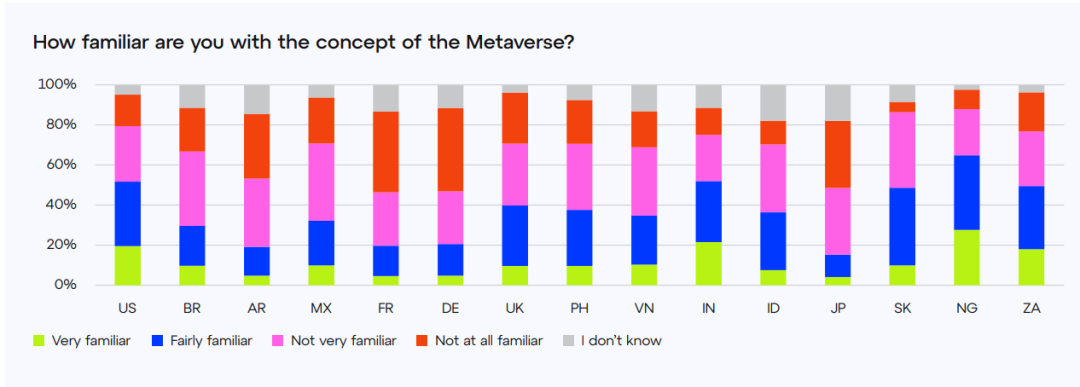
Trends vary significantly by country. Respondents in the US, India, South Korea, Nigeria, and South Africa are most familiar with the metaverse, while those in Europe, Latin America, and Japan are least familiar.
How familiar are you with the concept of the metaverse?
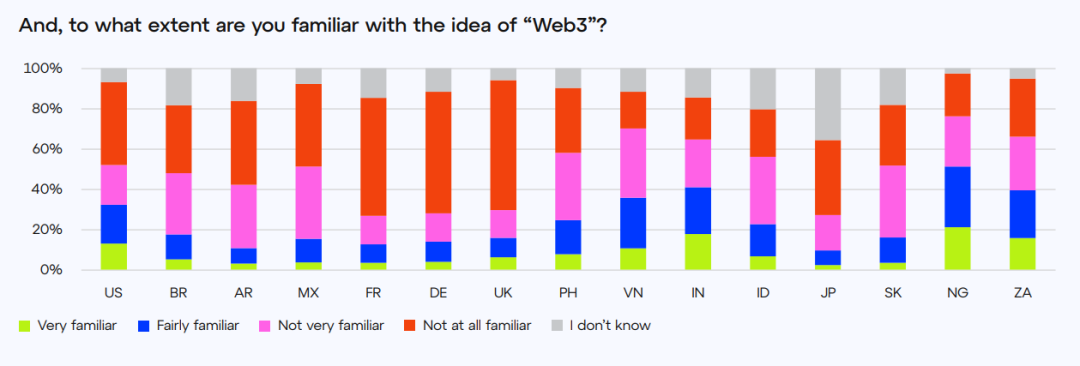
Web3 appears to be the least known concept globally. Yet, respondents in Nigeria and Vietnam show relatively high familiarity. Notably, one-quarter of Nigerians claim to be very familiar with the concept. In contrast, European countries and Japan generally exhibit lower familiarity, with the exception of the UK, where respondents show slightly higher awareness—especially among men.
How familiar are you with the concept of Web3?
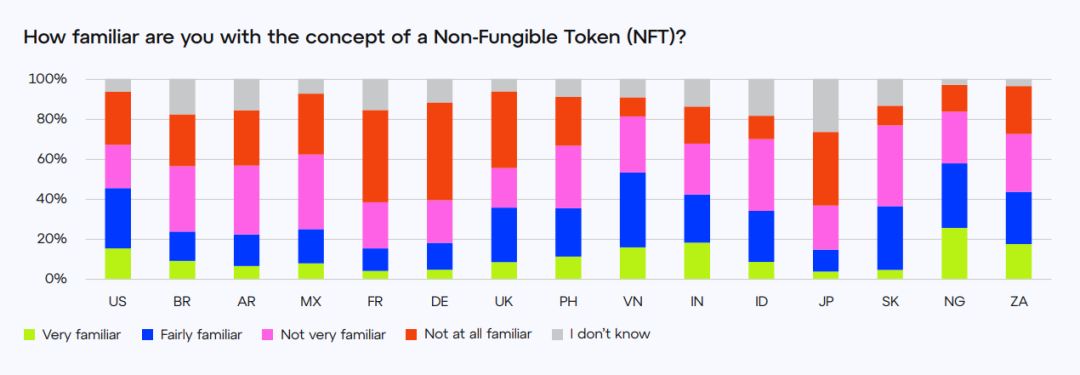
Regarding familiarity with NFTs, the US, India, South Africa, and especially Nigeria lead in awareness. Conversely, South American and European countries, along with Japan, have the highest proportions of respondents unfamiliar with NFTs.
How familiar are you with the concept of NFTs?
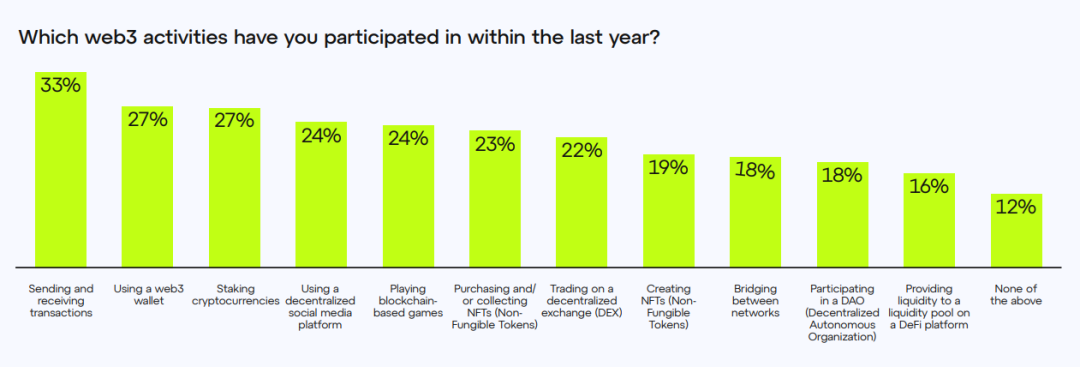
Globally, the most common web3 activity is sending and receiving transactions—performed by one-third of respondents familiar with web3 concepts. Next are using web3 wallets and staking crypto assets, both at 27%. Rounding out the top five are using decentralized social media platforms and playing blockchain-based games.
Which of the following Web3 activities have you participated in during the past year?
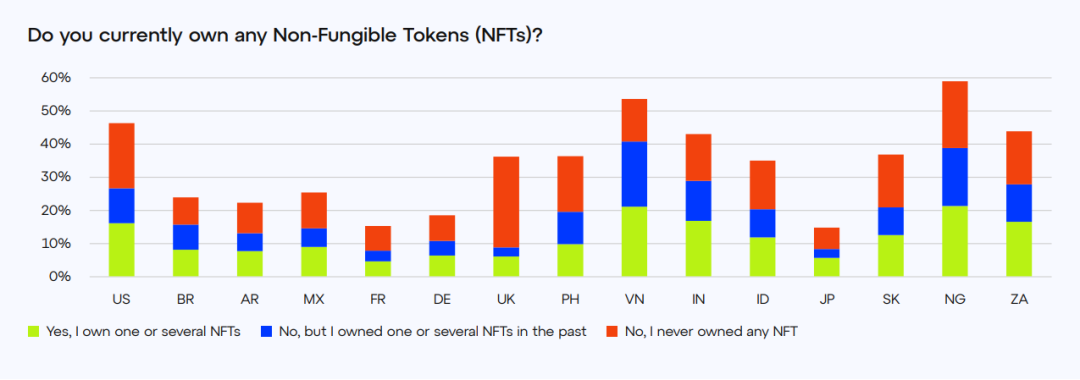
Vietnam, India, and South Africa are the countries where respondents most commonly own NFTs; European countries report the lowest ownership. However, these figures are constrained by limited awareness in most countries.
How many NFTs do you currently own?
05 Summary
-
While global awareness of crypto assets is relatively strong, awareness of web3 remains low.
Overall, a large majority (about 92% globally) have heard of crypto assets. However, disparities remain, with Nigeria, South Africa, and Brazil leading in awareness. Despite high global awareness of crypto assets, only 8% of respondents consider themselves very familiar with the concept of web3. This highlights a disconnect between public perception of web3 and its potential as a solution to today’s internet challenges around privacy, identity, and digital ownership.
-
People desire greater ownership and data privacy
Although many respondents are unaware of web3, substantial support exists for the underlying values and potential of Tech Crypto and its ecosystem. 50% believe they add value to the internet, and 67% believe they should own what they create online. Additionally, 62% of global respondents feel their creative contributions are inadequately compensated.
Concerns about data privacy are also prominent—83% of respondents prioritize data privacy, 70% believe they should share in profits derived from their data, and 79% want greater control over their online identities. These findings underscore the importance of helping people understand how web3 can give them greater agency over their identity and ownership online, offer stronger privacy assurances, and enable sharing in profits currently captured by companies via users’ online activities.
-
Regional Differences
Another clear divide emerges when comparing views across countries. European nations show greater skepticism toward crypto—a sentiment mirrored in countries like Japan and South Korea. In these regions, crypto is more strongly associated with negative connotations such as illicit uses. In contrast, most countries in Southeast Asia, South America, and Africa generally exhibit more positive attitudes toward crypto and web3. Consequently, in these regions, crypto is more closely linked with concepts like future money, digital ownership, or alternatives to traditional financial systems.
Moreover, in countries like Argentina and Nigeria, where fiat currencies are unstable, crypto is viewed as a vital means to access global capital and hedge against inflation.
-
From “Users” to “Builders”: A Paradigm Shift
The findings indicate an encouraging shift in mainstream attitudes: people want more control over the data they share online and fairer profit-sharing with creators. However, a significant gap exists between awareness of crypto and actual understanding and use of web3 technologies. This disconnect presents a valuable opportunity for mainstream web3 applications to address the agency deficit in today’s internet landscape.
We see an opportunity for internet users to adopt a “builder” mindset—recognizing that web3 products can solve pressing issues around online ownership, identity, privacy, and creator tokenization.
This is why builders in web3 must focus on rebuilding public engagement around Tech Crypto. The industry needs to build trust and understanding of web3’s potential by deeply understanding public perceptions and attitudes toward Tech Crypto.
Join TechFlow official community to stay tuned
Telegram:https://t.me/TechFlowDaily
X (Twitter):https://x.com/TechFlowPost
X (Twitter) EN:https://x.com/BlockFlow_News
 白话区块链
白话区块链