








Reserve: A Permissionless Asset Creation Platform, Can It Launch a Growth Flywheel?
TechFlow Selected TechFlow Selected
Reserve: A Permissionless Asset Creation Platform, Can It Launch a Growth Flywheel?
In the near future, we will witness a rapid growth in the market capitalization and number of RTokens.
 Navigating Web3 tides with focused insights
Written by: DeFi Made Here
Compiled by: TechFlow
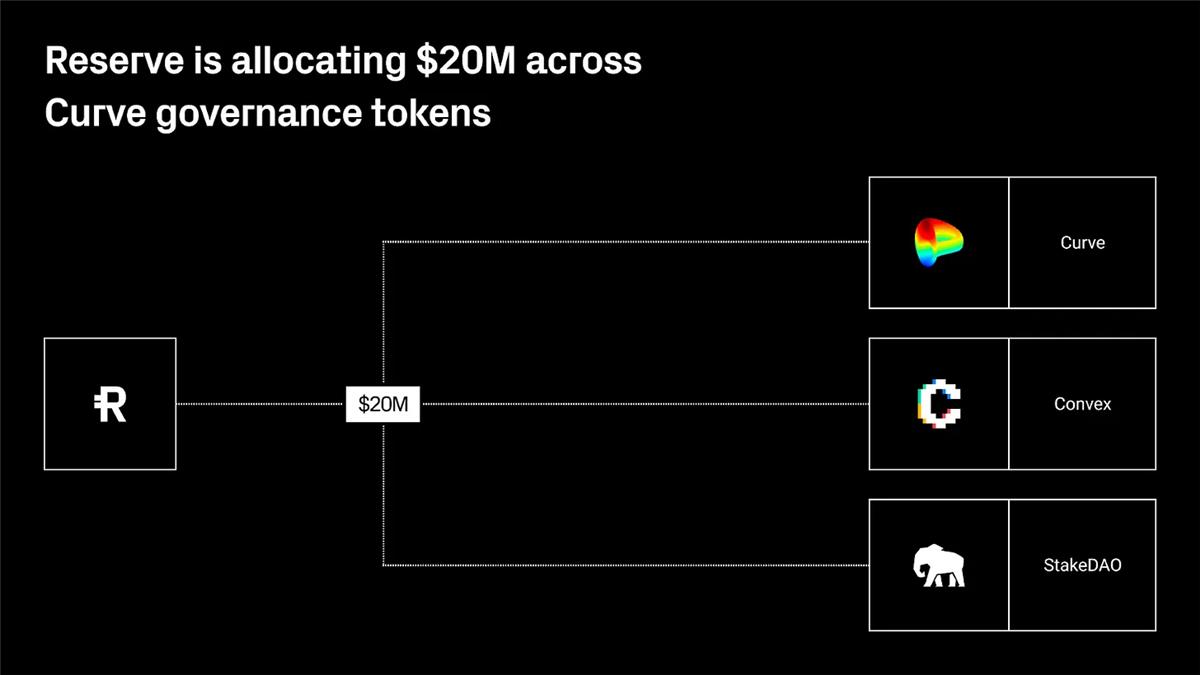
Last week, stablecoin developer Reserve announced a $20 million investment into governance tokens of Curve, Convex, and Stake DAO. Can this permissionless asset-issuance platform become the marketplace for asset-backed money?
What is Reserve Protocol?
Reserve Protocol is a platform that allows permissionless creation of stable and decentralized assets. These assets are known as RTokens and are backed by user-defined ERC20 tokens.
RToken backing can include yield-bearing tokens such as LP tokens from Convex Finance or receipt tokens like cUSDC from Compound Finance.
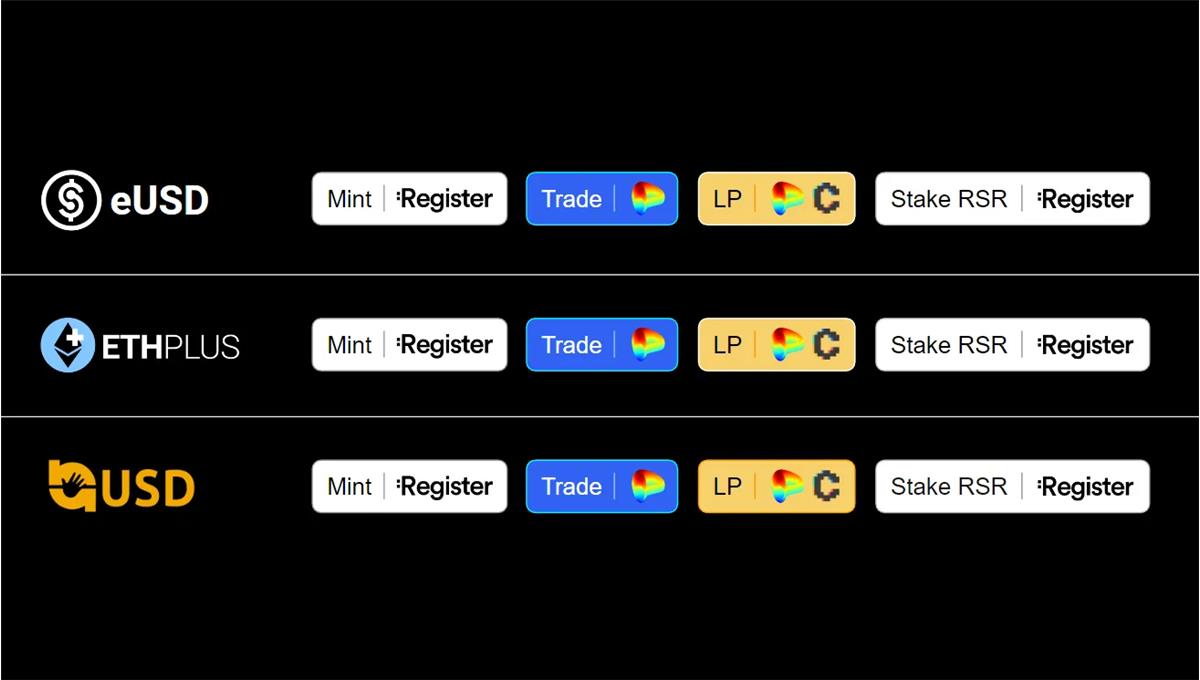
RTokens can also be over-collateralized through staking $RSR (more on this later). In less than 120 days, the protocol has launched three RTokens with a combined market cap of approximately $23 million:
• eUSD——An antifragile stablecoin already proven during the Silicon Valley Bank crisis.
• ETH+——A diversified ETH staking index offering up to 4.5% annual yield.
• hyUSD——A secure high-yield savings dollar offering up to 8% annual yield.
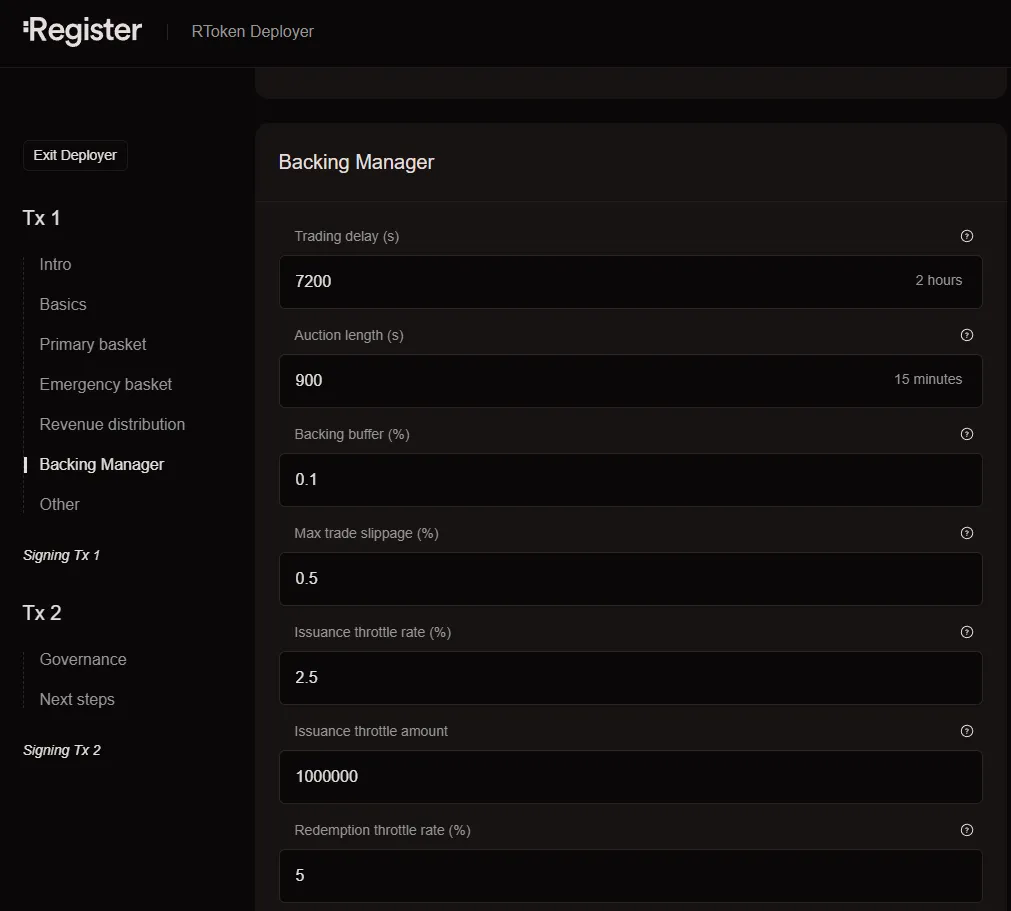
Anyone can access Reserve Protocol’s decentralized application (dApp) and configure the following parameters to create their own stablecoin tailored to specific needs:
• Token name;
• Token symbol;
• Basket of backing assets;
• Emergency collateral;
• Revenue distribution;
• And more (21 customizable parameters + 7 governance parameters).
By configuring these parameters, users can create stablecoins that align precisely with their preferences and requirements.
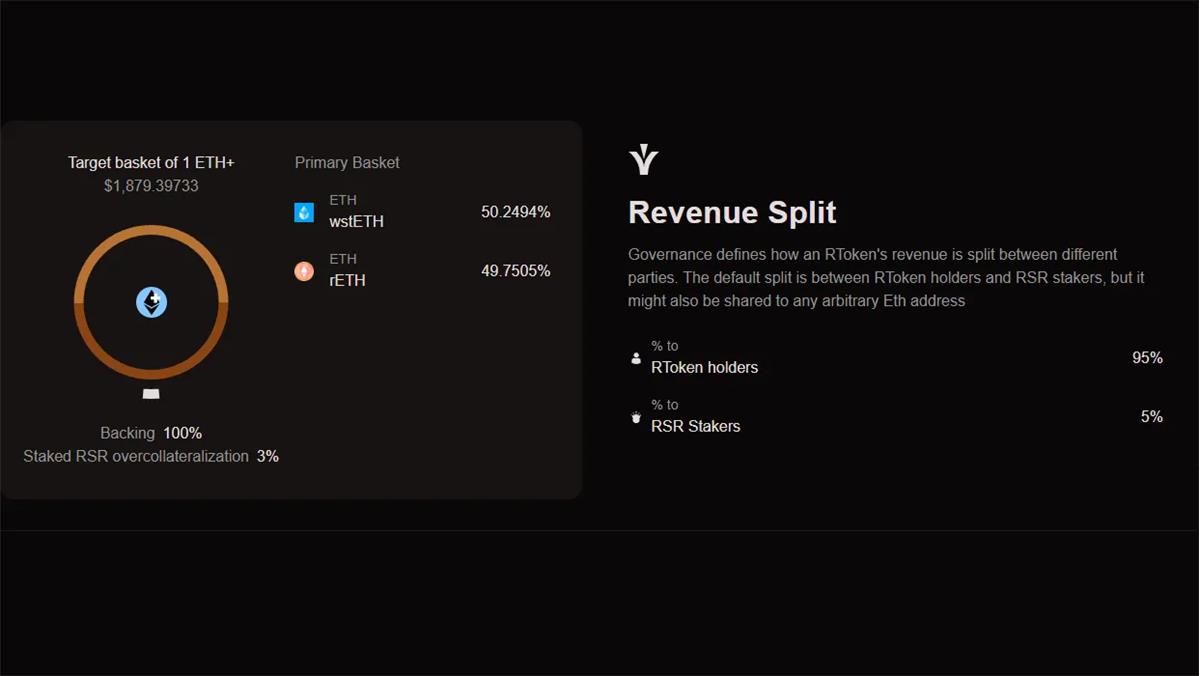
The token issuer can decide how much revenue is allocated to RToken holders, other wallets (e.g., “their treasury”), or $RSR stakers.
To provide additional over-collateralization support for RTokens, yield incentives can encourage $RSR stakers to participate. This mechanism aims to attract more stakers, thereby strengthening asset backing and stability.
In the event of collateral default, stRSR may be slashed, as occurred when eUSD became detached from USDC.
At that time, USDC was replaced with emergency collateral (USDT), leaving eUSD approximately 98% backed. To cover the remaining 2% gap before regulatory intervention or bank reopening, stRSR was then slashed.
Why is Reserve investing in the Curve ecosystem?
To answer this question, we must first understand the functions of money:
• Store of value;
• Unit of account;
• Medium of exchange.

Reserve Protocol achieves the first two functions, but without liquidity, RTokens cannot serve as a medium of exchange.
Therefore, to achieve widespread usage and adoption, Reserve decided to invest $20 million to support RToken deployers. The goal is to increase RToken liquidity and accelerate their real-world application and adoption across markets.
There are currently no clear guidelines on who will receive liquidity incentives or at what scale, but likely candidates are those aligned with Reserve's ecosystem values.
This means allocating some revenue to $RSR stakers, maintaining relative safety, etc. Clearly, not all RTokens will receive liquidity incentives, and not all will succeed long-term.
Reserve's objective is to promote adoption of sustainable, inflation-resistant, stable currencies. A permissionless experimental market can accelerate this process.
Who might use RTokens?
• Entrepreneurs;
• Video games;
• Metaverse;
• DAO treasuries;
• Hedge funds;
• Applications, and more.
Any of these parties can deploy an asset-backed currency on Reserve tailored to their specific needs. The best example is eUSD (deployed on Ethereum and MobileCoin L1). The RPay (Latin America) and MOBY (borderless) apps already have over 500,000 users.
Thus, eUSD has already become a medium of exchange for people using these mobile applications.

Mobile Coin is already supported by the Signal app, which has over 100 million downloads. I expect that once eUSD gains further popularity, it could be integrated into Signal, significantly boosting its usability and acceptance.

Therefore, Reserve’s current strategy is to support new RTokens until they mature and become self-sustaining. This approach will help grow the Reserve ecosystem and enable RTokens to develop organic use cases.
Characteristics of RTokens
However, RTokens also have certain limitations (or advantages, depending on your perspective):
• 1:1 asset-backed design;
• Incentive model;
• Dependence on Curve.
Design
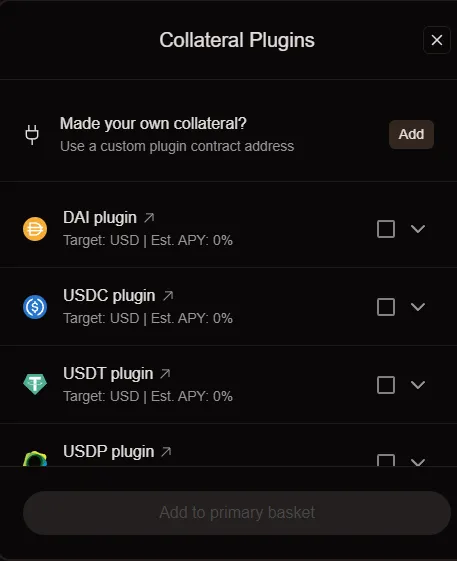
RToken deployers are limited to an asset-backed design. However, backing assets can take various forms, effectively giving RTokens the same structural characteristics as their underlying collateral.
Incentives
Instead of relying on token emissions or Ponzi-like economic models to incentivize RToken minting, deployers depend on unique use cases, organic appeal, and Curve liquidity incentives provided by the Reserve Protocol.
Curve Dependence
Like many stablecoin projects, Reserve relies entirely on the Curve ecosystem for liquidity. However, by the time an RToken reaches escape velocity and develops a self-reinforcing growth flywheel, Curve may or may not still be relevant.
Conclusion
I expect to see rapid growth in both the number and market capitalization of RTokens in the near future. RToken deployers benefit from free incentives and community support within the Reserve ecosystem. However, building a fully mature ecosystem where RTokens achieve broad adoption and function as a new form of reserve currency remains a long journey ahead.
Join TechFlow official community to stay tuned
Telegram:https://t.me/TechFlowDaily
X (Twitter):https://x.com/TechFlowPost
X (Twitter) EN:https://x.com/BlockFlow_News


