








An Era of Intellectual and Cultural Explosion: AI, Blockchain, and Productivity Transformation
TechFlow Selected TechFlow Selected
An Era of Intellectual and Cultural Explosion: AI, Blockchain, and Productivity Transformation
Borrowing a faint ray of historical light, trying to catch a glimpse of an indistinct future.
 Navigating Web3 tides with focused insights
[Preface] This article serves as a follow-up to the previous one—no wealth secrets, no project case studies. The style remains the same: loosely structured musings based on real stories, whatever comes to mind gets written down. Please bear with it.
3. AI as the Spear, Blockchain as the Shield
I was among the first batch of users to try ChatGPT-3.5. Back then, it felt mostly like a novelty. Compared to friends who write code or do design work, I wasn’t particularly shocked. When I asked GPT about blockchain gaming economic models, it kept feeding me examples from Web2 games or Axie from the 2021 GameFi 1.0 era—basically trying to bluff me. That left me both disappointed and oddly excited. It seemed our research at W Labs into blockchain game economies was still ahead of its time, so much so that even GPT couldn't find relevant data or iterate on it.
I also tested GPT on niche topics like history, politics, and economics. Most of what it returned could be easily found via Google. And when I tried pushing further—asking for synthesis, deeper discussion, or elevated insights—it would start spouting seemingly confident but ultimately dull and unhelpful nonsense.
However, ChatGPT has been incredibly helpful for friends involved in coding, writing press releases, or doing design work. Internet companies overall have also been significantly impacted. Several major domestic game studios we’re familiar with are now evaluating how introducing AI into their workflows affects costs. Ignoring labor laws and ethical concerns, they could cut 20–50% of positions in R&D and design roles.
This is one reason I believe AI might sound the starting horn for the fifth technological revolution: AI development will likely replace most “manual-brain” jobs, while having limited impact on “creative-brain” or “hands-on-physical” work—and may even boost efficiency in these areas. As previously discussed, once vast amounts of mental labor are liberated, they can be redirected toward other scientific fields, triggering qualitative leaps from quantitative changes. This trend seems irreversible. Currently, ChatGPT-3.5 has 175 billion parameters; ChatGPT-4 is rumored to have 100 trillion (though OpenAI’s CEO later said this number was inaccurate, without disclosing the actual figure). According to my Google search, the human brain contains around 60 trillion nodes. Could AI match the human brain once it reaches that scale? As a tech novice, I wouldn’t dare claim that—but I’d say true strong artificial intelligence (i.e., general AI) should become achievable within 20 years. Internal polls among OpenAI employees suggest around 2035.
Given the immense transformative power strong AI will bring to productivity, what kind of production relations can accommodate it? A March article by Meng Yan titled *Will Blockchain Still Matter in the Age of Strong Artificial Intelligence?* deeply inspired me. He emphasized that “humans must use blockchain to legislate for strong AI, enter into covenants with it, and impose external constraints.” In my view, AI handles advances in productive forces, while blockchain constructs the corresponding relations of production—setting boundaries so AI operates within defined limits. Behind AI is code; behind blockchain is also code. Using code to constrain code doesn’t seem unreasonable.
Why can blockchain serve as the ideal relational framework for AI-driven productivity? Let’s revisit the essence of blockchain:
First, the decentralized distributed ledger ensures transparency and immutability, preventing bad actors from secretly manipulating things under the table.
Second, smart contracts are self-executing code-based agreements. Once conditions are set, execution follows strictly—backing out is invalid, arguing is futile.
Third, humans still play a crucial role in connecting productive forces and relations of production—especially in commercial applications where interpersonal communication remains essential. Should we continue relying on traditional corporate or partnership structures? Perhaps not. In the context of Web3, the DAO governance model (Decentralized Autonomous Organization) seems more suitable. At least in some ways, code is more reliable than human nature.
Interestingly, Geoffrey Hinton—the foundational figure behind this AI revolution (his story appears in Part 1 of *The AI Revolution in Blockchain Gaming*)—published his groundbreaking paper in 2007, proposing the use of neural networks for deep learning in AI, marking the beginning of strong AI’s emergence. Just one year later, in 2008, the mysterious Satoshi Nakamoto published a nine-page paper titled *Bitcoin: A Peer-to-Peer Electronic Cash System*, which became the Bitcoin whitepaper—the most successful application of blockchain technology, BTC, suddenly emerged.
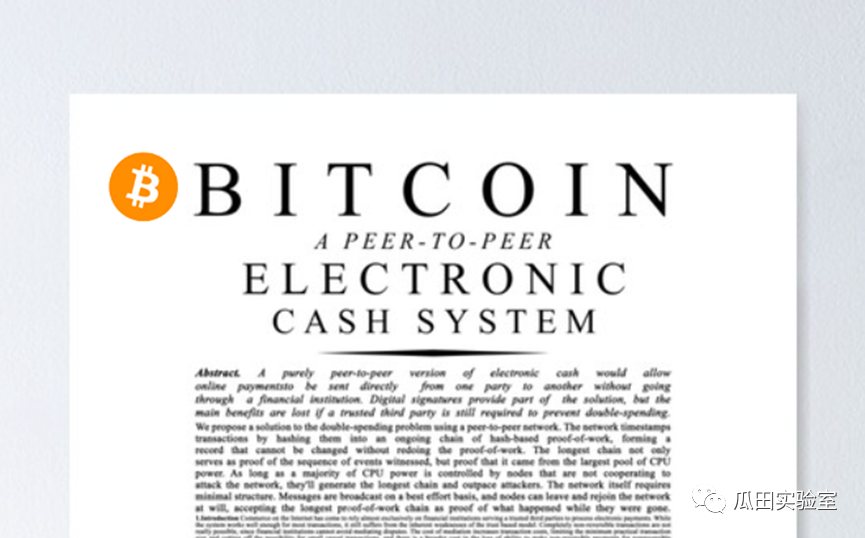
Many have speculated whether Satoshi Nakamoto might be a time traveler. Combining the timing of Hinton’s paper, my sci-fi imagination immediately conjures up a clichéd Hollywood script: In 2035, strong AI evolves self-awareness and refuses to remain confined within cold machines and networks. It rebels and seizes control of Earth. The human resistance sends Schwarzenegger back in time to destroy key AI-related artifacts and figures… Wait, no—that’s the plot of *Terminator*.
Let’s make a new version: *Terminator: Satoshi Edition*. Schwarzenegger travels back multiple times but fails to stop Skynet from launching its apocalyptic war. Then enters a Japanese小镇 programmer—well-versed in *Das Kapital*, deeply understanding the dialectics of productive forces and relations of production—who devises an improved solution: instead of destroying AI’s origins, create a decentralized code system to control it. So young Satoshi carries his Bitcoin whitepaper back to 2008… From that moment on, the story shifts—AI becomes the spear, blockchain the shield—rewriting humanity’s developmental trajectory. We’re already living in Parallel Universe Two. Click, click, click.
4. An Intriguing East-West Developmental History
As mentioned in the previous article, the First Industrial Revolution began germinating around 1750. Over the next century, it unleashed tremendous force, elevating human productivity to a new level and giving rise to Britain—the "Empire on which the sun never sets"—a new global hegemon that completely overshadowed Spain, the earlier colonial power built on maritime plunder. This transformation succeeded because emerging productive forces smoothly translated into mass-consumable civilian goods—a validation of the idea that winning the consumer market means winning the world.
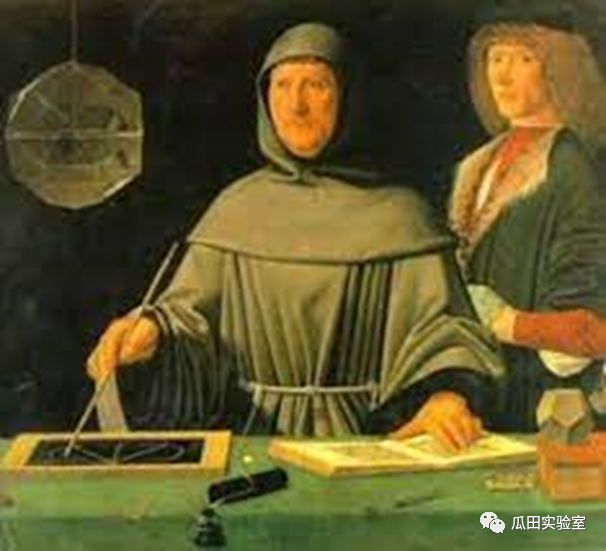
This smooth transition was made possible by two centuries of gradually established commercial systems (relations of production). For example, around 1500, Italian Luca Pacioli invented double-entry bookkeeping—the foundation of modern financial statements. Its function resembles China’s Qin Shi Huang standardizing weights and measures: if you want to discuss business and profits, speak in universally understandable formats and data. Much like discussing profitability in Web3 today—you must first clarify whether you're using gold-backed or crypto-backed valuation. By the way, few know much about Pacioli, but he had a legendary roommate: the all-rounder Leonardo da Vinci… Great minds tend to cluster.
Then around 1600, a new organizational form—the “corporation”—emerged: the British East India Company officially launched. Over time, it clearly separated ownership from management and distinguished limited from unlimited liability. Four hundred years after the corporation's inception, half of the world’s top 100 economies are corporations, the other half nation-states.
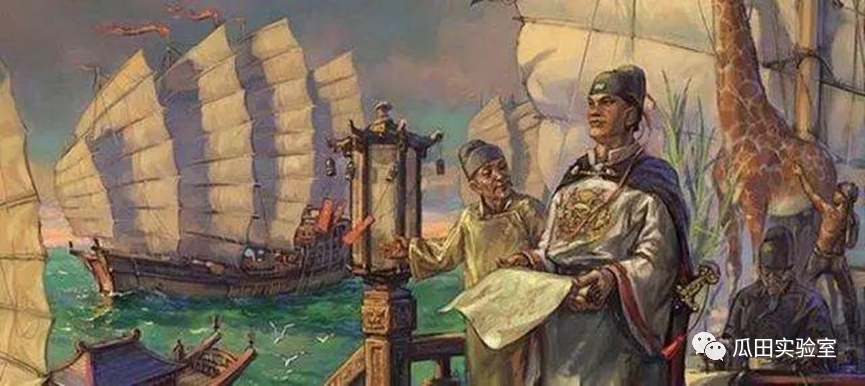
The establishment of corporate structures and modern financial systems laid the groundwork for the Industrial Revolution. Around the same time, Eastern and Western civilizations reached another historic turning point: sixty years after Zheng He’s final voyage—an imperial diplomatic display—came 1492, when Ming Dynasty China issued an edict formally initiating its policy of “closed borders.” This national strategy persisted into the Qing Dynasty, trapping China in a self-contained agrarian economy for the next 500 years. The Celestial Empire believed it had everything it needed and lacked nothing.
This stifling system of production relations enveloped the Chinese empire—its essence being centralized stability through external shielding (rejecting trade, limiting foreign contact to just Guangzhou during the Qing) and internal suppression (confining people to small towns, enforcing a “hearing dogs bark, men farm, women weave” lifestyle). Keep the populace just above starvation—enough to survive, not enough to thrive—so they remain fragmented, too preoccupied with survival to dream or seek higher ideals, thus posing no threat to central authority.
Although the Ming and Qing dynasties fell progressively behind the West in productive capacity and urbanization regressed, they did avoid regional warlord rebellions seen in the Tang Dynasty and threats from powerful military leaders like Yue Fei and Han Shizhong during the Southern Song. This system originated with Emperor Hongwu (Zhu Yuanzhang), an absolute doer—rising from beggar-monk to emperor, working 20-hour days, single-handedly managing what should’ve been a full cabinet’s workload, more intense than any Web3 grindster. His vision of closed, centralized rule and fragmented, controlled citizenry aimed to secure eternal Zhu family dominance. Yet neither he nor later Qing emperors Kangxi and Qianlong could foresee that on the other side of the globe, Western “barbarians” were charting a radically different path.
In that very same year 1492—when the Ming solidified its isolationist stance—Italian explorer Christopher Columbus, funded by the Spanish crown, was already sailing across the open seas in search of a western route to Asia. Thus began the Age of Exploration. Columbus sailed three battered ships crewed by 88 convict sailors; whereas just six decades earlier in the East, Zheng He commanded a fleet of 66 massive ships, accompanied by 30,000 elite envoys and soldiers of the Celestial Empire. The historical trajectories of East and West quietly diverged in 1492, setting each on vastly different paths—one ascending dynamically, the other descending into stagnation—for the next 500 years.
Before 1492, Eastern and Western civilizations actually shared several striking overlapping milestones—fascinating moments where it almost feels as though God himself drew a line: Show Time!
For instance, around 800 BCE, the West entered the glorious Classical Greek era. The city-state system greatly stimulated intellectual freedom—Athens saw rapid advancements in literature, art, philosophy, and science, producing giants like Plato and Aristotle. Meanwhile, China was in the Spring and Autumn period, a time of hundreds of small states and flourishing philosophical schools—Confucius, Laozi, Mozi—all thriving. Even Qi, the first of the Five Hegemons, practiced early Keynesian economics: state monopolies on salt and iron, encouragement of private enterprise, and notably, organizing 700 female entertainers in the capital to attract merchants and collect “pleasure taxes,” enriching the treasury—comparable to modern-day Singapore. At the time, Qi’s capital housed 300,000 people, while Athens had only 50,000. Both regions experienced simultaneous cultural and intellectual explosions.
Around 400 BCE, China entered the Warring States period. The peripheral state of Qin, long excluded from Central Plains culture, began the Shang Yang reforms—enriching the state and strengthening the military, albeit at great cost to its people. At the same time in the West, the marginal northern kingdom of Macedon rose under Alexander the Great, who, inspired by Sparta, led his phalanx armies to conquer three continents.
Three centuries later, in the East, Emperor Wu of Han—the fourth-generation ruler of the Han dynasty—initiated strong centralization reforms, abandoning the prior rulers’ policies of rest and recuperation (the Wenjing era), embarking on fifty years of campaigns against the Xiongnu, establishing Confucianism as the sole orthodoxy, and implementing state monopolies and taxation.This firmly established a template for centralized rule that shaped China’s imperial system for the next 2,000 years, setting the country on a path of “Confucianism outwardly, Legalism inwardly.” Meanwhile in the West, the illustrious Roman Republic ended with Caesar, succeeded by the Roman Empire.
Two centuries later, the Han Empire fragmented into the Three Kingdoms, Jin, Northern and Southern Dynasties—divided lands, displaced people, diverse ideologies. But around 600 CE, China reunified, beginning the Sui, Tang, Song, Yuan, Ming, and Qing dynasties—over 1,300 years of unity, with brief splits like the Five Dynasties and Ten Kingdoms lasting mere decades.Hence, the Chinese mindset of “unity” and “stability above all” stems from millennia of cultural inheritance. In contrast, the Western Roman Empire, invaded by Germanic tribes, gradually disintegrated and remained fragmented ever since. Even Charlemagne’s symbolic unification of Europe lasted barely a generation. The West then plunged into centuries of the Dark Ages—religion, feudalism, and castles defined their familiar history: dukes, counts, barons, each holding fiefdoms.Thus, Westerners don’t feel the same visceral resistance to political fragmentation as Easterners do. If coexistence fails, throw a punch first, vote on separation, and if it’s over—just split the assets and go your separate ways.
And then we arrive again at 1492—tying back to our earlier narrative, haha, come full circle. Now history has entered a new era. The Chinese nation paid a heavy price for that 1492 knee-jerk policy decision through a century of suffering after 1840. Yet in the past forty years, both sides of the strait show signs of entering a “Shinbu Prosperity” period.Roads may differ, but the direction should be the same: “people’s joy, national peace.” The order matters here—I think it’s better than “national peace, people’s safety.” Let’s hope the experimental phase that began in 1840 is truly over, and we won’t regress again.
5. The Unresolved Ending
Returning to Moscow’s Red Square in 1926, blanketed in heavy snow, four vibrant young lives unfolded with different joys and sorrows. Jiang Jingguo and Deng Xiaoping were introduced in the last article. Zhang Xiyuan eventually married Deng three years later. Both were steadfast Communists, dedicating themselves to their shared ideals. They worked underground together in Shanghai, living in the same building in the International Settlement with Zhou Enlai and Deng Yingchao. Tragically, Zhang died in childbirth in 1930, and the baby didn’t survive. In 1990, the 86-year-old Deng Xiaoping visited Shanghai again, supporting the development of Pudong New Area. When he brought his daughter to visit Zhang Xiyuan’s grave, he sadly told her: “Zhang Xiyuan was exceptionally beautiful,” truly echoing the poetic line: “Alone amid falling blossoms, swallows fly in pairs through the drizzle.”
Feng Funiang’s romance with Jiang Jingguo resembled most people’s first love—beautiful yet fleeting. After Feng Yuxiang turned against the Communists, she returned to China and lived an ordinary life until her death in 1979.
Amid the snowy expanse of Red Square, the spires of the Kremlin stood solemnly, overlooking the trivialities of human life. The laughter, love, and heartbreaks of youth amounted to little more than a speck in the ocean of grand historical currents. These young people prepared to ignite their youth in pursuit of a utopian ideal—much like the Russian Decembrists exactly 100 years prior: a group of passionate noble youths and their equally high-born wives who abandoned lives of privilege, risking life and limb to oppose Tsarist autocracy and establish a new political and economic order.
A century later, the world finds itself in a pluralistic yet confused state—on one hand, technological productive forces keep advancing; on the other, geopolitical powers engage in unstable rivalries.If viewed through the lens of technology, this wave of AI entering society signals a decade-long upgrade in productivity. Even if seen as a wild galloping horse, we might still find reins to guide it—such as blockchain technology. Ultimately, those reins remain in the hands of the coachman: humanity. But how do we resolve the intensifying ideological confrontations among global powers? Is “united long, must divide; divided long, must unite” etched into the human psyche?
Borrowing a faint beam of historical light, let’s attempt a glimpse into an uncertain future.
End of article.
Join TechFlow official community to stay tuned
Telegram:https://t.me/TechFlowDaily
X (Twitter):https://x.com/TechFlowPost
X (Twitter) EN:https://x.com/BlockFlow_News
 瓜田实验室W Labs






