








A Brief Analysis of the Crypto Market's Reaction and Impact in Response to SEC Allegations
TechFlow Selected TechFlow Selected
A Brief Analysis of the Crypto Market's Reaction and Impact in Response to SEC Allegations
If a large number of cryptocurrencies are classified as securities, it will fundamentally change the way the cryptocurrency industry operates.
 Navigating Web3 tides with focused insights
Author: @jinzejiang0x0, LD Capital
Summary:
-
The U.S. Securities and Exchange Commission (SEC) has filed formal lawsuits against cryptocurrency exchanges Binance and Coinbase, triggering a chain of events including massive market sell-offs and delistings of tokens categorized as securities;
-
The SEC's allegations against Binance are more severe, including fraud, commingling of assets across entities, and acting as a counterparty to client trades;
-
The market reacted sharply—the 18 tokens defined by the SEC as "securities" saw an average price drop of 28.8%, compared to BTC’s decline of 7.4%. Despite being sued for the first time, BNB’s market share even slightly increased, showing relative price resilience;
-
Among the tokens labeled as securities by the SEC, public blockchains dominate with 13 out of 18, followed by entertainment and metaverse projects at 4 out of 18, which also experienced larger declines;
-
This report forecasts potential future scenarios arising from the SEC lawsuits, including legal implications and market reactions, and discusses progress in crypto-industry legislation;
-
The report compiles precedents from past crypto-related cases, including illegal token offerings and unregistered investment products.
On June 5 and 6, the U.S. Securities and Exchange Commission (SEC) alleged that 19 types of digital tokens traded on cryptocurrency exchanges Binance and Coinbase are essentially securities, sparking a sharp market-wide sell-off.
SEC Allegations
The SEC accused Coinbase of operating an unregistered securities exchange, broker-dealer, and clearing agency, as well as offering an unregistered crypto staking service. However, the allegations against Binance go further. In addition to the same charges as Coinbase—operating unregistered securities exchanges, broker-dealers, and clearing agencies—the SEC also accused Binance of activities similar to those of FTX: fraud, cross-entity commingling of assets, and acting as a counterparty in client trading. The SEC did not bring such allegations against Coinbase.
The SEC has sent a clear warning to financial markets: most digital crypto assets are securities—a stance that could impose strict regulatory requirements on digital asset exchanges.
Since Gary Gensler was sworn in as SEC Chair in 2021, the industry has anticipated stricter cryptocurrency regulation. While serving as a blockchain professor at MIT, Gensler noted that many cryptocurrencies are likely securities, meaning they should fall under SEC oversight and be subject to U.S. jurisdiction.
The SEC has already taken enforcement actions against several industry players, including Ripple Labs, LBRY, Kraken, and Bittrex. Now it appears that prior actions against smaller firms may have been preparatory steps before targeting the two largest exchanges.
Chain Reaction
These lawsuits and their aftermath have triggered a chain reaction throughout the industry. In response to SEC actions, Binance.US announced the suspension of USD deposits and withdrawals. Binance stated that challenges imposed by the SEC on its banking partners had disrupted fiat on- and off-ramps.
Robinhood, a prominent brokerage firm, decided to delist crypto tokens classified by the SEC as unregistered securities. After June 27, the platform will no longer support tokens such as Cardano (ADA), Polygon (MATIC), and Solana (SOL). Prior to the SEC action, Robinhood reportedly held $583 million worth of MATIC, SOL, and ADA.
Crypto.com announced the shutdown of its institutional exchange, citing insufficient demand due to the evolving U.S. market landscape. This reflects the challenges faced by crypto companies in attracting institutional investors such as pension funds, mutual funds, and university endowments, who are becoming more cautious amid volatile market conditions and heightened regulatory scrutiny.
On June 16, Binance came under investigation by French authorities for allegedly providing digital asset services illegally and engaging in serious money laundering. On the same day, Binance announced its exit from the Dutch market, stating it would cease services for users in the Netherlands due to its inability to register there.
Market Shifts
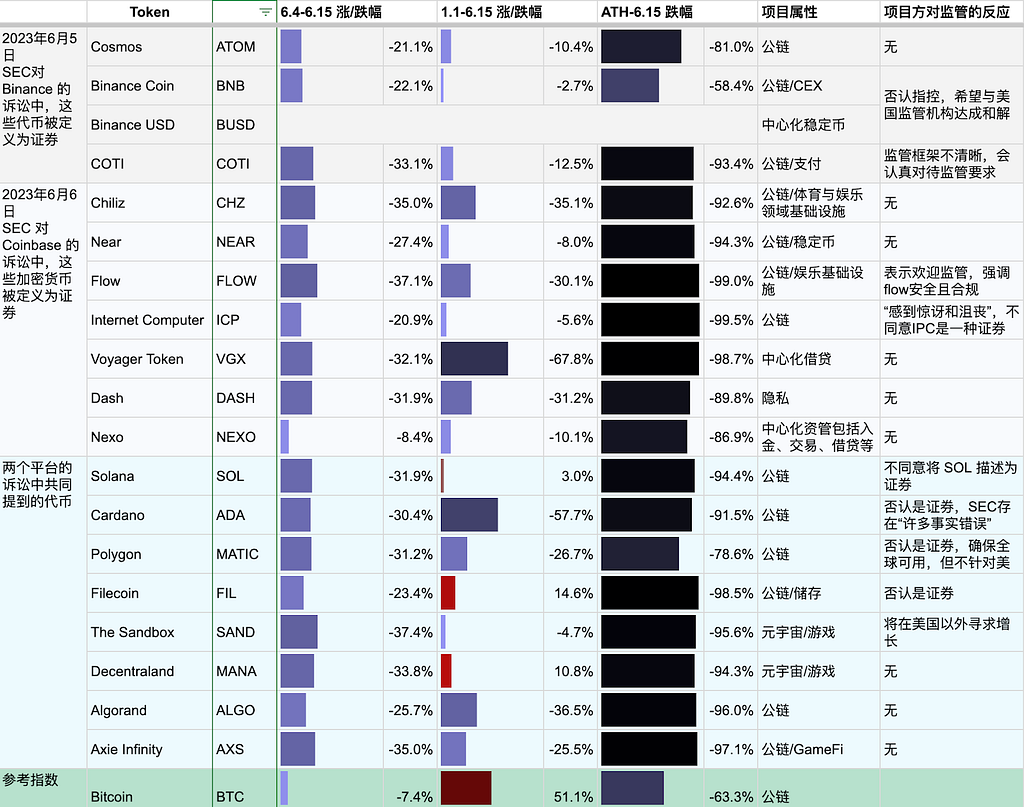
Table 1: Overview and price changes of tokens mentioned in the June SEC lawsuits as potential securities. Source: Coinmarketcap, Coingecko, TrendResearch
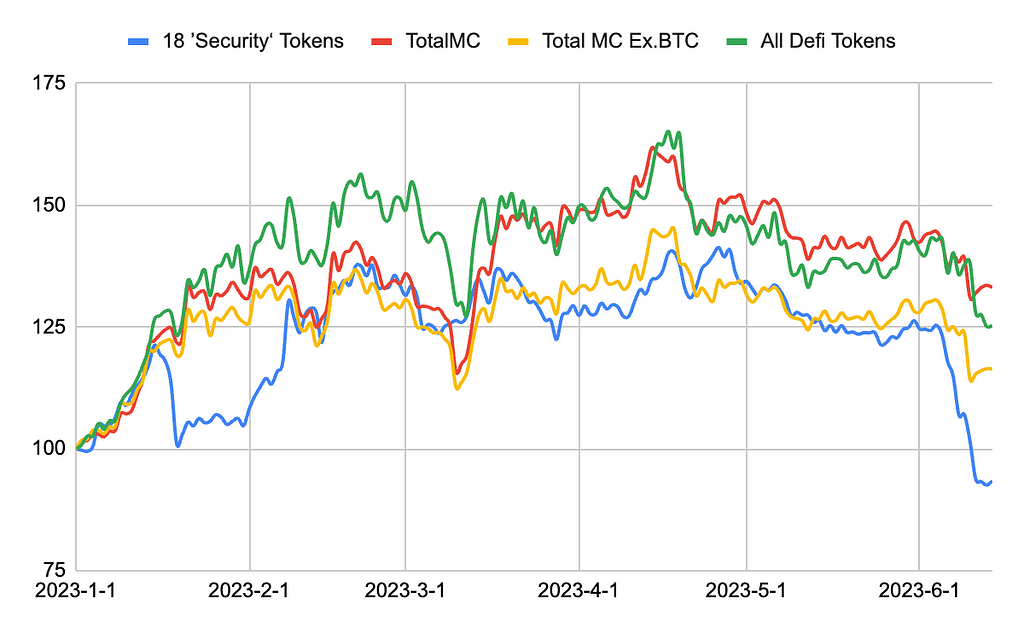
Figure 1: Comparison of the combined market cap of 18 tokens defined by the SEC as "securities" versus total crypto market cap, altcoins (excluding BTC), and DeFi tokens since 2023. Source: Coinmarketcap, Coingecko, TrendResearch
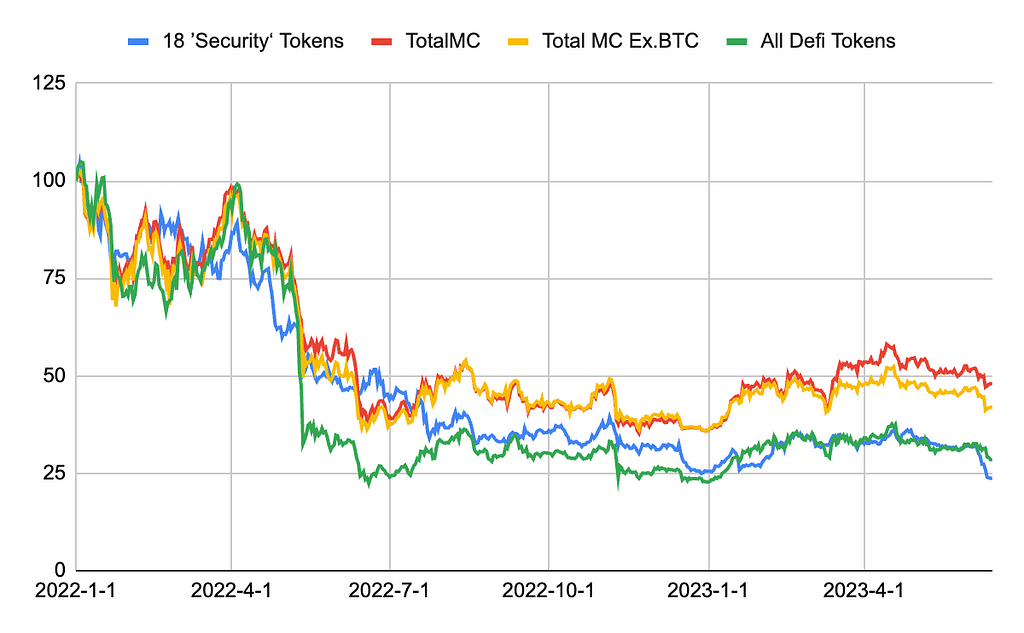
Figure 2: Comparison of the combined market cap of 18 tokens defined by the SEC as "securities" versus total crypto market cap, altcoins (excluding BTC), and DeFi tokens since 2022. Source: Coinmarketcap, Coingecko, TrendResearch
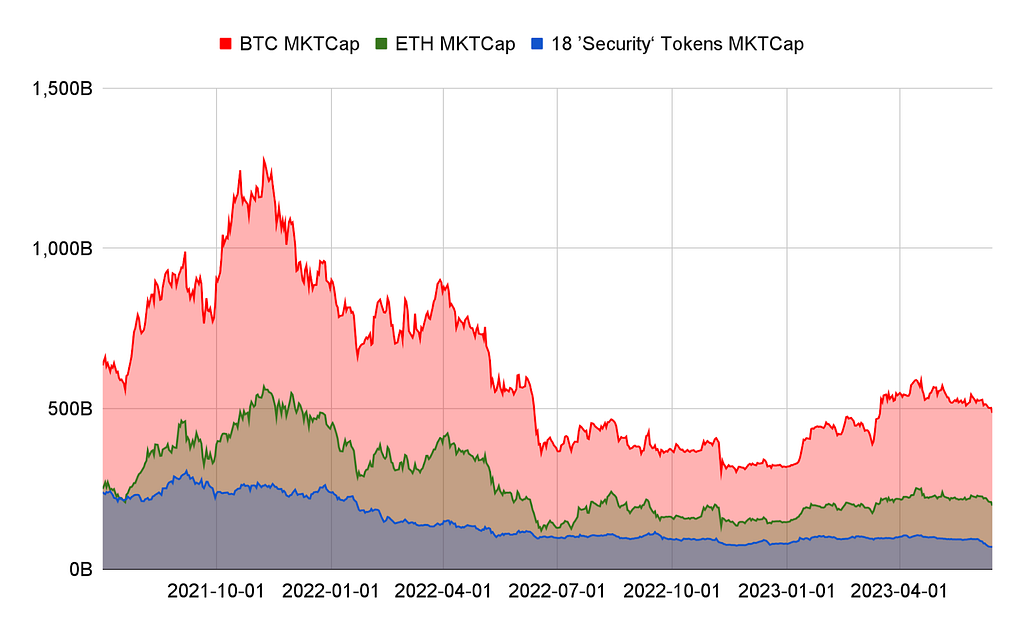
Figure 3: Comparison of the combined market cap of 18 tokens defined by the SEC as "securities" versus BTC and ETH market caps. Source: Coinmarketcap, Coingecko, TrendResearch
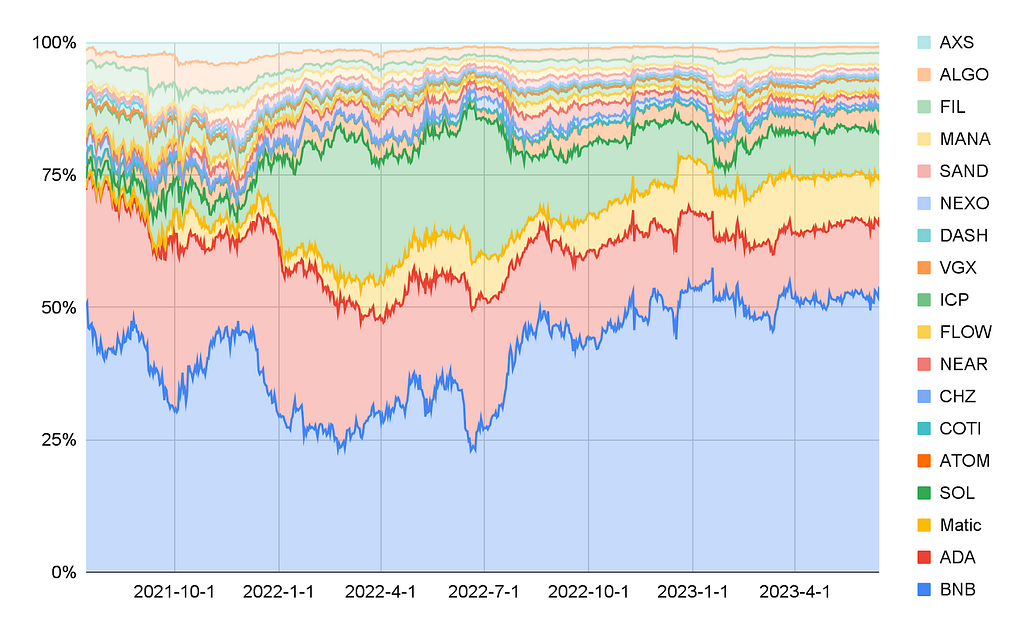
Figure 4: Market cap changes of 18 tokens defined by the SEC as “securities.” Source: Coinmarketcap, Coingecko, TrendResearch
We analyzed recent price movements of crypto tokens identified by the SEC this month as potential securities. Excluding BUSD, among the 18 named tokens, we observe:
Table 1 shows that most are public blockchains (13/18), followed by entertainment and metaverse projects (4/18), and asset management/lending (2/18);
Figure 4 shows that BNB has consistently accounted for over 50% of the group’s market cap. Even after being sued by the SEC for the first time, its market share slightly increased, indicating relative price resilience. Since early June, these tokens have fallen an average of 28.8%, compared to BTC’s 7.4% decline—indicating substantial losses;
Figure 3 shows that the peak market cap of these 18 tokens occurred in September 2021, exceeding $300 billion. Their lowest point came this month following the SEC regulatory crackdown, dropping to just $70 billion;
Since early June, the three worst performers were FLOW (-37.1%), SAND (-37.4%), and CHZ (-35.0%)—suggesting entertainment-related tokens suffered greater losses;
Since early June, the least affected were NEXO (-8.4%), ATOM (-21.1%), and BNB (-22.2%). NEXO had already settled with the SEC earlier in the year by paying a fine, so it was least impacted. BNB, being the highest-market-cap token among those charged (nearly $50 billion pre-drop), naturally exhibits lower volatility. That ATOM, with a market cap of only a few billion dollars, also showed limited downside indicates resilience;
From their respective all-time highs, these tokens have averaged a 91% decline. The smallest drops were BNB (-58.4%), MATIC (-78.6%), and ATOM (-81.0%). Notably, BNB and ATOM were also among the least affected since early June, suggesting consistent price resilience;
From their all-time highs, the largest declines were ICP (-99.5%), FLOW (-99%), and FIL (-98.5%). Yet ICP fell only 5.6% this year, and FIL gained 14.6%, indicating reduced downward momentum after major corrections;
Figure 1 shows that before the June regulatory event, the 18 tokens underperformed the broader market in 2023. After the event, their underperformance widened, erasing all previous gains and turning negative for the year;
Figure 2 shows that extending the timeline back to early 2022, these 18 tokens still lagged the overall market, though they performed better than DeFi tokens during much of 2022.
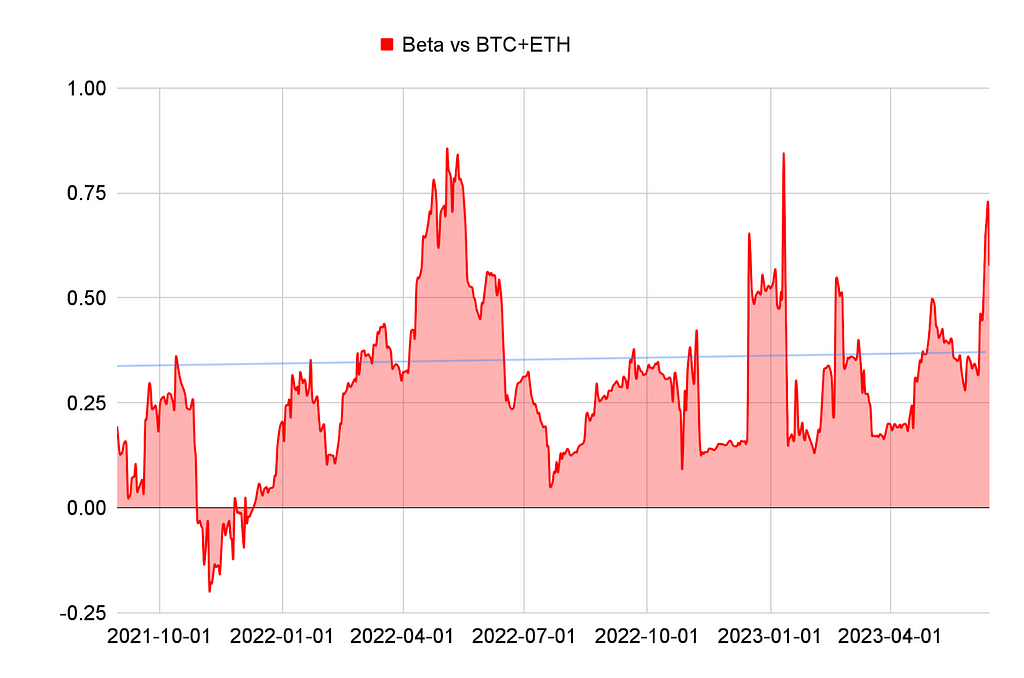
Figure 5: 30-day rolling Beta values of the 18 SEC-defined “securities” tokens relative to BTC+ETH. Source: Coinmarketcap, Coingecko, TrendResearch
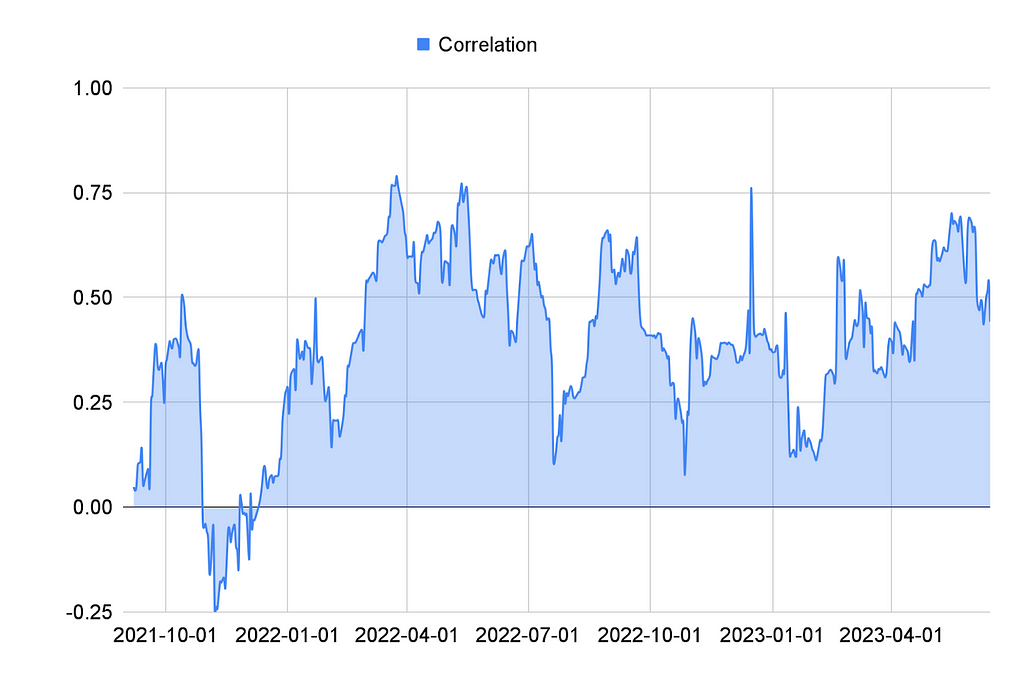
Figure 6: 30-day rolling correlation of the 18 SEC-defined “securities” tokens with BTC+ETH. Source: Coinmarketcap, Coingecko, TrendResearch
Beta represents the systematic or market risk of a security relative to a benchmark index. If Beta is greater than 1, the security’s price may be more volatile than the benchmark; if less than 1, it may be less volatile.
The rolling Beta analysis reveals that the market cap volatility of this basket of “security” tokens is actually lower than that of blue-chip assets like BTC and ETH, which is unsurprising given diversification effects—individual tokens do not move in perfect sync due to differing project-specific cycles, thereby reducing the portfolio’s overall Beta relative to the benchmark.
The data show noticeable shifts in Beta and correlation over time, likely influenced by market conditions, token fundamentals, or macroeconomic factors. Higher Beta values indicate greater sensitivity to market movements. When market sentiment turns extremely optimistic or pessimistic, both correlation and Beta tend to rise, weakening the benefits of diversification.
Overall, a market-cap-weighted portfolio of these tokens has underperformed BTC and ETH over the past two years, highlighting that during bear markets, altcoins lack the price resilience of BTC and ETH.
What Is a Security?
Under U.S. law, whether something qualifies as a security largely depends on whether it resembles shares issued during corporate fundraising. The SEC currently applies the Howey Test, a 1946 Supreme Court ruling. Under this framework, an asset may fall under SEC jurisdiction if investors put in money with the expectation of profit derived from the efforts of others.
What Are the Implications of Being Classified as a Security?
Labeling a token as a security makes operating a crypto trading platform significantly more expensive and complex. Under U.S. rules, this classification imposes strict investor protection requirements on platforms and issuers. Exchanges would face ongoing regulatory scrutiny, potentially leading to penalties—or, in the worst case, criminal charges if law enforcement becomes involved.
If a large number of cryptocurrencies are classified as securities, it would fundamentally reshape how the crypto industry operates. First, compliance with securities laws would become essential, requiring these altcoins and their issuers to meet stringent regulatory obligations—including registration with the SEC, mandatory disclosures, and reporting duties.
Additionally, such classification could lead to potential trading restrictions. If most altcoins are deemed securities, they could only be traded on registered securities exchanges subject to specific rules and regulations. This could limit retail investors’ access and liquidity to these assets and introduce additional barriers to market participation.
For PoS public chains like Polygon or Binance Smart Chain, being labeled as securities raises numerous issues—such as accounting for transaction fees paid by users, KYC requirements for validators, tax implications, and whether any DeFi applications on-chain are legally authorized. These classifications could be more damaging to the long-term health of the industry than simply shutting down or exiting the U.S. market.
Potential Future Scenarios of the SEC Lawsuits
The lawsuits against Binance and Coinbase reflect the escalating tension between the government and the crypto industry. SEC Chair Gary Gensler has clearly stated that the U.S. does not need more digital currencies, emphasizing that the country already has a digital currency called the dollar. Treasury Secretary Janet Yellen also supports the SEC’s actions, favoring the use of regulatory tools to protect consumers and investors. This signals regulators are taking a firmer stance against crypto challenging the foundational principles of traditional finance.
Four possible developments may unfold in the future:
1. Regulatory enforcement expands to target more blockchain projects, particularly high-market-cap public chains. Recently, the SEC has primarily targeted exchanges. Among the 19 tokens mentioned in the litigation documents, excluding BUSD and NEXO, the SEC has not yet directly issued warnings or lawsuits—suggesting more enforcement actions may follow.
2. Civil charges escalate to criminal charges. Since the SEC and CFTC lack authority to bring criminal charges, such actions may not yet be imminent. Criminal charges against crypto exchanges or projects typically involve fraud, money laundering, or other illegal activities. These cases are usually handled by law enforcement agencies such as the FBI or the U.S. Department of Justice (DoJ). For example, last year the DoJ brought criminal charges against six defendants in four crypto issuance cases for alleged involvement in crypto-related fraud. Similarly, Sam Bankman-Fried (SBF) faces 12 criminal charges related to FTX and Alameda, including conspiracy to commit bank fraud and operate an unlicensed money transmitting business, wire fraud against FTX customers, securities fraud against FTX investors, and conspiracy to make illegal political contributions and defraud the Federal Election Commission.
3. The SEC or Gensler’s authority could be curtailed. Many U.S. politicians oppose the SEC’s aggressive regulatory approach.
For instance:
Senator Bill Hagerty tweeted: “The SEC is using its role to eliminate an industry. Allowing a company (Coinbase) to go public, then blocking it from registering as a compliant exchange.”
Senator Cynthia Lummis tweeted: “The SEC has failed to provide a registration pathway for digital asset exchanges, and worse, failed to offer clear legal guidance distinguishing securities from commodities.”
On June 16, Republican Representatives Warren Davidson and Tom Emmer introduced the “SEC Stabilization Act,” aiming to restructure the SEC and remove current Chair Gary Gensler. The bill proposes increasing the number of commissioners and adding oversight directors to prevent regulatory policy from being swayed by the personal views or political agendas of the SEC chair.
4. Prolonged legal battles or swift settlements with fines. Defendants may actively contest the charges, resulting in multi-year legal disputes—for example, the Ripple vs. SEC case, ongoing since December 2020, remains unresolved. Alternatively, if the defendants quickly comply, restructure operations, and accept fines, cases may settle rapidly—as seen when Kraken resolved its dispute with the SEC in under one month earlier this year.
Progress in Crypto Industry Legislation
Congress may pass a crypto regulatory framework, providing clearer rules for the operation of cryptocurrencies and related businesses in the U.S. Such clarity could stimulate further industry development and innovation. A draft bill co-sponsored by Representatives Patrick McHenry and Glenn Thompson, within the House Financial Services Committee, is considered the most viable legislative proposal. It seeks to clarify jurisdictional authority over certain digital assets and aims to “strike an appropriate balance” between consumer protection and responsible innovation.
The 162-page draft was released in early June and suggests that digital assets initially treated as securities could eventually be regulated as commodities. Whether an asset is a security or commodity largely depends on the degree of decentralization of the underlying blockchain network.
It proposes that if a network meets certain criteria—such as no single entity having unilateral control or material influence over the network’s functions in the past 12 months, and no issuer or affiliate holding more than 20% of the tokens—it can be considered decentralized, and qualifying tokens would fall under the jurisdiction of the Commodity Futures Trading Commission (CFTC).
However, this draft bill is expected to face strong opposition from Democratic lawmakers in Congress. SEC Chair Gary Gensler and some Democrats believe most digital assets should be classified as securities and that existing regulations are sufficient.
It remains unclear when this bill might reach a congressional vote, but it marks a significant step in the ongoing debate over digital asset regulation.
Precedents in Crypto Cases
Ripple (XRP): In 2020, the SEC sued Ripple Labs Inc. and two executives, alleging they conducted a $1.3 billion unregistered securities offering through a digital asset called XRP. The SEC argued that despite Ripple positioning XRP as a cryptocurrency, its distribution resembled a traditional securities offering and thus should be governed by securities laws. This remains the largest crypto-related lawsuit brought by the SEC. As of my knowledge cutoff (September 2021), the case was still ongoing with no final judgment.
Block.one (EOS): In 2019, the SEC reached a settlement with Block.one, which agreed to pay a $24 million fine to resolve allegations that its 2017–2018 EOS initial coin offering (ICO) violated securities laws. This case was significant as it demonstrated the SEC’s willingness to impose substantial penalties on ICOs violating securities regulations.
Telegram (Grams): In 2020, the SEC successfully blocked Telegram’s Grams token launch. The SEC argued that Grams were unregistered securities, making their issuance unlawful. Ultimately, Telegram agreed to pay a fine and return funds to investors.
Kik (Kin): In 2020, the SEC successfully sued Kik Interactive Inc. for conducting an unregistered securities offering via a digital asset called Kin. Kik ultimately agreed to pay a $5 million fine to settle the charges.
BlockFi: The SEC determined that investors lending crypto assets to BlockFi in exchange for variable monthly interest constituted a securities offering. Additionally, the SEC found that BlockFi issued securities and held over 40% of its total assets (excluding cash) in investment securities without registering as an investment company under the Investment Company Act of 1940. BlockFi agreed to pay a $50 million penalty directly to the SEC and another $50 million in fines to 32 U.S. states, marking the largest penalty ever levied against a crypto firm at the time.
NEXO: The SEC charged Nexo Capital with issuing and selling an unregistered retail crypto lending product, Earn Interest Product (EIP). On January 20, 2023, crypto lending platform Nexo reached a settlement with the SEC and state regulators, agreeing to pay $45 million in fines and discontinue its lending product. The SEC cited the company’s prompt remedial actions and cooperation with staff as reasons for settling.
Kraken: In February 2023, the SEC brought securities violations against crypto exchange Kraken over its staking-as-a-service program, raising concerns about transparency. That same month, Kraken reached a $30 million settlement with the SEC, agreeing to terminate its yield-generating “staking” program.
Crypto Yield-Bearing Services
U.S. regulation extends beyond securities-related token issuance and trading to include financial services, such as those involving BlockFi and NEXO mentioned above.
If a company offers a platform where users deposit funds and earn interest, this business model closely resembles bank or financial institution deposit services. In such cases, the company must register and obtain licenses as a bank or financial institution under applicable local laws and regulations.
In the U.S., such companies may need authorization from the Federal Reserve System, the Federal Deposit Insurance Corporation (FDIC), the Office of the Comptroller of the Currency (OCC), or state-level banking regulators. These bodies oversee banks and financial institutions to ensure compliance with legal and regulatory standards.
In other jurisdictions, companies may need licenses from corresponding banking and financial services regulators. For example, in Europe, this could include the European Central Bank and national banking supervisors.
It should be noted that such licensing typically requires meeting various criteria, including capital adequacy, risk management, and corporate governance. Companies must also comply with anti-money laundering (AML) and know-your-customer (KYC) regulations.
Is Regulation Outdated?
Proponents of stricter regulation argue that classifying tokens as securities brings greater information and transparency to investors due to mandatory SEC disclosures. However, crypto advocates argue that their projects are decentralized to some extent, rendering old rules ill-suited. Crypto exchanges maintain that the assets they list should be treated as commodities, not securities. In the U.S., regulations governing commodities and derivatives focus more on enabling companies, producers, and farmers to effectively hedge against price volatility risks.
Despite increased regulatory scrutiny, the crypto industry still hopes Congress will ultimately pass new laws to legitimize the sector. Last year, both Democrats and Republicans introduced several bills that would place cryptocurrencies under the jurisdiction of the CFTC and legalize other products—including stablecoins—by regulating permissible holdings.
Given the unique attributes of crypto assets—which can derive value from multiple sources beyond traditional securities—regulating them solely under a 90-year-old securities law framework may no longer be appropriate.
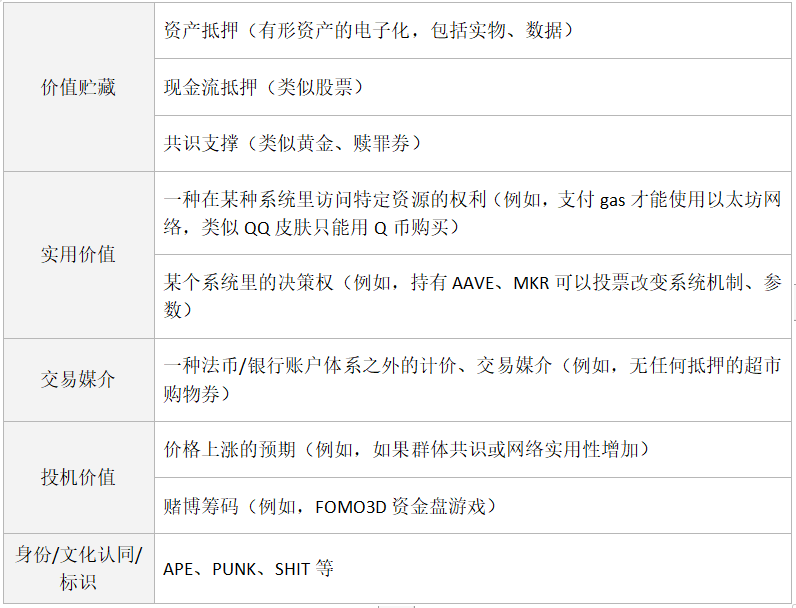
Table 2: Classification of Value Sources in Digital Crypto Assets. Source: TrendResearch
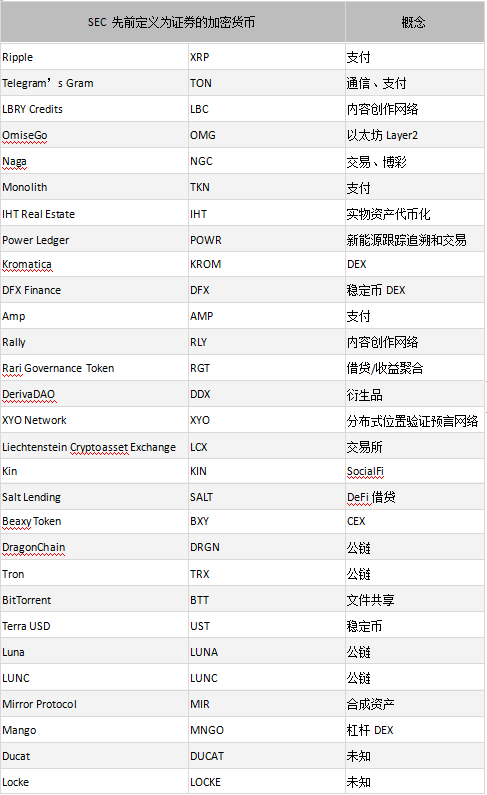
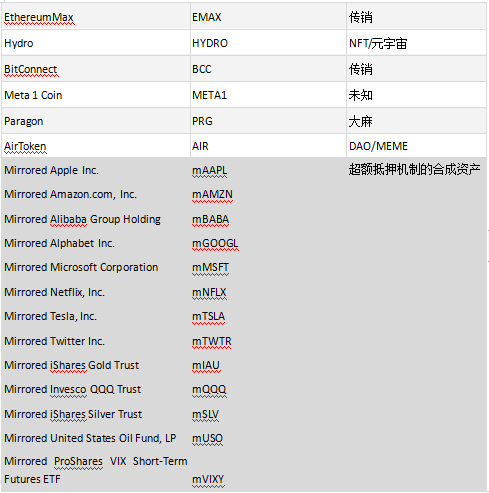
Table 3: Crypto assets previously defined as securities by the SEC in various lawsuits prior to the June litigation filings. Source: SEC, TrendResearch
Join TechFlow official community to stay tuned
Telegram:https://t.me/TechFlowDaily
X (Twitter):https://x.com/TechFlowPost
X (Twitter) EN:https://x.com/BlockFlow_News
 Cycle Capital Research






