








Lagrange Protocol: Trustless Cross-Chain Interoperability via ZK
TechFlow Selected TechFlow Selected
Lagrange Protocol: Trustless Cross-Chain Interoperability via ZK
Traditional messaging protocols rely on nodes to relay messages, but Lagrange takes a different approach. It allows anyone to cryptographically verify message submissions, similar to how IBC relies on light clients for cross-chain validation.
 Navigating Web3 tides with focused insights
Author: Maven 11
Compiled by: TechFlow
Cross-chain interoperability and security have become key challenges in today’s blockchain landscape. ZK startup Lagrange Labs offers a compelling solution. As an investor in the project, Maven11 explains the significance of Lagrange, detailing the core concepts of the Lagrange protocol, its verification process, and how it leverages zero-knowledge proof technology to enable trustless cross-chain operations.
Cross-chain state proofs are essential for applications in a multi-chain world. They allow applications to accept verifiable claims about chain states from untrusted users. Use cases include multi-chain DEX pricing, yield aggregators, lending valuation, and more.
In simple terms, a state (storage) proof is a zero-knowledge proof that demonstrates the existence of a certain on-chain state on any given blockchain. Thanks to the power of zero-knowledge proofs (ZKPs), this can be achieved efficiently and without trust, eliminating reliance on oracle networks.
Traditional message-passing protocols rely on nodes to relay information, but Lagrange takes a different approach. It allows anyone to submit cryptographically verified data, similar to how IBC uses light clients for cross-chain validation.
In Lagrange, any cross-chain transport layer or untrusted user can submit non-interactive proofs that are verified on-chain. These proofs do not depend on validator sets or signatures, ensuring data is sourced directly on-chain and aggregated efficiently across chains.
The verification of Lagrange state proofs involves multiple steps:
-
State Root Verification: Verify a succinct zero-knowledge proof generated by the Lagrange State Committee, proving the authenticity of a given state root (block header).
-
Batch Storage Proof: Verify that a set of claimed states exists within a specific chain's state root.
-
Zero-Knowledge Distributed Computation: Verify arbitrary distributed computations executed over on-chain states.
Because Lagrange state proofs are modular, protocols can choose to use partial proofs—of state, storage, or computation—to customize their proof systems based on application needs. Existing cross-chain applications can easily enhance the security or expressiveness of their cross-chain tooling.
The Lagrange Zero-Knowledge Big Data Framework employs dynamic data structures similar to Verkle trees, enabling applications to combine efficient storage inclusion proofs with arbitrary distributed computations such as MapReduce or distributed SQL.
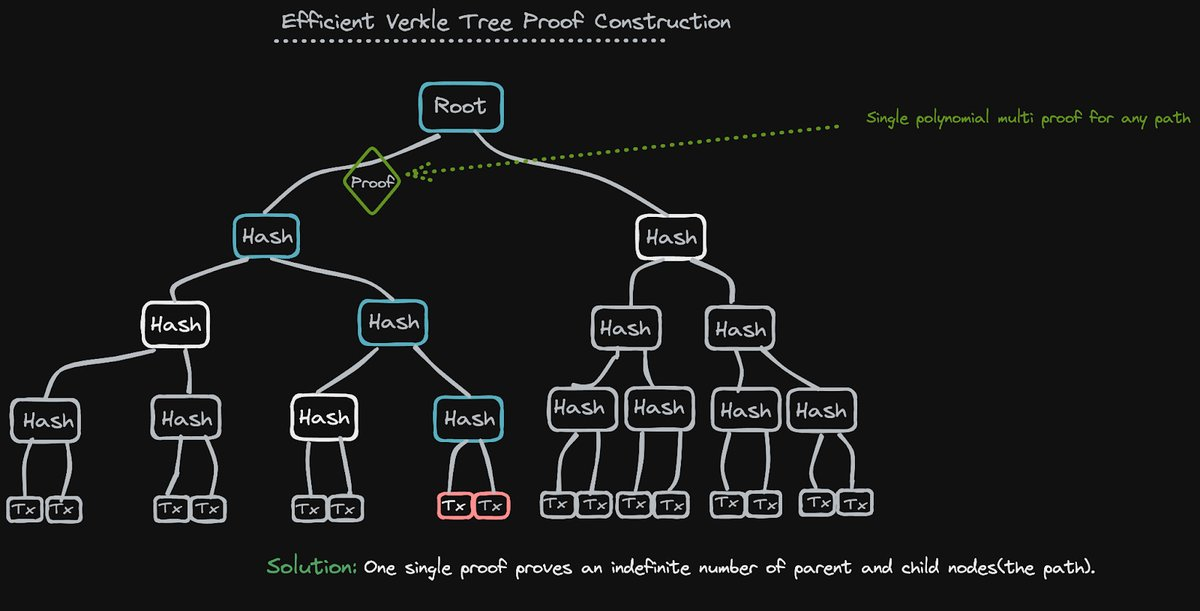
With the LagrangeJS SDK, developers can easily request state proofs from any chain and specify arbitrary computations to run over subsets of stored states. This empowers developers to leverage secure cross-chain state and storage proofs through a user-friendly interface.
The Lagrange SDK also simplifies the process of generating state proofs across multiple chains simultaneously. These proofs allow DApps integrated with the Lagrange protocol to bundle multiple state verifications into a single on-chain transaction.
The Lagrange protocol enables cross-chain state verification by integrating major blockchains. Initially, it is compatible with all EVM L1s, L2s, and rollups. In the future, support is planned for non-EVM chains such as Solana, Sui, Aptos, and Cosmos SDK-based chains.
Additionally, Lagrange aims to improve the security of existing cross-chain bridges and message-passing protocols by leveraging economically bonded statements, creating strong economic single-slot finality guarantees for Optimistic Rollups. This could significantly enhance interoperability among isolated rollups on Ethereum.
Its mechanism essentially involves generating ZK light client proofs for Optimistic Rollups, replacing the current “light client” implementation on Ethereum—the Ethereum sync committee.
The current Ethereum sync committee consists of only 512 randomly selected validators who receive higher rewards to provide light client functionality each day.
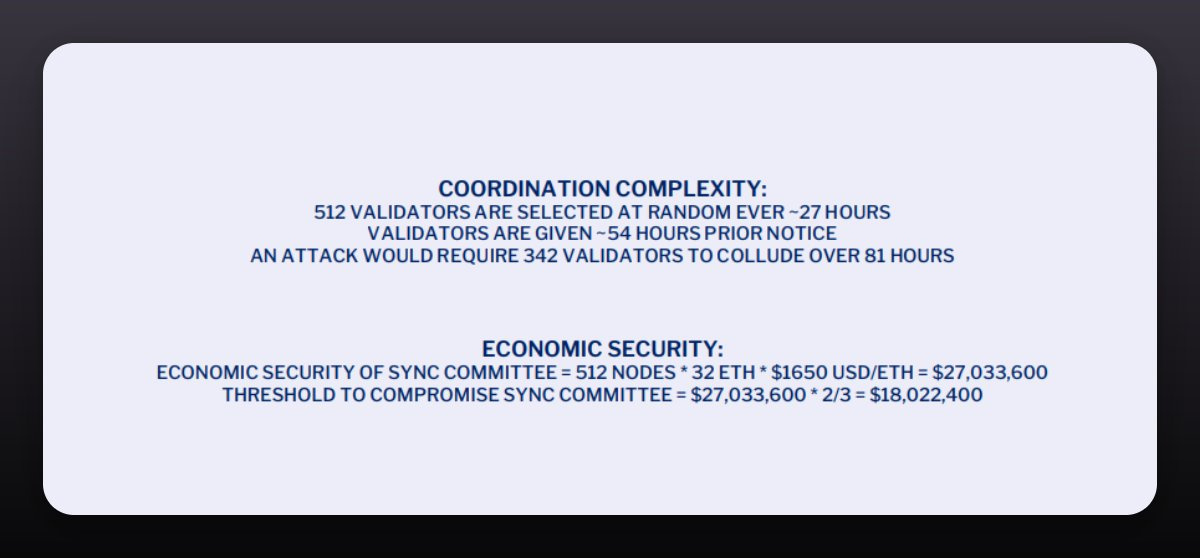
The security of the Lagrange Cross-Chain State Committee stems from a growing, dynamically sized set of nodes that are economically bonded—either restaked via EigenLayer or staked using liquid staking derivatives such as Rocket Pool.
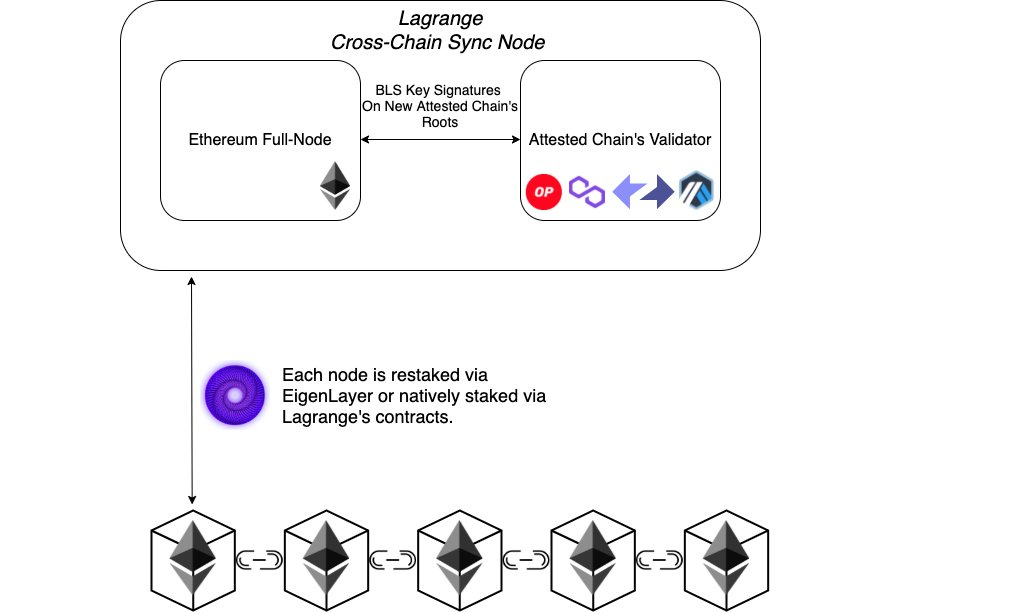
Nodes must sign off on every new block that achieves finality on the chain they are proving. In contrast to Ethereum’s sync committee, which caps at 512 nodes, the cross-chain state committee supports an unlimited number of nodes. As a result, the amount of collateral backing each proof can scale dynamically as needed, creating secure proofs for each respective chain or rollup.
State proofs have significant use cases in protocols like shared sequencers, helping improve cross-rollup communication, and solving oracle problems in implementations such as SUAVE.
Join TechFlow official community to stay tuned
Telegram:https://t.me/TechFlowDaily
X (Twitter):https://x.com/TechFlowPost
X (Twitter) EN:https://x.com/BlockFlow_News
 Maven 11






