"AI Revolution in Blockchain Gaming" (3): Video Games, the Hidden Engine of Technological Development
TechFlow Selected TechFlow Selected
"AI Revolution in Blockchain Gaming" (3): Video Games, the Hidden Engine of Technological Development
Games have been the driving force behind technological advancements over the past half-century.
 Navigating Web3 tides with focused insights
Video Games: The Hidden Engine of Technological Advancement
I bet many readers seeing this title are already smirking: "Bro Gu, you can't just elevate video games to such a lofty status because you personally enjoy gaming." But no joke—I'm being completely serious here. At first, I didn’t even want to include the word “hidden”—I was ready to call it simply “the engine.” But then I reconsidered, given the current ambiguous stance toward the gaming industry in our country, so better stay humble. Welcome to the third installment of this long-form series. Today, we’ll explore how video games have driven global technological development over the past five decades.
01 Steve Jobs and Pac-Man
Those familiar with the electronics industry know that the integrated circuit sector took off in the 1970s, when Motorola introduced its 6502 processor. Despite being only an 8-bit chip, it offered high performance at a low cost—making it feasible to build consumer electronics affordable to middle-class households.
The key question for any emerging technology is: how do you transform it into a product that ordinary people not only can afford but also enthusiastically buy? This is a critical benchmark determining whether an industry will go global. Three factors are essential:
-
The technology must be novel;
-
It must be mature enough to be productized;
-
The product must be sufficiently inexpensive.
Think back over the past few decades of groundbreaking tech products—home computers, the internet, mobile phones, mobile internet—and you'll find they all met these three criteria. Why are we writing this series? Because AI and blockchain both show similar potential to become transformative technologies...
In the very year Motorola's high-value 8-bit processor emerged, one company and one individual quickly spotted the massive business opportunity it presented. They each pursued separate paths: the individual teamed up with a close friend to assemble the following rather ugly electronic device:
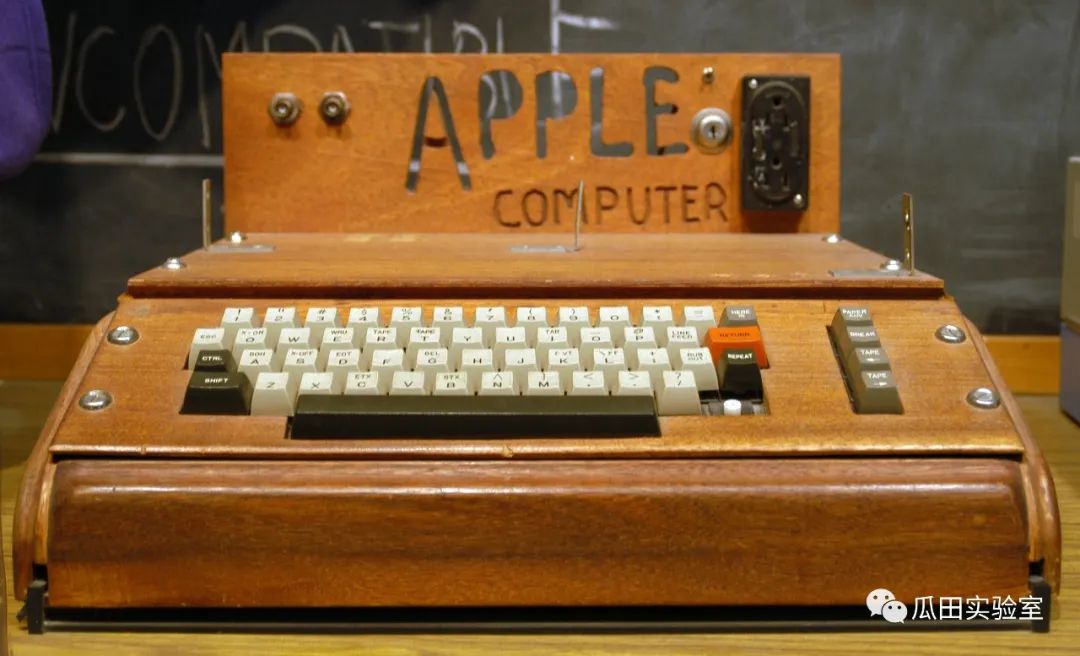
That’s right—the Apple I prototype. The visionary behind it was Steve Jobs, Apple’s co-founder, and his brilliant partner was Steve Wozniak. Thus, the world’s first personal home computer was born—an awkward-looking duckling sold for $500 (based on conservative data from the U.S. Bureau of Labor Statistics, the purchasing power of a dollar around 1975 equals about six times today’s value, making this equivalent to roughly $3,000 now—a sky-high price). Even more astonishing: 48 years after the debut of the first Apple computer, Apple’s market capitalization reached $2.7 trillion. If Apple were considered an independent national economy, its GDP would rank fifth globally—above the UK, second only to Germany, Japan, China, and the United States. Steve Jobs had built a new tech empire.

Hold on—what does this have to do with games? Patience. We just covered the first path: the birth of the personal home computer. Now let’s look at the second path: a company called Atari incorporated the 6502 processor into a gaming device. After two years of development, they launched the Atari 2600 in 1977—the first home video game console.
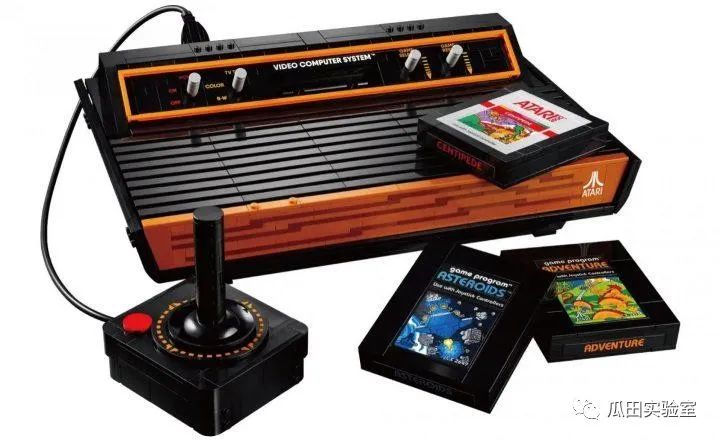
By 1980, this console generated $2 billion in annual revenue (equivalent to $12 billion today). Modern gamers may feel disconnected from Atari’s glory days, but its pioneering “one platform, multiple games” model remains influential: console manufacturers develop the hardware, while game cartridges are produced by external studios. In the movie *Ready Player One*, the final challenge involves playing *Pac-Man* standing on ice—that iconic game became wildly popular on the Atari 2600.
Atari’s explosive success showed many tech companies a new way to rapidly convert technological capability into wealth. Soon after, legendary names like Sega and Nintendo entered the scene. In 1983, Nintendo’s Famicom (known as the NES outside Japan) swept through the global gaming market like a tornado, giving our generation unforgettable childhood memories—like *Super Mario Bros*. The Famicom wasn’t discontinued until 2003, having sold over 60 million units worldwide. The well-known Xiao Ba Wang learning computer in our country was actually a clone of the Famicom.
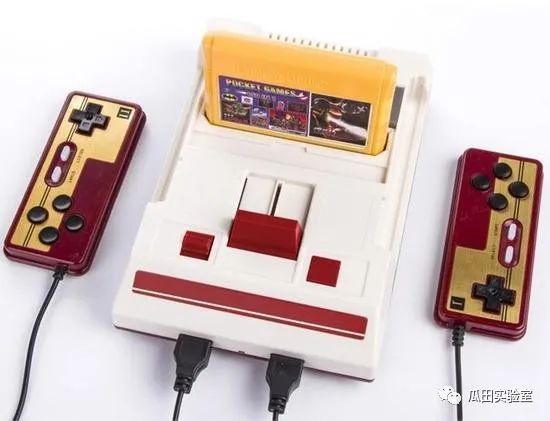
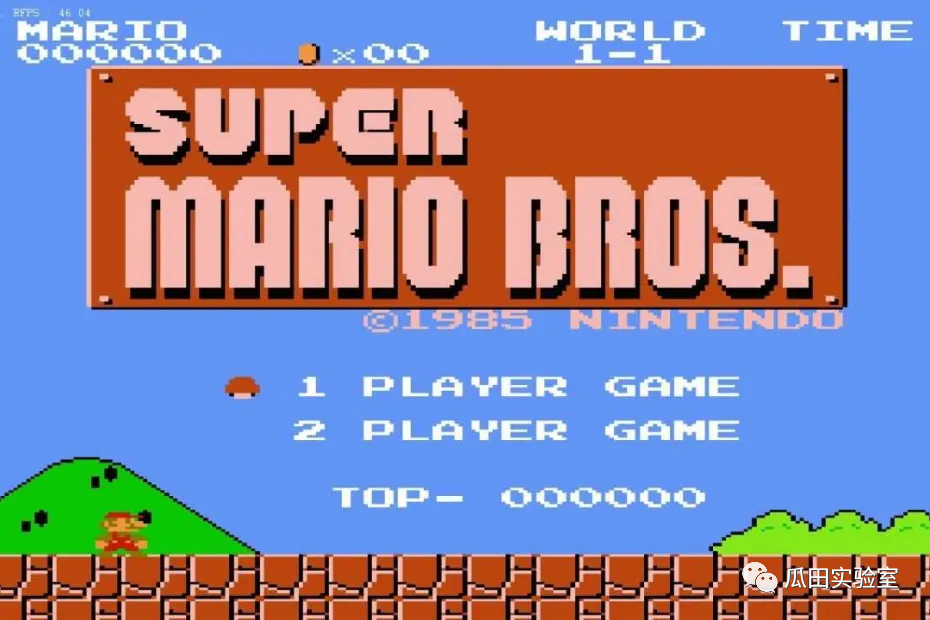
Here’s a fun tidbit: the first path mentioned earlier—personal computing—was actually inspired by Atari. Though Jobs spent his life as a boss, he once worked briefly at Atari’s game console team. During that time, he learned about the powerful capabilities of the 6502 chip, which later fueled his decision to start Apple.
By the late 1980s, competition between Sega and Nintendo intensified. The 8-bit processors were no longer sufficient, so they moved to 16-bit chips. Driven by end-user demand and market pressure, chip R&D advanced rapidly—companies raced to innovate because the commercialization path was clear.
So isn’t it fair to say that in the 1980s, video games drove the development of the chip and computer industries? Later, Nintendo’s Game Boy (sold over 100 million units) advanced hardware compatibility technologies, while Sony’s PlayStation pushed forward optical disc and CD-ROM technologies. These are significant contributions of the gaming industry to technological innovation. Gaming provided the largest civilian consumer application scenario, and market demand remains the true parent of new technologies.
02 The Magic of NVIDIA
With the recent surge in AI, NVIDIA has been frequently spotlighted in media reports. Tech-savvy PC builders and cryptocurrency mining influencers are already familiar with NVIDIA—it’s the world’s leading graphics card manufacturer. High-end AAA games require graphics cards; cryptocurrency mining also relies on them (specifically the GPU, whose computational power in certain tasks exceeds that of CPUs). But what does this have to do with AI? Let’s break it down.
Over nearly five decades, as gamers’ demands for higher-quality graphics and video rose, GPUs evolved rapidly in computational power. Later, adjacent industries such as video capture and cryptography discovered the high-performance computing capabilities of GPUs, further expanding their applications. Around 2000, AI entered the deep learning era (refer to Part 1 of this series: Hinton developed a method for describing neural networks—deep learning). Scientists realized that the parallel processing architecture of GPUs was especially well-suited for training neural networks—the more data fed in, the better the results. It’s said that OpenAI’s breakthrough came during an internal test using over ten thousand NVIDIA A100 GPUs—an event akin to God touching a golden finger, revealing the corner of a new world.
Thus, graphics cards became essential fuel for AI startups. Look at NVIDIA’s stock performance over the past two decades—it truly took off around 2016. As noted in the previous article, OpenAI was founded in 2015. Riding the AI wave, NVIDIA achieved a remarkable turnaround: its current market cap stands at approximately $680 billion, surpassing chip rivals Intel and AMD, ranking just behind Apple, Microsoft, and Google as a legendary tech powerhouse.
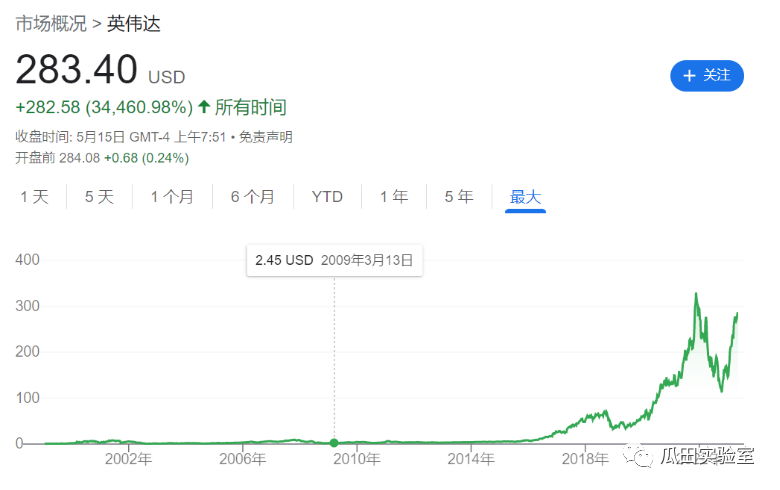
Today, the dominant GPUs powering large AI models are NVIDIA’s A100 and H100. Some analysts even use the number of A100 and H100 GPUs owned by an AI company as a key metric—dubbed “NVIDIA content” or “Nvidiaosity.” High Nvidiaosity is like taking Viagra—guaranteed fast growth... That’s my playful definition of “NVIDIA,” haha, just joking around.
Recently, Elon Musk announced that Twitter has purchased about 10,000 NVIDIA GPUs. While everyone envies NVIDIA’s good fortune, we must not overlook a crucial fact: as early as 2016, NVIDIA’s founder Jensen Huang donated an AI supercomputer, the DGX-1, to OpenAI to demonstrate the unique advantages of NVIDIA GPUs in AI computing. This custom-built machine could compress a full year of OpenAI’s training time into just one month. Clearly, NVIDIA had already positioned itself in the AI space long before the boom. A $680 billion company doesn’t emerge by luck alone—the behind-the-scenes strategic planning and business negotiations must have been extraordinary, far beyond a simple divine touch.
So how did NVIDIA come to dominate across gaming, industrial video, crypto mining, and AI computing? Let’s dig deeper:
Like the internet, integrated circuits were originally developed for military purposes. In the 1950s, the U.S. Department of Defense sought to add control units to weapons like missiles for greater accuracy, and funded university labs to research solutions. Among them, William Shockley—a star scientist from MIT known as the father of the transistor and Nobel laureate in Physics—led a group of young talents to pioneer the concept of the chip.

Shockley, already famous and accomplished, loved nothing more than going on public AMAs, basking in applause and admiration, constantly saying “the project team is doing great”—while still spending money from his investor, the U.S. Department of Defense. But his young team genuinely wanted to build things and get rich—they pushed hard for increased R&D, cost reduction, and mass production to expand into the vast civilian market and make big money. Shockley, however, kept holding them back.
Eventually, eight young engineers quit Shockley’s lab and founded a new company called Fairchild Semiconductor—dubbed the “Traitorous Eight.” Among them was Gordon Moore, who later formulated Moore’s Law.
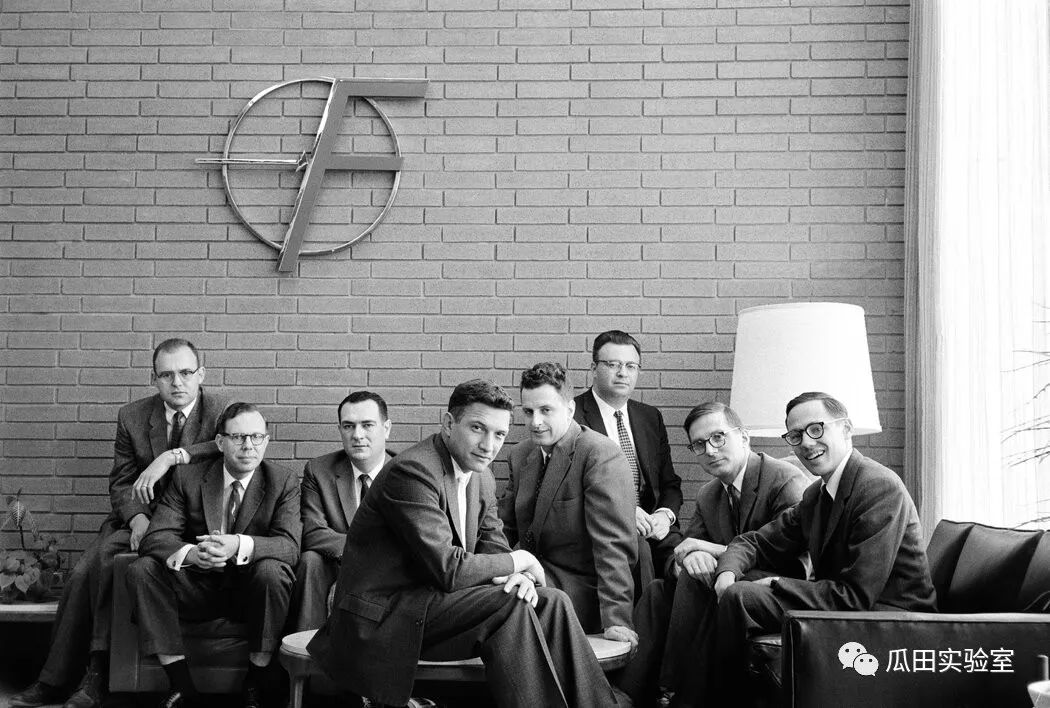
Their pact was almost poetic: they signed their names on a dollar bill—message clear: “Old Xiao, stop feeding us empty promises! We want real green cash!”

Throughout tech history, such tight-knit teams often spark revolutionary change—from the Traitorous Eight driving the chip revolution, to the PayPal Mafia launching the internet revolution in the early 2000s (founding Tesla, LinkedIn, YouTube, etc.), to the founding team of OpenAI in 2015 mentioned in our last article.
Back to Fairchild—this company was truly historic:
First, it defined the semiconductor industry, shifting R&D focus to silicon-based materials enabling mass production of integrated circuits;
Second, it pioneered the “venture capital + incubation” business model. The Traitorous Eight first approached Arthur Rock, the father of Silicon Valley venture capital, who connected them with their financial backer, Sherman Fairchild (the company’s name derived from him). Sherman was no small player—he was IBM’s largest individual shareholder. Fairchild’s first major order came from IBM. This model—where investors don’t just fund but actively guide company operations using their network—became standard practice, emphasizing deeper alignment (exactly what W Labs is doing now, haha).
Third, it catalyzed the rise of Silicon Valley. Fairchild became the “Whampoa Military Academy” of semiconductors. After several years, disagreements with Sherman led the original team and others to spin off and start their own companies. These new firms clustered around Fairchild’s office, forming what is now Silicon Valley. Among them were Intel and AMD. Former Fairchild employees went on to found over 100 semiconductor companies—Fairchild truly earned its reputation as a divine startup incubator.
Back to NVIDIA: AMD was founded by someone who came from Fairchild, and NVIDIA’s CEO Jensen Huang used to be an engineer at AMD before starting his own company. These companies and individuals are deeply interconnected—rumor has it Huang and AMD’s current leader Lisa Su are distantly related.
NVIDIA’s founding vision was simple: “You Intel and AMD fight over CPUs—I’ll focus entirely on GPUs.” As video games grew more sophisticated, traditional CPUs struggled with graphics workloads. NVIDIA carved out a new niche—dedicating a specialized chip solely to graphics processing, naming it the GPU, and placing it on graphics cards. At the time, this was uncharted blue ocean territory.
Initially, gaming accounted for 100% of NVIDIA’s revenue. With profits secured, Huang aggressively reinvested in R&D, expanding GPU applications into industrial fields. In recent years, AI became another major frontier—all while maintaining strong product competitiveness. This strategy closely mirrors Huawei’s: lead with R&D, follow with market expansion. Today, the graphics processing niche is hotter than ever—not just for AI, but even military drones use GPUs for image recognition.
Thus, we successfully reaffirm the thesis: video games have been the behind-the-scenes driver of technological progress over the past half-century.
To be continued.
This series is co-authored by the “AI & Blockchain Gaming Research Team” at W Labs. Special thanks to team members Guage, Jaran, Bao Bao, Brian, Xiao Fei, and Hua Ge for their dedication. Lead writer: Guage.
Join TechFlow official community to stay tuned
Telegram:https://t.me/TechFlowDaily
X (Twitter):https://x.com/TechFlowPost
X (Twitter) EN:https://x.com/BlockFlow_News
 瓜田实验室W Labs