The "V God" Behind BRC-20: DOMO and BTC's Innovative Ecosystem
TechFlow Selected TechFlow Selected
The "V God" Behind BRC-20: DOMO and BTC's Innovative Ecosystem
As the market enthusiasm for BRC-20 gradually increases, more and more cryptocurrency researchers are turning their attention to this field.
 Navigating Web3 tides with focused insights
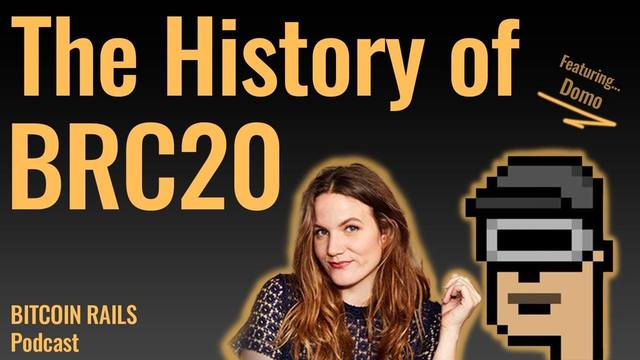
Domo@domodata, the founder of BRC-20, describes himself on Twitter as: "Terminally on-chain || Dune wizard || Alf bot || Crypto @ trad payments leader".
BRC-20 is an experimental fungible token standard for Bitcoin built upon the Ordinals protocol—an initiative that embodies his self-description: truly on-chain and aiming to lead in crypto trade payments.
As interest in BRC-20 grows within the market, more and more cryptocurrency researchers are turning their attention to this space. On April 28, 2023, Go2Mars Research published its first original educational article on the BRC-20 protocol: "Bitcoin NFTs? Ordinals Protocol and BRC-20".
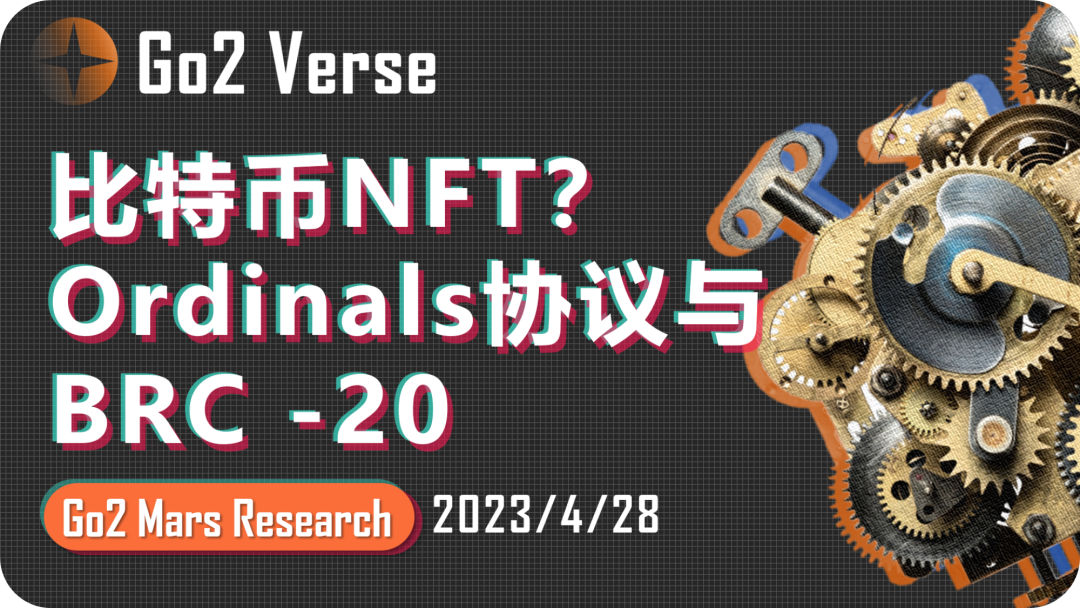
Since the publication of that article, the BRC-20 ecosystem has grown increasingly vibrant. We now turn our focus to @domodata, a key driver behind the BRC-20 movement, to uncover the story of this "Vitalik of Ordinals"—the visionary figure shaping the future of Bitcoin’s Ordinals protocol.
The Ordinals Protocol: The Sat Era of Bitcoin
With a market capitalization of $545.7 billion, Bitcoin stands unchallenged as the leading cryptocurrency asset. While Bitcoin lacks Turing completeness and does not support the same level of extensibility as Ethereum, it has maintained its core principles—decentralization, free transactability, and value—over more than a decade. Secure and simple, Bitcoin remains true to Satoshi Nakamoto's original vision described in the whitepaper title: "Bitcoin: A Peer-to-Peer Electronic Cash System."
The emergence of the Ordinals protocol has opened up new possibilities for the Bitcoin ecosystem. By assigning unique identifiers and annotations to individual satoshis (sats), the smallest units of Bitcoin, each previously fungible sat becomes a distinct "NFT." Since 1 BTC equals 100 million sats—and the total supply of sats is fixed—Bitcoin has officially entered the "Sat Era," a milestone comparable to Ethereum’s smart contract era. This advancement enhances Bitcoin’s scalability, enabling asset issuance and the development of richer ecosystems. Among these innovations, the BRC-20 protocol has emerged as the most significant, establishing a foundational ecosystem just weeks after its proposal.
A Long-Awaited Boom: The Rise of BRC-20
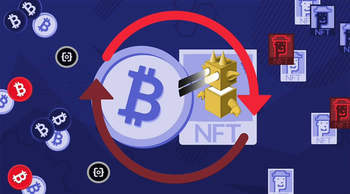
The BRC-20 protocol enables the creation and trading of fungible tokens (FTs) on the Bitcoin blockchain using the Ordinals protocol. It leverages JSON data to deploy token contracts, mint tokens, and transfer them across wallets.
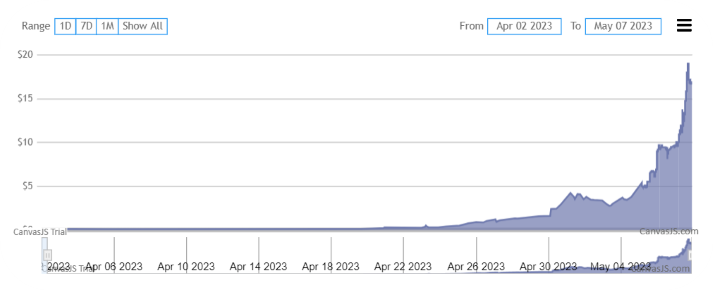
As of May 8, there are over 14,000 BRC-20 tokens with a combined market cap reaching $540 million. The past 24 hours alone saw over $10 million in trading volume—a modest figure relative to the broader crypto market but remarkable given its rapid growth trajectory.
This surge has reignited activity across the Bitcoin network. Network-wide transaction fees hit 403.91 BTC in the last seven days, compared to just 21.89 BTC on April 8—a nearly 18-fold increase in one month. The first token issued under the BRC-20 standard, Ordi, rose from $0.10 to $16.99 within just two weeks.
Meanwhile, the booming BRC-20 market has also drawn increased investor attention to the concept of Bitcoin-based NFTs.
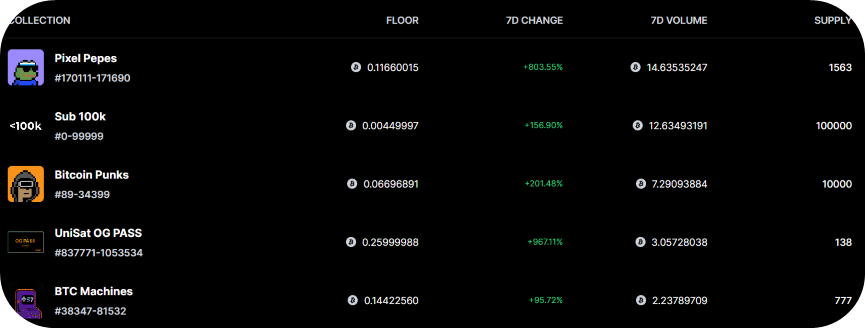
Unlike ERC-721 NFTs—which rely on smart contracts and store image data on IPFS servers—NFTs inscribed via BRC-20 are fully stored on-chain. This complete on-chain permanence is precisely why many Bitcoin maximalists and decentralization advocates are so enthusiastic. Built on immutable Ordinal inscriptions, the data persists forever on the Bitcoin blockchain.
Domo and BRC-20
Domo@domodata, the creator of BRC-20, introduces himself on Twitter as "Terminally on-chain || Dune wizard || Alf bot || Crypto @ trad payments leader"—highlighting his ambition to be a leader in cryptographic trade and payment systems.
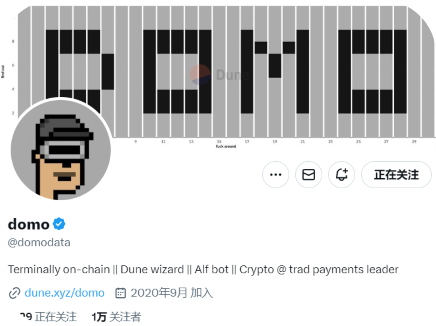
BRC-20 is his experimental fungible token standard built atop the Ordinals protocol—an embodiment of his stated mission: achieving true decentralization by enabling Bitcoin-native crypto asset issuance.
In his whitepaper, however, domo explicitly states that BRC-20 is merely an experimental framework demonstrating how anyone can create off-chain balance states using inscriptions. He emphasizes that it is not intended to be the definitive standard for fungibility on Bitcoin or Ordinals. Instead, he encourages the Bitcoin community to iterate, refine, and optimize the design until a consensus emerges around best practices.
On March 6, amid growing tensions between Blur and OpenSea, the Ordinals market began expanding rapidly. As Ordinals gained explosive popularity, fierce competition erupted over infrastructure. Some platforms, like Ordinals Market, leveraged existing Ethereum infrastructure and Emblem Vault technology to facilitate Bitcoin inscription trading on Ethereum, circumventing Bitcoin’s slow transaction speeds and poor user experience. Others pursued novel, native Bitcoin-based solutions.
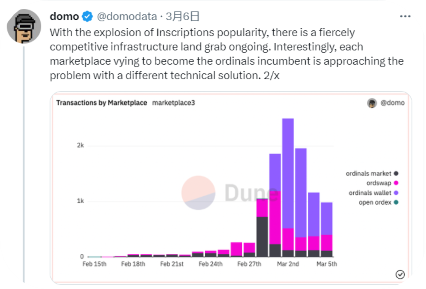
On March 9, domo informally introduced the idea of “brc-20” and a fungibility experiment. Under this model, anyone could use ordinal inscriptions to deploy, mint, or transfer tokens. Like similar projects, it adopted a “first-come, first-served” principle.
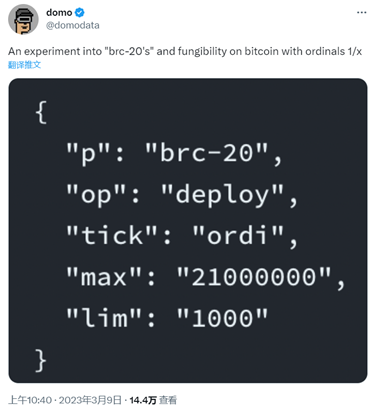
By reviewing his past tweets, we see that domo follows interesting ERC-721 NFT projects, occasionally retweets project announcements, engages with internet memes—including Trump NFTs—and holds CryptoPunks. He frequently shares insights and opinions on ordinal applications and related ideas.
Bitcoin Innovation: BOP, ORC-20, and BRC-721
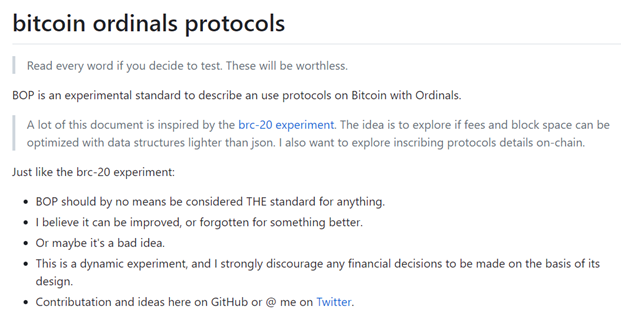
Beyond domo, numerous developers are actively pushing the boundaries of Bitcoin innovation. Hugo, a developer at Hirosystems, proposed BOP—the Bitcoin Ordinals Protocol—as an experimental alternative shortly after BRC-20. BOP explores whether lighter data structures than JSON can reduce fees and block space usage. It details methods from minting to transferring tokens and offers greater scalability compared to BRC-20.
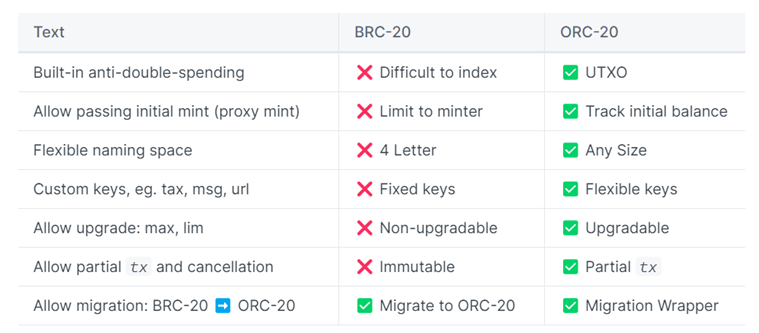
Additionally, OrcDAO launched the ORC-20 protocol. ORC-20 is an open standard for ordinal tokens on Bitcoin designed to enhance the popular BRC-20 standard. It aims to maintain backward compatibility while improving adaptability, scalability, and security, and eliminating the risk of double-spending. Like others, it remains an experimental project.
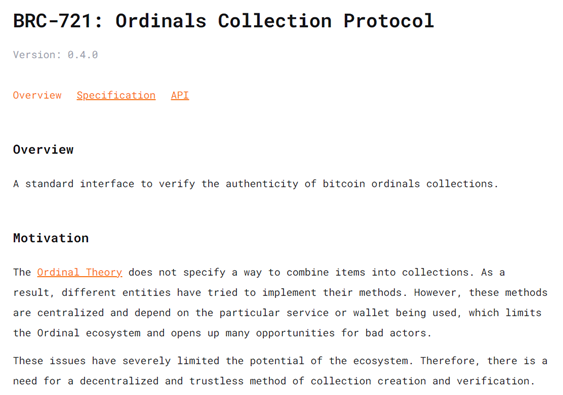
Moreover, BRC-721: The Ordinals Collection Protocol has gained traction as a standardized interface for verifying the authenticity of Bitcoin ordinal collections. A core issue with the current Ordinals protocol is that it doesn't define how to group inscriptions into collections, leading to fragmented, often centralized approaches dependent on specific services or wallets. This limits the ecosystem’s potential. Therefore, a decentralized, trustless method for creating and verifying collections is essential.
BRC-721 introduces such a decentralized and trustless mechanism, akin to Ethereum’s ERC-721 standard. By establishing a single source of truth, it simplifies collection creation and verification without requiring upfront costs.
Expanding Innovation in the Bitcoin Ecosystem
Bitcoin’s core function lies in value storage rather than execution. In contrast, Ethereum’s rich ecosystem stems from its EVM and smart contract capabilities. Thus, executing complex operations on Bitcoin remains the biggest hurdle to its ecosystem growth. However, as more developers and researchers turn their attention to this purest form of cryptocurrency, we have reason to believe that the BTC ecosystem will gradually flourish.
Of course, whether such development aligns with Bitcoin’s original vision—and what long-term impacts it may bring—remains to be seen. As a research institution focused on blockchain technology and applications, Go2Mars Research will continue tracking the evolution of the BTC ecosystem, analyzing trends and influencing factors, and providing valuable insights and recommendations for our readers.
Join TechFlow official community to stay tuned
Telegram:https://t.me/TechFlowDaily
X (Twitter):https://x.com/TechFlowPost
X (Twitter) EN:https://x.com/BlockFlow_News
 Go2Mars Capital