The Importance of Decentralized Storage in the Web3 Ecosystem and Analysis of Mainstream Projects
TechFlow Selected TechFlow Selected
The Importance of Decentralized Storage in the Web3 Ecosystem and Analysis of Mainstream Projects
The implementation of Greenfield will create a complete decentralized ecosystem integrating finance, applications, and storage.
 Navigating Web3 tides with focused insights
❖The Weight of Storage❖
For DeFi applications, blockchains may already meet the requirements for decentralized infrastructure. However, for collectibles and broader Web3 applications, relying solely on blockchain as infrastructure is far from sufficient.
➤ NFT Collectibles
For NFT collectibles, design and visual appearance are what hold the most value. Whether it's artwork or photos and videos of celebrities, details matter. These contents often come in large file formats. While the blockchain can only store a string of code identifying the NFT, the actual files—images, videos, or other media—must be preserved via decentralized storage to retain their genuine collectible value.
Many celebrities, public figures, and artists have launched NFT collections. Brands like Pizza Hut, Coca-Cola, Budweiser, Adidas, Nike, Chevrolet... have all entered the NFT space.
For these brands, celebrities, and artists, issuing regular tokens could likely attract investigation or even lawsuits from the SEC over "profiting through unregistered securities." In contrast, NFTs leveraging their own IPs carry collectible value while posing lower regulatory risks.
Of course, not all NFTs require decentralized storage. Some NFTs have no associated files, such as domain names; others lack collectible value, such as trivial low-resolution images. These two types do not need decentralized storage.
For NFTs with real collectible value, decentralized storage is essential.
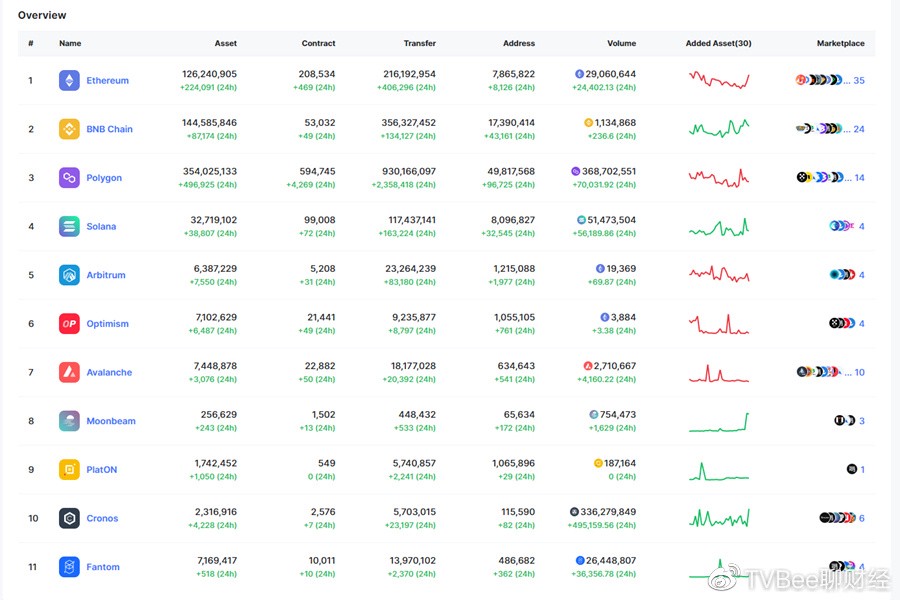
Let’s look at some data from the NFT market. Starting with static data, according to NFTScan, there are 689,995,136 NFT assets across 11 major ecosystems. Even if only 1% of these require decentralized storage, that still amounts to 6.9 million NFTs needing such storage. Clearly, the demand scale for decentralized storage from NFTs is substantial.
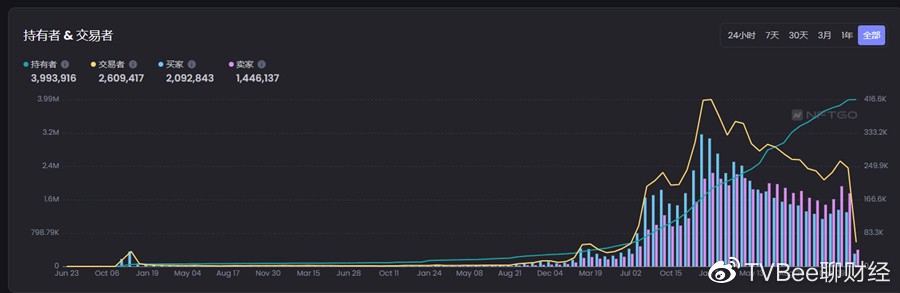
Now let’s examine dynamic changes. The yellow curve represents the number of NFT traders, which clearly declined during the bear market. However, the green curve shows changes in NFT holders—we see that while growth slowed slightly during the crypto bear market, the increase remained nearly steady. More and more NFTs are being minted, so demand for decentralized storage will naturally continue rising.
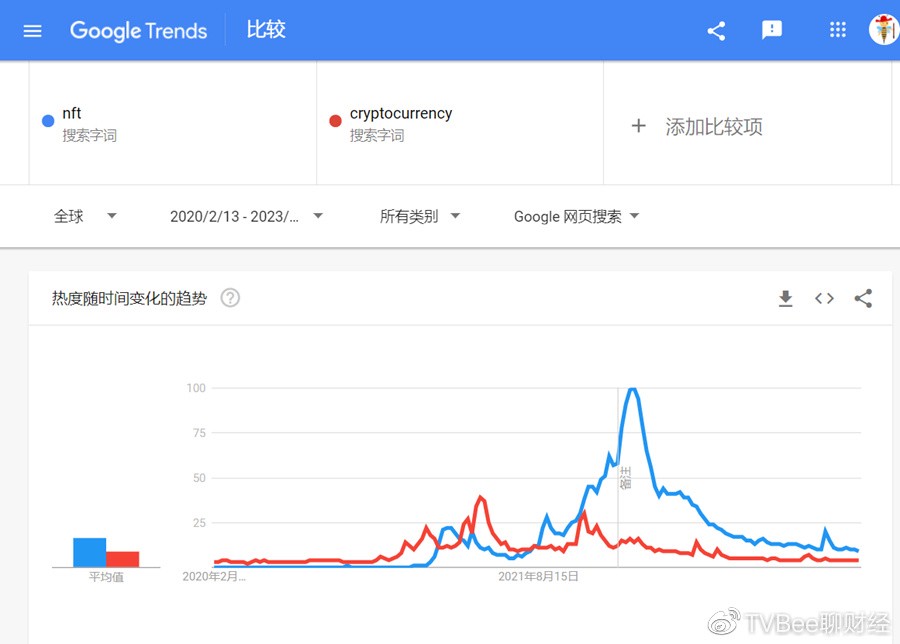
Finally, consider Google's search trend data over the past three years. Search fluctuations for "NFT" are much smaller than those for "cryptocurrency." Except during periods of extreme market frenzy, NFT-related searches, while slightly less popular than cryptocurrency searches overall, remain quite strong.
➤ Web3 Demand
DeFi primarily deals with financial assets, and on-chain data suffices to record asset types, quantities, and transactions. However, other Web3 applications require decentralized storage.
Take blockchain games as an example. We know game data written onto public chains remains secure as long as the chain operates—even if the game shuts down, player data and token assets stay intact on-chain. But skins, weapons, characters—their intricate designs may carry collectible value. If these visuals are stored on centralized servers controlled by developers, once the game shuts down, players are left with nothing but item codes and attribute values. Especially when games partner with brands, brand IP adds collectible value to in-game items.
Another example: suppose there’s a Web3 reading application. If books are stored centrally, it cannot truly be considered a Web3 app. With centralized storage, book copyrights may not be fully protected. (Why mention this? Binance’s last IEO project, Hook, was a Learn & Earn initiative—remember this concept, as it might spark a surge.)
Simply put, information within Web3 apps cannot all be lightweight like DeFi data. Larger-scale Web3 files need storing—whether they're NFTs or not. Only when blockchain and decentralized storage work together can we build complete Web3 infrastructure.
Web3 is still in its early stages, so the author currently lacks concrete data to illustrate the size of this sector. Yet judging from widespread coverage across media and social platforms, Web3 is highly likely to experience explosive growth.
Those familiar with IT fundamentals understand that the volume of data stored in databases differs vastly from file storage. Even if blockchains scale to store large files, their data structure involves encrypting and compressing block data, making them unsuitable for efficient file retrieval and analysis.
Therefore, decentralized storage is not only necessary for NFT collectibles but also a crucial foundation for the entire Web3 ecosystem.
❖Pains of Storage❖
In the previous section, the author analyzed the demand for decentralized storage from NFT collectibles and Web3 applications. Now some readers might ask: aren't Filecoin and Arweave already available?
Below, the author analyzes the current pain points of existing decentralized storage solutions.
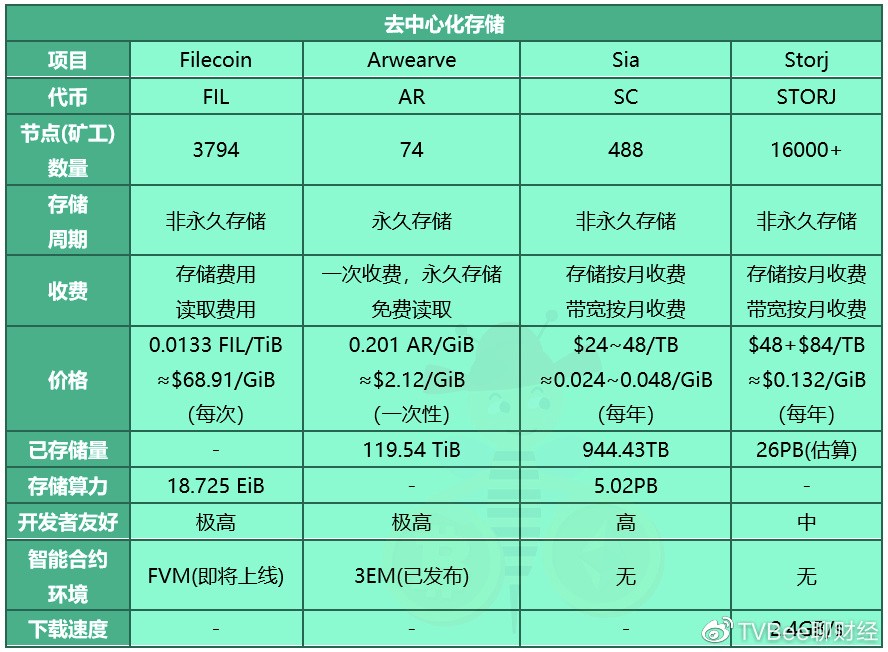
Based on data from block explorers and official websites, here's a comparison of four mainstream decentralized storage projects:
➤ Cost
Storj has the lowest cost, followed by Sia and Arweave, while Filecoin is the most expensive.
Filecoin’s default storage duration is 540 days, though miners can choose any period between 180–540 days, typically selecting 180, 360, or 540 days. Averaging 360 days, the annual cost per GB is around $68. At the maximum 540-day term, it’s approximately $45 per GB annually. This data comes from the Filecoin block explorer, reflecting total service revenue—including both storage and retrieval fees—confirming its high cost.
Amazon cloud storage costs no more than RMB 2.16 per GB annually. Additionally, every 1,000 retrieval requests cost RMB 0.00405.
Sia and Storj are cheaper than Amazon cloud storage.
Arweave outperforms Amazon cloud storage when long-term storage and frequent access are needed.
Filecoin’s cost is too high.
➤ Decentralization
Judging by the number of storage nodes, Storj is the most decentralized, followed by Filecoin, while Arweave is relatively more centralized.
Regarding data retrieval, Filecoin involves full nodes, whereas Storj uses dedicated server clusters. Thus, Filecoin achieves higher decentralization in retrieval.
➤ Storage Power
Some projects don’t publish real-time storage power, but judging by node count, Storj and Filecoin have greater storage capacity.
➤ Storage Ecosystem
In terms of stored capacity, Storj holds the largest volume, while Arweave stores significantly less. Filecoin does not disclose real-time storage volume.
OpenSea’s documentation indicates NFTs are stored via NFT.storage, which itself relies on Filecoin or IPFS. Not all NFTs can afford Filecoin’s storage fees—IPFS is also decentralized and free (though without incentives, nodes may not actively replicate data, so availability isn’t guaranteed). Filecoin acts as IPFS’s incentive and persistence layer. Therefore, Filecoin’s ecosystem is likely dominated by NFTs.
In November last year, Arweave announced integration with Meta to store digital collectibles for Instagram creators, indicating some presence in digital collectible storage.
As for Siacoin and Storj, the author found no information about partnerships with NFT or other collectible platforms. Their ecosystems may primarily serve non-blockchain users.
➤ Developer Friendliness
Siacoin’s documentation mainly focuses on client-based file uploads.
Storj offers both client tools and APIs.
Filecoin and Arweave emphasize API and SDK documentation, providing richer developer tools.
Keep in mind, in Web3 apps, users should create or upload files directly within dApps, which interact with decentralized storage via API calls for file read/write operations.
Only Storj publicly reports real-time download speeds.
➤ Smart Contracts
Siacoin and Storj currently do not support smart contract development. Arweave supports smart contracts, but few developers seem to use them—unclear how well the 3EM compiler performs.
Filecoin’s upcoming FVM is its native virtual machine, compatible with Ethereum’s EVM, though performance remains unknown—expected launch in March.
In summary, Filecoin boasts strong technology and rich developer tools, but its usage cost is prohibitively high.
Arweave’s strengths include permanent storage and free reads. However, it has fewer nodes, and its design—storing file content in blocks and requiring miners to compute hashes based on random historical blocks (easier than Bitcoin but involving larger data reads)—makes it difficult to handle many large files efficiently.
As for Siacoin and Storj, they offer low cost and moderate performance but lack comprehensive developer tooling, with Storj being slightly better.
Overall, none of the current decentralized storage solutions are sufficiently practical.
❖BNB Greenfield❖
➤ Network Architecture
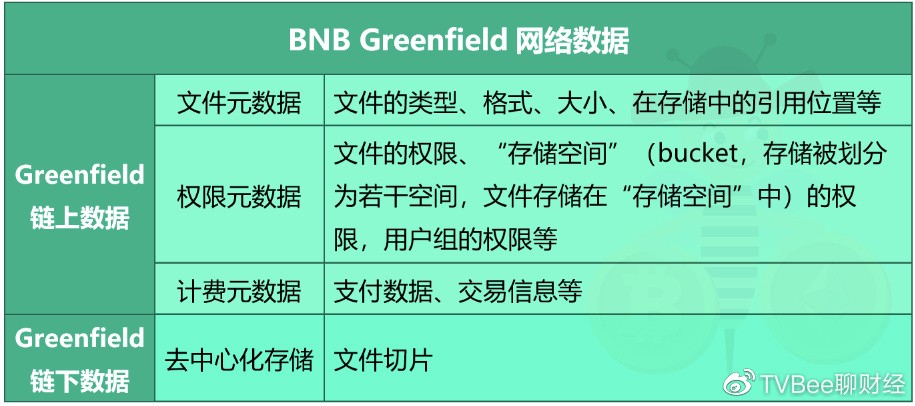
Greenfield’s network architecture consists of on-chain and off-chain components. The on-chain part operates via public chain mechanisms—no further explanation needed.
➤ Storage Model
In the off-chain component, when users upload files, they designate a "primary SP." The primary SP receives the file, splits it into multiple "file slices," and then other "secondary SPs" assist in storing these slices. This peer-to-peer model resembles old BT or eDonkey downloads—an inherently decentralized file storage approach.
Of course, the algorithm for slicing and storing includes redundancy—meaning different SPs store overlapping slices—to ensure file integrity and fast response even if some SPs fail.
Additionally, uploaded files cannot be modified. To edit a file, users must delete the original and re-upload. Naturally, the new file becomes a distinct storage object with a different ID and reference location—consistent with blockchain’s immutability principle.
➤ Cost / Fees
Greenfield’s pricing model sits between Filecoin and Arweave.
First, it includes both on-chain gas fees and storage service fees. Gas fees are similar to those on BNB Chain (BSC).
Storage service fees cover both file storage and retrieval.
The file storage fee structure resembles Filecoin’s—larger files and longer durations incur higher costs. However, the author estimates these fees will be significantly lower than Filecoin’s—again,参照 BSC pricing.
For file retrieval, the “storage bucket” provides a time-based free quota. Users pay only after exceeding this limit, with fees charged incrementally by time. This is interesting—while Arweave offers permanently free downloads, not all files actually require perpetual storage and continuous access.
Greenfield strikes a balance between Filecoin and Arweave. And chances are, its costs will be far below Filecoin’s (参照 BSC gas fees).
➤ Storage Ecosystem
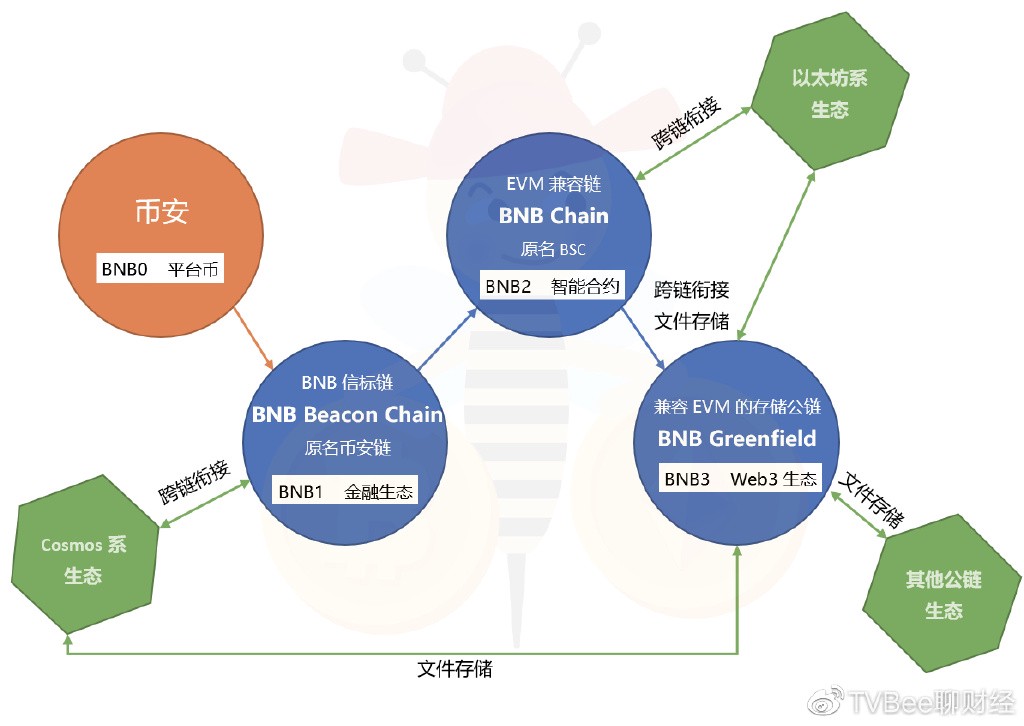
Let the author illustrate: BNB Chain is actually three chains:
-
The first, the Beacon Chain, connects to the Cosmos ecosystem, enabling cross-chain financial applications;
-
The second, BSC, supports smart contracts and is EVM-compatible, forming a cross-chain smart contract ecosystem with Ethereum;
-
The third, Greenfield, is an EVM-compatible storage blockchain. It can provide decentralized storage services to ecosystems like Cosmos, Ethereum, Solana—and connect directly to Ethereum or BSC, indirectly linking to Cosmos as well.
➤ Developer Friendliness
According to the whitepaper, Greenfield’s SPs provide publicly accessible APIs very similar to Amazon S3 APIs. They offer REST APIs, forming another whitelisted P2P network for intercommunication. This is highly developer-friendly—APIs are simple, and anyone experienced with Amazon S3 can get started immediately.
Regarding decentralization and storage power, the author estimates Greenfield will have fewer nodes than Filecoin (again,参照 BSC), but likely more than Arweave. Storage capacity is expected to fall between the two.
❖Final Thoughts❖
Why is Binance building BNB Greenfield? Because the NFT market and Web3 applications need decentralized storage—a demand with significant growth potential, possibly even explosive.
On the other hand, existing decentralized storage projects lack usability.
BNB Greenfield is likely to inherit Filecoin’s technical strengths, match or surpass Arweave in cost efficiency, and offer a stronger blockchain application ecosystem than other storage networks.
As always, no new token—BNB remains the core value symbol and billing foundation for Greenfield. Thus, Greenfield benefits BNB, while the existing value and traffic attached to BNB will also fuel Greenfield’s ecosystem growth.
For BNB and BNB Chain, Greenfield’s launch will complete a fully decentralized ecosystem encompassing finance, applications, and storage.
For blockchain and crypto markets, decentralized storage is critical infrastructure. Compared to other decentralized storage solutions, Greenfield will lay down a more balanced, versatile, and practical foundation for the Web3 ecosystem...
Join TechFlow official community to stay tuned
Telegram:https://t.me/TechFlowDaily
X (Twitter):https://x.com/TechFlowPost
X (Twitter) EN:https://x.com/BlockFlow_News
 TVBee
TVBee