The AI Revolution in Blockchain Gaming: AI Is Not a New Proposition (I)
TechFlow Selected TechFlow Selected
The AI Revolution in Blockchain Gaming: AI Is Not a New Proposition (I)
AI has brought about a whole new revolution—no one can escape it.
 Navigating Web3 tides with focused insights
"The wolf is coming, the wolf is coming..." This time, AI has truly arrived—like a flood or a ferocious beast. In just two months, ChatGPT, developed by OpenAI, surpassed 100 million monthly active users, becoming one of the fastest-growing applications in history. Then on March 14, the latest GPT-4 was released. On March 29, Elon Musk—the so-called "commander" of Dogecoin—joined over 1,000 experts and industry leaders in signing an open letter calling for a six-month pause on developing AI systems more powerful than GPT-4, to allow time to understand and mitigate extreme large-scale risks.
Even the ultimate hype master Musk has hit the pause button (though he immediately changed his Twitter profile picture to a Doge meme to ride the wave? Haha), giving you and me a six-month grace period—an internship, if you will—to prepare. But this pause also signals an irreversible and unstoppable trend. With over five months left, we should seriously reflect on how to face or embrace the transformation AI will bring to our work and lives.
AI is so powerful because it enables computers to think, learn, and solve problems logically—just like humans. Imagine chatting naturally with an unfamiliar online friend who has infinite knowledge and topics to discuss, effortlessly playing both the straight man and the funny man in a crosstalk duo.
If such an omniscient intelligent system were to assist human work, more than 50% of jobs could soon be replaced by AI, and over 90% of jobs would gradually be impacted, greatly increasing efficiency while freeing up more of our time.
For example, imagine an AI voice bot that chats with children, detects when their knowledge falls below average, and then acts as a kind, long-term companion—teaching them missing concepts through conversation and storytelling. That might be the briefest moment of pure joy for every tiger parent out there.
AI is bringing a revolution unlike any other—one no one can escape. We should thank the commander for hitting pause, even if it's just for show while secretly continuing R&D behind the scenes ("publicly repairing roads, secretly advancing through Chen Cang"). W Labs launched its dedicated "AI + Blockchain Gaming Research Group" right after ChatGPT 3.5 emerged. Since then, we've visited numerous blockchain gaming projects already exploring AI, combined our own learning, and begun crafting the story of AI + gaming + blockchain games as we see it. Let’s dive in! (This series might get very, very long—readers, treat it like a serialized novel. And rest assured, it’s all original; none of this is generated by ChatGPT, haha.)
1. AI Is Not a New Concept
The last mainstream AI boom dates back to 2016, when AlphaGo defeated former world Go champion Lee Sedol. After that came several relatively quiet years—until ChatGPT burst onto the scene in 2022, reigniting global interest. This isn’t surprising. In fact, AI has been a field under development for nearly seven decades, having already weathered multiple "winters."
The story of AI’s evolution begins with the birth of the term itself. Prior to that, early computer scientists had already begun contemplating and attempting to simulate human intelligence. In the summer of 1956, John McCarthy and others convened a two-month research workshop at the tranquil Dartmouth College in Hanover, aiming to gather like-minded individuals to discuss "artificial intelligence."
This event became known as the "Dartmouth Conference." During the meeting, participants discussed a range of issues related to machines simulating intelligence, including how to make machines think and learn like humans. Although the conference didn’t achieve its ambitious goals (scientists were overly optimistic, greatly overestimating their capabilities and underestimating AI's complexity—we still don’t know whether humans or AI holds the “God’s-eye view”), it marked the birth of the AI field and is widely regarded as the starting point of AI as an independent discipline.
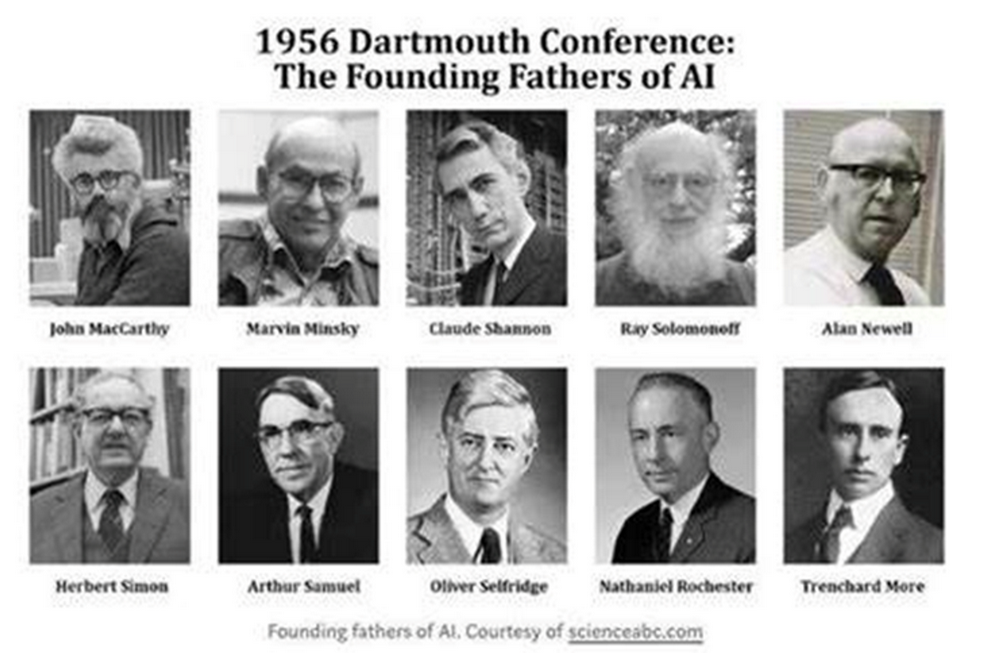
Key figures at the 1956 Dartmouth Conference
Early AI research focused primarily on symbolic approaches—using rule-based and logical methods to simulate human intelligence. During this phase, Marvin Minsky built the "Mark I Perceptron," one of the earliest neural networks. Later, Alan Turing proposed the famous Turing Test.
For those in crypto who may not know Turing, surely you’ve heard of Chen Fengxia (CFX), the ten-bagger token of early 2023? As the leading Hong Kong-themed cryptocurrency, CFX surged partly due to aggressive market-making by DWF (Da Wei Fang), but also because of its early association with Tsinghua University’s Yao Class. The Yao Class is led by Andrew Yao, a renowned Chinese computer scientist who won the 2000 Turing Award—the highest honor in computing—and remains the only ethnic Chinese recipient to date. Now you understand Turing’s stature in the field… After quite a detour, we’re finally back on track.
The precursor to the Turing Test was the "imitation game" thought experiment introduced by Turing in his 1950 paper *Computing Machinery and Intelligence*, which later evolved into the now-familiar Turing Test. This concept predates the term "artificial intelligence" itself (as noted earlier, coined at the 1956 Dartmouth Conference) and was the first formal standard for judging whether "machines can think": if a significant portion of humans cannot distinguish between a machine and a human during conversation, the machine is considered to have passed the test. This groundbreaking idea cemented Turing’s legacy as the "father of artificial intelligence," and today’s most prestigious award in computer science bears his name—the Turing Award. For those eager to explore the life of this extraordinary genius, watch *The Imitation Game*, starring Benedict Cumberbatch as Turing.
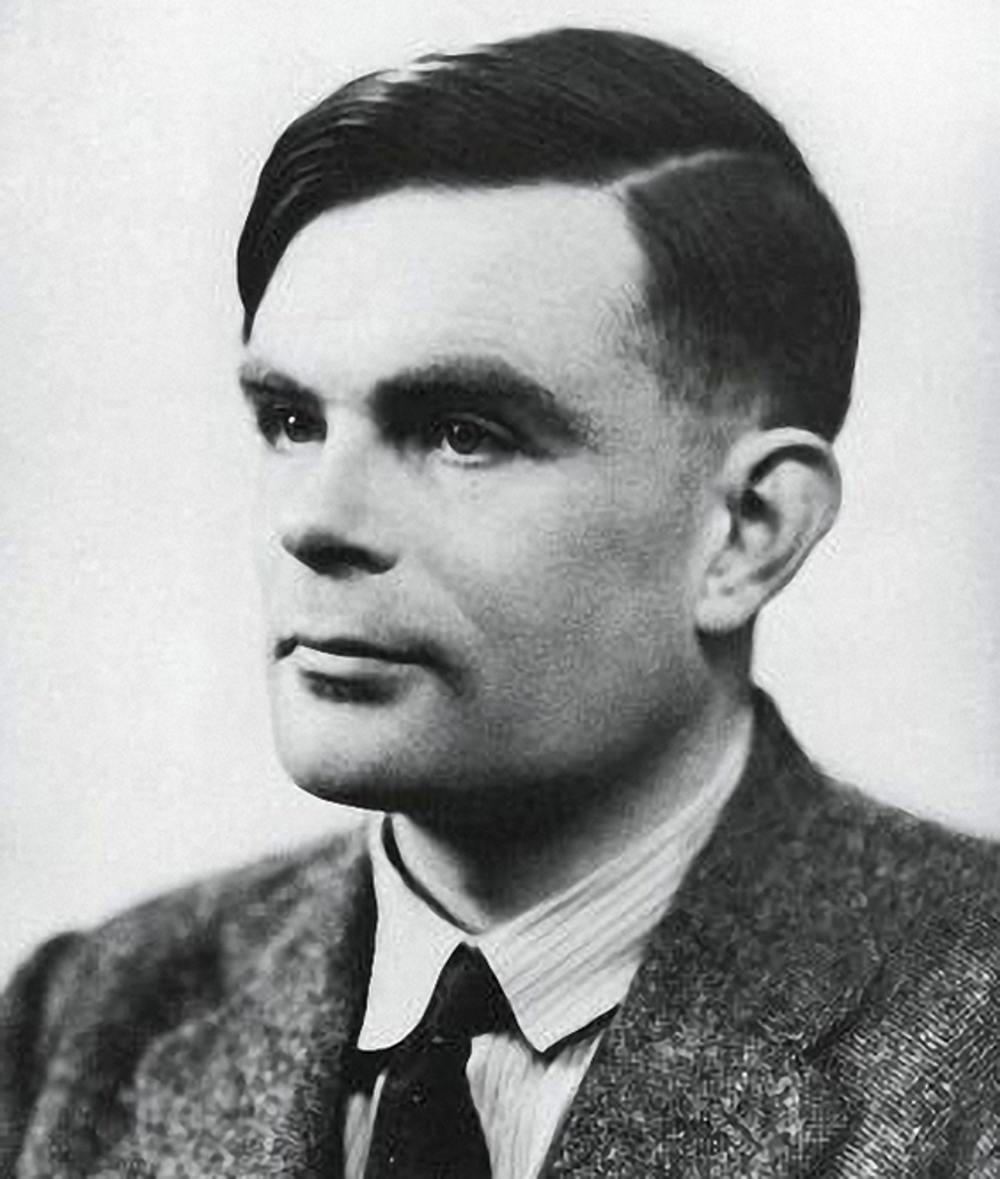
Alan Turing
After the Dartmouth Conference, AI progress slowed significantly, with little major breakthroughs. The 1970s marked the first AI winter.
In 1986, Geoffrey Hinton (remember this name—it’s crucial) and others introduced the backpropagation algorithm, which enabled neural networks to optimize weights via gradient descent (don’t worry if it sounds confusing—I read several articles and still don’t fully grasp it either). Just remember: backpropagation remains one of the most common methods for training neural networks today. What followed was a second AI winter lasting from the 1990s into the early 2000s.

Geoffrey Hinton
We now generally understand that technological advancement isn’t linear—it requires long periods of stagnation before sudden explosive growth. After surviving two winters, in 2007 Hinton pioneered a new way of describing neural networks—deep learning emerged. As a subfield of AI, deep learning began rising rapidly in the 2000s, fueling a decade of rapid progress, attracting brilliant computer scientists and companies alike:
2010: DeepMind founded;
2011: Andrew Ng and others launched "Google Brain";
2013: Zuckerberg and Yann LeCun, inventor of convolutional neural networks (CNN), established Facebook AI Research Lab (FAIR), achieving key breakthroughs in computer vision and natural language processing;
2014: Google acquired DeepMind;
2015: AlphaGo defeated European champion Fan Hui, showing early promise;
2015: OpenAI, today’s most prominent AI star, was founded;
2016: AlphaGo defeated world champion Lee Sedol;
2017: AlphaGo defeated Ke Jie, thereafter unbeatable;
Same year: Qi Lu joined Baidu. As a leader in China’s AI landscape, Baidu holds significant positions in natural language processing and autonomous driving.
NVIDIA introduced progressive generative networks capable of producing photorealistic faces, ushering in the era of "deepfakes" on the internet. NVIDIA will reappear frequently throughout this series—a true pride of Chinese innovation, a single company leveraging GPU chip technology across gaming, AI, and crypto.
Let’s take a moment to defend Baidu (no sponsorship, though I personally dislike Baidu products’ user experience). As early as 2012, shortly after the AI revival began, Baidu recognized the importance of deep learning. To recruit Hinton, several top-tier companies entered a bidding war to acquire his team. Hinton even registered a small startup, DNNresearch, whose sole assets were himself, his two students, and a few papers on deep learning.
Four companies participated: Silicon Valley giants Google and Microsoft, two-year-old DeepMind, and... the Chinese firm Baidu. Baidu opened with $10 million, quickly raising to $20 million. Cash-strapped DeepMind dropped out, followed by Microsoft due to lack of conviction, leaving only Google and Baidu locked in battle—both determined to win Hinton. The price climbed to $30 million, then $40 million, clearly heading toward $50 million or higher. Baidu escalated from researchers to senior executives, with decisions made via direct calls from Beijing.
But Hinton voluntarily ended the auction, selling to Google at a lower price—he valued a suitable research environment over money. The Baidu researcher involved, Kai Yu, was astonished by how fast and easily wealth could come. No matter how charismatic Li Yanhong was, he couldn’t stop Yu’s dream. So Yu founded Horizon Robotics, a chip and autonomous driving company. By end of 2022, Horizon was valued at $5 billion with $3.4 billion in total funding—a classic rags-to-riches story fueled by information advantage.
One of Hinton’s students, Ilya Sutskever, later accepted Musk’s invitation, leaving Google to co-found OpenAI.
It was Google’s golden age in AI. Until around 2018, Google remained the undisputed leader—recruiting Hinton, acquiring DeepMind, building Google Brain, positioning itself at the forefront of AI research and application.
Others largely followed Google’s path. Google’s Transformer architecture gave OpenAI a giant’s shoulders to stand on—the "T" in today’s widely known GPT stands for this very architecture.
But afterward, OpenAI slowly stepped into the spotlight.
In 2019, OpenAI released GPT-2. Microsoft, which missed out on Hinton, didn’t miss this chance—investing $1 billion in OpenAI. After GPT-2, OpenAI successfully forged its own path in large models, distinct from Google’s leadership, entering a turbocharged mode:
-
2020: GPT-3;
-
2022: GPT-3.5—ChatGPT, built in just days, swept the globe by year-end, sparking a new AI wave;
-
2023: While others struggled to catch up with ChatGPT, OpenAI dropped GPT-4.
From here on, no rivals remain. Having unlocked its full potential, OpenAI has pulled far ahead of competitors with its strong first-mover advantage and lightning-fast iteration speed, creating a generational gap.
To be continued.
This series might become the longest W Labs has ever published—readers, enjoy it like a juicy serial drama.
This series is collectively authored by the W Labs "AI + Blockchain Gaming Research Group." Special thanks to team members Guage, Jia Ran, Bao Bao, Brian, Xiao Fei, and Hua Ge for their hard work!
Join TechFlow official community to stay tuned
Telegram:https://t.me/TechFlowDaily
X (Twitter):https://x.com/TechFlowPost
X (Twitter) EN:https://x.com/BlockFlow_News
 瓜田实验室W Labs