








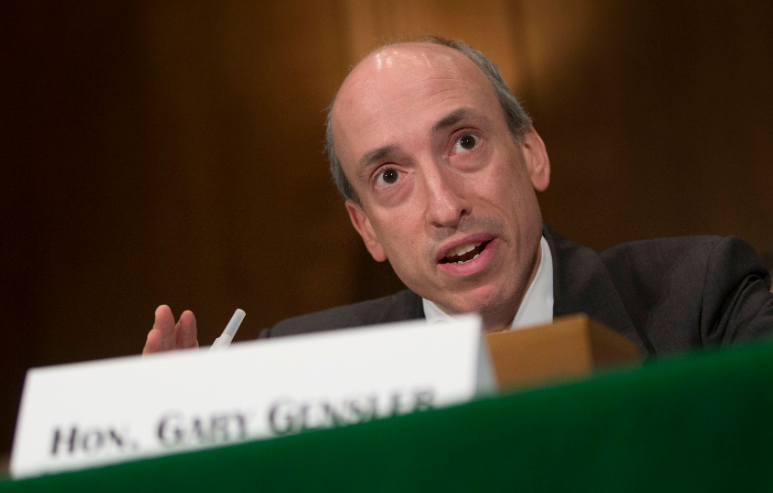
What did SEC Chair Gary Gensler say during the House of Representatives hearing?
TechFlow Selected TechFlow Selected
What did SEC Chair Gary Gensler say during the House of Representatives hearing?
On April 18, SEC Chair Gary Gensler appeared before the House Financial Services Committee hearing to defend the agency's aggressive regulatory approach.
 Navigating Web3 tides with focused insights
By Mary Liu, TechFlow
On April 18 local time, Gary Gensler, Chair of the U.S. Securities and Exchange Commission (SEC), appeared before the House Financial Services Committee to defend the agency's aggressive regulatory approach. This marked Gensler’s first appearance before the committee since October 2021, and his first testimony before a House Financial Services Committee controlled by Republicans.
Background: Industry backlash grows as Republican lawmakers propose ousting Gensler
Since the collapse of FTX last year, the SEC under Gensler has significantly intensified enforcement actions against the crypto industry—particularly targeting major players such as issuing Wells Notices to Coinbase and filing lawsuits against Tron founder Justin Sun, the Tron Foundation, and the BitTorrent Foundation.
These actions have drawn criticism from Republicans. Representative Warren Davidson introduced new legislation calling for Gensler’s removal and replacement by the SEC’s Executive Director. House Financial Services Committee Chairman Patrick McHenry tweeted that the SEC’s crackdown on cryptocurrencies has failed to bring stability to digital asset markets, writing: “Your actions are pushing innovation overseas and endangering U.S. competitiveness.”
U.S. business groups have also opposed the SEC’s aggressive regulation. Tom Quaadman, Executive Vice President at the U.S. Chamber of Commerce’s Center for Capital Markets Competitiveness, recently sent a letter to the House Financial Services Committee stating: “The SEC’s unprecedented volume of rulemaking warrants close congressional scrutiny.”
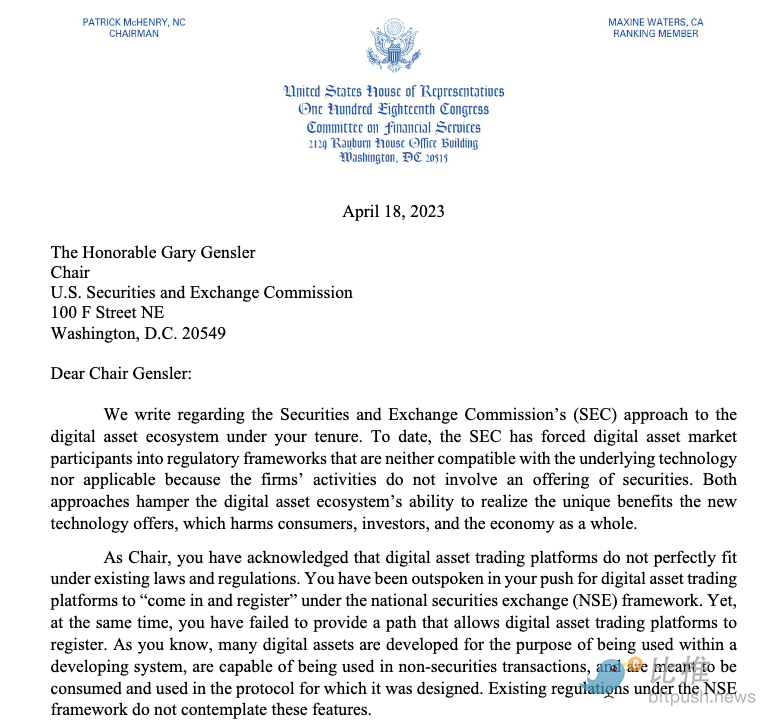
Ahead of the hearing, a group of Republican lawmakers sent Gensler an open letter criticizing the SEC’s digital asset regulation, particularly opposing his repeated calls for cryptocurrency platforms to register with the agency.
Lawmakers wrote: “You have failed to provide a pathway for digital asset trading platforms to register. Without clear road rules, your push for companies to ‘come in and register’ is a deliberate misrepresentation of non-existent registration procedures at the SEC. The sole entity responsible for the lack of registrants is the U.S. Securities and Exchange Commission itself.”
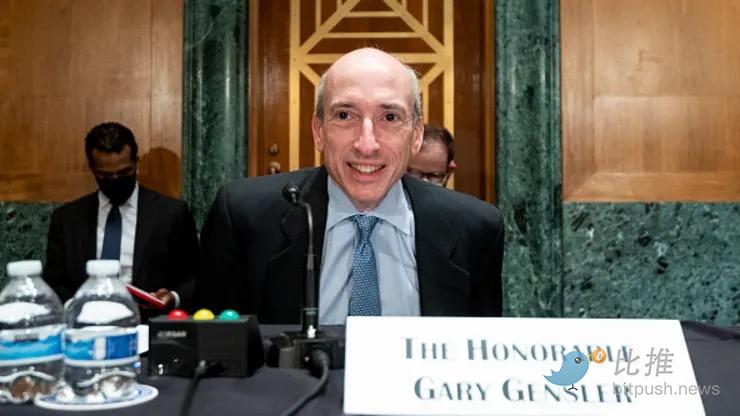
Gensler: Most crypto tokens are securities
Gensler dismissed criticisms from Republican lawmakers, stating in his written testimony to the House Financial Services Committee: “…Given that most crypto tokens are securities, many crypto intermediaries are engaging in securities transactions and must register with the SEC.”
Representative Josh Gottheimer said during the hearing that the SEC has provided very “limited” specific guidance for digital asset companies seeking compliance. Gottheimer added: “Under your leadership, the SEC has primarily used enforcement actions to drive compliance. I am concerned that the lack of formal guidance through normal rulemaking processes creates further uncertainty in this space.”
Gensler responded that the SEC has already issued more formal definitions and updates, with new measures expected soon.
Gensler stated: “Over the past two years, we’ve initiated nearly 1,500 enforcement actions and conducted over 6,000 examinations of registrants. We’ve engaged with more than 40,000 registrants—asset managers, brokers, dealers, exchanges, fund complex providers, public companies, and others. The SEC’s dedicated staff have done outstanding work with limited resources.”
Gensler refuses to clearly state whether Ethereum is a commodity or security
During the hearing, House Financial Services Committee Chairman Patrick McHenry repeatedly asked SEC Chair Gary Gensler whether “Ethereum is a commodity or a security,” but Gensler repeatedly declined to give a direct answer, citing the SEC’s longstanding policy of not commenting on the “facts and circumstances” of specific cases.
When asked whether Ripple’s token XRP is a security, Gensler replied that the case is currently under litigation.
McHenry also hinted at a possible “turf war” between the SEC and the Commodity Futures Trading Commission (CFTC). CFTC Chair Rostin Behnam, who oversees derivatives regulation, has previously stated that Ethereum falls under CFTC jurisdiction. Meanwhile, New York Attorney General Letitia James labeled Ethereum as an unregistered security in her recent enforcement action against crypto exchange KuCoin.
Therefore, there remains no federal consensus on whether Ethereum is a security or a commodity.
SEC does not rule out taking action against offshore firms
Several Republicans brought up the SEC’s handling of FTX, Silvergate Bank’s most prominent client. McHenry recently sent a letter to Gensler requesting more information about the SEC’s allegations against Sam Bankman-Fried. On Tuesday, Gensler said he was obligated to keep investigation details confidential.
New York Representative Ritchie Torres asked why the SEC chose not to take action against other offshore firms like Binance—especially after FTX’s collapse. Gensler responded that the agency is committed to taking appropriate action against any company interacting with U.S. investors, even if those offshore firms are not registered in the United States.
Gensler argued that offshore firms may be conducting illegal business with U.S. customers, and the SEC retains jurisdiction over such cases. He said: “Building investigative files takes longer. Cooperating with offshore enforcement authorities sometimes takes more time, and frankly, getting foreign companies to comply with subpoenas is challenging when they’re located abroad.”
Prominent crypto ally Representative Tom Emmer asked Gensler: “Are you concerned that your approach to the digital asset industry is effectively driving it out of the United States?” Gensler replied: “I’m trying to get them into compliance. If they don’t follow the law, then they shouldn’t be offering products to U.S. investors. But if they do follow the law and act in investors’ best interests, they can operate here.”
Stablecoins and crypto banking issues
Stablecoin regulation remains a key area of jurisdictional conflict between the SEC and the CFTC. Last month, CFTC Chair Behnam stated that stablecoins fall under CFTC oversight until Congress and the Biden administration establish a comprehensive new regulatory framework. However, the SEC also claims jurisdiction over these assets; Gensler himself signed an administrative proposal in 2021 to create such a framework.
During the hearing, Republican Representative French Hill asked Gensler whether he supports legislation around stablecoins. Gensler gave a conditional yes, while warning against “disrupting the $100 trillion capital markets,” and expressed support for stablecoin legislative recommendations put forward by a regulatory working group led by Treasury Secretary Janet Yellen.
During the hearing, Gensler also attempted to link the recent failures of Silicon Valley Bank and Signature Bank to their relationships with digital asset industry clients, noting that Circle held $3 billion in USDC reserves at Silicon Valley Bank.
During the hearing, Democratic lawmakers led by senior member Maxine Waters (D-Calif.) defended Gensler’s digital asset strategy, arguing that his approach is “markedly different” from that of previous SEC officials.
In recent months, the SEC has steadily increased its enforcement actions against crypto companies. As previously reported by TechFlow, its latest move involved accusing Seattle-based exchange Bittrex of failing to register with financial regulators across multiple areas and violating securities laws. The agency claimed that mainstream cryptocurrencies Dash and Algorand exhibit characteristics similar to securities. On the day of the hearing, Coinbase CEO Brian Armstrong said at the Global Innovation Forum summit that due to unclear U.S. crypto regulations, “everything is ‘on the table,’ including moving operations out of the U.S.” The Telegraph reported that Coinbase is considering relocating to the UK, which is currently Coinbase’s second-largest market.
A report released last month by venture capital firm Electric Capital showed that the U.S. share of blockchain developers is shrinking. The study concluded that “clear and supportive regulation” in the crypto sector will be key to attracting such professionals back to the United States.
Join TechFlow official community to stay tuned
Telegram:https://t.me/TechFlowDaily
X (Twitter):https://x.com/TechFlowPost
X (Twitter) EN:https://x.com/BlockFlow_News
 比推 BitpushNews






