








How to understand the societal impact brought by the development of Web3 social and on-chain data?
TechFlow Selected TechFlow Selected
How to understand the societal impact brought by the development of Web3 social and on-chain data?
When a protocol succeeds, its users succeed as well.
 Navigating Web3 tides with focused insights
Author: Bridget Harris, Sophie Fujiwara
Translation: TechFlow
This article comes from Stanford Blockchain Review. TechFlow is an official partner of Stanford Blockchain Review and has been exclusively authorized to translate and republish this content.
Introduction
The design of our social networks determines how we interact with each other online and shapes the structure of our social layer. While Web2 social companies are driven by profit and dominate user data extraction, Web3 places greater emphasis on community, transparency, and user incentives.
When a protocol succeeds, its users succeed as well. Web3 introduces behavioral change by simplifying social coordination and aligning incentives.
Many social experiences become possible or easier through trustlessness and accountability—precisely what blockchains provide. However, changing deeply entrenched behaviors of individuals, communities, and even societies poses significant challenges. Despite offering transparency, Web3 social remains largely misunderstood today due to difficulties in onboarding new users and frequent scandals.
All our friends are already using Twitter, Instagram, and Facebook. To truly shift behavior toward adopting Web3 protocols, users must first trust them and see them as strong alternatives to Web2 social networks. This behavioral transformation brings about a shift in core principles: from trust to trustlessness, from rewarding intermediaries to rewarding end-users, and from black boxes to transparency. In this article, we explore how these principles can be applied to build an entirely new concept of social networking—from social primitives to shared identity and social functions.
Identity
On today's social media, we reduce ourselves to a single vector of identity represented by our profiles, rather than allowing our profiles to reflect who we truly are. Identity in crypto holds far broader potential, which is why new primitives such as soulbound tokens, decentralized identifiers (DIDs), and verifiable credentials are at the heart of the next wave of on-chain social.
While Web2 digital presence is concentrated on a few central platforms, Web3 behaviors are recorded on-chain, painting a more comprehensive picture of us.
Disco enables this by creating a "data backpack" filled with credentials, accounts, membership statuses, and other identity data, making it easy to navigate across protocols on-chain. Similarly, ENS and Unstoppable Domains allow users to own their on-chain identities by linking wallet addresses to human-readable domains, enabling seamless login and transactions across platforms via that domain.
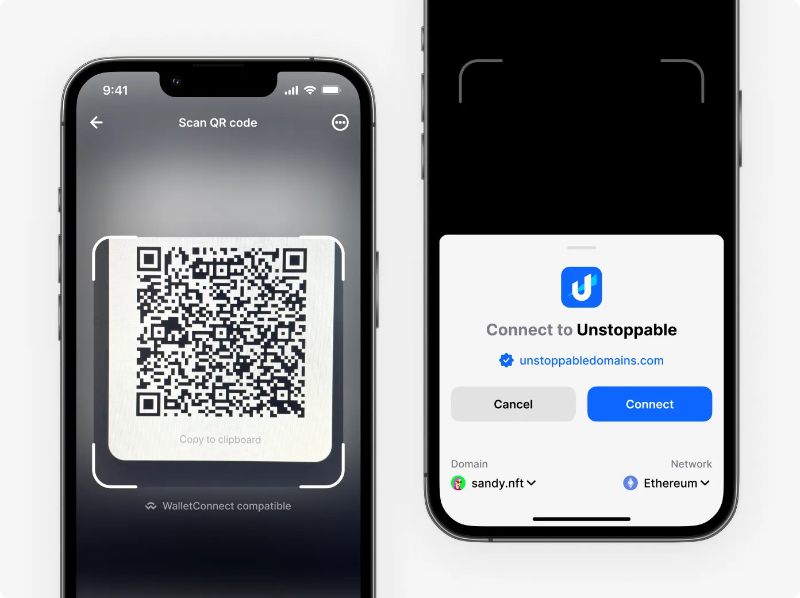
On-chain identity verification goes beyond our current conception of social media. Instead of being limited to posting photos on Instagram or 280-character tweets on Twitter, we can now represent nearly any aspect of ourselves on-chain, creating a more holistic identity shaped by our own narratives—not forced into predefined formats. The tools mentioned here make this easier for users without imposing constraints.
Messaging
Messaging is another widespread feature of social networks, with private messaging being one of the most important social actions on Web2 platforms. Although blockchain-enabled messaging has yet to reach mainstream adoption, recent developments show promising traction. Notably, new companies like Notifi and Waku have emerged focusing specifically on building messaging infrastructure layers. These firms help protocols embed and scale native messaging capabilities, delivering a more complete experience for end users.
Unique verticals also exist in direct-to-consumer models:
-
Matrix describes itself not as a messaging protocol but as a decentralized repository of conversations, since its infrastructure spans multiple servers and communication via its protocol automatically establishes shared ownership among participants.
-
Push (formerly EPNS) has created a model enabling businesses to communicate directly with their user base via wallet addresses—and vice versa. This opens up major opportunities for direct and efficient business-customer engagement, while letting users consolidate platform activity and updates into a single UI.
-
Several companies like Comm and Console are working to cryptographically replace Discord.
Additionally, many platforms support direct P2P messaging powered by on-chain mechanisms, including popular ones like XMTP, Dialect, Status, and Blockscan. Recently, WalletConnect launched an inbox allowing wallets to communicate with both protocols and other wallets.
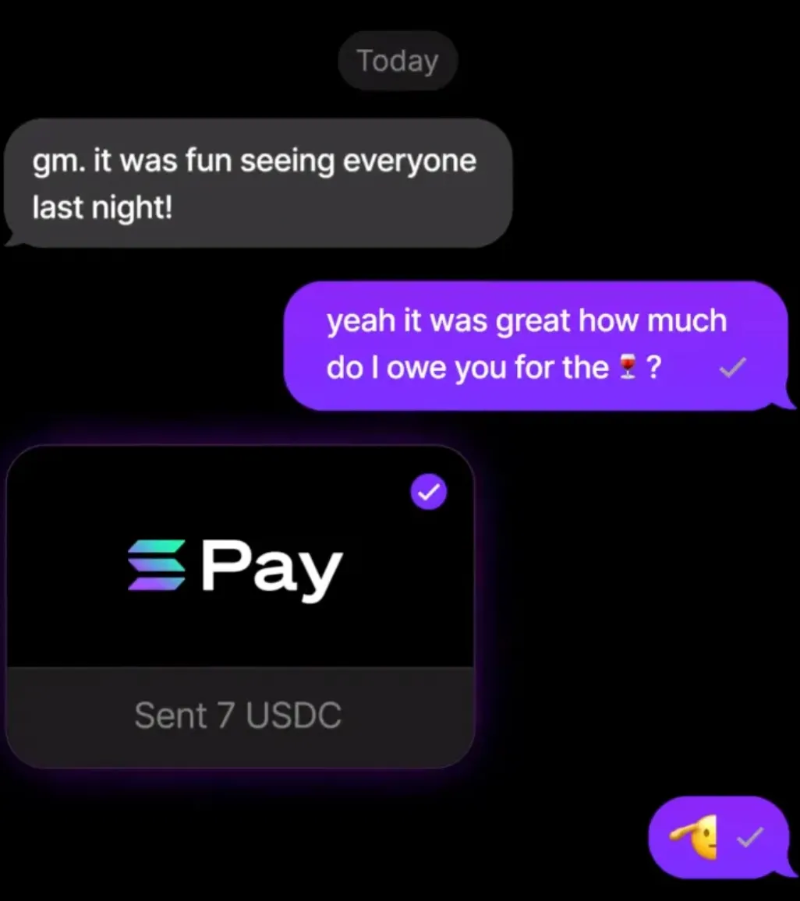
Like many verticals in Web3 social, the key challenge here lies in balancing convenience and quality. Messaging in Web3 does not aim to replace Web2 messaging, but rather introduces new forms of messaging with different stakeholders and interfaces.
Social Media
Despite innovation, many existing on-chain social channels have yet to gain substantial momentum.
There are several reasons for this, including technical barriers to entry, stigma around non-crypto natives, and complex or confusing user interfaces—all issues prevalent across the crypto space. But for social, we face an additional hurdle: the “cold start” problem.
Currently, the two most discussed protocols are Lens and Farcaster, both aiming to create decentralized social graphs accessible from multiple different clients.
-
Lens has Phaver, Lenster, Orb, and Buttrfly; Farcaster has Warpcast and Purple. These protocols foster factions, with users becoming highly loyal to one camp or another.
-
The core difference between Lens and Farcaster is that Lens targets creators and influencers looking to monetize through trading and bring over existing audiences, whereas Farcaster centers around the crypto-native Twitter community.
Other protocols adopt their own community strategies, such as DeSo, DSCVR, GM, and CyberConnect.
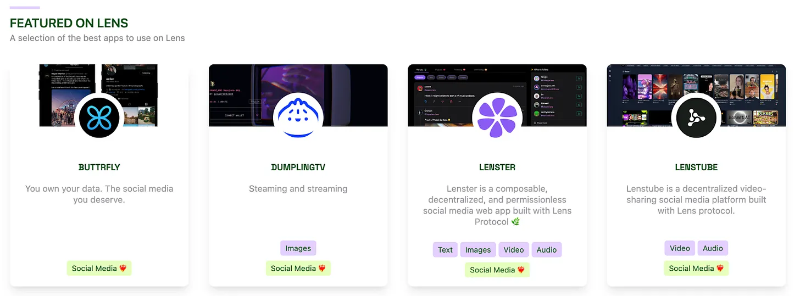
At its core, the success of Web3 social networks depends less on technological superiority and more on building group identity through shared stories and communities. We’ve seen this in successful NFT collections, where top projects like DeGods and BAYC maintain strong core communities instead of relying solely on speculative traders to sustain value. This community-centric focus has led to tools like Station and Jokedao that help coordinate communities on-chain. As protocols scale, we will increasingly see resilience rooted in community strength, especially as most technology becomes commoditized.
On-Chain Co-Creation
NFTs represent a new economic mechanism for verifiably owning digital items. This ownership can be distributed among multiple people, creating blockchain-based provenance and enabling collaborative creation paradigms. As NFTs define and maintain abstract ownership, it’s time to re-envision concepts like patents and intellectual property licensing.
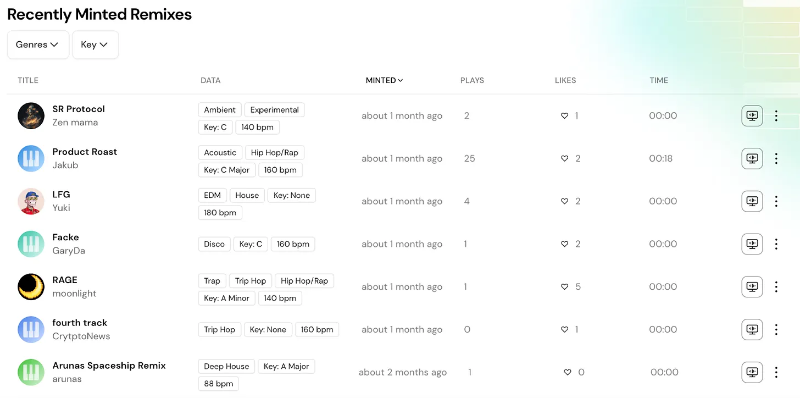
Recently, the rise of TikTok remixes has sparked discussions about collaborative media creation. Companies like Arpeggi and Adimverse are building decentralized solutions that use smart contracts to automatically attribute content.
Mirror and 0xSplits, along with the recently launched Lens, offer proportional revenue sharing for every contributor to a project, ensuring fair compensation for all. To incentivize collaboration and creativity, this should become the dominant model for creator payouts—replacing the inadequate compensation models currently seen on Medium and Spotify.
On-chain behaviors can be pieced together to reimagine the relationship between consumers and big data. On-chain data doesn’t just tell you what customers are buying and selling—it reveals who they are through their collective behavior.
A wallet’s history reveals social interactions, personal interests, and financial history.
However, unlike private platforms that sell and use our data without consent, in Web3 we willingly expose our data knowing it’s public. Numerous tools empower anyone to take control of their data:
-
OnceUpon and Arkham Intelligence aim to make blockchain data easily interpretable for both traders and non-crypto natives.
-
Ora and Lore transform complex transaction data into natural language, helping users contextualize behavioral patterns and track them effectively.
-
Bello and Spindl enable brands to use on-chain data to better understand their customers in a transparent way, contrasting sharply with tracking practices in Web2.
-
Golden Protocol leverages blockchain transparency to create attributes that live on-chain, tying information directly to its creator and ensuring proper attribution of every narrative. These can surface at the dapp layer as badges, similar to Metagame, where you earn your NFTs (rather than buy them) through on-chain actions.
With all this data and new ways to display and discover it, personal and community identities are bound to evolve. On-chain coordination creates a level playing field for participation; on-chain data allows anyone to craft or verify narratives; on-chain behaviors generate this wealth of data.
Curation and Discovery
Having all these blockchain protocols is great—but nearly impossible when trying to find what you’re looking for. There’s currently no Web3 search engine capable of quickly locating the right application when needed. Platforms like Launchcaster address this simply by functioning as a Web3 version of ProductHunt.
Other platforms take a more curated approach, such as Boys Club and Dirt, which serve niche audiences that trust their taste and manually curate content.
These curators have evolved into trusted brands because they send strong signals to their audience—when they endorse something, it matters. This mirrors Web2, where we rely on brands to curate the internet. It’s a major issue in the NFT space too, where OpenSea rankings and influencer endorsements on Twitter serve as primary curation platforms. More decentralized curation exists as well, such as Yup, which aggregates and filters content from existing platforms, or token-curated registries that reward users for good taste. This user-driven curation enables attribution, allowing even those with small followings to act as curators—not just mega-influencers.
Education
One of the main barriers to crypto adoption today is lack of accessible knowledge. Due to its complexity, many people hesitate to engage—even within social contexts. As a result, some new consumer-focused companies are abstracting away crypto from the front-end, allowing users to benefit from these technologies without changing their existing behaviors. For example, Niche Protocol offers new social apps in an extremely user-friendly manner to achieve this abstraction.
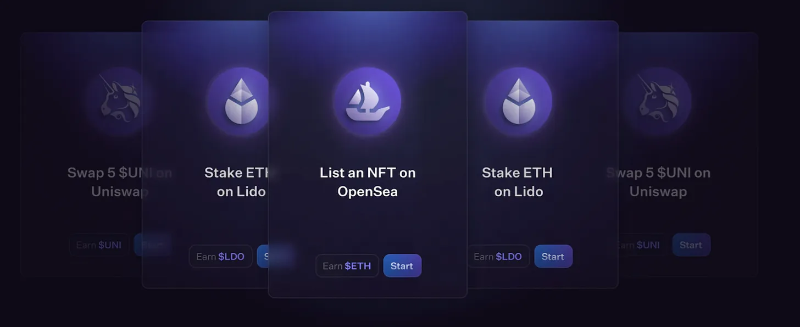
Overall, accessibility, ownership, and rewards are the main pathways these protocols use to break away from traditional social platforms. Other platforms like RabbitHole and Layer3 reward users for learning and engaging with crypto protocols, creating journeys that are both educational and incentivized. These platforms promote accessibility and strive to make onboarding seamless, helping users build higher levels of trust in the protocols they interact with.
Financial Transactions
Beyond the social layer, blockchain technology is actively creating new dynamics around community-driven financial activities.
A compelling example is Antic, which is building infrastructure enabling any existing platform to integrate a “buy together” button into their site. Shared ownership isn't unique to Web3, but many crypto-native protocols like Fractional (now Tessera) were early pioneers in introducing these new ownership models.
Blockchains are also ideal backends for these solutions. Giving users the option to purchase assets or experiences in groups can attract more users to a platform and increase revenue.
Moreover, shared ownership is an interesting model that allows groups to invest in alternative assets, share experiences, and build communities around what they buy. With blockchains enabling transparent and trustworthy shared ownership, these new financial mechanisms will continue to grow in sophistication and popularity.
Shared ownership can serve as a mechanism for friends coordinating purchases, but it also allows strangers to make financial decisions together—because they only need to trust the underlying system, not each other.
SyndicateDAO enables group investing, while Bridgesplit allows fractionalization of financial assets regardless of how distantly separated co-investors may be.
Conclusion
By leveraging blockchain transparency, data, and coordination mechanisms, we can not only understand users more effectively but also enhance the quality of connections and trust among parties.
Communication is central to society, and with on-chain social interactions, we can better reward user engagement and foster community growth.
Web3 social has profound implications for identity and interaction.
Currently, on-chain data is a novel technology—intellectually fascinating but not yet widely practical.
We believe that in the future, on-chain social will be fully realized—not by replacing today’s social media, but by enhancing certain behaviors through these new primitives.
Join TechFlow official community to stay tuned
Telegram:https://t.me/TechFlowDaily
X (Twitter):https://x.com/TechFlowPost
X (Twitter) EN:https://x.com/BlockFlow_News
 Stanford Blockchain Club






