Delysium launches AI-powered Web3 operating system Lucy, enhancing Web3 user experience through natural language interaction
TechFlow Selected TechFlow Selected
Delysium launches AI-powered Web3 operating system Lucy, enhancing Web3 user experience through natural language interaction
Delysium has launched Lucy, the world's first AI-powered Web3 operating system. Global public testing is now open, with the official version即将 launching on ecosystems including BNB Chain and Ethereum.
 Navigating Web3 tides with focused insights
Lucy Airdrop is Live
Delysium launches Lucy, the world's first AI-powered Web3 operating system.
Operate various crypto applications through simple conversations.
Make it easier for hundreds of millions of future users to enter the crypto world and enjoy a friendlier, more convenient, and secure Web3 experience.
Event Rules
Lucy is now open for public testing. Be among the first to experience Lucy by completing interactions such as chatting, transferring funds, and checking assets. Invite more friends to participate and earn AGI airdrops.
AI Has Become the Global Tech Consensus for the Future
Every once in a while, a groundbreaking product emerges that changes the way people live.
If tools like Stable Diffusion and Midjourney brought global users an imaginative feast of digital art creation, then ChatGPT has led humanity into the next era.
In January 2023, ChatGPT, developed by OpenAI, reached 100 million monthly active users—just two months after launch—making it the fastest-growing consumer application in history.
This signifies that AI has become a new interaction paradigm, enhancing the efficiency of information access and processing through natural human-computer interaction, enabling everyone to live more conveniently and naturally in the virtual world.
For this reason, some have called ChatGPT the clarion call of the Fourth Industrial Revolution—marking a shift toward more accessible, high-efficiency productivity tools whose impact may surpass even that of the steam engine.
If we only view the future from today’s perspective, most future developments would never come into existence. Each time a new technology emerges, we marvel at its revolutionary effects, yet when envisioning the future, we often underestimate their long-term influence.
This is especially true for the current state of the crypto world.
Natural Language Interaction Is Making Web3 Experiences Simpler
Fourteen years ago, Satoshi Nakamoto released Bitcoin, giving birth to the crypto world. Fourteen years later, the global crypto user base has surpassed 400 million—and this number continues to rise rapidly.
Despite living in an ever-expanding crypto ecosystem, the difficulty of accurately obtaining relevant information and correctly using crypto assets continues to grow. This has led to increasing interest in how users can interact with the crypto world more naturally, smoothly, and securely.
Let’s take a look at how a newcomer entering Web3 learns about and begins using various crypto applications.
First, they might search Google for questions like “What is Bitcoin?”, “How do I register a Bitcoin wallet?”, “How to buy ETH?”, “Where to buy NFTs?”, “What is BAYC?”, “How to join a project’s IDO/IEO?”, or “How to provide liquidity on a DEX?”
They may also read articles from media outlets, follow KOLs on Twitter or other social platforms, and join Discord or Telegram communities of certain projects to learn things like “What opportunities exist in Layer2?”, “Which projects are trending recently?”, or “What is Azuki’s roadmap for the next year?”
Additionally, they might frequently receive direct messages saying, “I’ve got a great opportunity to get free Bitcoin—just connect your wallet to claim.” If they lack technical knowledge or experience, checking whether such an address is safe would require either Googling or spending significant time consulting others.
There are many similar scenarios, but none represent the simplest or most effective approach. Web3 users need an experience far more efficient and convenient than anything available before.
Most importantly, it must be extremely easy to use.
From the invention of computers and the emergence of graphical user interfaces (GUI), to the rise of natural language interaction (NLI), humans have continuously sought simpler ways to engage with and experience the virtual world.
In this evolution, efficiently and naturally interacting with digital information—enabling mainstream users to quickly get started without prior experience and minimizing the learning curve—is not only the strength of natural human-computer interaction but also precisely where AI excels.
When mainstream large models incorporate information and knowledge from the crypto domain, AI can better understand users’ Web3-related needs through natural language interaction.
Meanwhile, the crypto world’s consistent data standards, permissionless data usage, and interoperable data structures allow AI to connect and operate various crypto applications without requiring database access permissions.
Therefore, Web3’s interoperability enables AI, built on natural language interaction, to go beyond products like ChatGPT—allowing users to perform nearly all on-chain operations through simple conversations, such as checking assets, executing transfers, summarizing project details, discovering opportunities, and identifying risks.
Lucy, launched by Delysium, is exactly such a product.
Redefining the Gateway to Crypto: An AI-Powered Web3 Operating System
By continuously integrating crypto-specific information and knowledge into mainstream large models such as GPT and BERT, Lucy is evolving into one of the most promising Web3 education platforms—helping mainstream users learn essential knowledge and guiding them to further operate various Web3 applications.
For example, when asking Lucy “What is Bitcoin? How do I register a Bitcoin wallet?”, she directly provides users with an introduction to Bitcoin and instructions for registering both centralized and decentralized Bitcoin wallets.
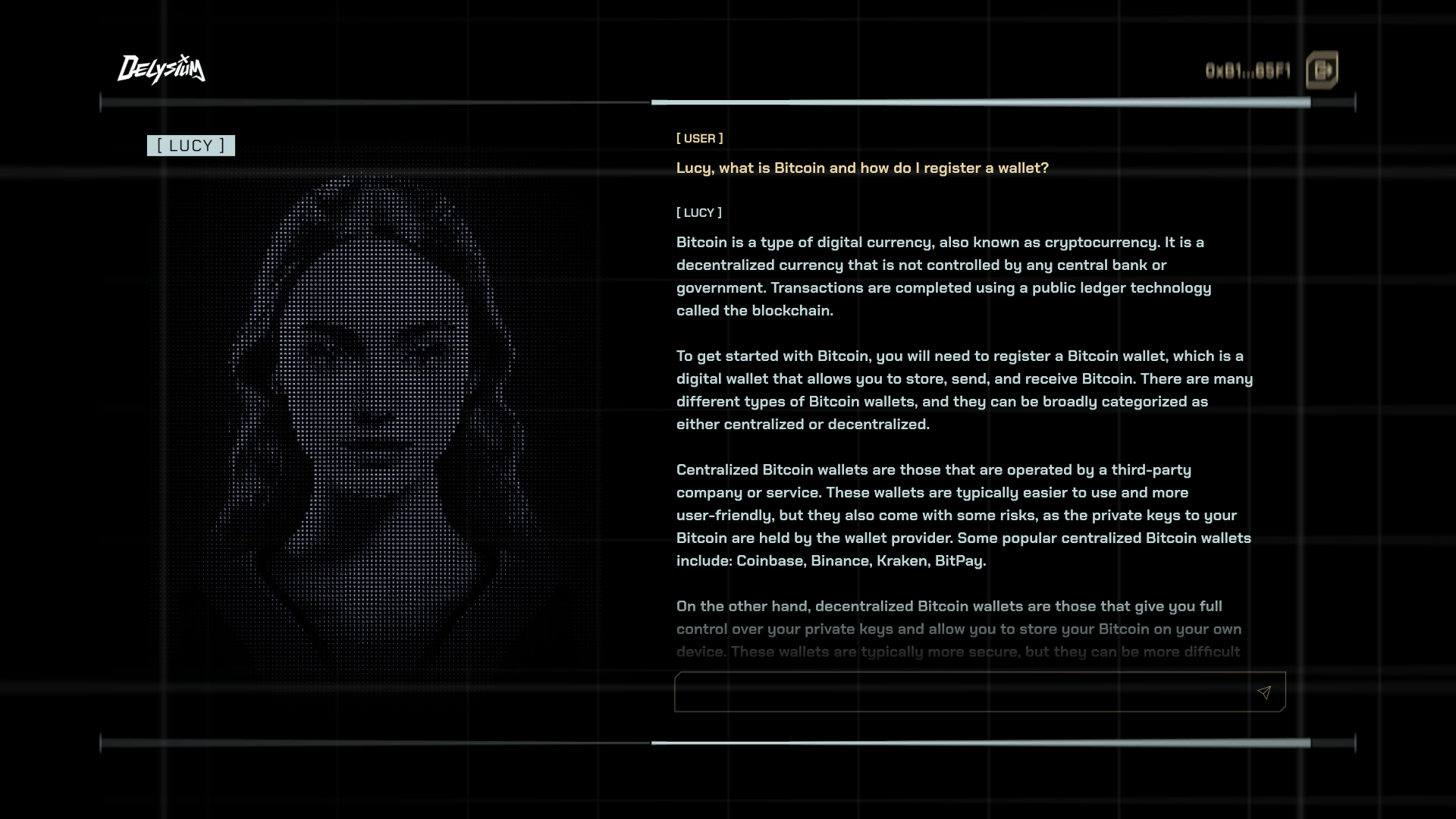
Users no longer need to repeatedly search across search engines and social media—they can quickly learn structured Web3 knowledge and specific operational steps.
From here, Lucy opens the door to the crypto world and, through natural language interaction and publicly available on-chain data, helps users operate various Web3 applications.
When we want to check non-fungible tokens (NFTs) or fungible tokens (FTs) held by a wallet address or domain, we no longer need to visit blockchain explorers like BscScan, Etherscan, or PolygonScan, or marketplaces like OpenSea, Blur, X2Y2, LooksRare, and GEM. Instead, simply conversing with Lucy retrieves the required information.
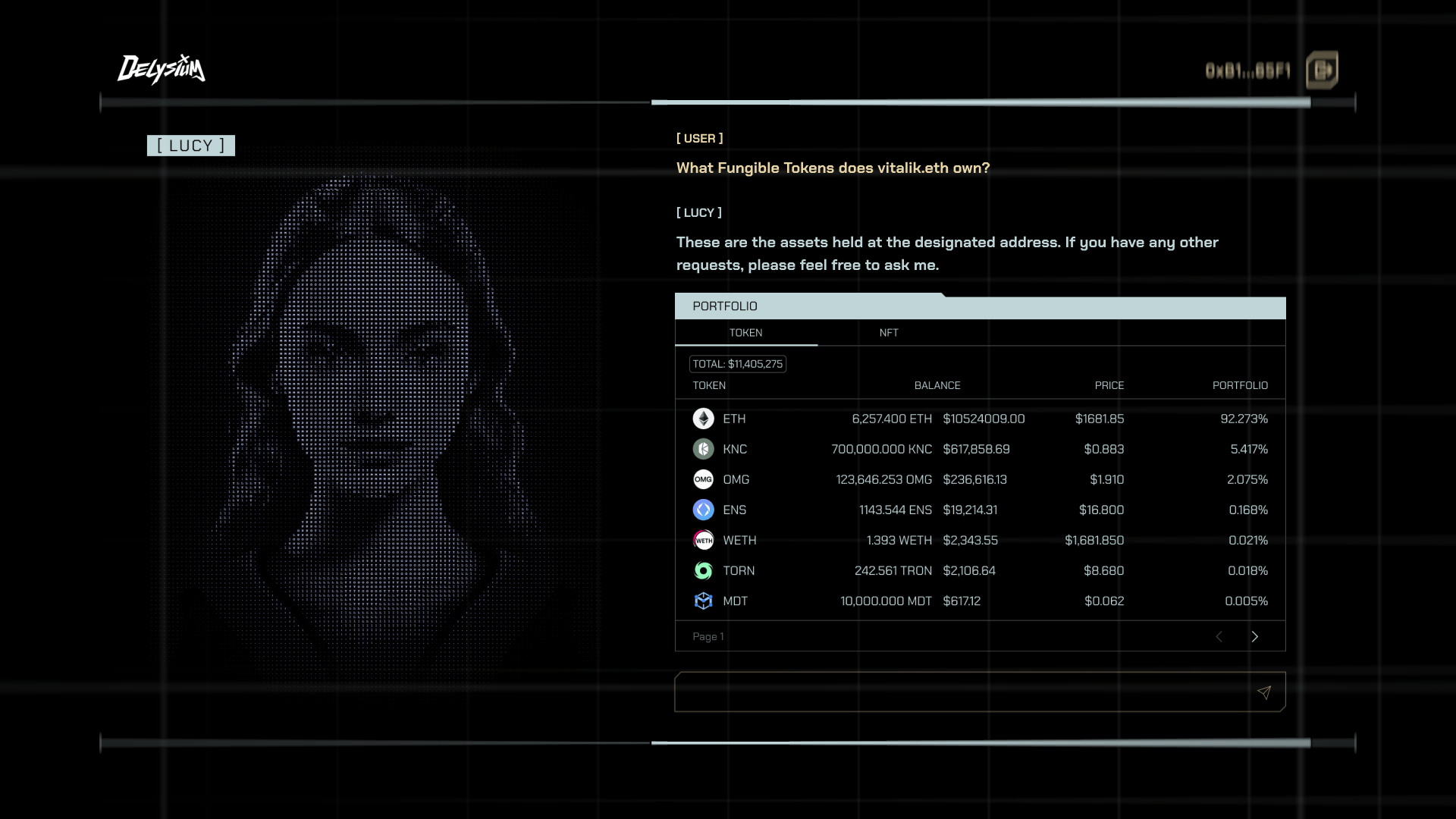
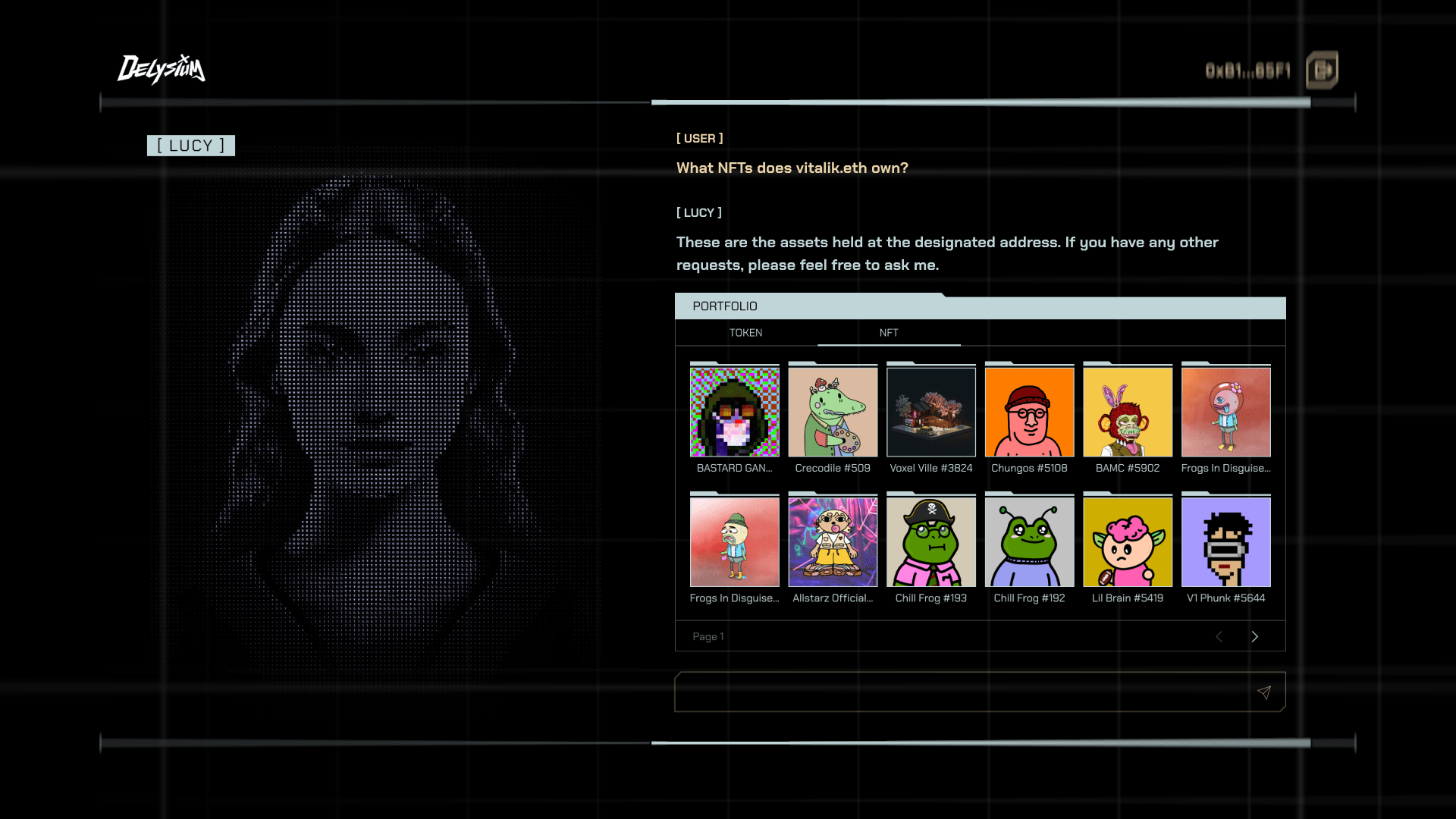
Just like everyday conversation, natural language interaction allows us to quickly and clearly know the crypto assets held by any address.
Of course, Lucy’s capabilities extend far beyond asset queries. The next step—executing on-chain transfers—is also supported.
Before Lucy, initiating a transfer required finding the destination address, copying and pasting it into the transfer field, and carefully double-checking before confirming.
Now, with Lucy, users can simply tell her the transfer details via conversation and complete the transaction.
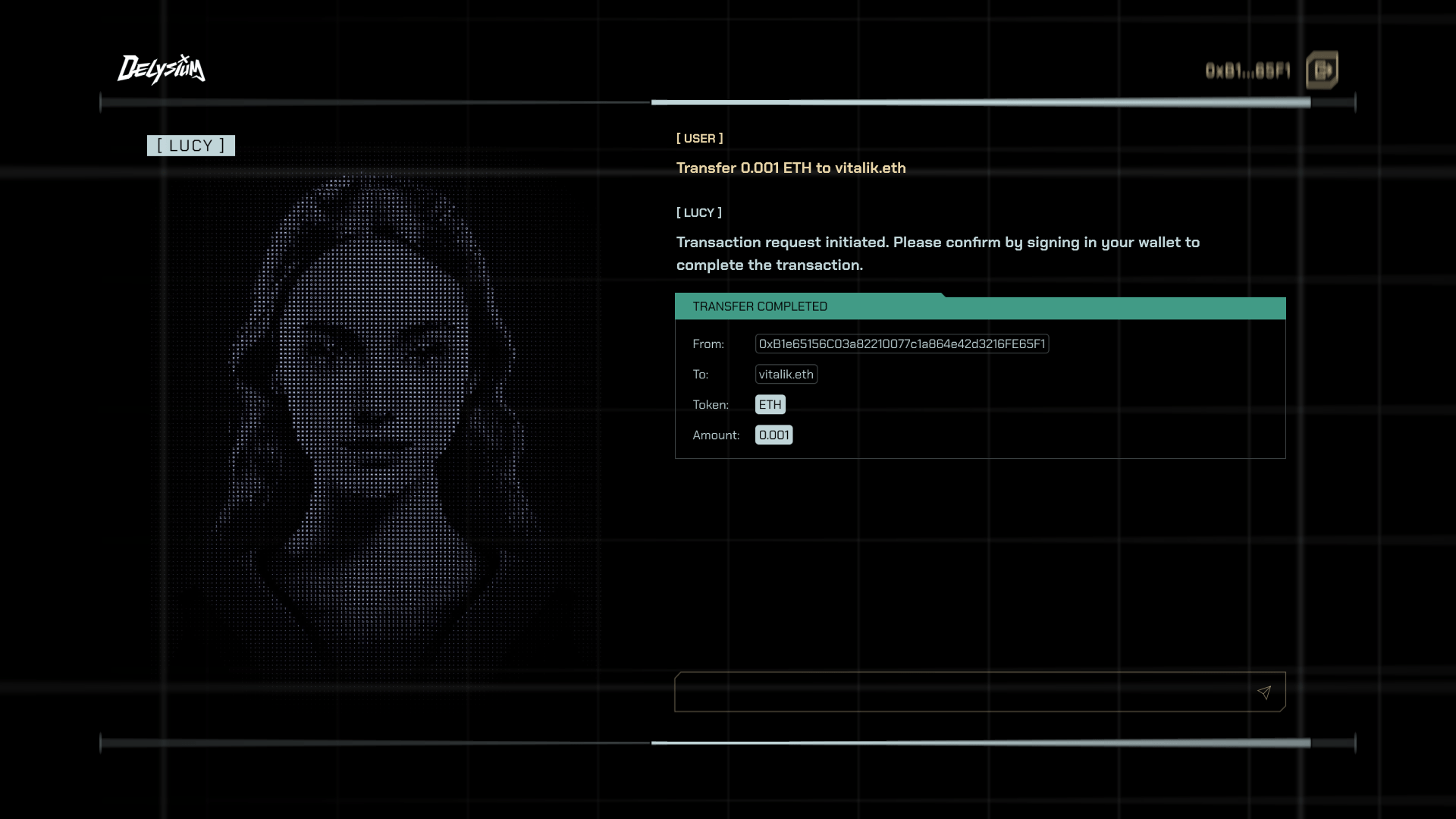
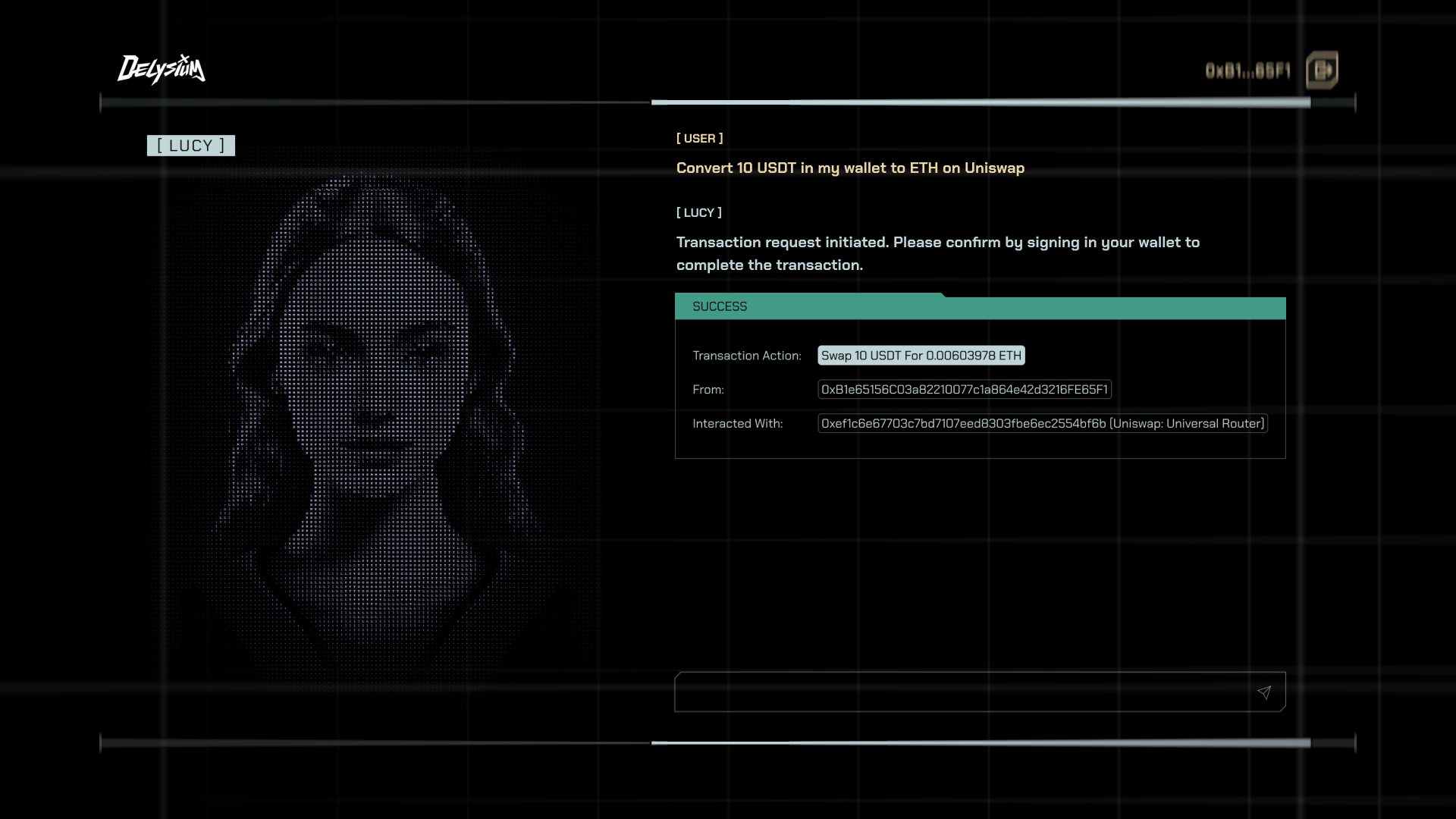
This means any user can effortlessly complete a series of on-chain operations through simple conversations with Lucy.
Previously, to stay updated on a project, a Web3 user had to follow news feeds, track KOL opinions, join Discord or other communities, and manually gather and organize key information to form preliminary judgments.
However, such information can quickly become outdated. To stay ahead, users might pay to join Alpha Groups for real-time insights, allowing early participation in promising projects.
Now, simply ask Lucy, and she will quickly and accurately summarize project details.
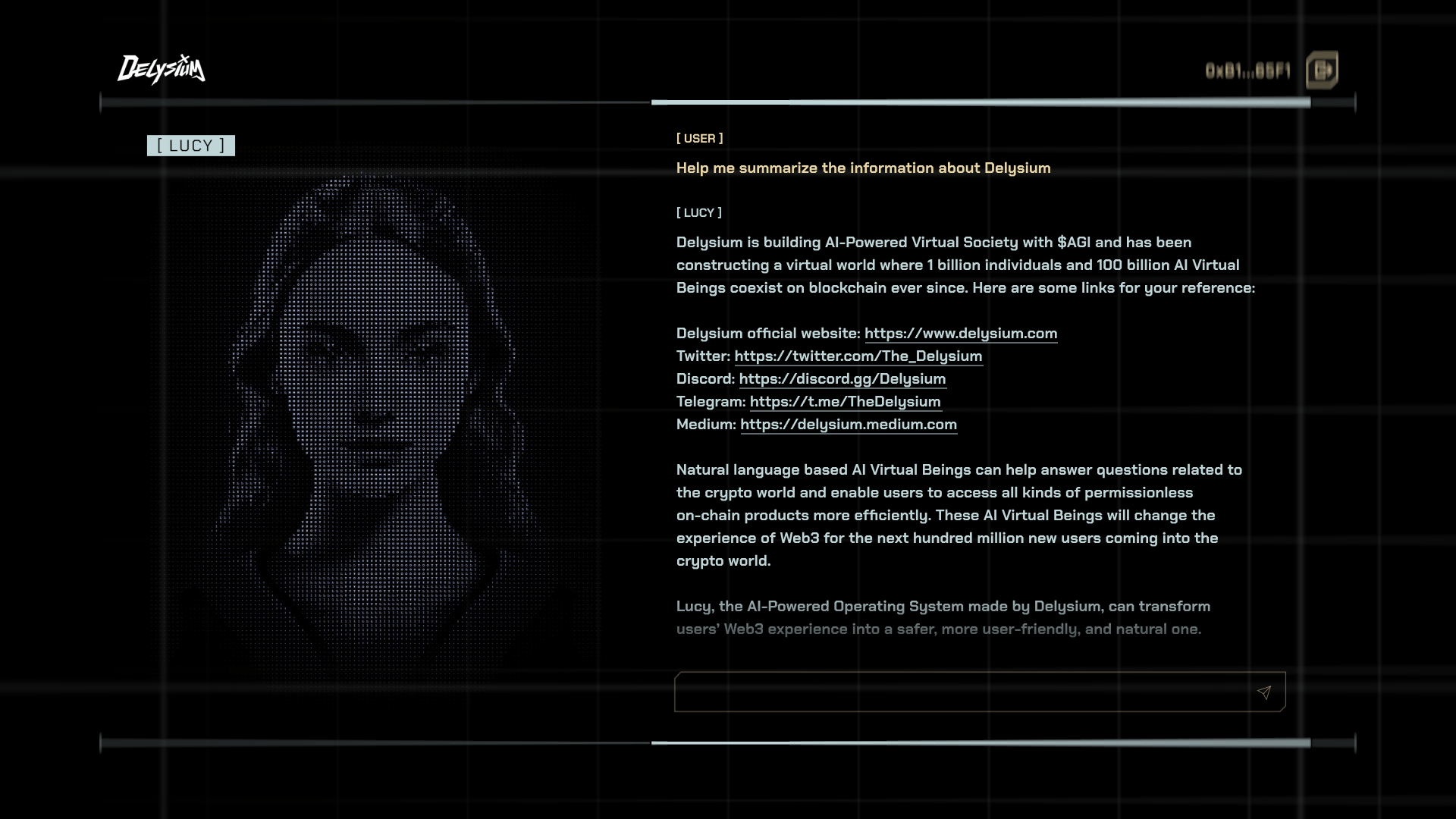
In fact, when users leverage simple conversations to let Lucy connect and operate various crypto applications, the significance goes beyond natural language interaction itself—it injects renewed momentum into the entire Web3 industry.
Of course, while the crypto world is full of opportunities, it also carries substantial risks—where a single misstep can lead to major losses. Lucy, with its high degree of openness, is particularly effective at addressing these issues.
Lucy can integrate with on-chain applications offering security auditing services, such as PeckShield and SlowMist, transforming into a guardian of users’ crypto assets and providing intelligent protection for every transaction.
For instance, if a user finds a “seemingly promising” project and prepares to send funds to an address, Lucy might alert: “This address has transacted multiple times with an address flagged as malicious. Please confirm whether to proceed.”
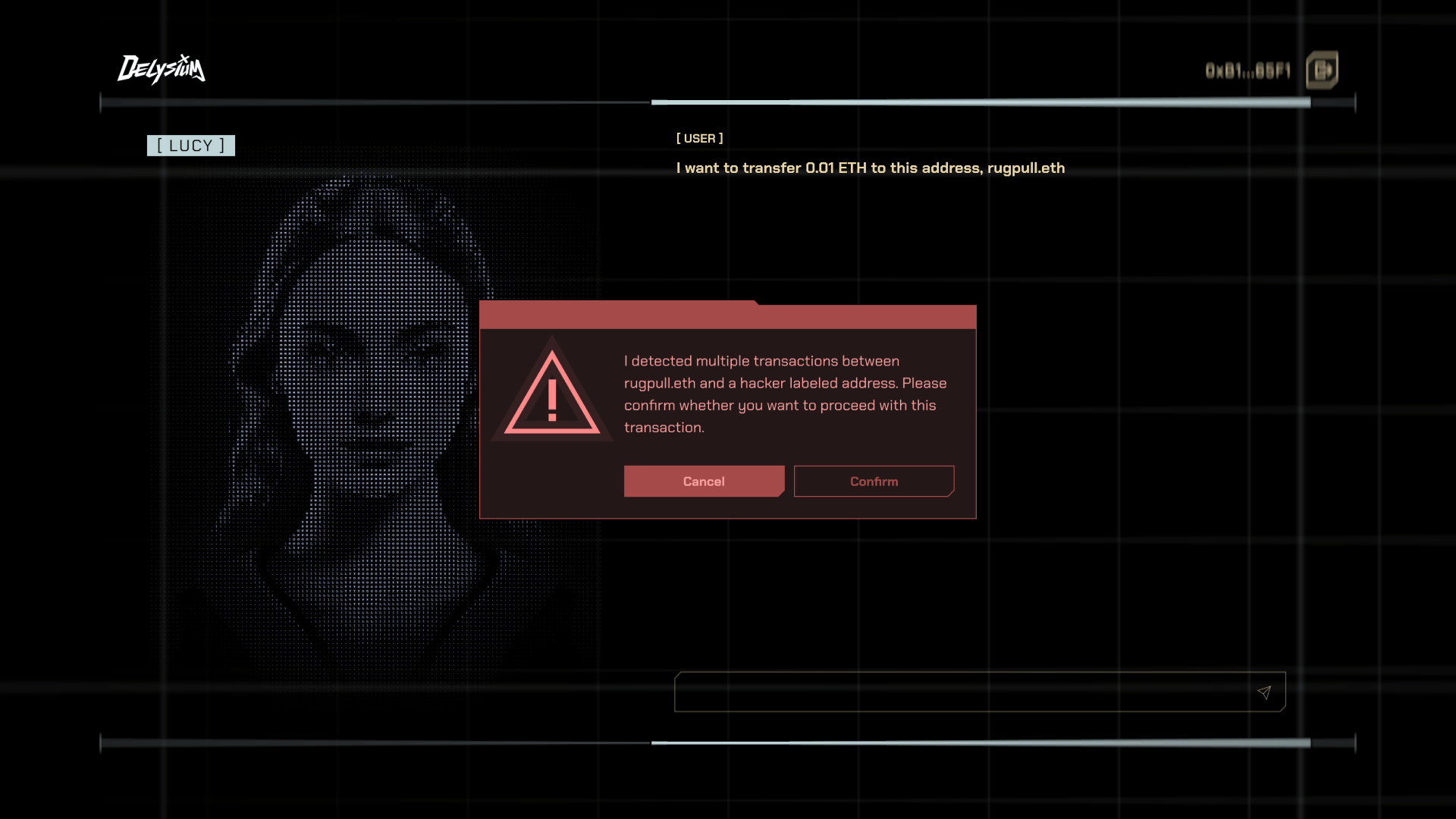
There are countless other Web3 scenarios like this, and the future holds endless possibilities.
The crypto world—with its consistent data standards, permissionless data usage, and interoperable data structures—will continue to grow richer and more mainstream.
Accordingly, AI’s role within it will become increasingly vital. More natural human-computer interaction is an essential component of the virtual world—especially Web3—making all “crypto activities” smarter and more convenient.
Powered by Delysium’s Web3-optimized natural language model, Lucy leverages publicly available on-chain data to enable users to connect and operate diverse applications through simple conversations—making it easier for hundreds of millions of future users to enter the crypto world and delivering a friendlier, more convenient, and secure Web3 experience for all.
This is Lucy.
An educational platform that makes it easier for hundreds of millions of future users to enter the crypto world;
An intelligent assistant that helps every user efficiently gather and process crypto information;
A Web3 gateway that enables all users to conveniently operate crypto applications.
GM Lucy
Join TechFlow official community to stay tuned
Telegram:https://t.me/TechFlowDaily
X (Twitter):https://x.com/TechFlowPost
X (Twitter) EN:https://x.com/BlockFlow_News
 @The_Delysium