








Looking Back at In-Depth Interviews with Former SEC and CFTC Chairs, and Outlook on Cryptocurrency Regulation in 2023
TechFlow Selected TechFlow Selected
Looking Back at In-Depth Interviews with Former SEC and CFTC Chairs, and Outlook on Cryptocurrency Regulation in 2023
BUSD Issuance Set to Halt: Revisiting an In-Depth Interview with Former SEC and CFTC Chairs on 2023 Crypto Regulation
 Navigating Web3 tides with focused insights
By: michaeljin.eth
— With BUSD issuance nearing a halt, revisit in-depth interviews with former SEC and CFTC chairs to explore cryptocurrency regulation outlook for 2023.
Intro
This article provides an in-depth analysis of a late-2022 Goldman Sachs research report on perspectives and outlooks regarding digital currency regulation following the FTX collapse (readers seeking the original report can DM our assistant to receive it). In 2022, the cryptocurrency industry experienced a series of high-profile catastrophic events.
From the implosion of the Terra ecosystem to the downfall of once-respected crypto entities such as Three Arrows Capital, Voyager Digital, Celsius, BlockFi, and FTX, these collapses delivered massive negative shocks to the entire cryptocurrency ecosystem.
In the aftermath, regulatory approaches toward digital assets, the direction of ecosystem development, and potential risks to the financial system and real economy have become focal points of discussion within and beyond the industry. Below are expert perspectives on cryptocurrency regulation after the FTX incident.
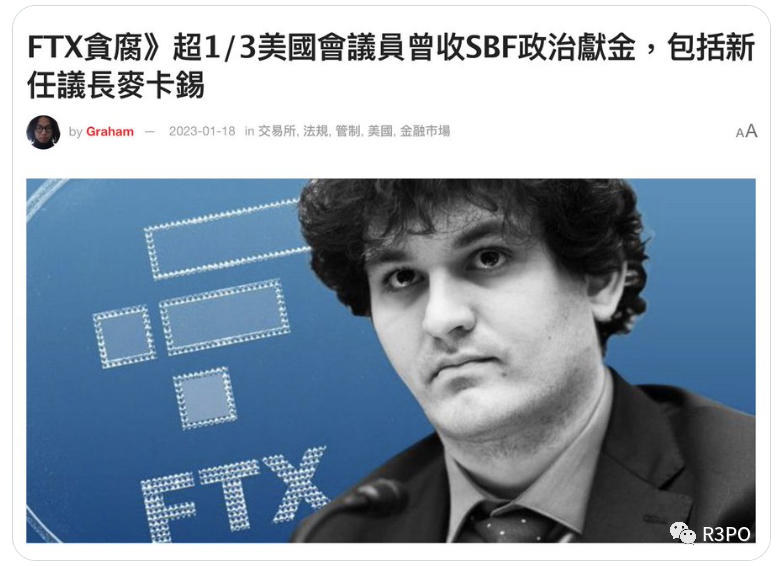
[Expert Perspectives]
Marcel Kasumovich, Head of Research at One River Asset Management, believes that the issue with U.S. cryptocurrency regulation is not lack of regulation per se, but rather lack of clarity in regulation. He notes that multiple regulatory bodies—including OFAC, FinCEN, SEC, and CFTC—are involved in this space, but due to their lack of clear mandates, significant risk-taking has been pushed offshore to non-U.S. entities. This explains why the Bahamas became the base for FTX. However, Kasumovich argues that the technology itself did not fail during recent turmoil. The innovative potential of blockchain technology to improve financial systems and other sectors remains immense and evident. As he points out, billions of dollars in transactions settle daily on blockchains without trusted intermediaries—an astonishing achievement.
Jay Clayton, former Chairman of the U.S. Securities and Exchange Commission (SEC), described the current ambiguity around U.S. digital asset regulation as “garbage.” He emphasizes that the core of the debate lies in whether digital assets should be classified as securities—subject to SEC oversight—or as commodities, regulated by the Commodity Futures Trading Commission (CFTC). According to Clayton, most digital assets clearly qualify as securities, and the SEC has already won several cases proving this point. In his view, existing laws should be enforced rather than waiting for Congress to pass new legislation. He also stresses the need for heightened attention to stablecoin risks, calling for stricter regulation of stablecoins.
Clayton acknowledges the significant promise of distributed ledger technology. He highlights its potential to deliver efficiency and low-friction transactions, possibly revolutionizing traditional financial markets and other industries. Nevertheless, he insists this potential must be harnessed within a robust regulatory framework to protect investors and ensure market fairness and transparency.
Timothy Massad, former Chairman of the Commodity Futures Trading Commission (CFTC), stated: "The current U.S. regulatory framework for cryptocurrencies is insufficient to protect investors." Massad notes that even U.S.-regulated crypto exchanges operate only under outdated state money transmission laws, which fall far short in establishing proper investor protection standards. He observes that the crypto market has emerged as a global retail financial instrument, while current commodity regulations apply only at the derivatives level under federal oversight—not at the spot market level.
Massad calls for stronger investor protections and a better regulatory framework for crypto markets. He emphasizes that the SEC and CFTC must cooperate more closely to strengthen investor safeguards in the crypto space. He suggests the two agencies could establish a joint self-regulatory organization to implement standards for decentralized finance platforms. Massad believes that despite the global nature of digital assets, such an entity would be more effective in protecting cryptocurrency investors.
[Regulatory Signals Are Confusing, But Protecting User Rights Remains Central]
The Deputy Governor of the Bank of England urged the UK to “continue bringing these activities and entities into regulation.” New regulations should ensure that new stablecoins “meet standards comparable to those expected of commercial bank money.”
U.S. Treasury Secretary Janet Yellen called for separating customer funds from corporate assets and advocated for more effective oversight of the cryptocurrency market.
The proposed Digital Commodities Consumer Protection Act (DCCPA) aims to protect individuals from another Celsius or Voyager-like collapse by imposing strict rules on customer assets. If passed, the Commodity Futures Trading Commission (CFTC) will oversee its implementation and bring legal actions against violators.
[Key Regulatory Focus Areas for Cryptocurrency Regulation in 2023]
1. Clearer Regulators and Rules
-- SEC and CFTC Joint Enforcement
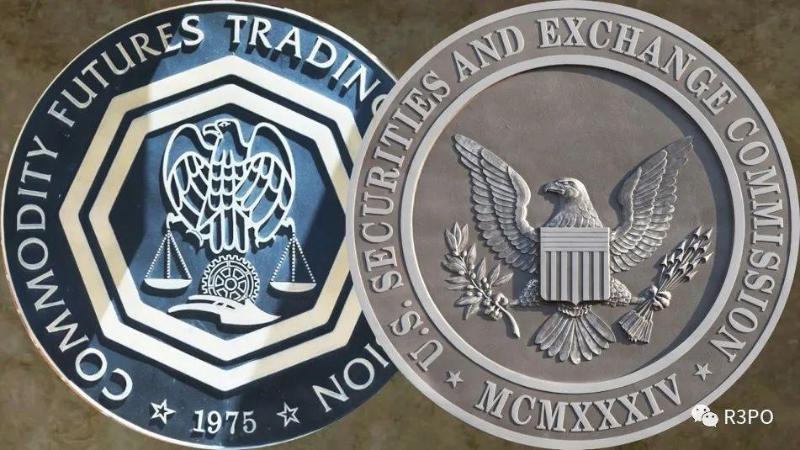
Amid the complex U.S. regulatory debates, some experts believe that any new oversight and enforcement actions on cryptocurrencies are most likely to come from the SEC and CFTC—not Congress. SEC Commissioner Hester Peirce advocates for both regulators to jointly develop new rules, warning that assigning responsibility to just one agency would be “problematic.”
In recent years, the SEC has become increasingly active in lawsuits against crypto companies. While most of these actions—aside from the high-profile case against Ripple over its XRP token—have been relatively uncontroversial, such litigation is expected to accelerate this year.
-- Higher Audit Standards for Crypto Projects
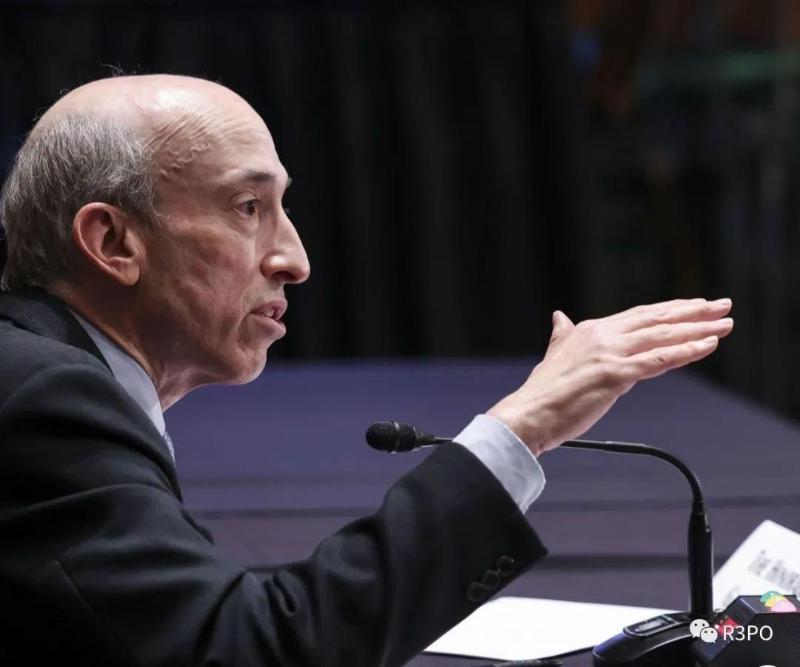
SEC Chair Gary Gensler has expressed interest in treating most crypto tokens as securities, which would bring them under his jurisdiction. If the U.S. follows through, this would essentially require crypto projects to undergo the same audits and disclosures as public companies—an undoubtedly pivotal development in cryptocurrency regulation for 2023.
2. Strengthened Stablecoin Regulation
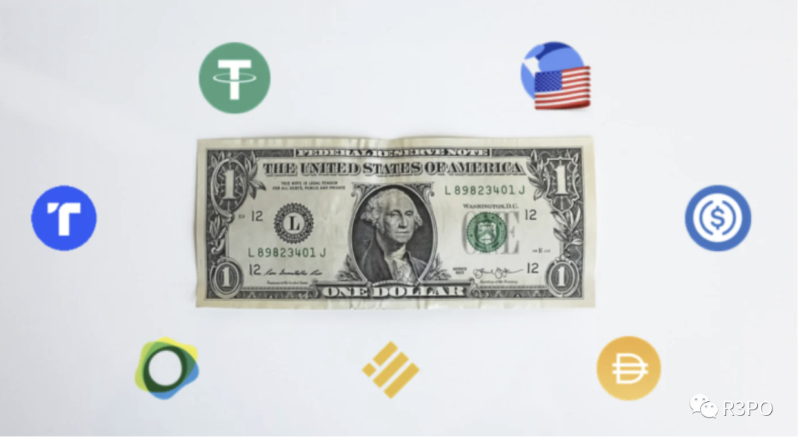
The Biden administration’s 2022 report on stablecoins discussed regulatory frameworks for stablecoins and the possibility of a digital dollar. In 2023, we are likely to see progress on a key stablecoin bill. Representative Patrick McHenry (R.N.C.), one of the bill’s sponsors, proposes authorizing the Federal Reserve to license non-bank stablecoin issuers and implementing a two-year moratorium on algorithmic stablecoins. The bill faces debate, primarily over who should regulate stablecoin issuers. If the Fed oversees them, stablecoin issuers could borrow from the central bank or obtain deposit insurance via the Federal Deposit Insurance Corporation (FDIC). This legislation could significantly impact major U.S. stablecoin issuers like Circle and Paxos. Recently, Paxos—the issuer behind Binance’s largest stablecoin BUSD—received strict regulatory scrutiny from the SEC.
https://www.americanbanker.com/news/draft-bill-lets-nonbanks-issue-stablecoins-bans-algorithmic-coins-for-two-years
3. Emphasis on Protecting Customer Assets
On February 15, the U.S. SEC proposed a rule that may prohibit investment advisors from holding assets in crypto firms, effectively requiring registered investment advisors to store digital assets outside the crypto industry. The rule would expand the agency’s existing requirement that advisors must entrust client funds and securities to “qualified custodians.” If approved, the new version would extend similar asset protection requirements to any assets entrusted to investment advisors—including cryptocurrencies.
Currently, crypto trading and lending platforms commonly offer custody services to customers, but under this proposal, they would not qualify as “qualified custodians.” Under SEC rules, qualified custodians typically include chartered banks or trust companies, broker-dealers registered with the SEC, or futures commission merchants registered with the CFTC.
The SEC’s proposal further states that qualified custodians must undergo independent audits, provide regular disclosures, and maintain client assets in segregated accounts under the client’s name. This implies that under the new rules, banks and affiliated brokers could provide services to U.S. crypto investors and exchanges, offering safer institutional custody for crypto assets.
4. Regulation Trending Toward Globalization: MiCA
The European Union has taken the lead in comprehensive market-wide crypto regulation. In 2023, the European Commission will continue advancing the Markets in Crypto-Assets Regulation (MiCA), which law firm Akin Gump describes as “one of the first attempts globally to comprehensively regulate the cryptocurrency market.”
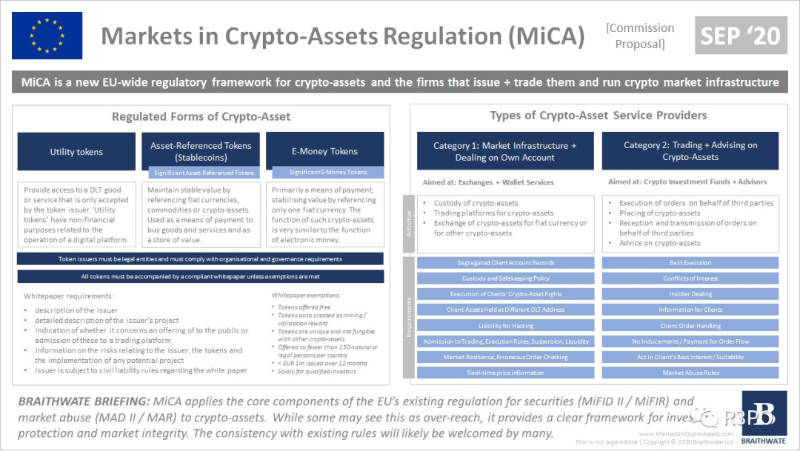
MiCA will be the first detailed regulatory framework of its kind and may set the benchmark for other jurisdictions. Spanning numerous areas—including anti-money laundering (AML), consumer protection, corporate reporting, fund transfers, and environmental impact—it will require stablecoin issuers to hold sufficient monetary reserves to prevent bank runs and mandate that crypto miners disclose their energy consumption. More importantly, any exchange operating in the region must be supervised by financial regulators in EU member states.
BNP Paribas expects MiCA to officially take effect in the second half of 2024—18 months after publication in the EU Official Journal. MiCA reflects the EU’s preference for a “comprehensive and integrated” top-down regulatory model. From a business standpoint, it establishes foundational rules for crypto-assets and crypto-asset service providers, first addressing core issues related to crypto-assets—especially stablecoins. Building on this foundation, regulation will gradually expand into areas such as NFTs, DeFi, smart contracts, and DAOs, strengthening oversight step by step.
Join TechFlow official community to stay tuned
Telegram:https://t.me/TechFlowDaily
X (Twitter):https://x.com/TechFlowPost
X (Twitter) EN:https://x.com/BlockFlow_News






