Atkins’ First Year Leading the SEC: A Comprehensive Shift in Crypto Regulation
TechFlow Selected TechFlow Selected
Atkins’ First Year Leading the SEC: A Comprehensive Shift in Crypto Regulation
Before the bill is enacted, the SEC’s crypto regulatory framework remains in a transitional state of “administrative guidance + case-by-case handling.”
 Navigating Web3 tides with focused insights
Author: Turner Wright
Translation & Compilation: TechFlow
TechFlow Intro: On April 21, 2025, Paul Atkins was sworn in as Chair of the U.S. Securities and Exchange Commission (SEC)—exactly one year ago today. Over this past year, the SEC has dropped multiple lawsuits against crypto firms, approved several crypto-related ETFs, and signed a digital asset regulatory coordination memorandum of understanding (MOU) with the Commodity Futures Trading Commission (CFTC). Yet, Democratic lawmakers’ allegations of conflicts of interest against Atkins are intensifying, and the SEC remains awaiting Congressional passage of the Market Structure Bill to clarify its jurisdiction over digital assets.
On April 21, 2025, Paul Atkins was sworn in as Chair of the U.S. Securities and Exchange Commission (SEC). Today marks exactly one year since his appointment.
Over this year, the SEC has undergone a fundamental shift in its regulatory and enforcement stance toward digital assets—sharply contrasting the approach taken under former Chair Gary Gensler.
During the 2024 U.S. presidential election campaign, Donald Trump issued several pledges to the crypto industry: replacing Gensler, establishing a national Bitcoin (BTC) reserve, and opposing the issuance of a U.S. central bank digital currency (CBDC). After winning the November 2024 election, Gensler resigned in January 2025, and SEC Commissioner Mark Uyeda served as Acting Chair until the Senate confirmed Atkins’ nomination.
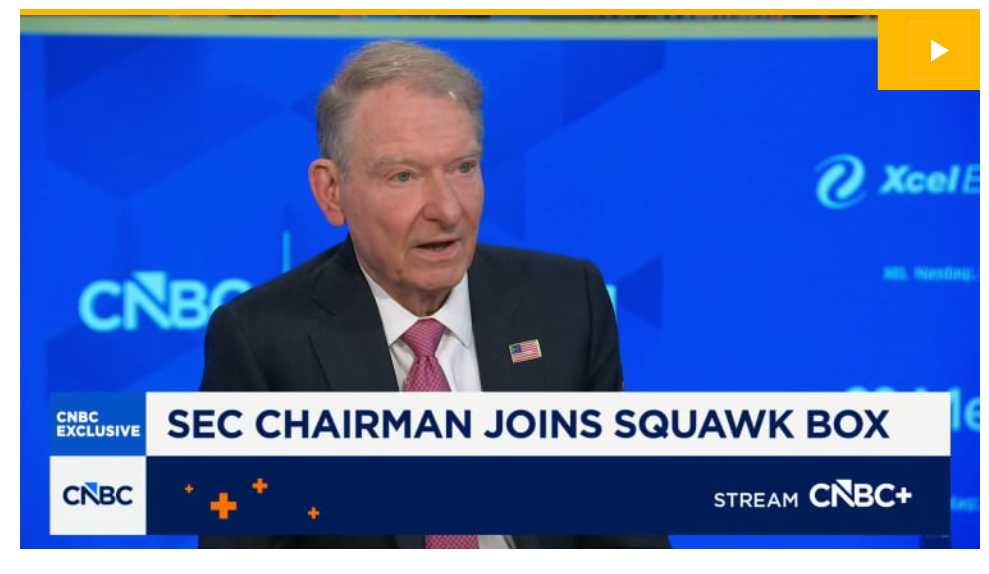
Caption: SEC Chair Paul Atkins interviewed on CNBC’s Squawk Box on April 20, 2026
Source: CNBC
The SEC Had Already Begun Shifting Before Atkins Took Office
Even before Atkins officially assumed office, the SEC began signaling change. During Uyeda’s tenure as Acting Chair, the SEC established a crypto task force led by Commissioner Hester Peirce and—starting in February 2025—began dropping civil enforcement actions and investigations against crypto firms, with Coinbase being the first.
Over the 12 months since Atkins formally assumed office, the SEC rolled out a series of policies widely viewed by the industry as favorable:
- Terminated multiple enforcement actions against crypto firms
- Approved several exchange-traded funds (ETFs) tied to various crypto assets
- Executed a digital asset regulatory coordination MOU with the Commodity Futures Trading Commission (CFTC)
- Issued an interpretive notice clarifying that most cryptocurrencies do not constitute securities under federal law
In an interview with CNBC on April 21, Atkins said: “A year goes by quickly, but I think we’ve made tremendous progress. When I took office, I pledged a new day for the SEC—and we delivered. We have moved away from the prior model of regulating primarily through enforcement and operating opaquely, and the crypto space is the clearest example.”
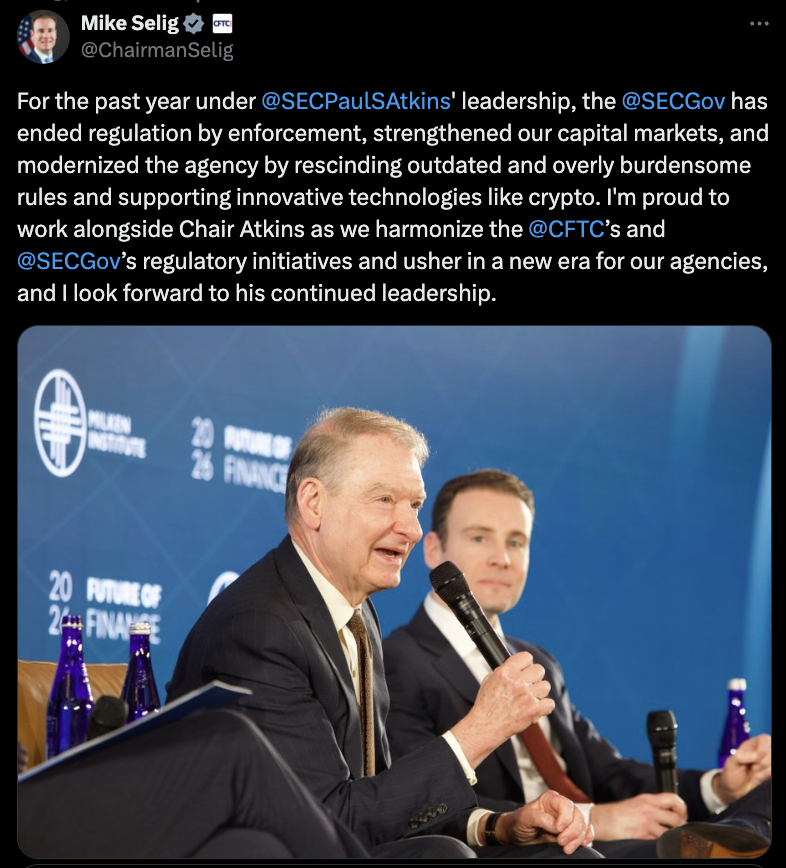
Source: CFTC Chair Michael Selig
Democratic Lawmakers Focus Fire on Conflicts of Interest
While much of the crypto industry has welcomed Atkins’ approach, criticism from Democratic members of Congress is escalating. The central concern: some of the investigations and enforcement actions dropped by the SEC involved companies linked to Trump and his family—raising potential conflict-of-interest concerns.
Last week, Senator Elizabeth Warren of Massachusetts accused Atkins of misleading Congress during his testimony. In a letter dated April 15, Warren pointed out that the SEC’s own fiscal year 2025 data shows the agency’s enforcement actions have fallen to their lowest level in the past decade.
Although the trend toward dismissing cases and easing regulation is clear, the SEC still awaits Congressional passage of the Market Structure Bill to formally define the boundaries of its regulatory authority over digital assets. Until that legislation is enacted, the SEC’s crypto regulatory framework remains in a transitional state characterized by “administrative guidance + case-by-case adjudication.”
Join TechFlow official community to stay tuned
Telegram:https://t.me/TechFlowDaily
X (Twitter):https://x.com/TechFlowPost
X (Twitter) EN:https://x.com/BlockFlow_News
 @Cointelegraph