
6 Web3 Concepts to Watch in 2023: NFTs, DAOs, Web3 Marketing...
TechFlow Selected TechFlow Selected
6 Web3 Concepts to Watch in 2023: NFTs, DAOs, Web3 Marketing...
In the Web3 space, there's always a lot of innovation and experimentation happening, making it nearly impossible to keep up with everything.
 Navigating Web3 tides with focused insights
Written by: Myles O'Bery
Translated by: TechFlow
In the Web3 space, there's always a lot of innovation and experimentation happening—we can hardly keep up with it all.
But if we zoom out, there are six major Web3 concepts in 2023 that builders and creators must pay attention to. To understand these concepts, we've invited Amanda Cassatt as a guest to explain them. She previously served as CMO at ConsenSys, bringing Ethereum to market, and is now founder and CEO of Serotonin, a leading Web3 marketing agency.
Here’s what we’ll break down today:
-
NFTs and their future adoption;
-
Community and its role in Web3;
-
How marketing is changing in this space;
-
Web3 social and the creator economy;
-
Experiments and adoption in the metaverse;
-
DAOs and their implementation;
Let’s begin.
NFTs and Their Future Adoption
We always say NFTs are just technology. They're merely packaging, a vehicle—not the end result. In fact, Amanda likes to refer to them as substrates that people can shape according to their needs, and we fully agree.
Now that the speculative frenzy of 2021 has ended, we’re beginning to see more practical uses for NFTs beyond art and digital collectibles.
One increasingly popular use case is membership and loyalty programs.
We’ve seen Starbucks recently launch a beta version of their Web3 rewards program—this could become one of the biggest Web3 onboarding experiences of 2023, if successful.
But why put loyalty points on-chain?
Currently, loyalty programs are quite dull. They give you points based on spending, which you can redeem for vouchers, items, discounts, etc., and that’s it.
But with Web3 technology, much more becomes possible. Businesses can now offer members digital items and experiences—low-cost for companies and offering users far greater choice.
On top of that, participants can easily sell or transfer their points, since NFTs (or fungible tokens) can be exchanged peer-to-peer or via marketplaces. This unlocks significant value for those who never use their points.
At this point, the ability to freely sell loyalty points or memberships is one of the biggest benefits of using NFTs for both consumers and businesses.
From a consumer perspective, they become more willing to spend on memberships knowing they can recoup some of that cost later.
For example, BAYC recently launched an NFT series called Sewer Passes—an entry ticket to a game. If I want to participate, I can buy a BAYC (my community membership), claim my free Sewer Pass, then sell my BAYC.
If moved on-chain, thousands of exclusive, expensive memberships currently available could work similarly.
Putting loyalty programs and memberships on-chain also means companies must prepare for subsequent restrictions on storing identity data. Companies will still have wallet addresses through which purchase behavior can be tracked, but unlike ad platform data, it won’t be tied to personal identities.
Yet even without access to deep user data, companies gain access to thousands of other data points. Since anyone can view a wallet’s transaction history, you can “spy” on how your community (or potential customers) interact with competitors—and even target rival customers through marketing campaigns.
And because this data remains accessible as long as it’s stored on-chain, you can permanently retarget existing customers.
Moreover, since data is stored on-chain, you don’t need to manage massive internal databases—making it easier to manage, more accurate, and reducing your company’s vulnerability to hacks. It also means you can freely rebuild legacy systems without losing valuable customer data.
Community and Its Role in Web3
“Community” is a word many of us tend to overuse in Web3. Some see it as just a buzzword, but Amanda believes it refers to something very specific—the merging of investors, users, and team into one unified category: community.
But why focus on community instead of building like traditional Web2 companies?
In Web2, consumers remain somewhat distant from your business. But by building with a Web3 mindset, you bring your audience directly into your development process, ultimately helping you build better products and experiences.
Engaged communities can also act as part-time employees, helping scale your company with minimal additional overhead.
For instance, you can rely on your community to support marketing efforts, audit smart contract code, or simply provide feedback. Sometimes this happens organically when people engage with your project, but having a plan to encourage participation certainly helps.
Compared to traditional Web2 strategies—arbitraging CAC (customer acquisition cost) against LTV (lifetime value) via third-party platforms—this is a radically different approach.
In Web2, traffic disappears once you stop paying. But with a community-first model, your business can continue growing, thanks to Web3’s ability to align long-term stakeholder incentives.
However, the key is building your community sustainably—meaning no massive airdrops!
At Serotonin, Amanda and her team like to imagine community-building as aliens arriving on Earth in a spaceship (your company or project). Once landed, they lower a ladder and invite some humans (your community) aboard.
The only problem? The aliens and humans are standing too close! So you need to handle this very carefully.
You must be extremely cautious about where your "spaceship" lands and who you let into your community early on—because this sets the tone for everything that follows.
If you need people motivated to help build, you need believers in your vision—not those chasing quick profits from airdrops or whitelists.
For example, if you're launching an NFT project, seek early members interested in the artwork style or the artist themselves.
This is crucial because eventually, your community will grow beyond what you can personally manage, so it needs a solid foundation to sustain itself.
But where should your community base its operations?
Right now, one platform stands above the rest: Discord.
Besides many early crypto and Web3 adopters already using it due to familiarity, Discord was ahead of others in integrating Web3 features (like token-gated access).
This combination makes Discord the go-to community platform across the industry. Amanda also sees many communities on Telegram, along with several new Web3-native communication platforms under development.
So only time will tell whether Discord remains the de facto Web3 hub for most projects—but for now, it’s one of our best options.
Why Marketing in Web3 Is Changing
Given her role as former CMO at ConsenSys and now founder and CEO of a leading Web3 marketing and product studio, Amanda has deep insights into marketing in this space.
Here’s her take on Web3 marketing:
Web3 is transforming how we build marketing systems. In Web2, marketing consists of centralized activities—like paying platforms (e.g., Facebook) to deliver ads to potential customers.
In contrast, Web3 allows us to design self-marketing systems. Even before forming a community or choosing a name, leverage Web3 tools to design an incentive system.
This system creates both extrinsic and intrinsic motivations for people to help build your project over the long term.
To reiterate: airdrops shouldn't be the core of your Web3 marketing strategy. Just like in Web2, you must achieve product-market fit. You need to clearly define why your product is valuable and share that understanding with the right audience.
You must understand the problem you're solving, who needs that solution, and how much they're willing to pay. Without this knowledge, using Web3 tech is just a short-term marketing gimmick.
Tokens aren't your product—they're tools to amplify your product or business. They can add utility, but they are not the product itself.
Creator Economy and Web3 Social
One of Web3’s greatest innovations is giving creators and users ownership and control over their online identities.
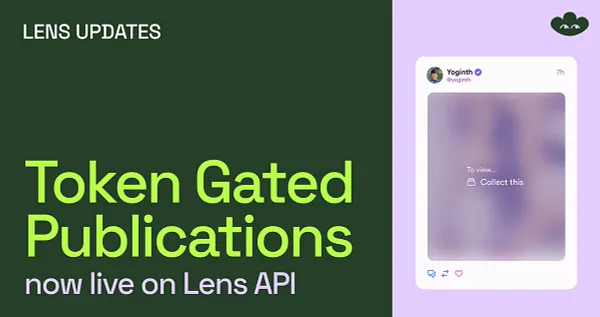
With on-chain social graphs like Lens Protocol, you’ll be able to port your content, reputation, and audience across platforms—instead of being owned by Facebook or Twitter.
Amanda believes 2023 might be the breakout year for Web3 social, especially if analysts are correct that crypto prices will remain flat for much of the year. Remember, we’re seeing some bullish movement now, but that doesn’t mean a bull market is back! We need more sustainable growth.
So if the market stays sideways, speculative interest may wane—giving people more time to experiment with Web3 social and build new digital identities.
But it’s also important to note we’re still refining the user experience of these platforms. Lens and other protocols and dApps still need to deliver many new features and fix bugs before opening widely to the public.
Amanda believes platforms with small, dedicated communities will stand out, as consistent engagement can drive organic platform growth.
But once these niche communities thrive, how do we bring in the mainstream?
Creators realize they lack control over their communities and content, prompting them to explore broader alternatives.
Kyle experienced this when his Facebook account—used for business—was deleted without cause, which is why he’s so bullish on Web3.
For the general public, evolution always happens when new alternatives emerge. Before TikTok, people thought Facebook, Instagram, and Twitter would dominate forever.
Overall, we believe migration to Web3 social will be gradual. First, creators experiment on these platforms and convince their Web2 audiences to join, slowly bringing more users and creators into the space.
Metaverse as the First Stop for Web3 Newcomers
We all know the metaverse is coming. In fact, it's the part of Web3 that most Web2 folks are interested in. A recent Capgemini report found that over 90% of consumers are interested in the metaverse and the interactions it enables in digital worlds.
Specifically, most consumers are excited about interacting with friends and family, followed by connecting with colleagues, game-related experiences, and finally commercial activities.
While enthusiasm for the metaverse is high, Amanda believes its success hinges on supply and demand—whether a company’s offerings match digital experiences, and whether their target customers are active in the metaverse.
For example, retail shopping makes perfect sense in the metaverse. When people visit malls, they enjoy browsing clothes and trying things on. With no physical limits, the metaverse can offer even more store choices.
Amanda even thinks the metaverse could become our go-to social hangout—similar to how people used to casually meet at malls in the '90s.
As people buy and develop land, the metaverse can attract more users, driving further development and expanding the range of products and services—more concerts, cool venues, brand sponsorships, shops, etc. We’re still in the early stages of this evolution.
But the key advantage is that the metaverse makes it easier for companies to engage their communities.
For example, Amanda helped the renowned auction house Sotheby’s build a replica of its New York headquarters in Decentraland.
In this virtual space, people can attend live auctions—an important feature since not everyone can physically attend (or qualify). Sotheby’s has also started accepting ETH bids, encouraging native Web3 participants to join.
Thus, the metaverse not only offers unique experiences for your audience but also significantly expands your reach.
DAOs and Their Adoption
DAOs were another hot topic last year, promising to revolutionize how companies and projects are governed.
Some DAOs achieved great success, while others fizzled out. But remember, like NFTs and other Web3 innovations, DAOs are simply another tool that builders and creators can shape to their needs.
This means real-world DAO implementations can look very different across organizations.
For example, many DAOs allocate voting rights based on how much a member invests in the project. Two prominent examples are Flamingo DAO and Pleasr DAO, which pool member funds and help collectively decide what to buy or sell next.
Other projects, like Maker, use specific governance tokens allowing holders to vote on various protocol decisions.
Overall, DAOs are excellent for making such governance decisions, as they allow immediate market access without forming formal investment vehicles.
For example, renowned Web3 legal scholar Aaron Wright created the LAO framework, which DAOs can follow to ensure they can easily establish necessary legal entities.
But one issue with DAOs arises when they apply the wrong governance model to a project—for example, using investment-based governance for a software company. Unless the main investors are themselves software entrepreneurs, it makes little sense to let them shape the company’s future.
Therefore, the key is tailoring the DAO structure and governance model to fit your company.
For instance, you could have a DAO where people invest, but only one person makes all decisions. Or it could resemble a traditional corporation or LLC, where the DAO has the power to hire or fire leaders, ensuring alignment with all stakeholders.
Even large corporations could use DAOs for meaningful departments, such as within their charitable divisions.
Overall, Amanda believes DAOs will be adopted where they’re needed most—where they can accelerate time-to-market, improve decision-making, or enhance transparency.
Prepare to Reap the Rewards of the Next Adoption Cycle
During the first wave of the internet, many big brands missed the initial adoption cycle, causing many to be disrupted by web-native companies.
So although we’re still early, many companies are learning from past mistakes and ensuring they’re ready for the coming wave—one that’s massive.
In fact, adoption of Web3 technologies—especially NFTs—has been extremely high in recent years. Amanda shared that when Jeff Bezos first started Amazon, internet usage grew around 2,000% annually. But in 2021, NFT adoption surged by an astonishing 21,000%!
And this is exactly what smart brands are watching—adoption rate, not the current size of the pie.
That’s why it’s no surprise that savvy companies like Starbucks, Reddit, and Nike are experimenting with Web3 at increasing scale.
Every company will become a Web3 company—it’s just a matter of who gets there first. Let’s see whose lunch gets eaten because they arrived too late.
Join TechFlow official community to stay tuned
Telegram:https://t.me/TechFlowDaily
X (Twitter):https://x.com/TechFlowPost
X (Twitter) EN:https://x.com/BlockFlow_News
 @web3academy_