The first Web3 development engine "Spike" launches, with participation from Kucoin, M23, Uphonest and other institutions
TechFlow Selected TechFlow Selected
The first Web3 development engine "Spike" launches, with participation from Kucoin, M23, Uphonest and other institutions
Spike Engine is the first metaverse engine in the Web3 space, supporting the entire process of Web3 application development, testing, distribution, and operations.
 Navigating Web3 tides with focused insights
Recently, Spike launched Spike Engine, a fully independent and open-source application development engine that leverages cutting-edge rendering technologies such as Vulkan, combined with on-chain capabilities including multi-chain smart contracts, signature machines, built-in wallets, and NFT interoperability standards. It is the world's first "Web3-native Metaverse Engine."
At the same time, Spike disclosed its latest round of funding participants, including institutions such as Kucoin, M23, and Uphonest.
What is a "Web3 Development Engine"?
Spike Engine is the first metaverse engine in the Web3 domain, supporting the full lifecycle of Web3 application development, testing, distribution, and operations.
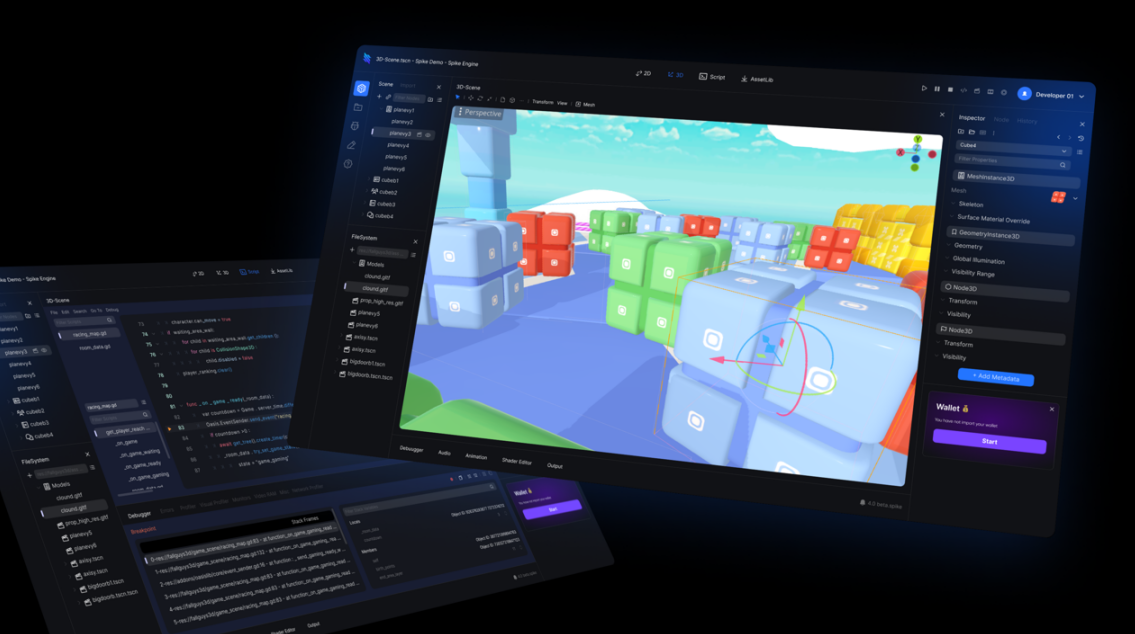
Firstly, at its core, Spike is a standalone and complete game engine—not merely an SDK or editor. Most creation tools available today are editors built atop existing engines. Editors rely on secondary development based on engines and lack customization in rendering pipelines, standardized asset formats, and long-term scalability. With every update from engines like Unity, these editors instantly become obsolete and lose functionality. Roblox succeeded by building its content platform on top of its own independent engine. Built on Godot 4.0’s technical framework, Vulkan dynamic rendering, and the latest WebGL technology, Spike Engine delivers superior rendering performance, easier development, and broader multi-device compatibility. In other words, beyond Web3 support, Spike itself is a more advanced development engine.
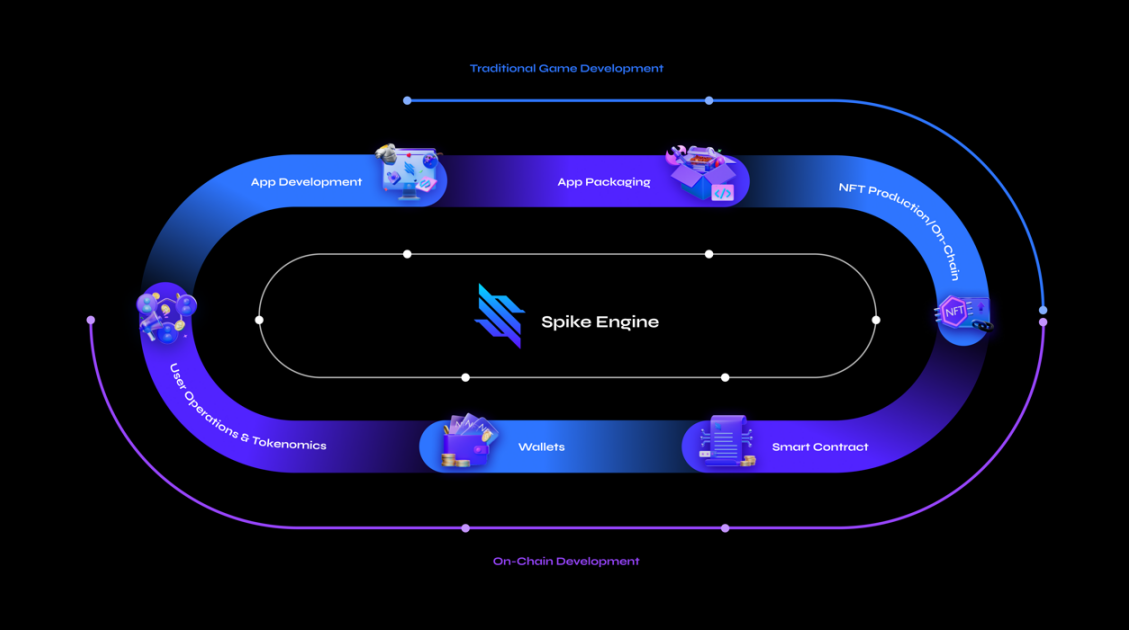
Secondly, beyond gaming, the entire Web3 application workflow can be completed within the Spike Engine. Starting from basic app development, Spike provides numerous plugins and script libraries, enabling developers to accelerate application creation. It also features a built-in wallet and compliant fiat gateways, which can be integrated after development—making it more accessible for Web2 users who can experience products without needing a decentralized wallet. Within Spike Engine, 3D/2D NFTs can be directly minted and stored on decentralized nodes, while EVM-compatible smart contracts can be written and deployed directly inside the engine.
Spike Engine is not only a more advanced development platform, but it also integrates all Web3-related development tools, enabling developers to publish their Web3 applications in one unified environment.
What Makes Spike Special: Openness & Standardization, Fully Open-Source with Composability
First is openness and standardization. Spike’s NFT assets and data samples follow unified specifications—similar to ERC20 token protocols—with clear standards defined for data and resources. Any metaverse NFT asset can seamlessly enter another metaverse without additional integration or adaptation, a first in the industry. Additionally, the Spike consensus protocol requires all creations within its ecosystem to be open to all applications, breaking down barriers between apps and enabling cross-application interoperability and composition—not limited to virtual assets, but also including user IDs, social relationships, and in-app data.
Moreover, Spike itself and the底层 code of Spike Engine are completely open-source, setting it apart significantly from proprietary engines like Unity or Unreal, offering professional developers greater opportunities for deep customization while avoiding risks of backdoors in closed-source software, thus better fostering community-driven ecosystem growth.
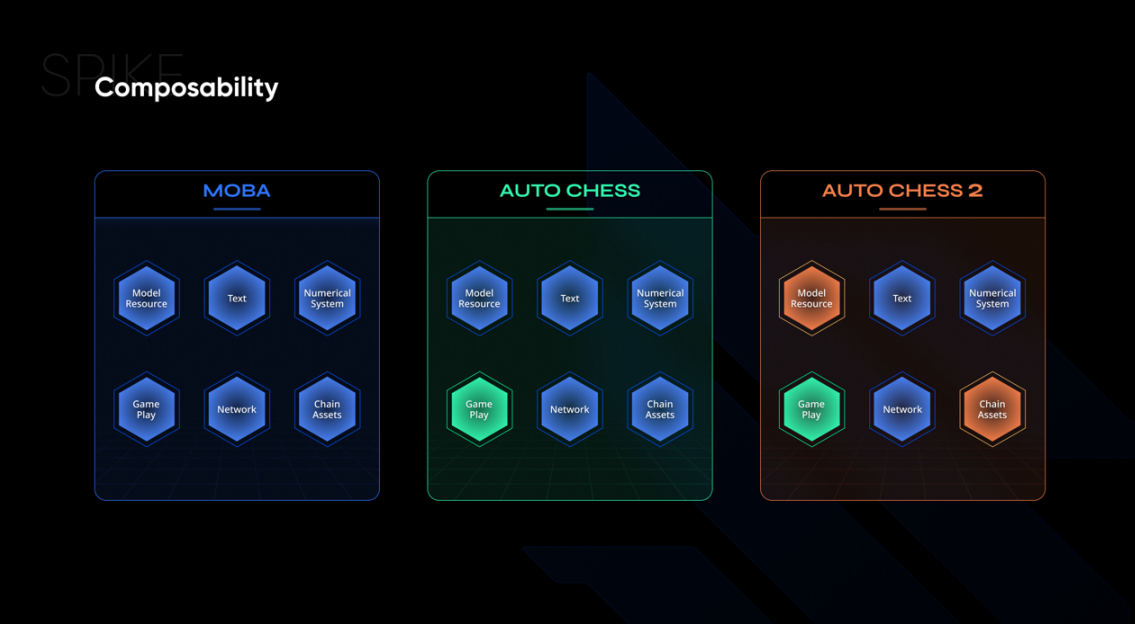
In addition, Spike’s greatest innovation for the metaverse ecosystem lies in its “composability,” where any data template or resource file can be recombined. A MOBA game could be quickly remixed by third-party developers into an AutoChess-style card game; a TikTok-like product could become a news recommendation app simply by switching short videos to news content—all permissionless. Traditional internet and gaming industries generate productivity through modular assembly of gameplay mechanics, numerical systems, and creative assets. However, during the Web2.0 era, such combinations were heavily restricted by licensing and copyright issues. Spike aims to solve this problem in Web3. Any development team, independent developer, or even player can recreate a game or application within hours, leveraging mature code, scripts, and assets to drive new innovation. Furthermore, Spike has introduced new asset format definitions atop ERC20, ERC721, and ERC1155, making assets easier to拆解 (break down), upgrade, transfer, and combine.
In financial applications, blockchain revolutionized "productive relations" by redefining "private ownership of property" and "protocol-based value distribution." Spike’s innovation for the metaverse represents a liberation of “productivity” itself, using blockchain technology to upgrade broader applications (not just financial ones), making them open, open-source, interoperable, and composable.
Spike’s Team and Ecosystem Development
Spike’s founding team consists of the original core members behind Oasis, with founder Jeff Yin also serving as CEO of Oasis. Launched at the end of 2021, Oasis grew to over 30 million registered users globally within six months, becoming the fastest-growing metaverse application across more than 100 countries. Oasis Editor has served millions of metaverse creators.
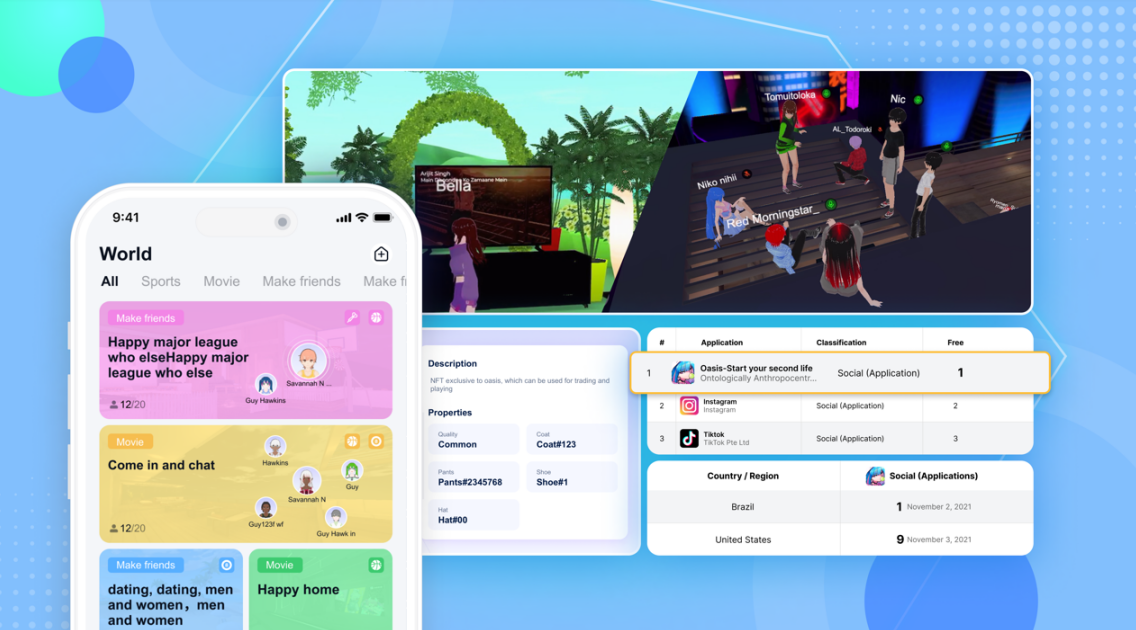
As one of the most successful metaverse applications, Oasis has received extensive media coverage worldwide.
Oasis recently rolled out wallet functionality to tens of millions of registered users, with over 2 million in-game wallets already activated. Upcoming features will include NFT minting, token trading, and DID support, allowing users’ assets within Oasis to go on-chain. Spike has incubated over a dozen games, some of which—like Space Kill—have already launched on major exchanges. With millions of active users in the ecosystem, these games will gradually go live on Spike Engine.
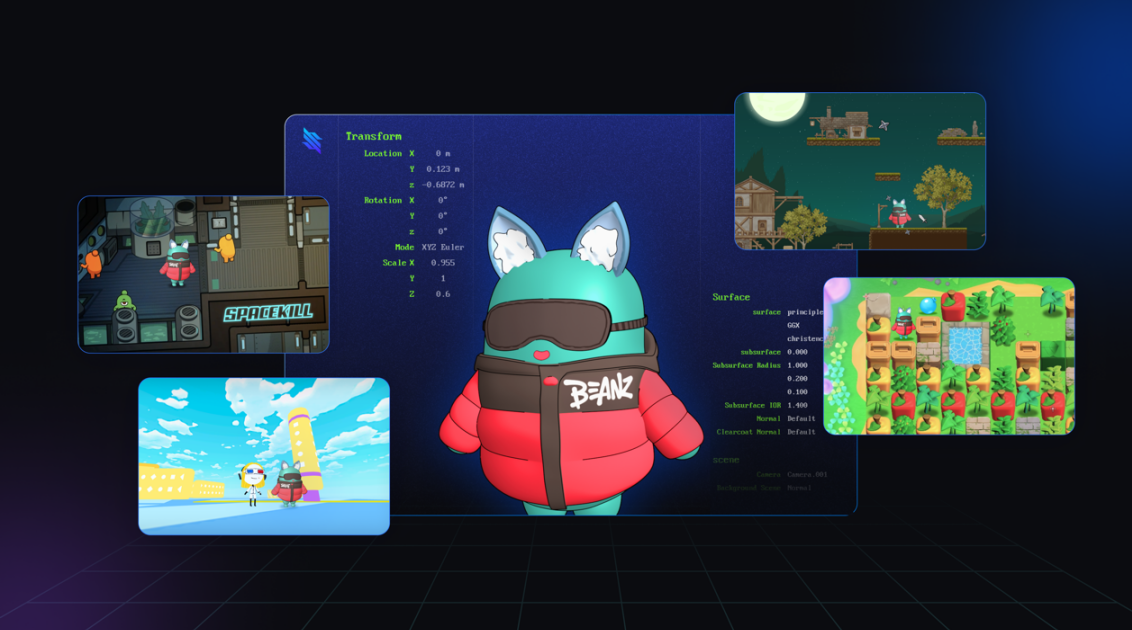
Spike Engine was officially released this month and is now available for download and use via the official website (https://www.spike.fun). The open-source code has also been published on GitHub. Spike has also released its first demo, allowing users to play games using NFT assets like Beanz and Mfers across different 3D and 2D worlds—showcasing Spike’s 3D-to-2D functionality that enables a single asset to work seamlessly across different art styles and gameplay genres. Moving forward, Spike will continue exploring innovations in Layer 1 and NFT cross-chain technologies.
Join TechFlow official community to stay tuned
Telegram:https://t.me/TechFlowDaily
X (Twitter):https://x.com/TechFlowPost
X (Twitter) EN:https://x.com/BlockFlow_News