Cardano's Ecosystem Anomaly: Top 9 by Market Cap, TVL Ranks 30th, Over 70 DApps
TechFlow Selected TechFlow Selected
Cardano's Ecosystem Anomaly: Top 9 by Market Cap, TVL Ranks 30th, Over 70 DApps
Cardano is like the "elephant in the room."
 Navigating Web3 tides with focused insights
Author: waynezhang.eth
While screening annual tokens, I came across Cardano—a project that previously ranked in the top ten by market cap and even reached third place during this bull run, behind only BTC and ETH. Yet, looking back, even during the bull market, few people actively promoted Cardano, and mainstream media rarely covered news or articles about its ecosystem. Cardano has become the proverbial "elephant in the room." To understand why this phenomenon exists, this article will examine several aspects of Cardano, including user numbers, project ecosystem, developer activity, and community engagement.
Cardano Overview
Cardano is a proof-of-stake (PoS) blockchain launched in September 2017 after initial development began in 2015 by Charles Hoskinson and his team.
Notably, Charles Hoskinson is also a co-founder of Ethereum. He left Ethereum due to disagreements with Vitalik Buterin over whether Ethereum should be structured as a for-profit or non-profit entity.
Currently, Cardano is primarily supported by three organizations: the Cardano Foundation, Input Output Hong Kong (IOHK, now renamed IOG), and Emurgo. The first two focus on developing the Cardano platform and related protocols. Emurgo, more of a third-party Japanese company, develops, supports, and incubates commercial projects on Cardano.
Cardano is often described as an "Ethereum killer" because it emphasizes lower transaction fees, higher scalability, and faster transaction speeds compared to Ethereum 1.0.
A key feature of Cardano is its two-layer architecture: the Settlement Layer (CSL) and the Computation Layer (CCL). The CSL validates and records ADA transfers, while the CCL supports smart contracts, enabling developers to build and execute applications. This separation aims to reduce network congestion. We’ll explore the technical details in a dedicated section later.
Cardano User Statistics
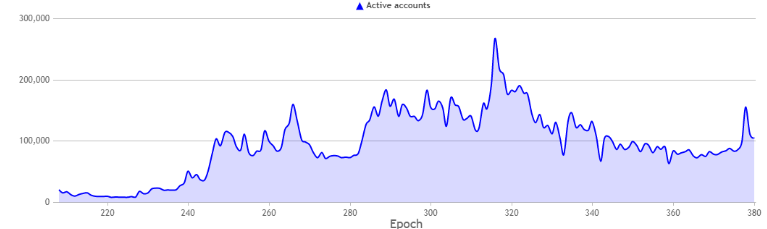
According to data from Cexplorer.io, the number of active accounts per Epoch (each lasting five days on Cardano) recently hovers around 100K. The peak was at Epoch 316, reaching 267.545K active accounts.
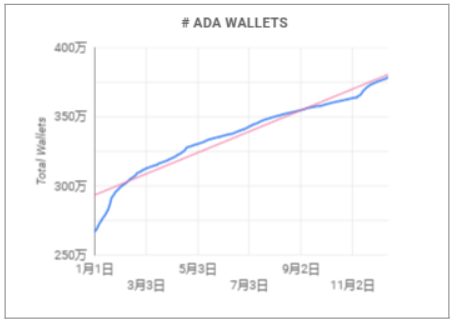
Another metric we examined is the number of Cardano wallet downloads and usage. According to Cardano Blockchain Insights, there are currently 3.79 million wallets—an increase of 38% this year. Growth has slowed compared to last year’s surge (from 220K → 2.64M), largely due to macroeconomic conditions. For reference, the number of ADA token holders is approximately 357.7 million—very close to the wallet count—suggesting a high proportion of holders actively participate in the ecosystem.
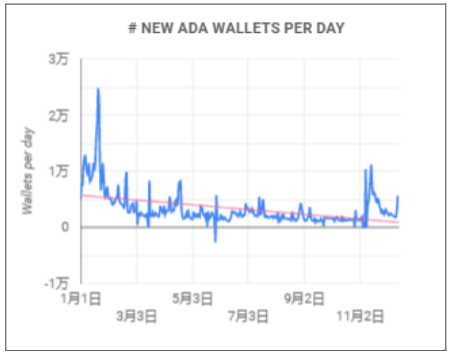
As the bull market faded into bearish conditions, daily new wallet creations dropped below 10,000. In mid-November, however, there was a sudden spike in new wallets (possibly linked to a Cardano NFT launch, though unconfirmed), increasing from around 1K to 3K new wallets per day.
-
In comparison with other top-ten public chains like Bitcoin, Ethereum, BNB Chain, and Polygon, Cardano currently has fewer ecosystem participants.
-
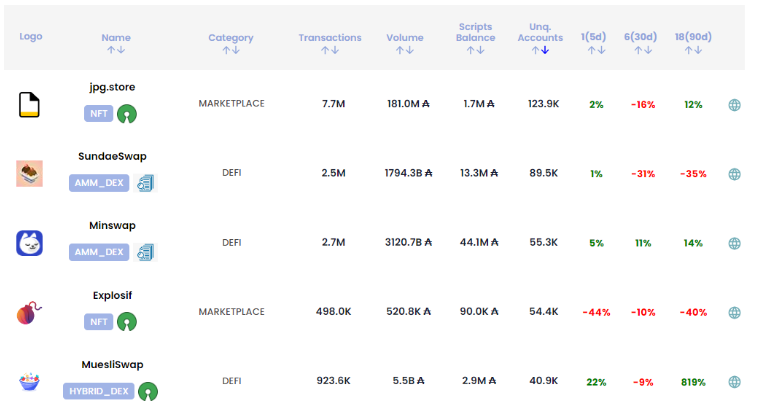
Looking vertically across projects listed on the ecosystem tracker, the top five projects show roughly equal user counts between NFT and DeFi categories. The leading NFT project has 123.9K users, while the top DeFi project has 89.5K users. There are 21 projects with over 1K users each. Beyond direct users, the Cardano ecosystem includes 888K delegators who stake their ADA in 3,233 staking pools to earn rewards.
Cardano Community Status
In my view, Cardano's community issues contribute significantly to its relatively low influence and brand visibility. Reflect on how you discovered most L1/L2 blockchains—many provide accessible community channels. However, aside from meetups, the official Cardano Community (with 1.3M Twitter followers) only offers a Telegram group for user-to-project and peer-to-peer communication. In practice, joining this group involves an extremely complex verification process via a bot, with no guidance provided.
To this day, I still haven’t figured out how to complete the bot verification. Any help from readers would be greatly appreciated!

The official meetup page lists 36K members across 88 groups in 53 countries—a stark contrast to its massive Twitter following:
-
Cardano Community: 1.3M followers.
-
Cardano Foundation: 848.9K followers.
-
InputOutputHK: 296.8K followers.
-
EMURGO: 125.5K followers.
Meanwhile, the official Telegram group has only 31K members. Possible explanations include:
1. Poor user experience in community interaction.
2. Use of platforms not commonly adopted in Web3 communities, such as Discord or Telegram.
3. High initial membership followed by gradual attrition due to marketing and community management shortcomings.
4. Insufficient operational talent to manage large-scale community growth.
5. A community strategy similar to Ethereum’s, relying heavily on forums.
6. Potential inflation or falsification of follower counts.
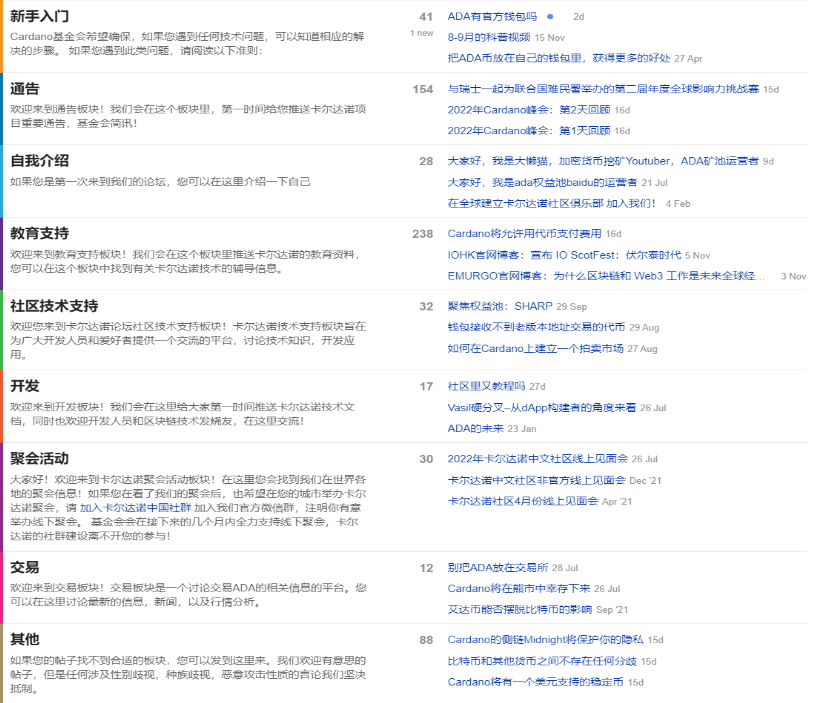
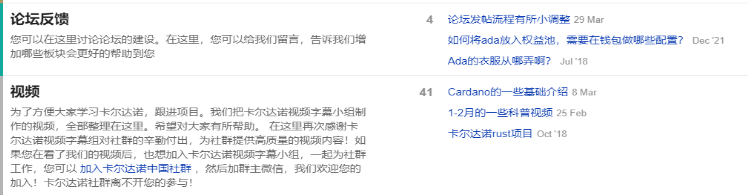
I believe points 1, 2, and 5 are the most plausible. In decentralized blockchain ecosystems, strong community cohesion is crucial—more members can mean more builders and users, driving adoption. Despite the gap between 36K and 1.3M, subgroups like the Chinese forum under Cardano Meetup offer well-organized discussions where basic questions can easily be addressed, fulfilling core community functions.
Cardano Project Overview
This section focuses mainly on dApps, excluding NFT projects, which will be discussed separately. Before examining Cardano’s projects, let’s compare it with other top-ten market-cap chains capable of hosting smart contracts: Ethereum, BNB Chain, and Polygon. According to DappRadar, these chains host 3,607, 4,414, and 1,402 dApps respectively, whereas Cardano lists only 29. Fewer dApps directly limit user engagement options, reduce on-chain activity, hinder ecosystem development, and weaken user attraction—partly explaining Cardano’s low active account and user numbers.
According to the official showcase, Cardano currently hosts 74 projects (excluding pure NFT projects). By category, the top five are: NFT tools (25), analytics (19), token utilities (16), wallets (12), and gaming (8). The ecosystem remains focused on NFTs.
Why does a top-ten market-cap chain have so few projects? Timing is a critical factor. Although development started early, Cardano’s staking mechanism wasn't introduced until 2020. It officially entered the “smart contract era” only after the Alonzo hard fork in September 2021. The first DeFi services appeared in early 2022. Effectively, Cardano’s ecosystem began growing in earnest only in September 2021.
2021 was a breakout year for Layer 1 blockchains:
-
Solana launched its mainnet in March 2020. Its May hackathon alone brought over 300 new projects.
-
Terra (later collapsed due to the Luna incident) launched in January 2018 and went live on mainnet in April 2019.
-
Matic Network expanded its scope and rebranded as Polygon in February 2021.
-
Avalanche was co-founded in 2019 and officially launched on mainnet on September 22, 2020.
-
Fantom, founded in January 2018, became EVM-compatible by the end of 2019, allowing developers to quickly port Ethereum-based dApps to Fantom’s Opera mainnet.
Other chains like Near, Dfinity, Algorand, Flow, and WAX also experienced rapid ecosystem growth in 2021. Being an early mover offered advantages; Cardano’s late entry may partly explain its “low profile.” However, a quiet ecosystem doesn’t mean a quiet price—ADA peaked at $3.01 in September 2021, with FDV exceeding $13.9 billion.
But we must ask: What took so long? Why did Cardano enter the “smart contract era” only in 2021? We’ll address this in the conclusion.

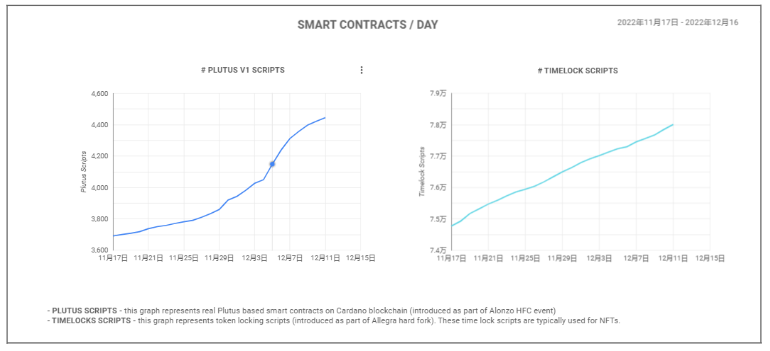
Behind every project lies smart contract infrastructure. According to Cardano Blockchain Insights, there are over 4,000 Plutus-based smart contracts and over 78,000 TimeLock scripts (commonly used for NFTs). These suggest untapped opportunities within the Cardano ecosystem.
Cardano DeFi Development
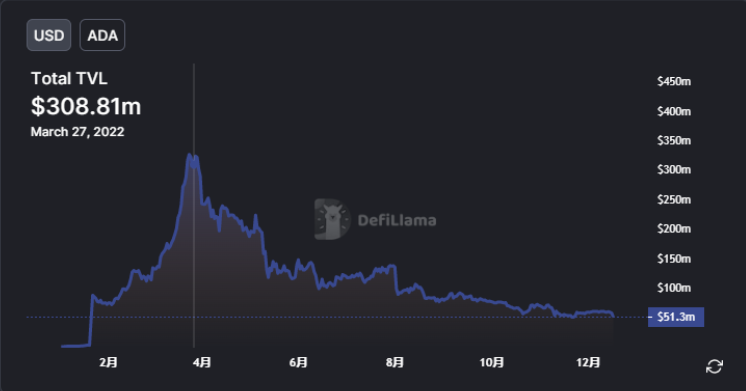
DeFi enhances network liquidity and asset diversity. Cardano’s first DeFi service emerged in early 2022. TVL peaked in May 2022 at over $30 million but has since fallen to $5.13 million, ranking 30th among public chains.
Note: DefiLlama data contains inaccuracies—for example, projects like SundaeSwap aren’t included.
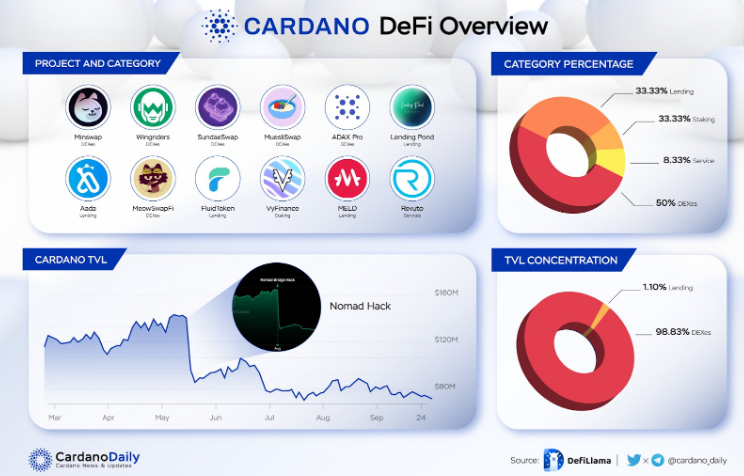
Cardano’s DeFi sector is still in its infancy. According to Cardano Daily’s Q3 report, current major DeFi categories include lending, staking, DEXs, and DeFi services. However, TVL remains concentrated in DEXs. For instance, Minswap, which holds 45.21% of total TVL, offers swap functionality, yield farming, and 720 liquidity pools.
On the lending front, the firstDeFi lending protocol, Aada Finance, only launched in September, and both utilization and product maturity remain low. Other upcoming lending projects include ADA Lend Finance, Liqwid Finance, and Parious.
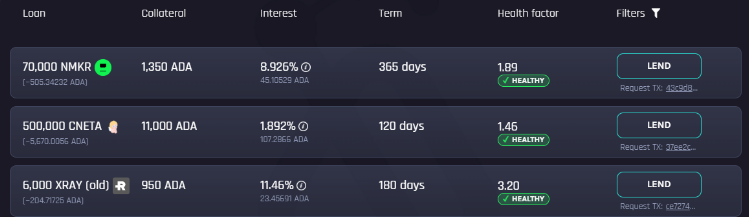
Next, cross-chain bridges: WingRiders DEX held the #1 TVL spot on Cardano before August, largely due to assets bridged via Nomad. After the Nomad hack drained those funds, the ecosystem lost 20% of its TVL. Minswap rose to prominence afterward. Currently, Milkomeda serves as the primary bridge. It connects to Cardano and wraps native assets from non-EVM sidechains—e.g., ADA becomes mADA, used as gas on the sidechain. However, the interface isn’t beginner-friendly. Other projects like AdaSwap and Fourier Labs are in development. For now, using CEX deposit/withdrawal services is recommended for ease and speed.
Finally, stablecoins—the cornerstone of DeFi. Cardano currently lacks an officially issued stablecoin. Ardana attempted one but announced in November it would cease operations, citing: “Development on Cardano has been difficult due to costs related to tooling, infrastructure, and security, coupled with uncertainty in completion timelines. The best course now is to stop developing dUSD,” following the collapse of its backer, Three Arrows Capital. However, its open-sourced code helped Djed. With support from IOG and Coti, Djed is expected to launch in January next year. Designed as overcollateralized, each Djed requires more than 400% collateral value to mint. Coti CEO Shahaf Bar-Geffen stated Djed will integrate with 40 Cardano ecosystem apps at launch. DjedPay, a merchant payment service, will also debut. Additionally, Emurgo plans to release a USD-pegged stablecoin called USDA next year.
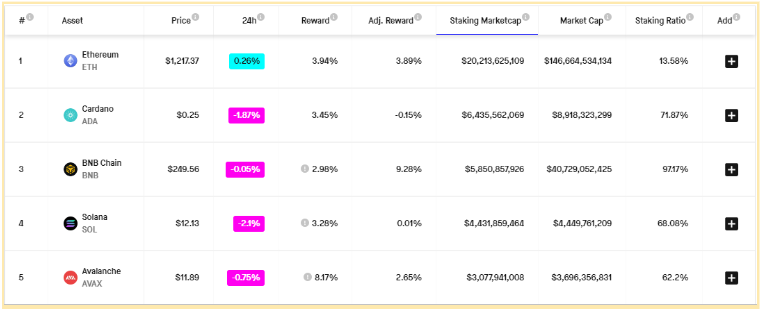
Beyond missing DeFi infrastructure, another concern is Cardano’s staking dynamics. Compared to Ethereum’s ~10% staking rate, Cardano has ₳25.30 billion staked—about 74.05% of its circulating supply of ₳34.2 billion, with 1.238 million staking addresses. Clearly, current DeFi offerings fail to attract the majority of stakers. Even Minswap, the top TVL holder, has only ₳86.58 million locked—just 0.25% of total staked ADA.
Cardano NFT Development
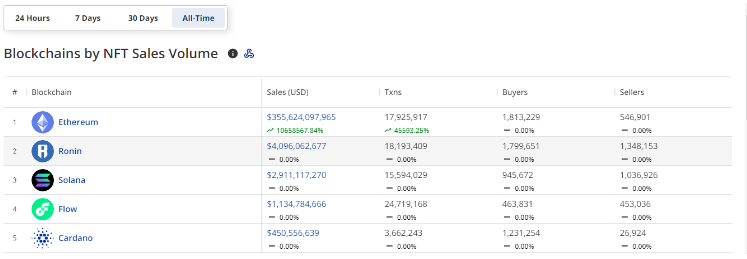
NFTs represent the fastest-growing segment in Cardano’s ecosystem. Real-time data from CryptoSlam shows Cardano ranks in the top five for NFT transaction volume. The most-used dApp on Cardano is the NFT marketplace jpg.store, utilized by 124.5K unique accounts.
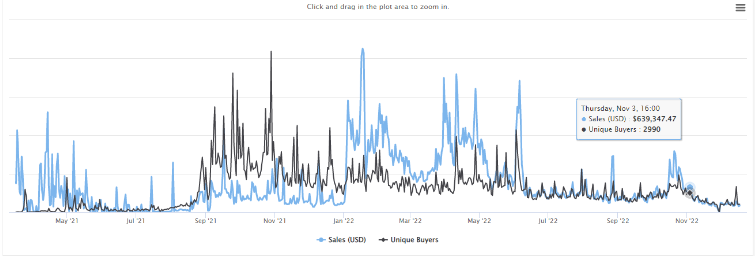
Due to market downturns, daily active NFT users on Cardano have dropped below 5K, recently hovering near 2K, with daily trading volumes fluctuating between $200K–$500K.
Cardano’s NFT market cap has surpassed ₳468.16 million, with over 8K total projects. The top ten account for 35% of total trading volume.
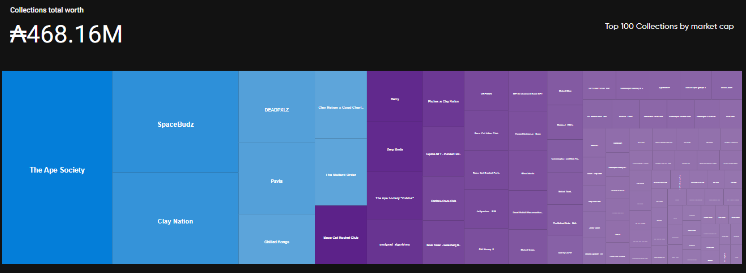
Among NFT projects, 104 have exceeded ₳1M in trading volume. Some have built strong communities—potential “blue-chip” NFTs on Cardano. For example, Claynation features 10,000 clay avatars and includes plans for 3D modeling, metaverse integration, and token launches.
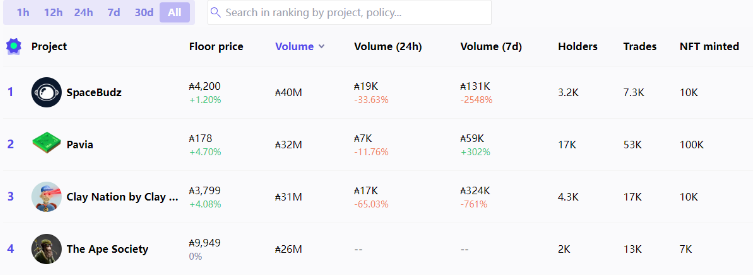
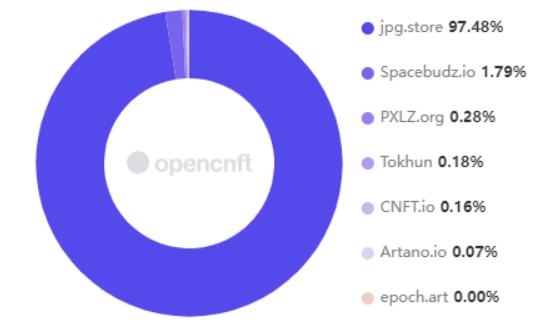
The NFT boom has spurred numerous marketplaces. Currently, Cardano hosts 15 NFT platforms. According to OpenCNFT’s 24-hour data, jpg.store dominates with 97.48% of trading volume.
Visually, jpg.store resembles OpenSea, offering NFT trading, launchpad, and creation tools. However, like OpenSea, it lacks robust analytics.
Other Areas of Interest
GameFi
With reported TPS above 250 and transaction costs around 0.1 ADA, Cardano is technically suitable for gaming. However, existing games are mostly NFT-based, lack full gameplay, and remain in demo stages. While P2E studios are emerging—EMURGO invested early in Nigerian studio Diagon Studios, and Cardalonia secured pre-seed funding in April—one question remains: If I were a game developer, why wouldn’t I build on Solana or Polygon instead?
Sidechains
Cardano’s EVM sidechain, deployed by IOG, is a fully decentralized scalability solution. It enables developers to deploy EVM-compatible smart contracts on Cardano without paying high Ethereum gas fees, using Solidity. Learn more here.
Privacy
IOG is launching Midnight, a privacy-focused blockchain running as a Cardano sidechain. It will support zero-knowledge proof smart contracts, enabling transactions without revealing identifiable data. Its native token will be Dust. No other notable privacy projects have emerged yet.
Governance
Project Catalyst is Cardano’s innovation fund. ADA holders can submit proposals and vote on them. According to Lido Nation, there have been 4,300 proposals, with 1,156 funded, totaling $38.65 million in grants.
Getting Started Guide
To explore Cardano through dApps, consider starting with these platforms:
Wallets
Like other blockchains, Cardano requires dedicated wallets. After testing several, I found them quite similar in experience. You can simply visit the link and choose your preferred wallet.
DeFi
Try Minswap—currently the highest TVL DeFi app on Cardano. It offers Swap, Pool, Farm, and Launchpad features, with intuitive UX and broad exposure to ecosystem tokens.
NFTs
NFT projects fall into three categories: NFT collections, marketplaces, and tools. The leading marketplace is Jpg.store. Its UI mirrors OpenSea, making it easy for experienced NFT users. Features include trading, browsing, portfolio creation, and a launchpad—though it lacks analytics. Recently, Jpg.store added support for purchasing Cardano NFTs using ETH or SOL.
Cardano Technical Features & Roadmap
Strong Academic Culture
Cardano has a pronounced academic orientation—scientists conduct rigorous research, propose innovations, and implement them cautiously. For reliability, Cardano uses Haskell, a functional programming language that minimizes bugs. Haskell provides a theoretical framework for defining and evaluating functions mathematically, enhancing security.
Cardano pioneered peer-reviewed code in the industry. Every update undergoes professional review to ensure technical feasibility before deployment. This meticulous approach explains the delayed smart contract rollout—time-consuming but rigorous.
Network Architecture
Cardano’s layered design is highly forward-thinking, split into two core layers:
-
Cardano Settlement Layer (CSL): Tracks addresses and tokens—essentially the payment layer.
-
Cardano Computation Layer (CCL): Executes logic and smart contracts.
Layer 2 (CCL) leverages Layer 1 (CSL) data to create a low-cost, high-performance dApp environment. Layer 1 verifies Layer 2 results and provides foundational support. This tight integration ensures secure and efficient value transfer.
The execution layer uses the eUTXO model, embedding state within each UTXO. This avoids Ethereum-like concurrency issues and high gas fees (current fees range between 0.17–0.18 ADA). Metadata and scripts embedded in transactions further improve throughput efficiency.
For more on the eUTXO model, see here.
Programming Language
Built atop the functional programming language Haskell, Cardano’s smart contract platform relies on Plutus (for general contracts) and Marlowe (for financial contracts)—both Haskell-based. Haskell, developed in the 1990s, is notoriously unfriendly to beginners, and few developers possess expertise in it today.
Roadmap
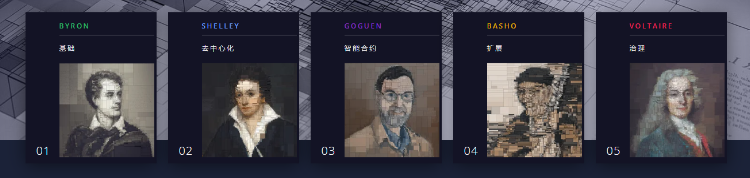
Cardano’s development is divided into five phases. While delivered sequentially, work across phases often proceeds in parallel—research, prototyping, and development occur simultaneously. Impressively, Cardano publishes all phase methodologies, prototypes, and technical specs in academic-style documentation for public access.
-
BYRON: After two years of development involving thousands of GitHub commits and hundreds of research hours, the first version of Cardano launched in September 2017, marking the start of the Byron era.
-
SHELLEY: Unlike Byron, which began with a single mainnet launch, Shelley transitioned gradually to ensure smooth, low-risk decentralization. Over time, more nodes shifted to community operation.
-
GOGUEN: Adds support for decentralized applications (dApps) built on Cardano’s peer-reviewed, high-assurance foundation.
-
BASHO: Focuses on optimization—improving scalability and interoperability. Previous phases prioritized decentralization and functionality; Basho targets performance enhancements to support high-volume applications.
-
VOLTAIRE: Introduces voting and treasury systems, enabling stakeholders to influence future network development through governance participation.
Tripartite Governance Structure
Cardano is primarily supported by three entities: IOG (formerly IOHK), Emurgo, and the Cardano Foundation.
-
IOG was founded in 2015 by Charles Hoskinson and Jeremy Woods. Based in Hong Kong, it is a fully decentralized blockchain infrastructure, research, and development firm. It delivers evidence-based software solutions, builds blockchain infrastructure for government clients, and collaborates with public and private sectors to advance decentralized platforms and smart contracts.
-
EMURGO Global is the official venture and investment arm of the Cardano project, registered in Tokyo since June 2017. It operates two subsidiaries: EMURGO Africa and EMURGO Ventures. In September, its founder announced plans to invest over $200 million over the next three years to support Cardano’s ecosystem.
-
The Cardano Foundation is a Swiss-based blockchain and cryptocurrency organization headquartered in Zug. Essentially an independent standards body, it oversees and monitors the ongoing development of Cardano and its ecosystem.
From the above, IOG leads technical R&D, the Cardano Foundation handles promotion, and Emurgo provides funding and regional business development. In theory, this division of labor creates synergy (1+1+1 > 3), but what’s the reality?
From a media perspective, some initiatives involve collaboration—e.g., Emurgo committed ~$100 million for African investments, with others contributing technology or resources. However, past controversies in 2020 raise questions. It’s unclear whether tripartite governance benefits or harms Cardano overall. But one thing is certain: the quality of cooperation among the three directly impacts Cardano’s trajectory.
Why Has Cardano Become the 'Elephant in the Room'?
From a Developer Perspective:
1. Smart contracts only launched in September 2021. By then, many developers had already committed to competing L1/L2 platforms.
2. Haskell is niche. Learning it offers far less ROI than mainstream languages like Solidity, Rust, or Golang. Onboarding new developers takes time.
3. Cardano’s academic rigor prioritizes stability and security, but developers seek user traction—which remains limited compared to major chains.
4. Migration
Join TechFlow official community to stay tuned
Telegram:https://t.me/TechFlowDaily
X (Twitter):https://x.com/TechFlowPost
X (Twitter) EN:https://x.com/BlockFlow_News