









From Berachain and Sei: Exploring the Emergence and Development of Native DeFi Chains
TechFlow Selected TechFlow Selected
From Berachain and Sei: Exploring the Emergence and Development of Native DeFi Chains
The future of DeFi enables everyone to access these financial services through smartphones and the internet. By leveraging cryptocurrencies, blockchain technology, and smart contracts, DeFi will bring revolutionary changes to financial technology and markets.
 Navigating Web3 tides with focused insights
The term "DeFi-native chain" first came into market view with the emergence of Berachain and Sei. Sei defines itself as the first truly dedicated DeFi blockchain, while Berachain quickly followed with an innovative consensus mechanism designed to solve liquidity challenges in DeFi.
As one of the earliest booming sectors in Web3, DeFi has captured mainstream attention and become one of the largest industries in the cryptocurrency space.
DeFi can offer all financial services (savings, lending, investing, insurance, etc.) and replace centralized financial products globally.
With DeFi’s future vision, anyone with a smartphone and internet access will be able to use these financial services. By leveraging cryptocurrencies, blockchain technology, and smart contracts, DeFi will bring revolutionary changes to financial technology and markets.

The development of DeFi in Web3 extends beyond competition on dominant public chains like Ethereum or scalability solutions aimed at improving throughput and performance. Pioneering development teams have proposed the design and vision for DeFi-native chains.
Berachain and Sei, two new Layer1 blockchains that gained attention in 2022, reveal the purpose and vision behind the emergence of DeFi-native chains.
By examining and analyzing the technology and ecosystems of these two blockchains, we can understand why they are called "DeFi-native chains," and thereby explore the rationale and growth potential of DeFi-native chains. Let's continue reading with the question "What exactly is a DeFi-native chain?" and uncover the answers together.
Who Are Berachain and Sei?
Berachain aims to be a high-performance, scalable, EVM-equivalent smart contract and cross-chain interoperability platform. Currently built on Cosmos-SDK and utilizing its native Tendermint consensus mechanism, Berachain combines Tendermint with its novel Proof-of-Liquidity anti-Sybil mechanism to deliver fast transaction speeds, low costs, and deterministic finality, while also creating a new interoperability layer between the consensus engine and virtual machine. This layer manages a "consensus-staked" native stablecoin, improves capital efficiency from staking, and most importantly, enhances resistance to Sybil attacks compared to traditional proof-of-stake blockchains.
Sei Network is a Layer1 blockchain built using Cosmos SDK and Tendermint Core, specialized for order-book applications and featuring a built-in CLOB module. CLOB stands for Central Limit Order Book, a type of data storage used in databases to store large character objects (Character Large Objects) as column values within a database row. Additionally, Sei enables IBC and integrates the wasmd module to support CosmWasm (CW) smart contracts, enabling cross-chain and multi-chain interoperability. From a technical standpoint, Sei optimizes its chain design specifically for order-book models, significantly improving overall throughput and reducing latency. Sei is optimized for speed, stability, and cost-efficiency.
Underlying Design and Technical Advantages
Sei employs Twin-Turbo Consensus (smart block propagation + optimistic block processing) and includes a built-in order-matching engine to enhance the scalability of order-book DEXs on Sei. It breaks through Tendermint limitations to achieve transaction speeds of 600 milliseconds. With DeFi-specific parallelization, it supports significantly higher throughput and order processing. In other words, as a DeFi-native chain, it offers clear advantages in transactions:
-
Native order-book matching mechanism to improve scalability; along with a built-in native price oracle providing high-quality, reliable data feeds
-
Front-running prevention achieved through batch aggregation of orders—this mechanism helps mitigate MEV issues. Sei aggregates all orders at the end of a block and executes all market orders at the same price, preventing front-running.
-
Parallel processing to dramatically increase TPS and order-handling capacity;
-
Sub-second settlement at approximately 600 milliseconds.
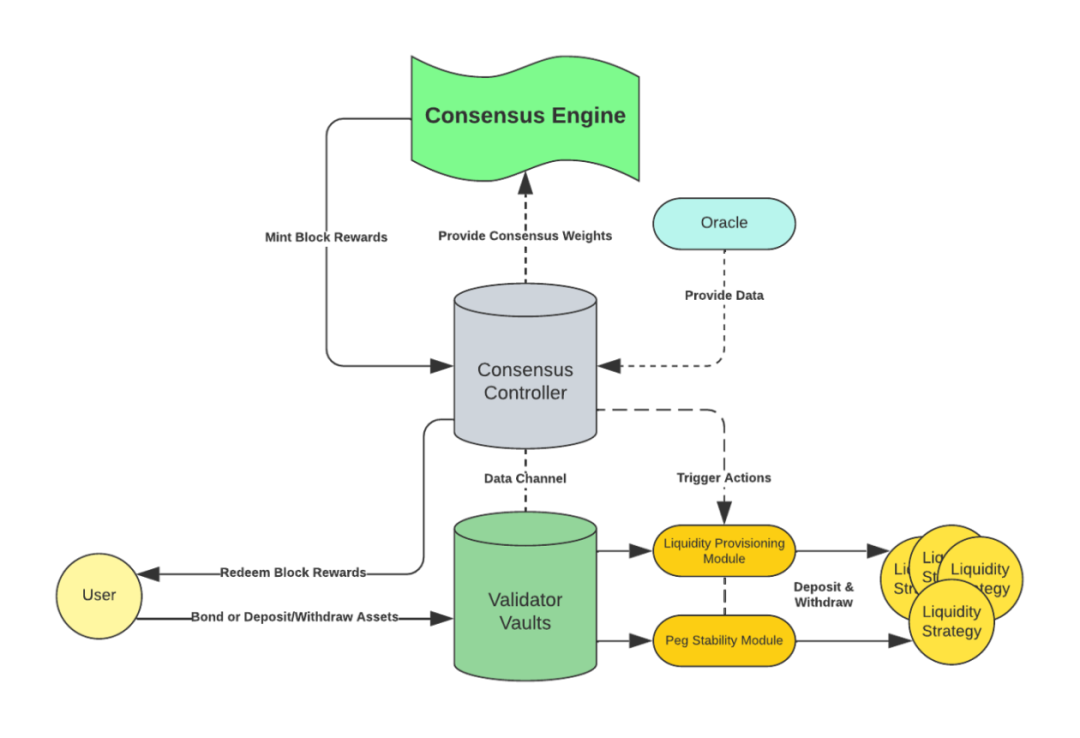
Building upon existing incentive mechanisms and economic models, Berachain innovates with its Proof-of-Liquidity consensus, better aligning incentives among investors, builders, and users interacting with the network. It positions itself as a high-performance, scalable, EVM-equivalent smart contract and cross-chain interoperable platform. As the whitepaper has not yet been released, we can summarize several of Berachain’s innovative advantages from available technical materials:
-
Proof-of-Liquidity Consensus: Designed to address liquidity difficulties faced by other Layer1 blockchains, this mechanism aims to ensure increasingly rich liquidity supply for DeFi on Berachain, offering greater benefits to liquidity providers.
-
Tri-Token Economic Model: Moving away from the conventional single-native-token model, Berachain’s team believes every decentralized economy relies on three core components: a medium for pricing and execution (gas), used to price computational work and execute smart contracts; a medium for consensus and governance (governance), enabling democratic organization and decision-making; and a stable medium for transactions (stablecoin). The Tri-Token model supports circulation and governance across these three functions.
Shared Advantage: Choosing Cosmos
Beyond their respective technological innovations, both Sei and Berachain have chosen to build on Cosmos SDK, benefiting from the following shared advantages:
-
Customizability: Enables full end-to-end blockchain process design and integration of custom-built-in features.
-
Modularity: Cosmos SDK provides teams with a platform where consensus and application layers work together, allowing updates or replacements of any individual stack layer.

Ecosystem and Development
-
Sei launched its incentivized testnet in July 2022 and has raised $5 million in funding. According to official disclosures, over 70 teams are building more than 100 applications on Sei. Official data shows up to 22,000 orders per second, over 4.5 million total testnet transactions, and more than 250K testnet users.
-
Berachain’s progress lags behind Sei’s. A full whitepaper has not yet been released, and currently only a prior NFT project, Bit Bears by Berachain, exists. According to official statements, a private development network is currently running and under testing, with plans to launch an incentivized testnet soon and share further details with the community.
The Two Extremes of Layer1
As new public chains, Berachain and Sei have yet to undergo real-world market validation. The feasibility of the DeFi-native chain visions described by their teams remains to be proven. However, by studying these two blockchains, we can recognize the necessity and potential for DeFi-native chains. First, let’s consider the flaws and challenges currently present in the DeFi industry: Why do we need DeFi-native chains?
The Sei team argues that most Layer1 blockchains fall into two extremes—one end being general-purpose chains (like Solana, Ethereum), and the other being application-specific chains (like dYdX, Osmosis). While application-specific chains are gaining traction due to their high performance, customizability, and tailored throughput, general-purpose Layer1 chains face clear shortcomings in the DeFi domain:
-
Unscalability—General-purpose chains often adopt a “one-size-fits-all” approach. Despite various scalability solutions, fundamental architectural limitations make scalability inherently problematic.
-
High Gas Fees and Slow Transaction Speeds—High transaction fees stem primarily from network congestion. Like cars competing to pass through a crowded road, gas prices rise sharply. Moreover, underlying infrastructure capable of supporting high-frequency trading is crucial. Most general-purpose Layer1 chains like Ethereum are suboptimal for order-book and trading use cases.

Why We Need DeFi-Native Chains
DeFi-native chains unlock a new design space between general-purpose and application-specific chains—neither fully general nor app-specific, but industry-specific. For example, Sei aims to create a customized environment for DEX applications, while Berachain seeks to resolve persistent DeFi industry issues such as insufficient liquidity and sustainability through its Proof-of-Liquidity mechanism.
By exploring the multidimensional design space between application chains and general-purpose Layer1s, Sei and Berachain reveal the possibilities of DeFi-native chains. Undoubtedly, DeFi-native chains will hold significant advantages in the following key areas.
Specialization
Infrastructure requires specialization. DeFi-native chains can build optimal infrastructure for decentralized finance. At a fundamental level, blockchains are distributed databases. Drawing a parallel to Web2 data services: in Web2, database solutions initially centered around general-purpose players like Oracle. But as the industry matured, companies like Databricks began specializing databases for growing use cases such as AI and ML. Similarly, as Web3 matures, Layer1s will evolve from general-purpose platforms like Ethereum toward specialized blockchains focused on key use cases—such as DeFi.
DeFi-native chains specialize in the DeFi domain, resolving existing issues such as transaction speed and fees at the consensus and technical levels, achieving true DeFi specialization.
Liquidity
In Web3, DeFi is creating a more efficient, fair, and valuable experience for finance and investment. Liquidity—the ability to transfer from one asset to another—is a critical component.
Berachain introduces innovations in Proof-of-Liquidity consensus and the Tri-Token system, using a consensus treasury to calculate validator voting power, distribute block rewards, and stimulate capital velocity and liquidity depth.
Sei implements a shared liquidity model, aiming to become the foundational infrastructure and shared liquidity hub for next-generation DeFi applications. This allows applications to easily plug into Sei’s order-matching engine and access pooled liquidity from other applications.

Developer-Friendly
As mentioned in the liquidity advantage, Sei enables developers to easily integrate with its order-matching engine and share liquidity across DApps. The construction of DeFi-native chains benefits DeFi application developers, greatly enhancing the development experience.
Developers gain the composability advantages inherent to Layer1 blockchains—since all applications are built on a single chain, they can seamlessly interact; while also enjoying application-specific benefits, including customizability and native multi-chain interoperability discussed earlier.
Conclusion
Although Ethereum still dominates the public chain landscape, we are witnessing the rise and innovation of new public chains. Precisely because of the limitations exposed by Ethereum’s underlying architecture, new chains are exploring diverse directions. In our article “Will Modular Blockchains Shape the Future of Web3 Users?”, we explored the advantages of modular blockchains—scalability, sovereignty assurance, and high efficiency at low cost. In this article, we’ve seen that DeFi-native chains also hold promising development prospects.
In fact, according to Electric Capital’s 2021 Developer Report, resources flowing into Web3 are rapidly increasing. One striking figure from the report is that over $100 billion in smart contract value comes from fewer than 1,000 full-time developers. DeFi still has considerable room for growth, offering opportunities and space for new developers. Perhaps after the initial phase of general-purpose chain adoption, as more developers and users enter the ecosystem and existing problems are identified and addressed, specialized blockchains targeting specific use cases will become the next innovation peak and value frontier. DeFi-native chains are a prime example of this trend.
References
https://twitter.com/Yyy1092422472/status/1571790966834724864
Introducing Berachain
https://medium.com/@itsdevbear/introducing-berachain-4f7dc3032c17
0xzx.com
https://0xzx.com/2022102508132773621.html
Sei is the first sector-specific Layer 1 blockchain, specialized for trading to give exchanges an un
https://www.seinetwork.io/
Overview
https://docs.seinetwork.io/introduction/overview
Join TechFlow official community to stay tuned
Telegram:https://t.me/TechFlowDaily
X (Twitter):https://x.com/TechFlowPost
X (Twitter) EN:https://x.com/BlockFlow_News
 @OurTinTinLand






