








Polygon Co-Founder Sandeep Nailwal: The "Millionaire" from the Slums
TechFlow Selected TechFlow Selected
Polygon Co-Founder Sandeep Nailwal: The "Millionaire" from the Slums
The rise of blockchain technology has also witnessed the emergence of Polygon.
 Navigating Web3 tides with focused insights
The rise of blockchain technology has also witnessed the ascent of Polygon.
Today, Polygon has become one of the most beloved public blockchains among builders—a multi-chain system supporting interoperability across multiple blockchains and networks. However, did you know? Before Polygon entered the top 15 cryptocurrencies and earned the nickname "the internet of blockchains," it was known as "MATIC." Emerging like a dark horse in the crypto market, it’s affectionately called "Ma Ti" (Horse Hoof) within China’s industry circles.
Polygon is a public blockchain built on an Ethereum-based Layer 2 scaling solution. Compared to Ethereum, Polygon offers superior speed, scalability, and usability.
As a homegrown Indian blockchain, it enables blockchain networks to connect and scale, aiming to create an Ethereum-compatible multi-chain ecosystem. Dubbed the “internet of blockchains,” it uses a proof-of-stake consensus mechanism to process on-chain transactions while inheriting security from Ethereum.
Just recently, Polygon announced on Twitter that it has initiated a full security audit of its zkEVM—focusing on correctness and robustness. This marks the final critical step on the testnet before mainnet launch.

Founded in 2017, as the company's reputation has grown, its founders have increasingly come into the spotlight. Today, in our “Crypto Titans” series, we take a closer look at Sandeep Nailwal, co-founder of Polygon.
Cliché but True: Knowledge Changes Destiny
Sandeep Nailwal, co-founder of Polygon. Put differently, he is a software developer based in Delhi, India.
As a software developer, Sandeep never planned to become an entrepreneur. Once deeply in debt, today he is indeed the founder of Polygon—a billion-dollar company—and striving to make it one of the largest players in Web3.

In Delhi, the west bank of the Yamuna River is commonly known as the affluent district. The opposite side—the east bank—is quite different, often disparagingly referred to as "Jamna-Paar" (Yamuna-paar), meaning slums, where residents are looked down upon. Sandeep Nailwal, now co-founder of a multibillion-dollar Web3 company, lived for years on the eastern bank of the Yamuna.
Sandeep was born into a poor farming family in Ramnagar, later moving with his family to Delhi. In Delhi, they lived in conditions akin to a slum. Members of such impoverished families typically took up lowly, menial jobs. His grandfather, for instance, once worked as a household assistant.

In his upbringing environment, it was common for children to drop out before completing 10th grade, some even turning to alcohol and gambling. When Sandeep saw his father fall victim to these vices and witnessed domestic violence at home, he found the motivation to escape this life—he resolved to continue studying beyond 10th grade.
"I always said I would become someone important. I didn’t want to play small games—I hated losing—but I didn’t know how to succeed. Everyone mocked me," he recalled. This mindset undoubtedly laid the foundation for Sandeep’s personal success and later achievements at Polygon. Pain and hardship forged his determination.
"Within my own family and environment, there were several examples of people I never wanted to become. After others learned about my father’s issues, many stopped respecting me too," Sandeep said.

Inner turmoil has always been Sandeep Nailwal’s closest ally, carrying him from Delhi’s “Jamna-paar” to leading Polygon, a multibillion-dollar Web3 company.
Today, under Sandeep and his co-founders’ leadership, Polygon has evolved into a global industry-leading platform hosting over 40,000 decentralized applications. At the time of writing, its native token MATIC has a market capitalization exceeding $7 billion.
Breaking Boundaries: The Leap into Entrepreneurship
Sandeep draws inspiration from Mark Zuckerberg and Facebook’s success as fuel for his journey as an internet entrepreneur. Today, he wears many hats—as an active guide, startup mentor, and angel investor—engaging deeply with founders and builders in Web3.
In Sandeep’s early life, entrepreneurship wasn’t part of his plan. After financing his computer science engineering and MBA degrees through bank loans, he began working to repay debts and save for a house. He previously worked in the tech division of Welspun, Asia’s largest textile company, and at Deloitte.
"I thought I needed to buy a house—it’s cliché, but traditionally men are expected to own a house before marriage. My wife told me not to worry, saying we could live happily in a rented place. She supported me pursuing my entrepreneurial dream," he said.
With his wife’s support, and unable to let go of the entrepreneurial idea, he eventually quit his job. In early 2016, Sandeep founded Scope Weaver, a blockchain services startup. Around the same time, JD Kanani—a data scientist at Housing.com who would later co-found Polygon with Sandeep—identified a weakness in the Ethereum blockchain.
A New Path Emerges
Ethereum’s creators never anticipated the massive adoption it enjoys today. As such, they didn’t build infrastructure capable of processing hundreds of thousands of transactions per second.
It wasn’t until the NFT project CryptoKitties overloaded the network and caused congestion that JD Kanani realized the urgent need for Ethereum scaling solutions.
"At the time, people were obsessed with initial coin offerings (ICOs). Blockchain projects released whitepapers online, raised funds without any product, and then failed," Sandeep recalled.
When JD Kanani met Sandeep, they immediately clicked and decided to collaborate on this project.
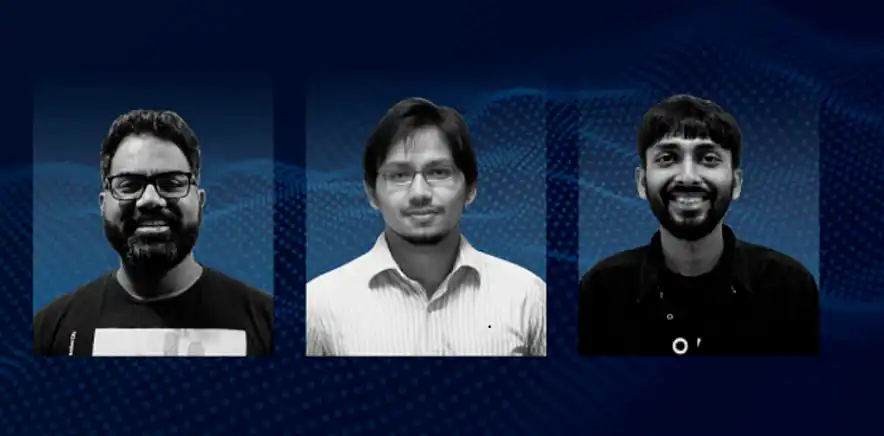
Thus, in 2017, Sandeep, JD Kanani, and Anurag Arjun jointly launched the MATIC Network.
The trio registered their address in Mumbai and operated out of a house in Bangalore, beginning their journey. JD Kanani handled programming and engineering, while Sandeep and Anurag managed the rest. At the time, Matic could easily have raised $15 million to $200 million for their project, but the co-founders chose not to. Taking shortcuts and chasing quick profits went against Sandeep’s vision of becoming someone significant.
"Matic was solving a long-term problem, so we had to choose slower growth. For me, everything was about ensuring infinite possibilities. If we had raised large amounts from external investors in the first few years, it might have limited our potential and our own vision," he said.
At the time, Matic hadn’t yet finalized its product, so it opted to raise only a minimal amount—$5 million from Binance—through an initial exchange offering, where the founders sold a portion of their MATIC tokens.
"I have a responsibility to keep Matic running."
"During those tough decisions not to raise more funds, I often couldn’t sleep at night," Sandeep recalled.
Is Being an Indian Web3 Founder a Disadvantage?
Entrepreneurship wasn’t smooth sailing. Soon after, Matic Network faced its toughest challenge.
While Matic’s product development progressed well, the 2018 bear market rapidly drained its funds. Meanwhile, Sandeep noticed Silicon Valley startups still raising capital.
"People from Stanford and other top universities could still raise funds. There was a perception that Indians couldn’t build software infrastructure companies. Industry insiders called Indian founders like us 'pajeets'—a derogatory, racially charged term," Sandeep explained.
Matic tried reaching out to investors but failed. Sandeep recalled that some investors disrespected the Indian startup, making up their minds not to invest even before hearing the pitch.
After a period of deep darkness, a glimmer of hope finally emerged.
Mihailo Bjelic, a Serbian engineer, believed in Matic’s vision and joined as a co-founder. Persistence, perseverance, and staying grounded eventually brought them luck.
In 2021, the co-founders decided on a broader approach to solve Matic’s challenges. Instead of building just a PoS chain, they aimed to create a scalable “internet of blockchains” around Ethereum using the same core concept. That year, they caught the attention of American tech billionaire Mark Cuban, securing an undisclosed investment from him.
Following this shift, Matic was rebranded as Polygon—and never looked back.
2021 marked numerous milestones for Polygon. It launched its SDK, enabling developers to quickly deploy Ethereum-compatible chains using built-in EVM and pluggable modules. It also raised $450 million in its first major venture round led by Sequoia Capital India, achieving a $14.4 billion valuation.
Polygon Today: Small Yet Vast
By mid-2021, approximately 400 decentralized applications were running on the Polygon platform. Today, that number exceeds 40,000. It has also partnered with Meta (Instagram), Starbucks, Reddit, Flipkart, and others, introducing Web3 products to mainstream audiences through cross-industry collaborations. As a leader of this industry-leading project, Sandeep can certainly be called a “big figure.” But there’s still one person he doesn’t like—himself.

"Even at our peak, I feel we’re still small. That feeling continues to drive me. I remain humble, and so does the team. We must reach the top, becoming one of the top three projects alongside Bitcoin and Ethereum," he said. "I don’t feel successful at all, nor do I look back. Now we carry the expectations of India’s entire crypto community—a responsibility we cannot afford to fail."
Regardless of scale, Sandeep still believes the decisions made in Polygon’s earliest days continue to converge over time, shaping everything they’ve achieved today.
Suffering Is Both Wealth and Pain
Though Sandeep has come far from his days in Jamna-Paar, those formative experiences continue to leave an indelible mark—sometimes even negative ones. For him, success comes at a cost.

Recently, he continues medication for psychological stress. "Only when medicated do I feel like myself. Without it, each day affects my life," he said.
"Now, I’m slowly learning how to find happiness. Recently, my baby was born—that brought me immense joy. I’m also interested in exploring meditation. My inner journey stems from this painful place; all the negativity sparked self-redemption."
Having personally faced these challenges, he has become outspoken about mental health and stress-related issues, consistently giving back to communities. During the peak of the pandemic, Sandeep launched Crypto Relief—an community-run fund that raised over $475 million to aid Indians needing healthcare. To date, the fund has distributed over $58 million in grants, publishing a public audit report.
He has funded several economically disadvantaged communities. He says he sees himself and his family in these people.
"We keep donating money to help people in these areas. If someone lacks funds for a wedding, we help out—my parents even attend as chief guests. It makes a huge difference in their lives," Sandeep said proudly.
Currently, Sandeep continues looking ahead. His mission is to build Polygon into a top-three global Web3 platform. Though his mother tells him to slow down and enjoy life, those driven by purpose rarely stop moving forward, do they?
Original Link
Join TechFlow official community to stay tuned
Telegram:https://t.me/TechFlowDaily
X (Twitter):https://x.com/TechFlowPost
X (Twitter) EN:https://x.com/BlockFlow_News






