









From compliance, traffic acquisition, and user perspectives: Can major IPs become a breakthrough attempt for domestic blockchain games?
TechFlow Selected TechFlow Selected
From compliance, traffic acquisition, and user perspectives: Can major IPs become a breakthrough attempt for domestic blockchain games?
How to attempt breaking into the mainstream in mainland China's blockchain gaming industry?
 Navigating Web3 tides with focused insights
This article has actually been in the works for a long time, cutting straight to the core issue: How can blockchain gaming break through in mainland China?
(1) What are major domestic companies doing?
W Labs has consistently published content on blockchain games and the metaverse, gradually attracting attention from traditional game giants within the industry. We frequently hold private meetings with them to discuss strategies and future directions for the blockchain gaming sector. It's safe to say that every sizable game company is monitoring blockchain gaming—only their level of involvement differs:
1. Companies still profiting heavily from Web2 games remain in research and observation mode;
2. A few tech titans have already established Web3 teams and made investments, but haven't launched any self-developed or operated Web3 projects yet;
3. Companies that have set up overseas structures are already deeply involved in specific projects. Take Funplus—the developer behind the hit game "King of Avalon"—as an example. They’ve publicly announced Xterio, a metaverse platform they funded and built. Their first product teaser is expected by the end of November, so stay tuned. And hey, feel free to gossip about how FTX Ventures’ stake will be handled, haha.
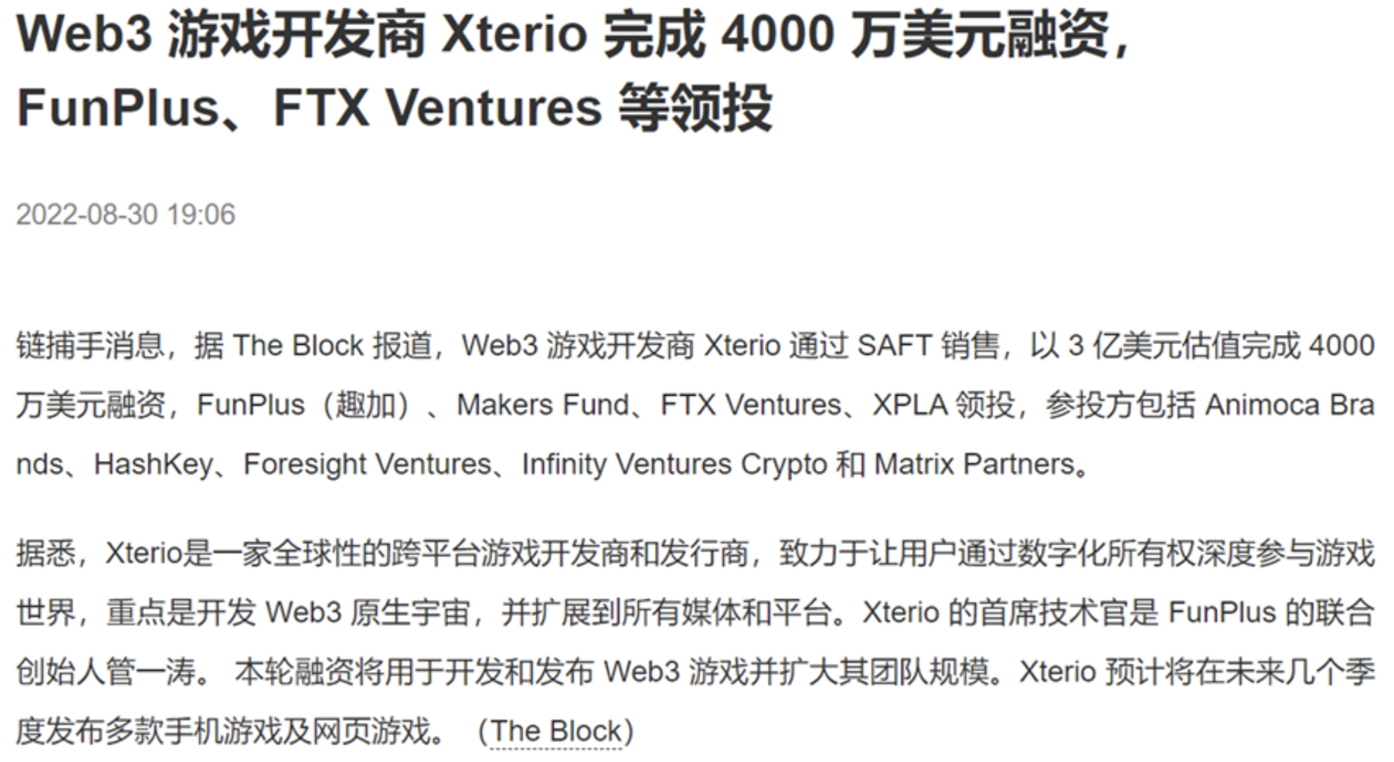
However, the crux of this business model lies in requiring an overseas structure and team. Once any action needs to take place domestically, it immediately faces strict scrutiny from internal legal and risk control departments, leading to endless discussions with no results.
So, is there truly a way to break through within China? In today’s ambiguous regulatory environment, creativity and initiative are essential for such breakthroughs. Whoever takes the first step will become the earliest king to build a moat.
W Labs has been actively researching this area. As the saying goes: A gamer who doesn’t want to be a lawyer isn’t a good analyst. This topic requires extensive engagement across various circles—policy, legal, gaming, etc. We won’t list out all the research processes here because there’s currently no definitive answer on what should be done. Promoting industry development in China always follows the path of “crossing the river by feeling the stones.” You keep feeling your way until you figure it out—just like during the reform and opening-up 30 years ago, and likely similar to Hong Kong’s recent push for a “Web3 boom on the Pearl River.” Following our series’ style, we’ll analyze a fresh, hot case study: Legend – Judgment of Flame. Yes, there’s already a blockchain gaming case in China—just two days old, haha.
(2) What is Legend – Judgment of Flame?
These past couple of days, official announcements about this game have appeared even in the most traditional state media outlets—People’s Daily, China News Service, China.org.cn… Shanda Interactive Entertainment developed a game called Legend – Judgment of Flame, leveraging the 20-year-old national IP “Legend” combined with digital collectibles.
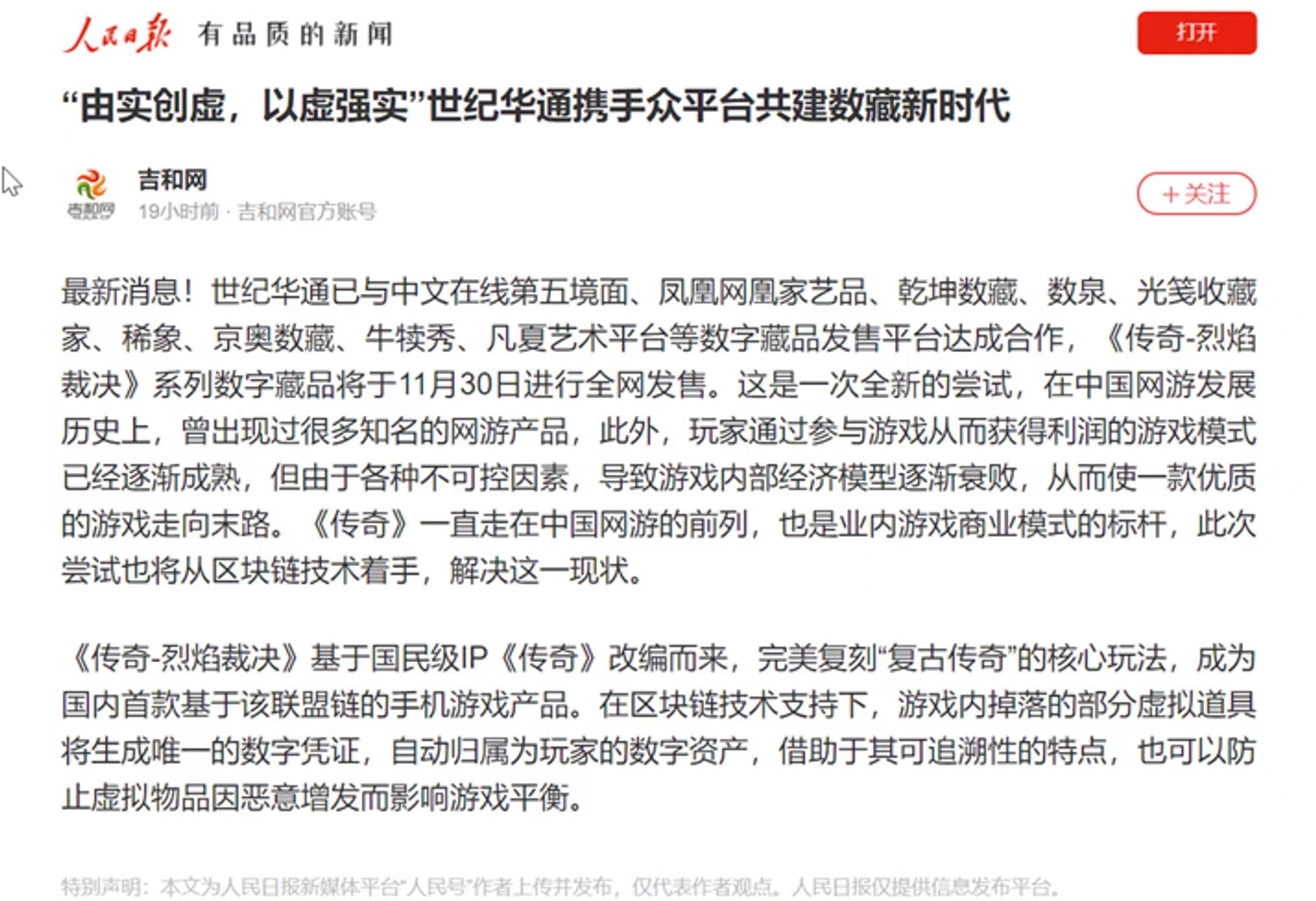
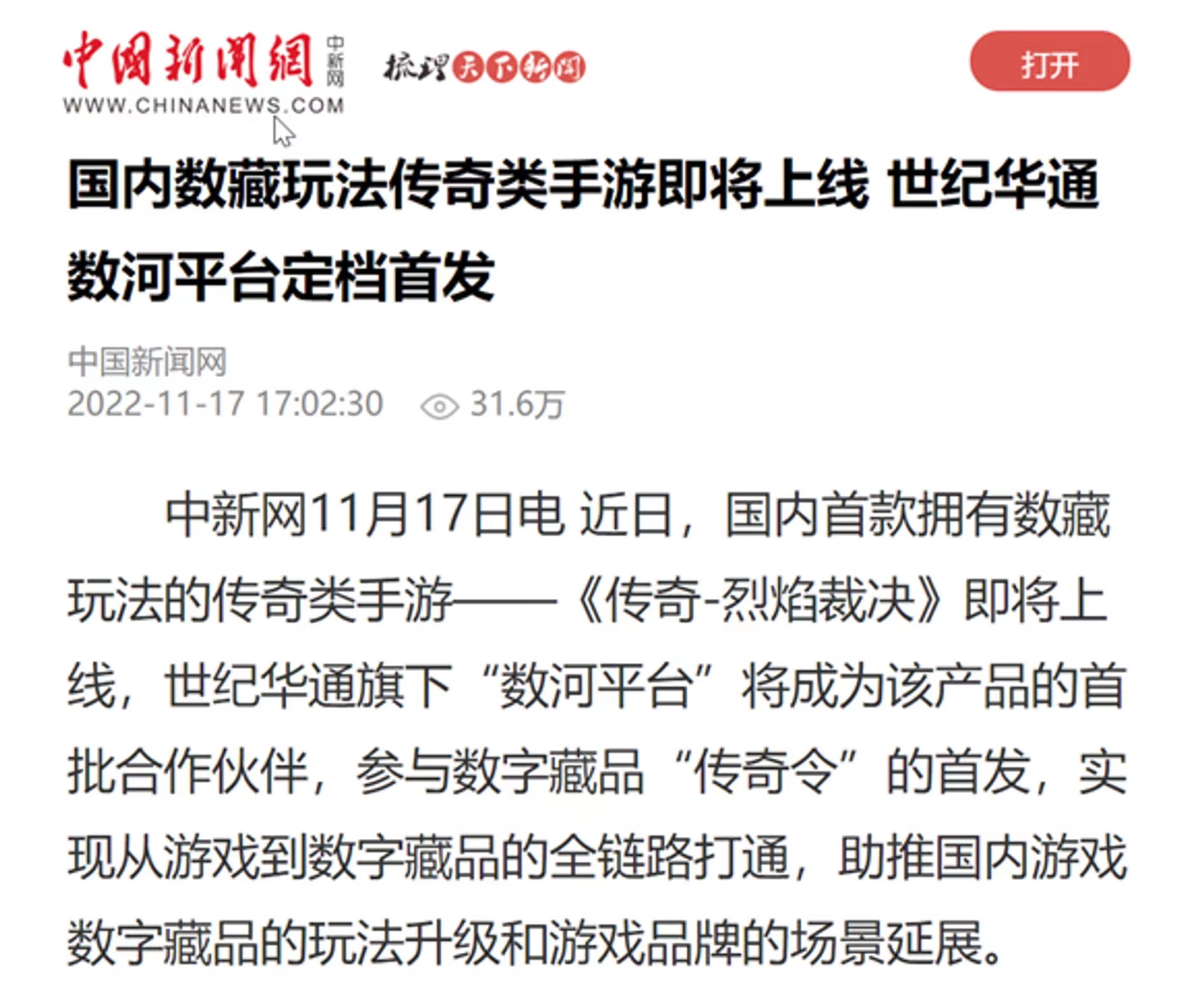
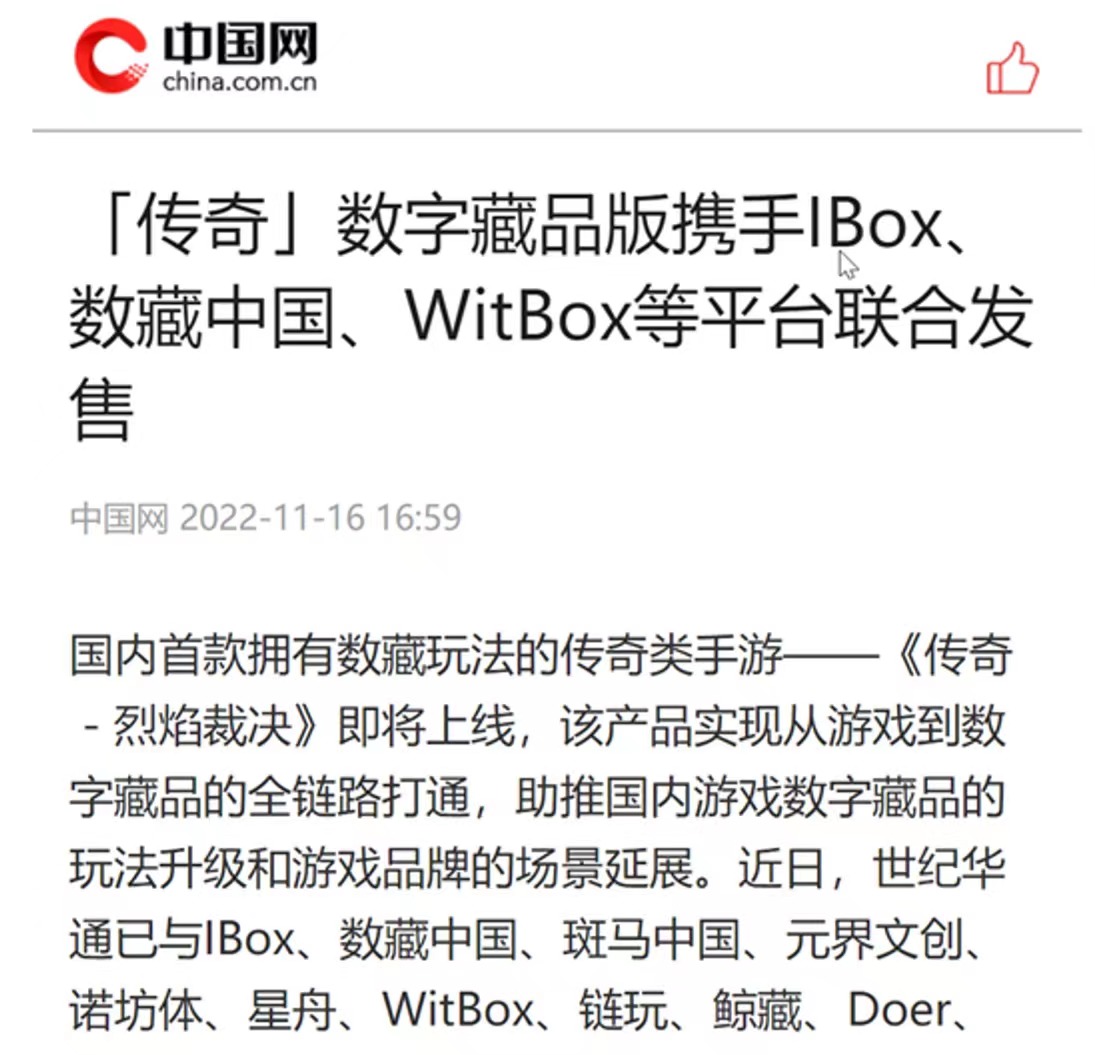
Based on W Labs’ communication with the Legend – Judgment of Flame team, this product aims to become China’s first legally compliant Web3 game! Exciting—but also raises many questions. Let’s first clarify some concepts for our young Web3-savvy readers:
- Shanda Interactive is a listed company and parent of Shengqu Games—the largest game company in China. Shengqu originated from Shanda (we’ll dive into Shanda’s story later). For gamers, mentioning Shanda brings to mind two iconic IPs: Legend and Dragon Nest.
- Digital collectibles are China’s localized adaptation of NFTs, which have created numerous wealth legends this year. After initial chaos, the space is now entering a phase of regulation and standardization—Ibox serves as a notable case.
- Last year, South Korean studio WeMade Entertainment’s blockchain hit Legend 4 brought massive profits to players. Its IP lineage directly connects to Legend – Judgment of Flame; we’ll elaborate in the next section.
- The gameplay of Legend-style games falls under MMORPG—main quests plus open-world monster grinding, questing, and loot drops, very similar in style to the Diablo series.
(3) The Love-Hate Saga Around “Legend”
Now onto my favorite gossip segment. Honestly, the biggest motivation behind writing this article wasn’t just sharing a potential new business model for blockchain gaming in China—we’ve researched those extensively. Rather, it was to unpack the dramatic history surrounding the MIR2 Legend 2 IP. Life itself is just one big game.
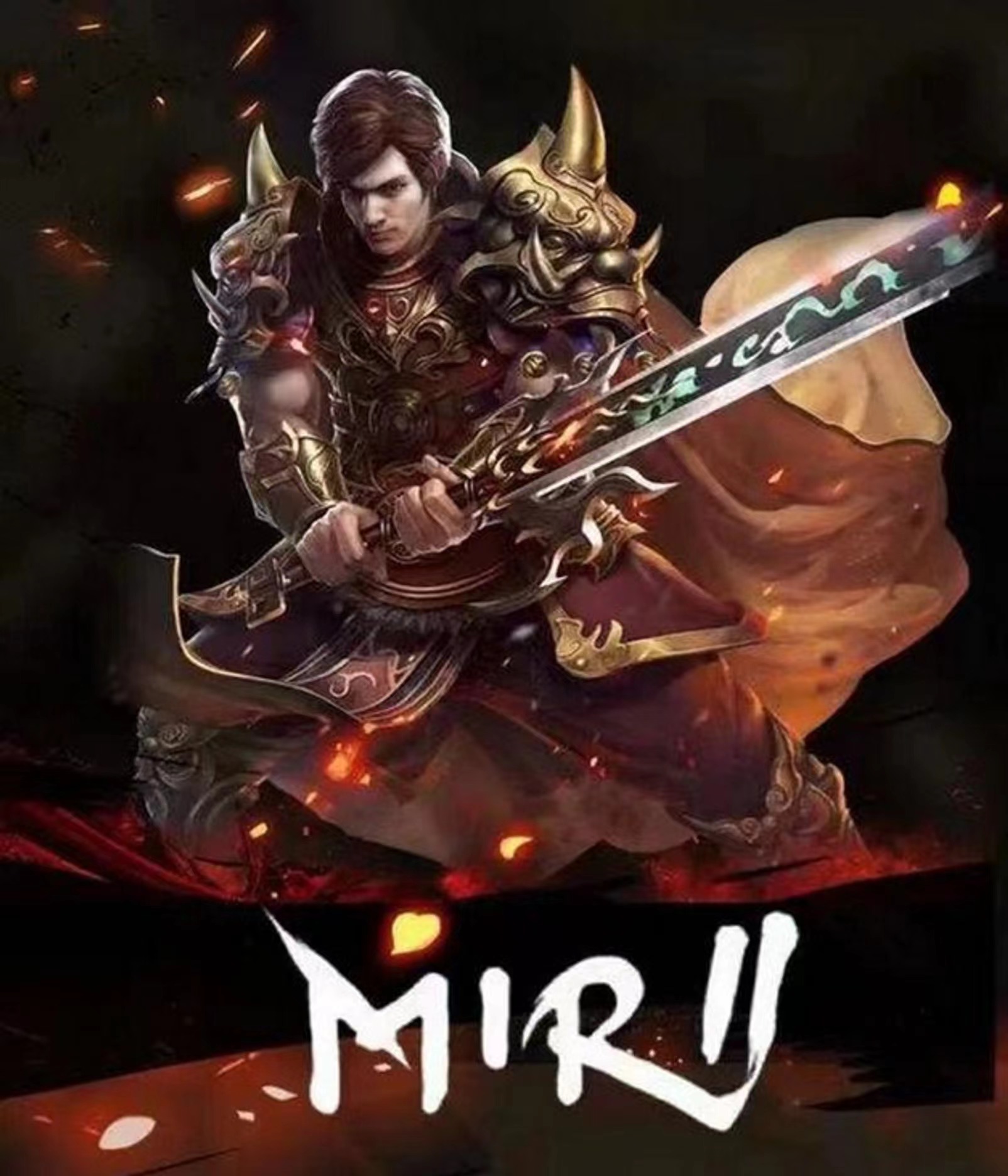
Most of you probably know that last year’s richest Chinese person was Binance’s CZ. Before him came e-commerce tycoons Jack Ma and Pony Ma; earlier still were Hong Kong’s “Superman” Li Ka-shing and Wanda’s “National Father” Wang Jianlin. But do you know who China’s richest man was 20 years ago?
Chen Tianqiao. In 2002, he founded Shanda and simply imported a South Korean game—MIR2 The Legend. With 70 million registered users and daily earnings of one million RMB, he became China’s youngest billionaire at age 28.
I’m a hardcore gamer with 30 years of experience. Back in school, the most frustrating part was hiding gaming from our parents—it was seen as pure idleness. In our parents’ eyes, the hierarchy of activities went like this: studying > reading books > playing sports > flirting with classmates > computer gaming > becoming a gangster. Computer games ranked just above Han Seung and Shan Chi.
Chen Tianqiao’s success shocked parents everywhere: You mean making games can earn *that* much money? Then came the moral panic: How many youths are being corrupted by games? What a waste of money! So they’d scold us for spending on games while simultaneously urging us to learn programming—whether you play games matters less; learning computers to become the next Chen Tianqiao is what counts.
Shanda earned so much in China that the original Korean developer of The Legend, WeMade Entertainment (the same one behind last year’s Legend 4), grew envious: “Bro, you’re a Chinese billionaire while I’m not even top ten in Korea—let’s renegotiate revenue shares?” Chen naturally refused: “What about contract integrity?” So WeMade cut off cooperation. But Shanda was ready—they simply forked the game, launching their own Legend of Mir World, migrating users over. WeMade was furious: blatant plagiarism! Lawsuits followed for years. Even funnier, Shanda flexed its financial muscle and secretly acquired Actoz—the Korean company holding the Legend IP (previously controlled by WeMade). Haha, a classic business move: “You’re suing me for copyright infringement? I infringed my *own* copyright—what’s it got to do with you?” Eventually, both parties settled out of court in 2007. The details are complex—friends at Shanda tried explaining multiple times, but I still didn’t fully grasp it. Not important anymore.
Back to Chen Tianqiao—I believe his role in China’s internet history ranks only behind the two Mas. He pioneered new business models, including the now-ubiquitous “free-to-play + in-app purchases,” which remains the primary monetization method for most online games. Even more impressive was his strategic vision. After earning from games, he launched Shanda Literature, monopolizing 70% of China’s literary IPs—Qidian, Rongshuxia, all under his umbrella—later sold to Tencent. He also attempted Shanda Box, which failed due to being ahead of its time—encroaching on TV territory and eventually shut down. Had it succeeded, it would’ve been a precursor to today’s “Xiaomi Box + Youku/iQiyi content” ecosystem.
Sadly, Chen later developed a neurological illness. After selling Shanda, he moved overseas for treatment and invested heavily in brain science research. A brilliant visionary ultimately felled by health—a fate no one can escape. Truly tragic.

Chen Tianqiao and Luo Qianqian: A legendary entrepreneurial couple who weathered hardships together
(4) What is the essence of this business model?
Nostalgia aside, let’s break down the core aspects of the Legend – Judgment of Flame case:
- Compliance: The game is legitimate, the digital collectibles are legitimate—combined, they remain compliant. Legend – Judgment of Flame has an official game license, and its digital collectibles are issued on the “Guoban Chain” (National Copyright Alliance Chain)—a government-backed consortium chain.
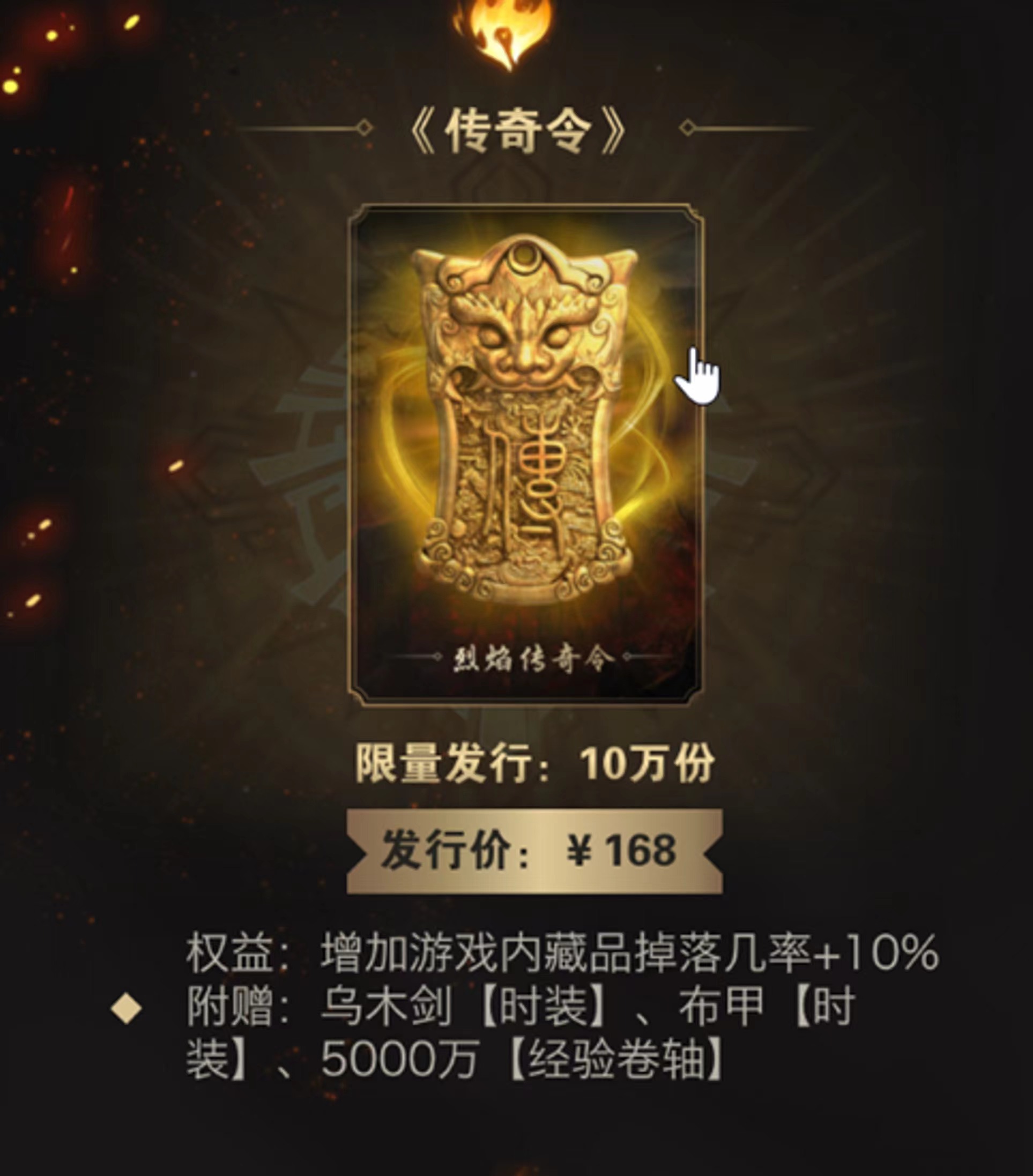
- Tradability: Digital collectibles from Legend – Judgment of Flame (e.g., “Legend Tokens”—let’s call them “Collectible A”) will be available on the Guoban Chain at the end of November and provide in-game benefits, such as increased drop rates for another type of in-game digital collectible gear (“Collectible B”). More importantly, both Collectible A and B can be traded on the Guoban Chain after holding for 21 days! Highlight this point! One major pain point in China’s digital collectible market is the lack of formal tradability—OTC is currently the only option. To date, W Labs’ research suggests Legend – Judgment of Flame may be the only upcoming domestic project to officially announce tradable digital collectibles.
-
User Base: In conversations with major Web2 game studios, W Labs consistently emphasizes two points: Who is your target audience for blockchain gaming? Is it the 300,000 active addresses currently in the blockchain gaming space? Or the 3 billion Web2 gamers? Different targets demand different strategies. Without exception, big studios aim to attract Web2 gamers. This is blockchain gaming’s century-long challenge—there’s no proven solution yet, nor likely a single one. But without trying, there will be no answers. Numerous hurdles exist: minimal savings on traditional user acquisition costs; deposit/withdrawal issues; high educational barriers for players entering Web3, and more.
Legend – Judgment of Flame clearly targets veteran players from Legend 2, primarily using traditional game marketing methods. The strategy relies on nostalgia: reminding old fans that the gear they farm now could hold real value—becoming their personal assets that can be listed and traded.
-
Game Type: To bring Web2 gamers into blockchain gaming, the most sustainable approach is leveraging strong emotional attachment to IPs—not promises of getting rich quick. For instance, if Chinese Paladin launched a blockchain version, I’d definitely buy its NFTs. For major Web2 studios exploring this space, I recommend starting with powerful IPs. Century Huatong’s attempt here is highly valuable—using their flagship Legend IP instead of launching a mediocre 60-point game slightly better than Axie.
Legend – Judgment of Flame is expected to begin closed beta testing and digital collectible sales by month-end. W Labs will continue tracking this innovative case closely. We’ve already set up a dedicated discussion channel in W Labs’ Discord community, where project details and updates will be shared. Interested readers are welcome to join.
To summarize, the combination of major companies, major IPs, and digital collectibles might represent a new path for blockchain gaming breakthroughs in China. Key considerations include: ensuring actual tradability of collectibles; effective user acquisition strategies from Web2; strong IP appeal; and managing price volatility to align with policy direction. Players should come for gameplay and nostalgia—not get-rich-quick dreams. Those chasing moonshots or crashes can go play memecoins.
Reposting is welcome. Original content takes effort—please credit “W Labs, Melon Fields Lab”
W Labs website: http://www.wlabsdao.com/
W Labs Discord: https://discord.gg/wggdao
W Labs Twitter: https://twitter.com/GuaTianGuaTian
W Labs in-depth articles on Mirror: https://mirror.xyz/iamwgg.eth
W Labs on Medium: https://guatianwgg.medium.com/
Join TechFlow official community to stay tuned
Telegram:https://t.me/TechFlowDaily
X (Twitter):https://x.com/TechFlowPost
X (Twitter) EN:https://x.com/BlockFlow_News
 瓜田实验室W Labs






