How do BTC and DeFi advocates view FTX's bankruptcy?
TechFlow Selected TechFlow Selected
How do BTC and DeFi advocates view FTX's bankruptcy?
Many services will likely still require centralization.
 Navigating Web3 tides with focused insights
Written by: Luiz Ramalho
Compiled by: TechFlow
Over the past week, I've followed discussions among Bitcoin and DeFi advocates regarding the collapse of FTX, and I found the content quite interesting.
Both groups share the "not your keys, not your coins" mentality, but their differences run deeper. Let's analyze how they diverge.
The Bitcoiner Perspective
All Bitcoiners are skeptical of Ethereum as both an asset and a platform, and many distrust any smart contract platforms—even those built on Bitcoin itself.
The main arguments center on the lack of security in these smart contract platforms and the belief that creating smart contracts undermines Bitcoin’s original vision. They argue it enables speculation, usury, and fraud.
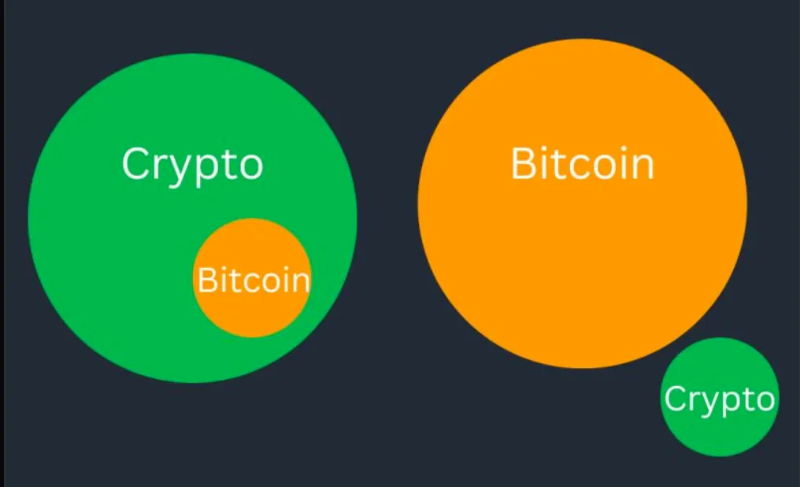
Bitcoiners’ responses are based on the argument that if you accept their worldview—where Bitcoin and "cryptocurrencies" are two separate things—then there's no reason to use casinos like FTX. And even if you do use it to buy Bitcoin, you should withdraw and self-custody.
The DeFi Advocate Perspective
Most DeFi advocates believe FTX’s core problem was its centralized and custodial nature.
They argue that ideally, centralized services should either completely disappear or be limited to very narrow functions. The vision behind smart contract platforms is to eliminate these trusted intermediaries—to replace centralized products with decentralized alternatives. Despite technical risks (such as hacks) and initial trust/centralization risks, such systems remain highly popular.
(Generally speaking, most DeFi protocols require some degree of trusted setup before becoming fully decentralized, though many are actively working toward greater decentralization. Since decentralization exists on a spectrum, it's difficult to draw a clear line at which point a DeFi protocol becomes too centralized to still be considered DeFi.)
The Moderate View
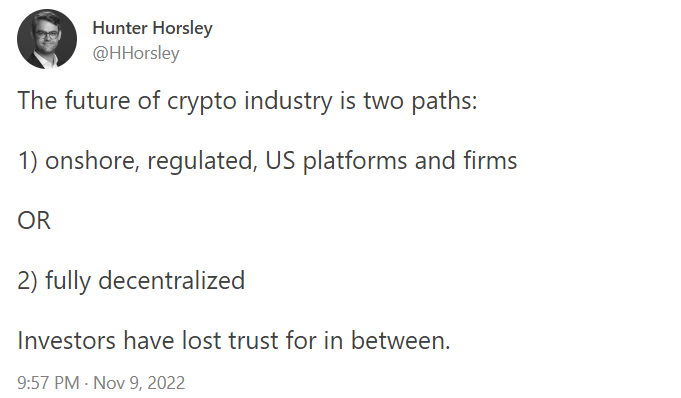
Within the DeFi camp, there are also more moderate perspectives. These individuals believe our world will become increasingly decentralized while still incorporating regulated centralized services.
This view is exemplified by companies like Coinbase, Bitwise, and most other centralized service providers.
My Personal View
I have seen enough useful innovation from smart contract platforms to believe they hold value.
However, I agree that much of DeFi’s potential lies in the future, and many benefits remain theoretical. But the same could be said for Bitcoin over the past 14 years—much of its original vision remains unfulfilled.
NFTs brought mass commercialization to crypto for the first time, beyond mere price speculation. I mean people genuinely enjoying buying digital collectibles. Their prices may rise or fall, but this behavior won’t disappear. This marks the first example of large-scale, crypto-native commerce.
Decentralized exchanges like Uniswap, and collateralized lending protocols like Aave and Compound, have become real and somewhat useful. Stablecoins with varying degrees of centralization are also useful—I can attest to this as someone living in Latin America.
Decentralized storage, computing, and other infrastructure are operational today and actively used.
Most of these functionalities cannot (or will not) be built on Bitcoin. So when I see so much counter-evidence, I struggle to accept the argument for using only Bitcoin. I deeply appreciate the simplicity of the Bitcoiner viewpoint, but I find it ineffective at pushing the boundaries of technological application.
I am a realist—many services will likely remain centralized. Therefore, although perhaps unexciting, my view aligns with the moderate wing of DeFi.
While I remain skeptical of regulatory actions by incumbents, I believe reasonable regulation is necessary, and we need a certain degree of centralization.
Join TechFlow official community to stay tuned
Telegram:https://t.me/TechFlowDaily
X (Twitter):https://x.com/TechFlowPost
X (Twitter) EN:https://x.com/BlockFlow_News