Bankless: Why Does Privacy Enabled by Cryptographic Technology Have Humanitarian Implications?
TechFlow Selected TechFlow Selected
Bankless: Why Does Privacy Enabled by Cryptographic Technology Have Humanitarian Implications?
The rise of digital authoritarianism around the globe is no longer a secret.
 Navigating Web3 tides with focused insights
Written by: Neeraj Agrawal
Translated by: TechFlow
It’s no secret that digital authoritarianism is on the rise globally. Our internet is built around chokepoints and centralized data warehouses.
Most meaningful internet activity flows through servers owned by companies like Facebook, Google, or Amazon. Financial activity similarly moves through intermediaries such as PayPal or banking systems. Ultimately, these companies can be controlled by states.
This is why the U.S. Treasury recently sanctioned the cryptocurrency privacy tool Tornado Cash.
Let’s set aside Coin Center’s legal rebuttal to the sanctions—namely, whether an autonomous smart contract qualifies as a sanctionable entity. The sanctions have already sparked a broader conversation about financial privacy.
Crypto skeptics might ask why such a tool was needed in the first place. This question echoes, “If you have nothing to hide, why do you need privacy?” It’s true that most cryptocurrency activity occurs on public blockchains and is easily traceable.
And it’s also true that the majority of activity on these blockchains is not illegal.
Skeptics may argue that someone who doesn’t want their financial activities exposed should simply use a traditional intermediary that doesn’t broadcast their information. While this would eliminate blockchain analysis risks, it creates another problem—if the intermediary is compromised or turns against you, you’re in serious trouble.
For those of us living under the rule of law in democratic societies, this may sound absurd. But states control financial systems, and not all governments value democracy or free expression.
Arming the Intermediaries
When protests erupted in Belarus against election manipulation, the Putin-backed government swiftly cracked down. A key aspect of this repression was economic punishment—protesters were hit with massive fines. Employers faced pressure for harboring dissenting employees, resulting in job losses for protesters.
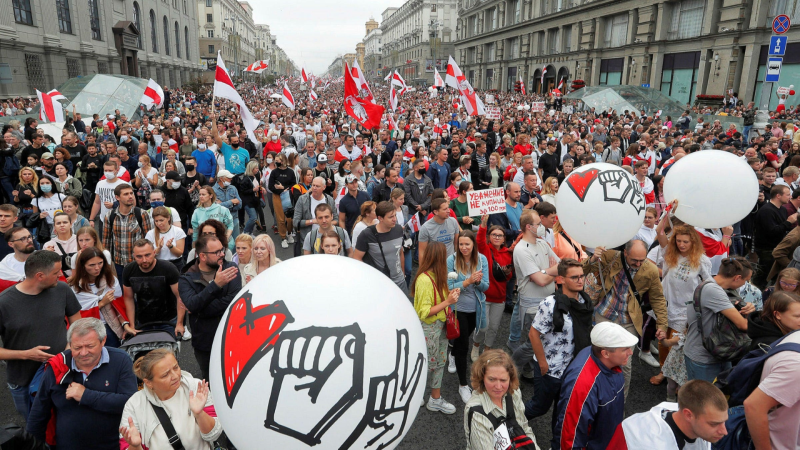
The nonprofit BYSOL began providing financial aid to protesters.
The organization was established in Belgium because, technically, funding protest activities labeled as “illegal” meant their banks had no choice but to comply with the law—seizing funds and freezing accounts.
Intermediaries are untrustworthy.
But how could money reach the protesters? All electronic transfers were monitored under the guise of preventing illicit activity, and cash was seized at borders.
The group turned to Bitcoin.
Protesters could deposit funds into personal Bitcoin wallets and then conduct small local exchanges to evade financial surveillance.
Using laws to arm intermediaries has become a popular tactic.
In Russia, political opposition groups have been labeled extremist organizations, leading compliant financial institutions to ban donations to them.
In Myanmar, the military regime introduced strict “know-your-customer” rules, forcing all users of digital banking systems to fully identify themselves to service providers. At the same time, physical cash supplies were disrupted. Now, all economic activity is being pushed into a more tightly monitored system, with the explicit goal of cutting off funding to resistance movements—bank accounts are arbitrarily frozen with little recourse.
This issue could even arise in the United States. Consider recent abortion bans—if offering financial services for abortions becomes illegal, it’s not hard to imagine intermediaries losing their ability to operate due to legal violations.
Many abortion pill websites currently rely on services like PayPal and Stripe to process payments.
This area is still evolving, but if PayPal cuts off their services, cryptocurrency will remain a viable alternative.
Crypto Must Stay Ahead of Dictators
The more authoritarianism grows, the less trust people will have in intermediaries. When individuals need to conduct transactions that states disallow or discourage, they’ll increasingly turn to cash—and perhaps more to cryptocurrency.
Cash is great—but only for in-person transactions.
For the digital age, we need digital cash, and cryptocurrency is our best option.
In countries like Belarus, Russia, Nigeria, Afghanistan, and many others, cryptocurrency has consistently supported dissent.
Sadly, despite its own privacy limitations, this technology has proven highly useful.
We should encourage privacy tools like Tornado Cash—tools that help people when entire state institutions stand against them.
Centralized financial systems are easy targets for surveillance and control, while cryptocurrency can serve as a counterbalance to such power.
Join TechFlow official community to stay tuned
Telegram:https://t.me/TechFlowDaily
X (Twitter):https://x.com/TechFlowPost
X (Twitter) EN:https://x.com/BlockFlow_News