








Cross-chain DEX Overview: Development Trends of Cross-chain DEXs and the Rise of Aggregated Cross-chain Protocols
TechFlow Selected TechFlow Selected
Cross-chain DEX Overview: Development Trends of Cross-chain DEXs and the Rise of Aggregated Cross-chain Protocols
The multi-chain parallel development landscape has become an established reality and the future narrative direction of the crypto world.
 Navigating Web3 tides with focused insights
By Morty, TechFlow
The narrative of a multi-chain parallel future in the crypto world continues—although many builders are working on high-efficiency blockchain base protocols such as Solana and Avalanche, reality shows that individual blockchains have capacity limits. Once daily active users surge, blockchain performance significantly degrades.
As a result, the coexistence and parallel development of multiple chains has become an established fact and the future direction in the crypto space. Meanwhile, more cross-chain/multi-chain infrastructure is being built. Over time and with intensifying competition, this infrastructure continuously evolves to improve user experience.
This trend is already evident with stablecoin issuer Circle: recently, Circle announced it will launch a cross-chain transfer protocol to support USDC interoperability. Moreover, this cross-chain transfer protocol is composable, enabling developers to build new applications by integrating features from trading, payments, NFTs, and gaming.
Cross-chain DEXs are another manifestation of this trend.
The execution logic of a cross-chain DEX is to exchange asset A on chain X for asset B on chain Y, with the entire cross-chain and swap process being seamless to the user. This means users no longer need to manually bridge asset A from chain X to chain Y, then use a DEX on chain Y to swap yA for asset B.
In short, cross-chain DEXs save users from cumbersome bridging operations,手续 fees, and gas costs.
However, despite similar underlying logic, each cross-chain DEX implements its operations differently.
According to an analysis by Fundamental Labs, current mainstream cross-chain DEXs can be categorized into four types:
-
Cross-chain DEXs with built-in Swap;
-
Cross-chain DEXs with built-in cross-chain liquidity pools;
-
Cross-chain DEXs based on sidechains;
-
Cross-chain aggregators based on multi-chain data integration.
1. Cross-chain DEXs with Built-in Swap
Cross-chain swaps in these DEXs are typically executed via external cross-chain bridges.
For example, SushiSwap, deployed across multiple blockchains.
Unlike UniSwap’s growth path, SushiSwap's expansion strategy emphasizes breadth—deploying DEX and other products across various blockchains. SushiSwap currently operates on 14 different blockchains.
However, SushiSwap did not support cross-chain asset swaps until July 21 this year, when it launched xSwap, its cross-chain product. xSwap uses the external cross-chain bridge Stargate Finance to complete asset transfers across chains.
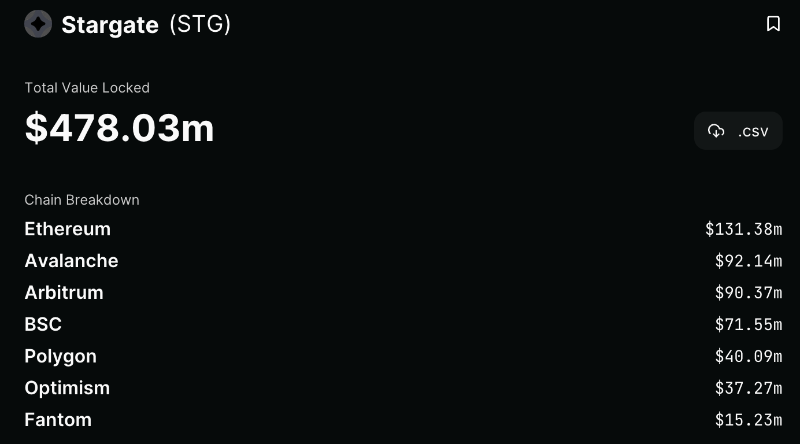
Stargate Finance is the first decentralized application built on LayerZero. According to DeFiLlama data, Stargate Finance currently has a TVL (total value locked) of $478 million.
Its cross-chain path is as follows:
SushiSwap on chain X: Asset A → STG Bridge: Stablecoin on chain X → STG Bridge: Stablecoin on chain Y → SushiSwap on chain Y: Asset B.
2. Cross-chain DEXs with Built-in Cross-chain Liquidity Pools
These cross-chain DEXs can be understood as decentralized "CEXs".
With a CEX, you can deposit token A from chain X into your exchange account, swap it for token B within the exchange, then withdraw token B to chain Y.
Similarly, using a cross-chain DEX with built-in cross-chain liquidity pools allows users to easily perform the same operation. But unlike the cumbersome CEX process, this decentralized cross-chain operation is seamless and executed entirely by smart contracts.
As previously mentioned, Stargate Finance also belongs to this category, although it only supports stablecoin bridging.
Catalog is another example of a cross-chain DEX with built-in cross-chain liquidity pools.
Catalog offers users a CEX-like experience: 0 gas fees and low fixed transaction fees. The 0 gas fee service is enabled through KeeperDAO's API infrastructure.
However, like using a CEX, users must deposit their assets into Catalog to access its cross-chain trading functionality.
The cross-chain trading logic of these DEXs generally follows the model shown below. However, they go further—for instance, enabling users to exchange USDT on Ethereum for other assets on Polygon, providing greater convenience.
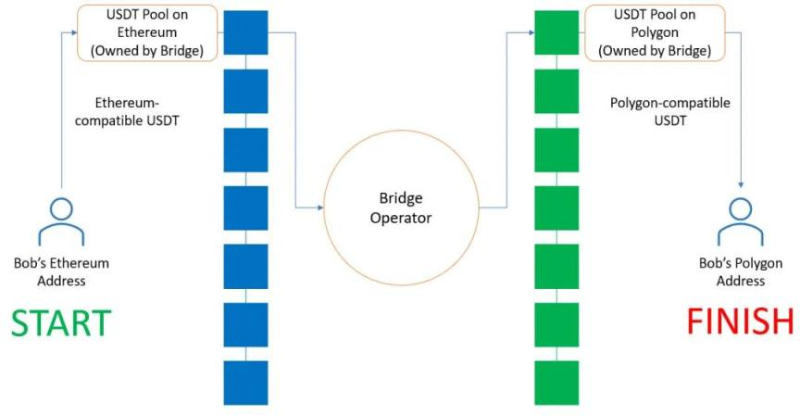
It should be noted, however, that these cross-chain DEXs heavily depend on the liquidity of assets within their bridges and are more vulnerable to asset losses during hacking attacks.
3. Sidechain-based Cross-chain DEXs
The most well-known sidechain-based cross-chain DEX is ThorSwap.
The implementation logic of such sidechain-based DEXs involves building a sidechain to ensure asset security within the DEX, which also serves as a transit hub between the source and destination chains.
Thanks to Cosmos IBC's cross-chain communication capabilities, ThorSwap can more easily realize its cross-chain DEX functions, allowing users to conduct cross-chain trades between the Cosmos ecosystem and various EVM-compatible chains.
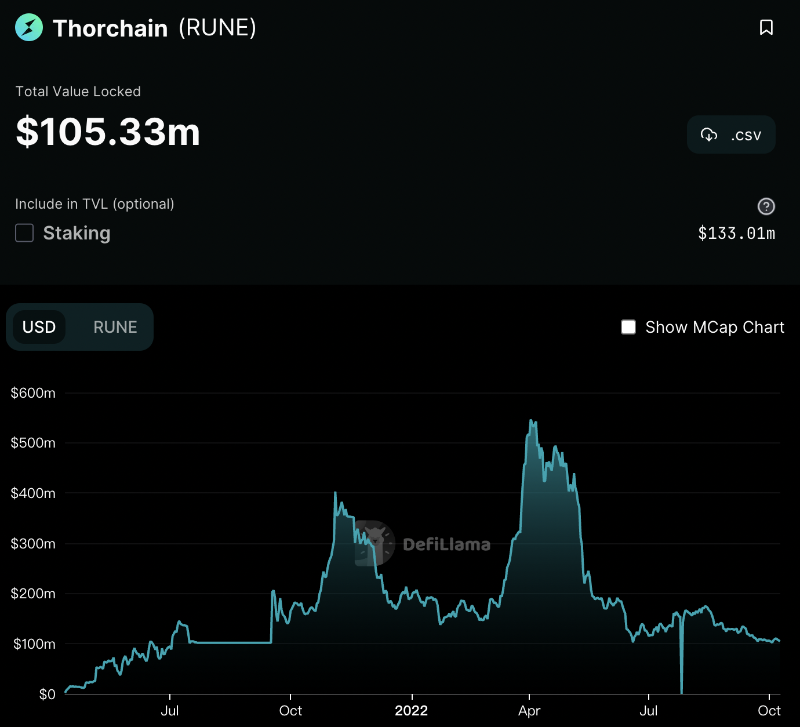
For liquidity provision, ThorChain adopts Bancor's model, requiring all tokens in its liquidity pools to be paired equally with ThorChain's native token RUNE. According to DeFiLlama data, ThorChain currently has a TVL (excluding RUNE staking) of $105 million. ThorChain's security is maintained through the staking of its native token RUNE.
4. Cross-chain Aggregators Based on Multi-chain Data Integration
Unlike the cross-chain DEXs mentioned above, cross-chain aggregators usually do not possess their own swap functions, liquidity pools, or blockchains. Instead, they achieve cross-chain swaps by aggregating and routing information across chains. These aggregators typically integrate DEXs across multiple chains along with the various types of cross-chain DEXs discussed earlier—much like 1inch—searching for the optimal cross-chain trading route for users.
ChainHop, integrated with the Celer IM cross-chain messaging framework, is one such cross-chain aggregator.
ChainHop is a composable, omnichain liquidity aggregation protocol that enables users to conduct cross-chain trades via various bridges and cross-chain DEXs. Through ChainHop, users can achieve optimal exchange rates and minimal slippage when swapping token A on chain X for token B on chain Y at the lowest possible cost.
Currently, ChainHop supports seven chains—Ethereum, BNB Chain, Polygon, Avalanche, Fantom, Arbitrum, and Optimism—and their respective DEXs, as well as five cross-chain protocols: cBridge, Multichain, Stargate, Across Bridge, and Hyphen Bridge.
Notably, beyond standard cross-chain DEX functionality, ChainHop leverages the Celer IM cross-chain messaging framework to aggregate liquidity from all supported blockchains—including the aforementioned DEXs and bridges. This allows users to access the deepest available liquidity, which is precisely why they enjoy optimal exchange rates and minimal slippage.
Powered by ChainHop’s intelligent routing algorithm, users may even receive better exchange rates and lower slippage than some single-chain DEXs. For example, when a user wants to swap a large amount of ETH for USDC on Fantom, ChainHop might first bridge ETH to Ethereum, perform the ETH-USDC swap there (where liquidity is deeper and slippage lower), then bridge the resulting USDC back to Fantom. All of this complex process can be completed in a single click.
Moreover, ChainHop’s composability allows deep integration with other dApps, helping them tap into liquidity across different blockchains to build cross-chain DeFi platforms, NFT marketplaces, IDO launchpads, and more.
Currently, ChainHop has launched an NFT community loyalty campaign called "ChainHop’s First Jump Campaign"—details available on its official Twitter.
Compared to the first three types of cross-chain DEXs, these cross-chain aggregators have advantages in not relying on internal liquidity, reduced security risks, superior user experience, and greater flexibility in protocol selection.
Conclusion
As discussed above, the multi-chain parallel landscape has become an established reality and the future trajectory of the crypto world.
Although cross-chain DEXs represent just one branch of the multi-chain narrative, they significantly enhance investor experience in multi-chain operations and profoundly influence user behavior. Therefore, the future development of cross-chain DEXs warrants long-term attention.
However, it is important to note that as cross-chain activities become frequent user behaviors, the associated security concerns deserve close scrutiny.
Join TechFlow official community to stay tuned
Telegram:https://t.me/TechFlowDaily
X (Twitter):https://x.com/TechFlowPost
X (Twitter) EN:https://x.com/BlockFlow_News






