








The most successful apps are packaged games
TechFlow Selected TechFlow Selected
The most successful apps are packaged games
What kind of gamified application can retain users in the long term?
 Navigating Web3 tides with focused insights
Written by jonlai, Partner at a16z
Translated by Claudia
In narratives around blockchain or Web3, a common idea is to use "tokens" to incentivize behavior. Thus, many founders often claim, "Because I offer token incentives, users will naturally be attracted..."
I’m typically skeptical of such statements—first because this mindset greatly underestimates the complexity of human nature. Society already has its own built-in incentive systems driving human behavior: vanity, desire for recognition, and belonging. Whether it’s internet-era points and badges or today’s Web3 tokens and NFTs, these are merely short-term external motivators. What truly matters is fulfilling intrinsic needs.
Second, retaining users is more important than acquiring them. Traditional Web2 “money-dropping subsidies” and Web3 “airdrop expectations” can generate short-term buzz, but turning brief usage into lasting behavioral habits is the far more critical challenge.
Today, we share an article from jonlai, a16z’s gaming partner: The Most Successful Apps Are Games in Disguise, exploring the mechanics behind gamified applications and what kind of game-like design leads to long-term user retention.
Here is the full article:
Gamification is dead—but not in the way you might think.
When you hear “gamification,” you likely think of applying video game mechanics—such as points, badges, and leaderboards—to non-game products. That’s why Tripadvisor awards points for writing reviews, Starbucks offers free coffee through a loyalty program, and Google News once gave out badges for reading articles.
However, over the past decade, the appeal of gamification has faded.
At its peak, many early developers used gamification in ways that didn’t serve user interests. Writing reviews benefits Tripadvisor more than the reviewer. Allowing Google News access to browsing history could even harm privacy-conscious users.
While these gamified features boosted short-term engagement, most failed to retain users long-term. Many such initiatives have since been shut down.
These gamification efforts failed because they ignored the foundational principle of great game design—user retention. Classic games like World of Warcraft and Candy Crush have kept players engaged for over 10 years. Their success stems from aligning game mechanics with users’ intrinsic motivations. Through feedback loops that teach and reward, they provide a long-term path to becoming a “game master.”
Today, many top-performing applications embed these game design principles into their core product architecture. These game-like experiences deliver fun and cultivate lasting habits. This category spans widely popular modern apps across productivity, social networking, finance, mental health, and education.
Motivation, Mastery, and Feedback
Though there are various frameworks for defining “what makes a game,” most agree on three core principles.
Motivation: Why would someone want to play your game?
Mastery: What are the rules and systems of the game?
Feedback: How does the person learn these rules?
Let’s examine some successful applications that implement these principles well.
Motivation (Motivation)
Most modern game designers subscribe to Self-Determination Theory, which holds that behaviors can be driven by either intrinsic or extrinsic motivation.
Extrinsic motivation comes from external sources, such as monetary rewards or commands from parents/bosses.
Intrinsic motivation arises from innate psychological needs, such as autonomy (the desire to control one’s life), competence (the desire to influence outcomes), and relatedness (the desire to connect with others).
Most games focus on intrinsic motivation, treating it as the most effective and sustainable driver of behavior. Take the opening level of Mega Man X, a classic sci-fi action game. Within the first five minutes, the player encounters Vile—a powerful enemy combat robot—and gets defeated.
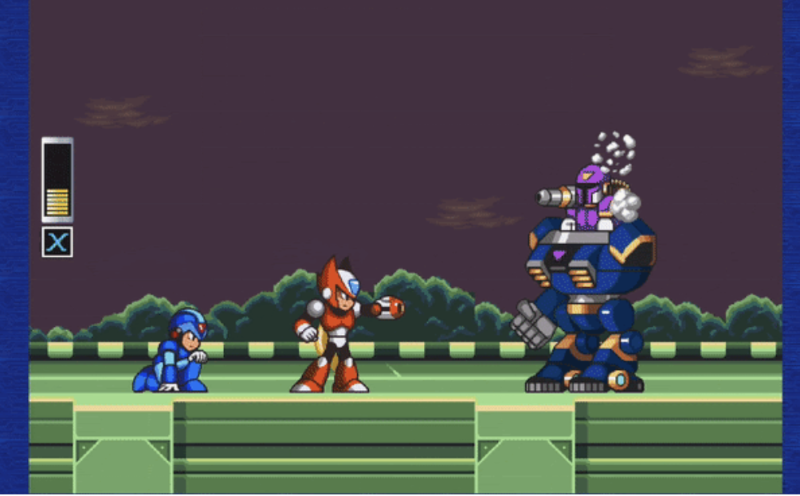
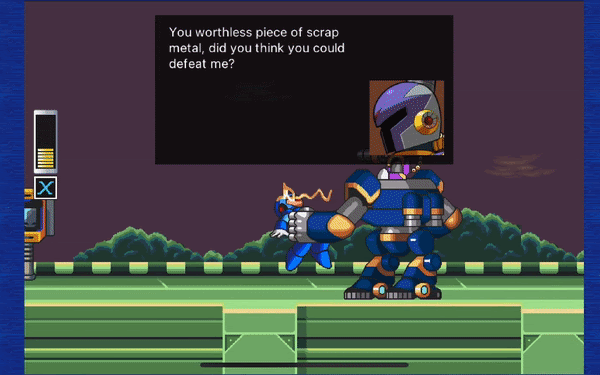
Yet instead of seeing “Game Over,” the player is rescued at the last moment by Zero, a red robot clad in sleek, Ferrari-like armor. As the player kneels before Zero, he declares, “You’ll become stronger… someday, you may even surpass me.”
This sequence powerfully illustrates intrinsic motivation, setting two clear goals for the player:
1) Become as strong as Zero
2) Defeat Vile
These goals form the game’s “win conditions” and are motivating because they directly enhance the player’s sense of competence (becoming stronger) and autonomy (choosing how to achieve it).
Crucially, the player is motivated to continue without any gamification tricks—no badges, no points. The player pursues self-determined goals, and the game provides the tools to achieve them. This alignment between product and intrinsic needs is key.
This is a principle many gamified applications fail to grasp. Instead, they treat the accumulation of badges or points as the end goal. Without support from intrinsic needs, these mechanisms become shallow, external motivators that quickly bore users.
Mastery (Mastery)
Cognition is the second key principle of game design. A player motivated by the win condition is ready to learn the game’s rules. In Mega Man X, these include control schemes (how to run and shoot) and enemy behaviors. These rules show the player how to win—by progressing along a Path to Mastery.
Mastery is central to every activity and tied to our innate need for competence. People want to improve their skills as they invest in an activity, whether learning a new sport or playing a game. And importantly, they expect mastery to be fair—progress should stem from skill and choice, not luck.
Game designers often struggle to balance difficulty—not too hard, not too easy. Well-designed games induce flow, a mental state where users are deeply absorbed in the present moment and time seems to fly.
The same applies to non-game products. Painting a landscape or playing a challenging guitar piece often induces flow as well.
Combining intrinsic motivation with a balanced path to mastery is essential for sustained engagement. As long as the rules are fair and the goal feels achievable, users who reach a certain point in a game or activity tend to stick with it. Where gamified apps often go wrong is celebrating the use of tracking systems—like levels, experience, or badges—without offering real challenges or a true path to mastery.
When you “level up” on Tripadvisor, you haven’t mastered any real skill. When you earn a Google News badge for reading an article, there’s nothing meaningful to celebrate. To be effective, these systems must measure genuine skill progression toward goals users care about intrinsically.
Feedback (Feedback)
Feedback is the third key design principle—how users learn the rules of the game/product.
The best games teach through tight, cause-and-effect loops. For example, Super Mario teaches via death and retry cycles.
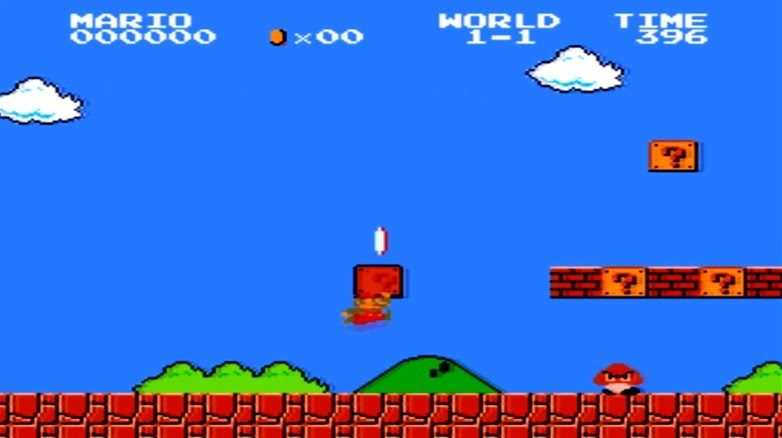
At the start of the first level, Mario immediately faces a Goomba. If touched, Mario dies and restarts the level—just three seconds back. This short, harmless loop encourages experimentation until the player discovers they can jump over or onto the Goomba.
Iterative loops also provide positive reinforcement when users take correct actions. In the animation below, Candy Crush Saga celebrates matching three candies of the same color with a spectacular explosion. The game also introduces serendipity, surprising users with unexpected results. When players chain matches, cascading effects unfold rapidly—fireworks, fish, lightning—creating delightful moments that are almost impossible to track.
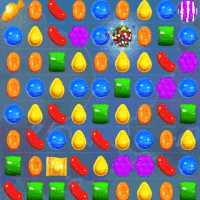
Top designers usually assume users won’t read instructions. Instead, they design products around Learning by Doing, embedding iterative feedback loops throughout the journey. These loops guide users along the path to mastery, helping them achieve their goals. Few gamified apps build feedback loops as naturally as these examples.
Game-like, Not Gamified
Over the years, the three core design principles—Motivation, Mastery, and Feedback (MMF)—have extended far beyond games. In the 1990s, IDEO, a renowned design firm, incorporated these principles into human-centered design. Today, many of the most popular consumer and enterprise apps integrate MMF into their core design.
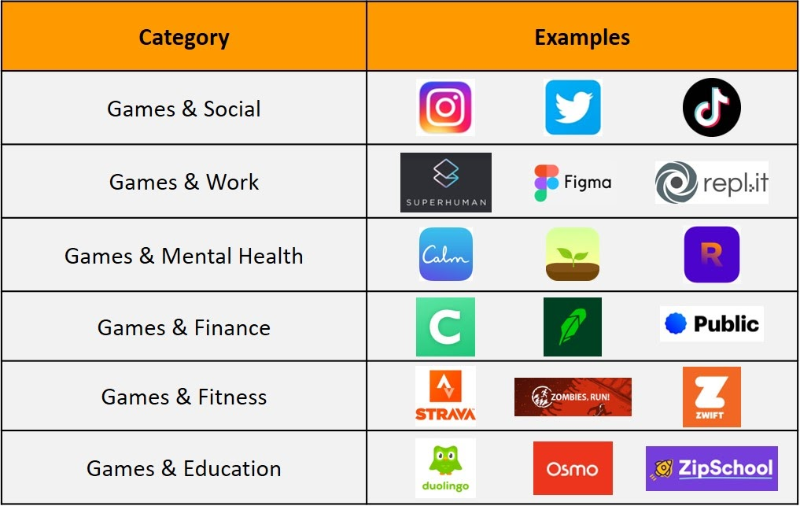
Games and Social
Many of our most popular social networks are game-like apps. Platforms like Instagram, Twitter, and TikTok tap directly into users’ intrinsic motivations. Users express themselves (autonomy) by creating content and connecting with others (relatedness). There’s even an optional path to mastery, as users strive to grow followers and receive feedback in the form of likes.
Clubhouse, a relatively newer app, further embraces serendipity in its core design. By placing users in live audio rooms, it recreates the joy of “bumping into” friends. Top Clubhouse speakers can invite others to host or help improve public speaking skills and achievements.
Notably, these social apps avoid points or badges, yet achieve strong long-term user retention—the hallmark of game-like experiences.
Games and Work
A new generation of productivity software has emerged that feels more like a game than a tool. Repl.it, a browser-based IDE, and Figma, a collaborative design tool, introduce multiplayer modes for coding and design respectively. Developers can work, comment, and learn from each other in real time. This “human element” makes these tools far more engaging than traditional solo workflows.
Superhuman, an email application, is another game-like example. Under former game designer Rahul Vohra, Superhuman sets a clear goal: inbox zero. It provides fine-tuned controls and inbox rules to help users achieve it. When users reach zero, Superhuman displays a beautiful, high-resolution nature image—different each day. At the bottom, it tracks how many consecutive days users have achieved inbox zero, reinforcing the path to mastery.

Games and Mental Health
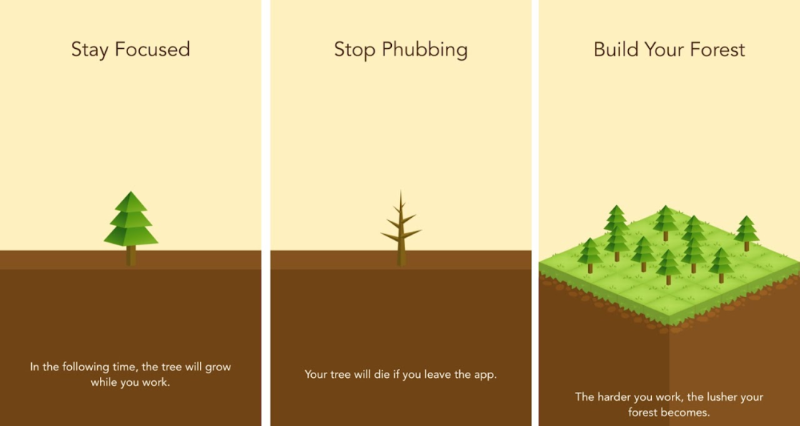
Forest is a game-like app for boosting productivity and mental well-being, with over 6 million paying users. It turns focused attention itself into a game.
Users begin by planting a virtual tree. As they work, the tree grows. If they leave the app before time ends, the tree dies.
A dead tree serves as negative visual feedback, discouraging distractions like social media or email. Successfully staying focused nurtures the tree, which users can plant in their personal forest. The lushness of the forest reflects their focus achievements and duration (another path to mastery).
Over time, Forest aims to build lasting habits centered on presence and mindfulness.
Games and Finance
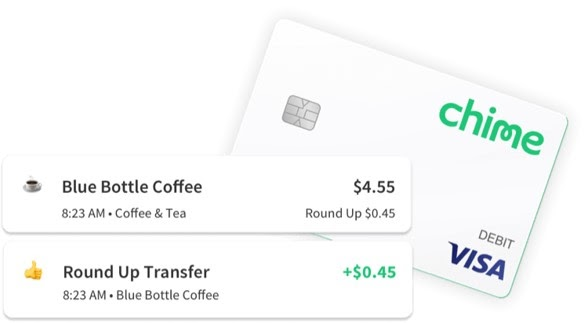
Chime Bank’s automatic savings account turns saving money into a game. Chime sets a clear goal—save money—and designs an entire process to help users achieve it.
Chime’s debit card rounds up transactions to the nearest dollar and automatically transfers the difference to a savings account. The amount saved varies per transaction and is highlighted in color on the app’s home screen, creating delightful surprise moments when users open the app.
By introducing randomness, Chime transforms the traditionally dull chore of checking bank statements into something fun.
This positive feedback loop reinforces the savings goal and helps users build good habits on the path to financial mastery. Over time, users may even feel motivated to save beyond Chime.
Games and Fitness
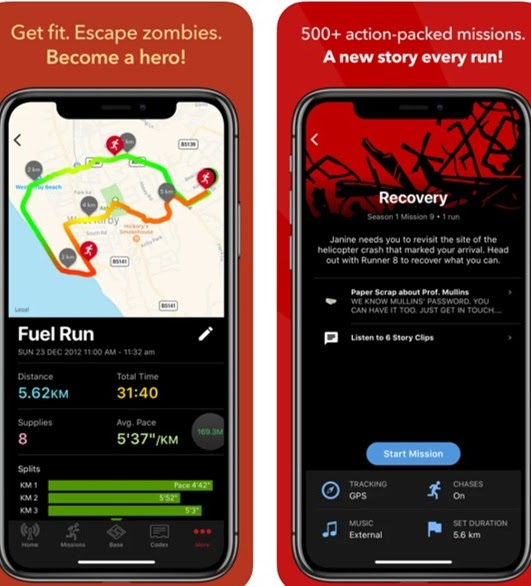
Zombies, Run! and Strava are game-like fitness apps that make running and cycling more engaging.
Zombies, Run! is an audio app where users play survivors in a zombie outbreak. It motivates running by assigning purposeful tasks—like gathering supplies or escaping zombies. Users win by running at certain speeds or distances. The app tracks every run and sends daily progress emails, celebrating milestone distances and completed missions.
Strava uses similar goal-setting and feedback loops but adds social dynamics. It maintains leaderboards for runs and rides, letting users compare progress with peers. When users run faster, they see their rank climb in real time. Leaderboards aren’t inherently motivating, but they work in Strava because racing is a natural competitive activity—users want to measure themselves against others.
Games and Education
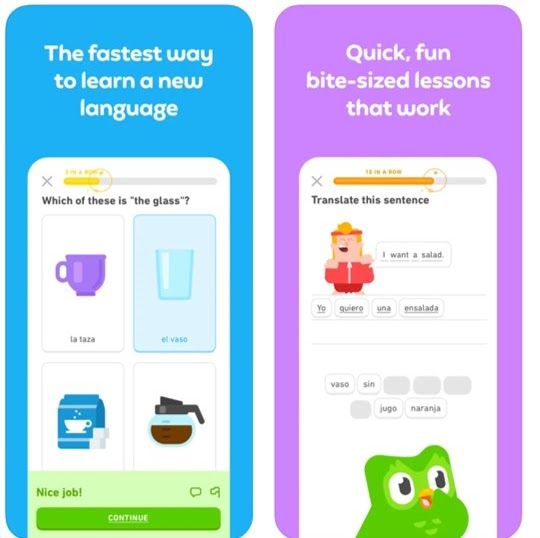
Duolingo is a popular, game-like language-learning app. It sets a clear goal—learn a language—and recommends 15-minute daily lessons to achieve mastery.
Lessons are broken into short, manageable levels, similar in length to mobile game sessions. The curriculum is carefully structured to help users enter a state of flow. Each lesson mixes new and old vocabulary based on performance. If a lesson feels too easy, new words appear; if too hard, fewer new words are introduced.
Duolingo also tracks users’ streaks—consecutive days of lessons—and reminds them to keep going. This supports autonomy while adding gentle accountability (avoiding the guilt of breaking a streak).
Looking Ahead
These three core principles are now embedded in many of today’s most successful modern apps. We may no longer call it gamification, but the fundamental ideas are more relevant than ever.
Early gamified apps prioritized short-term engagement over long-term retention, while game-like apps align closely with user needs and achieve lasting retention. At its core, the MMF framework is about user retention. When people enjoy themselves and see progress toward their goals, they form lasting habits. In this way, game-like apps have helped users move toward lifelong goals—from saving money and exercising regularly to improving workplace productivity.
Join TechFlow official community to stay tuned
Telegram:https://t.me/TechFlowDaily
X (Twitter):https://x.com/TechFlowPost
X (Twitter) EN:https://x.com/BlockFlow_News






