








A Deep Dive into Arbitrum Nitro and Its Impact on Arbitrum
TechFlow Selected TechFlow Selected
A Deep Dive into Arbitrum Nitro and Its Impact on Arbitrum
People often say that innovation is born during bear markets.
 Navigating Web3 tides with focused insights
Written by: Vaish Puri
Compiled by: TechFlow
It is often said that innovation emerges during bear markets. This summer was far from the "DeFi Summer" of 2017, yet Layer 2 solutions made significant strides—among them the widely adopted Arbitrum (an Optimistic Rollup).
Arbitrum has deployed its second-generation Optimistic Rollup: Arbitrum Nitro. Compared to traditional Optimistic Rollups, Nitro offers the network higher throughput, faster finality, and more efficient dispute resolution. This article aims to outline how Arbitrum Nitro works, the problems it solves, and how investors can position themselves optimally for potential future (but not yet announced) token airdrops.
Key Takeaways:
- The main component of Nitro is a new validator that performs interactive fraud proofs on Arbitrum via WebAssembly (WASM) code.
- Transaction fees are on average 90–95% cheaper than Ethereum.
- Arbitrum's innovation has come at the cost of decentralization. A potential solution may be following Optimism’s lead and distributing tokens via airdrop.
Overview
Arbitrum is an L2 scaling solution for Ethereum offering several unique advantages:
- Trustless Security: Built on Ethereum's security, any party can guarantee correct Layer 2 outcomes.
- Ethereum Compatibility: Capable of running unmodified EVM contracts and Ethereum transactions.
- Scalability: Achieved by offloading contract execution and storage from the mainnet, enabling significantly higher throughput.
- Lowest Costs: Designed to minimize L1 gas usage, reducing per-transaction costs.
Nitro represents the latest evolution in Arbitrum technology. It is a fully integrated L2 Optimistic Rollup system incorporating fraud proofs, sequencers, bridges, calldata compression, and more.
Why Nitro?
The primary element of Nitro is a new validator capable of performing traditional interactive fraud proofs on Arbitrum through WebAssembly (WASM) code. This means the previously used custom-designed language and compiler can now be replaced with standard languages and tools for developing and compiling the L2 Arbitrum engine.
Moreover, Nitro will greatly increase network capacity while lowering transaction costs. Previously, Arbitrum's capacity was constrained by Offchain Labs’ infrastructure. With Nitro, these limitations are relaxed, allowing for a substantial increase in throughput. Currently, Arbitrum transaction fees are already 90–95% lower than Ethereum’s, and they are expected to drop even further post-Nitro.
Technical Layer
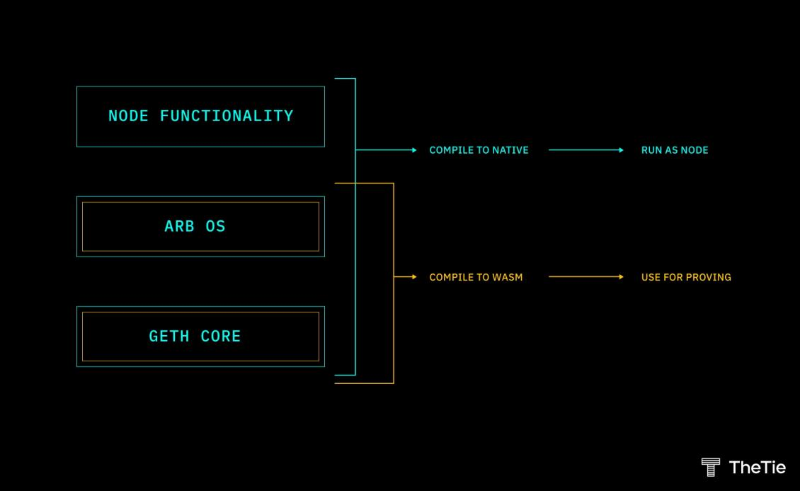
Several advancements in the Nitro stack lay the foundation. At its core: a new validator capable of classic interactive fraud proofs on Arbitrum via WASM. This allows us to use conventional programming languages and development tools instead of the custom-built language and compiler used in earlier versions of Arbitrum.
Validators and nodes run the Nitro engine compiled into native code during normal operations, switching to WASM only when fraud proofs are required. Developers at Offchain Labs successfully compiled Geth—the core Ethereum client defining the EVM standard—directly into Arbitrum.
As a result, Geth, the most popular and widely supported Ethereum client, has replaced the previous custom EVM implementation.
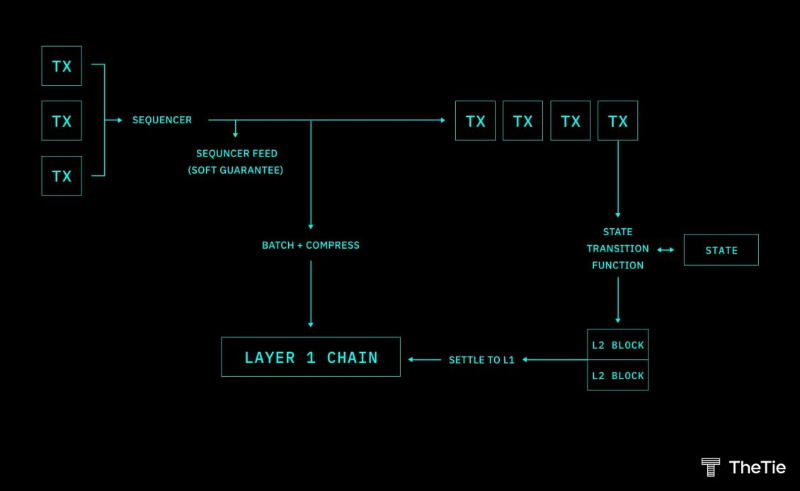
The final component of the stack is a streamlined, Go-written version of the ArbOS module, providing remaining functionalities needed to operate L2—including cross-chain communication, batch updates, and compression schemes to reduce L1 costs.
Essentially, Nitro enables Geth to run as an L2 atop Ethereum and uses the WASM-compiled core of the Geth engine to prove fraud.
When Will the Token Launch, and Why Is It Needed?
The sequencer (a computer under Arbitrum’s control) validates transactions off-chain before bundling and settling them on Ethereum, enabling the Layer 2 to process more transactions within fewer blocks.
While Nitro brings many improvements, it is by no means the full picture for Arbitrum.
Due to its innovative design, Arbitrum currently sacrifices some degree of decentralization.
Currently, only nodes authorized by Arbitrum can validate transactions, and the sequencer remains centralized.
Looking ahead, decentralized fair sequencing is conceptually straightforward. The sequencer could evolve into a committee of servers rather than a single centralized entity. As long as the majority of the committee acts honestly, transaction ordering remains fair.
In practice, however, this is challenging to implement. The first-ever decentralized fair sequencing algorithm was developed through research by a team from Cornell Tech, including Offchain Labs’ CEO and co-founder Steven Goldfeder. These ideas will serve as the foundation for Arbitrum’s long-term transition toward a decentralized, fair sequencer.
Offchain Labs claims this centralization is temporary, and many anticipate that Arbitrum will follow its competitor Optimism by launching a token to incentivize decentralization.
Concurrent with the upgrade, Arbitrum will relaunch Odyssey—an initiative allowing users to earn NFTs by engaging with the ecosystem.
In late June, Arbitrum had to pause the program temporarily due to rising transaction costs caused by a surge in new users.
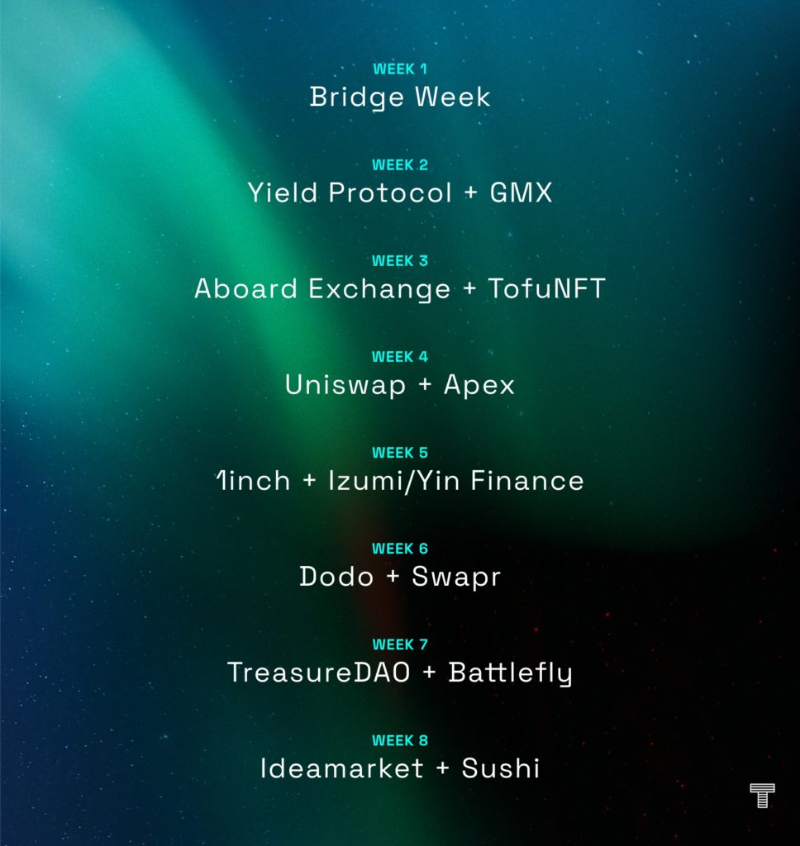
Investors can best prepare for potential token airdrops by participating in the Odyssey NFT campaign and actively engaging across the entire Arbitrum ecosystem—similar to strategies used on Optimism.
Join TechFlow official community to stay tuned
Telegram:https://t.me/TechFlowDaily
X (Twitter):https://x.com/TechFlowPost
X (Twitter) EN:https://x.com/BlockFlow_News






