









Decoding the Future of On-Chain Games: Composability, Community Governance, and Digital Identity
TechFlow Selected TechFlow Selected
Decoding the Future of On-Chain Games: Composability, Community Governance, and Digital Identity
Crypto gaming is still in its early stages. Current blockchain scalability and infrastructure fully enable the development of new types of games on-chain, opening new pathways for integration with the crypto economy and the broader decentralized ecosystem.
 Navigating Web3 tides with focused insights
Written by: Alec Chen
Compiled by: TechFlow
Introduction
Crypto gaming is still in its early stages. Today’s blockchain scalability and infrastructure fully enable building new types of games on-chain, opening new pathways for integration with the crypto economy and the broader decentralized ecosystem.
As crypto gaming matures, both players and developers will benefit from the economic models, incentive structures, and identity and coordination mechanisms inherent in decentralized economies.
On-Chain Gaming
On-chain games exemplify the paradigm shift that cryptocurrency brings to traditional gaming. Game design is driven by its constraints. Due to execution limitations imposed by gas costs, current iterations of on-chain games are typically turn-based RTS games.
0xMonaco is Paradigm's latest on-chain racing game, where players compete via smart contracts and can customize their strategies by modifying their own smart contract logic in response to opponents. By introducing multiplayer functionality, 0xMonaco adds an engaging and competitive PvP dynamic. The game has achieved significant success within the community, showcasing the potential for customization in on-chain multiplayer games.
With advances in blockchain infrastructure and scalability—such as zero-knowledge proofs and data availability layers—genres like multiplayer online battle arenas (MOBAs) and first-person shooters (FPS) can now be built entirely on-chain, unlocking large-scale on-chain multiplayer experiences. Bringing these highly interactive games on-chain will further increase mainstream appeal, drawing broader audiences into existing on-chain gaming ecosystems and bringing a new generation of young gamers into cryptocurrency.
Customizability
Games built on-chain offer transparency, strong immutability guarantees, and powerful customizability. By transforming core gameplay and features into hyperstructures, developers can prioritize composability and customization, adopting a decentralized, community-first approach to development and growth.
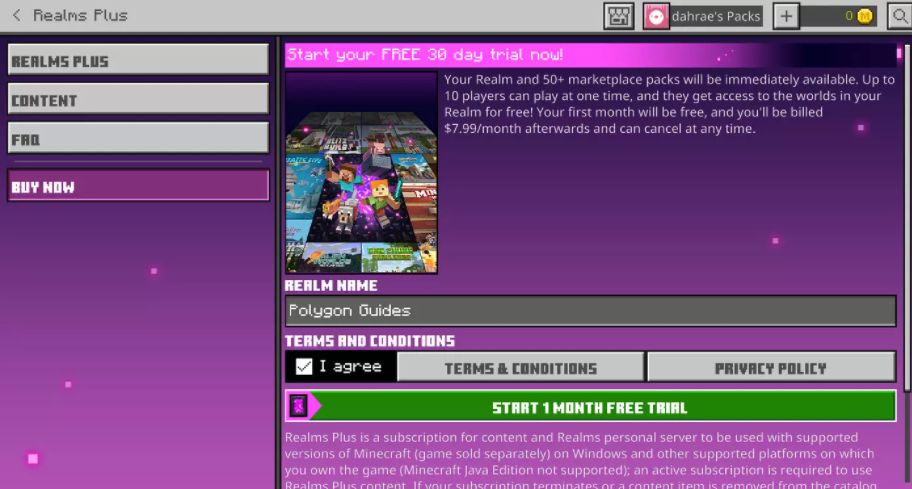
In traditional gaming, mods provide players with unique ways to experience content beyond the core game. User-generated content (UGC) drives massive revenue for games like Roblox and Minecraft, which outsource community management and development to independent creators—opening up an exciting new model for game studios.
With on-chain games, instead of game developers maintaining an "official" game server, studios can simply develop the underlying infrastructure (e.g., basic smart contracts defining core mechanics) and outsource hosting and further development to the community. Independent creators can build upon the original game protocol by hosting private servers with custom skins, gameplay rules, and assets, fully unleashing player creativity. Communities can then deploy native tokens within their private servers for governance and in-game purchases.
By analogy to blockchain infrastructure, private servers can be seen as Rollups built atop a Layer 1 base game, each with its own token and ecosystem.
Just as Rollups sharing a common base layer enjoy inherent composability and interoperability, on-chain games allow player assets and identities to interoperate across previously fragmented communities.
For example, in Minecraft, each server has its own unique assets, players, and community, with no way to share or communicate across servers. Moving games on-chain enables cross-server communication, allowing players to transfer their assets and progress from one realm to another.
The open-source nature of protocols and cryptocurrencies fosters this coordinated relationship, while tokenization allows communities to benefit from the growth of the broader gaming ecosystem.
Governance and Community
Bringing games on-chain also provides communities with crypto-native governance mechanisms.
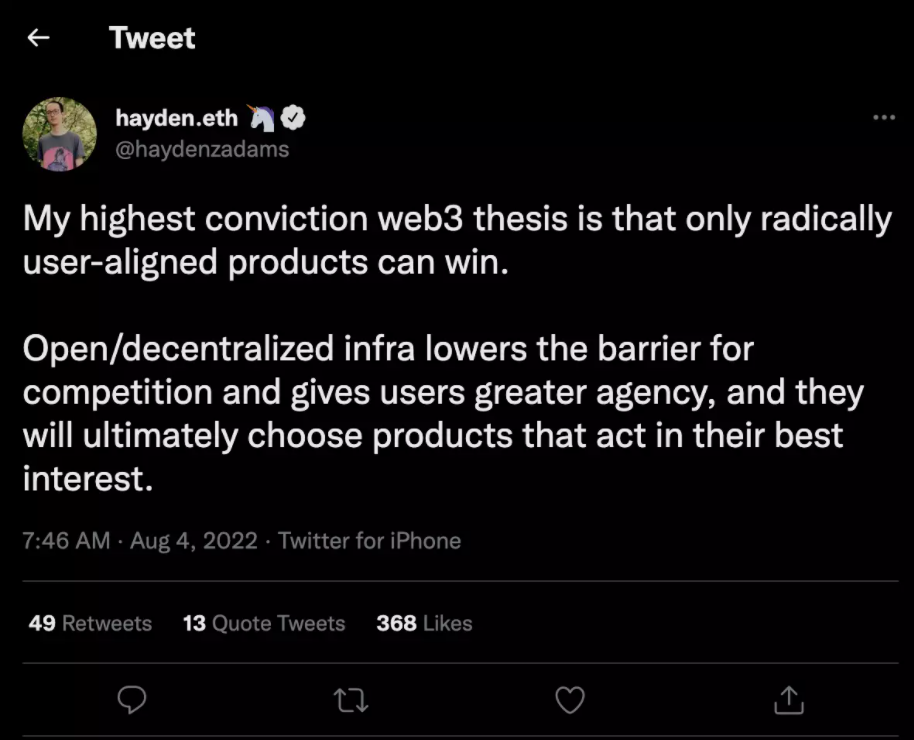
Decentralized governance empowers players to participate in and influence game development: users can vote on and propose changes to game balance and mechanics through governance tokens.
Moreover, since games are built on open blockchains, this offers players verifiable on-chain data and asset ownership. Developers aiming for a community-first approach can foster user engagement through on-chain integrations, leveraging cryptocurrency to unify assets, communities, and governance.
On-chain gaming also opens the possibility of making community ownership a core game mechanic.
Examples might include games where balance is regulated by the community, enabling players to use crypto governance to modify the smart contracts governing core game mechanics.
Another intriguing possibility is unlocking utility for native tokens within games. Traditionally, players in multiplayer games organize themselves into collectives—"guilds"—to achieve shared goals. In on-chain games, guilds are replaced by DAOs, which are crypto-native and inherently more transparent.
Building these integrations on crypto also benefits developers.
Compared to traditional games, where developers must invest significant engineering effort to implement governance systems, in crypto they can bootstrap guild systems simply by plugging into existing crypto primitives—using tokens for membership and DAO tooling for governance. This unlocks greater expressiveness and customizability for DAO guilds, unbound by game designers’ limitations.
Identity and Social Layer
Cryptocurrency also provides gamers with a powerful, composable digital identity.
For instance, on Steam, players can customize their profiles and self-organize into communities based on shared interests or games. Bringing such a system on-chain allows crypto gamers to build reputations under pseudonyms while being able to port and leverage their identities and social graphs across games outside any single developer or publisher ecosystem. This has profound implications for reputation-based services.
As users accumulate reputation pseudonymously in online games or broader digital communities, these on-chain metrics and gaming identities can be linked across contexts as measures of authority and credibility.
Crypto Wallets
Traditional crypto wallets are designed for general-purpose use and lack many advanced features gamers expect in gaming applications.A particularly important gap in existing wallets is the absence of discovery, identity, and community primitives tailored for gaming.
Social components are crucial to the success of multiplayer games: players want to see what games their friends are playing, form communities around shared interests, and discover new games.
Integration of crypto games via traditional channels appears unlikely: due to the traditional gaming industry’s resistance to cryptocurrency—for example, Valve banning all NFTs and crypto games on its platform—it seems necessary to build an equivalent solution natively for crypto.
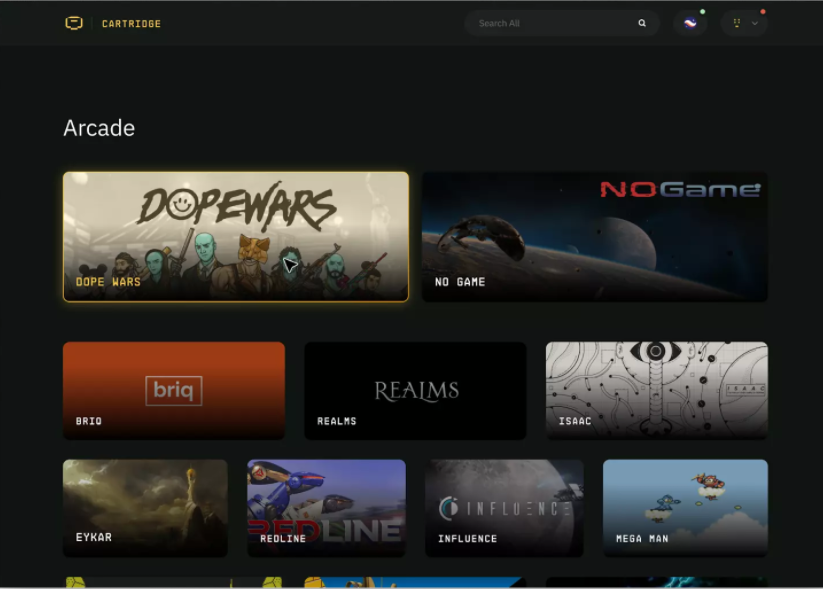
One team working to bridge this gap is Cartridge—the “Steam” for crypto gaming.
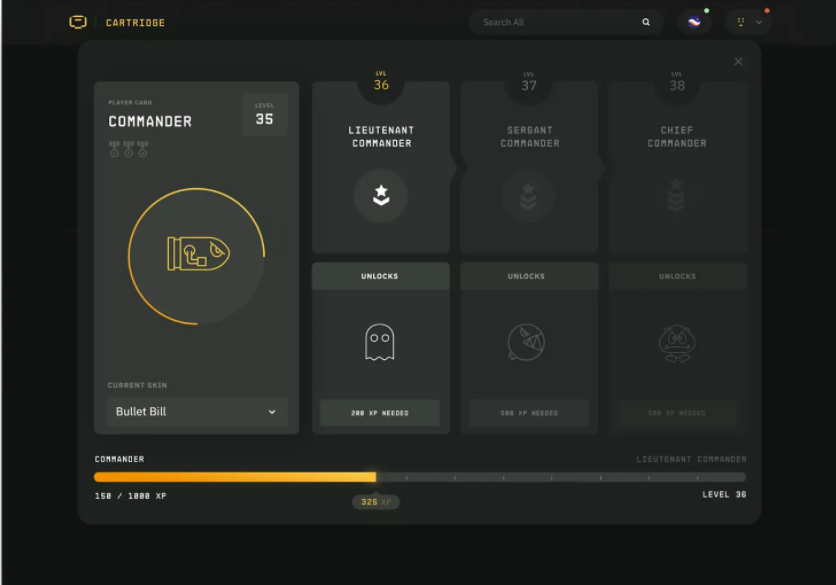
Cartridge will allow users to browse and launch curated crypto games, earn rewards from quests, level up their accounts, and interact with friends and communities. Game-specific crypto wallets provide missing discovery and social functionalities for blockchain gamers: platforms like Cartridge serve as infrastructure connecting the composability advantages of crypto gaming beyond the application layer.
Conclusion
Platforms like Steam, while offering composability and ecosystems for games, can unilaterally impose restrictions on players—often against community consensus.
Decentralized alternatives like Cartridge allow users to benefit from the core innovations of decentralized gaming—identity, governance, and social coordination—while preserving free market principles.
Ironically, the core innovation of building games on decentralization has led to centralization of assets, identities, and communities within gaming ecosystems.
On-chain gaming enables composability by default and unlocks new game mechanics and paradigms for both developers and users.
But we must not forget the purpose of increasing throughput and improving blockchain infrastructure: to unleash the potential for building new applications in the decentralized domain.
If we believe the next billion users will enter crypto through gaming, then we must create crypto games with broad mainstream appeal, while delivering exceptional user experiences through carefully designed incentive structures, sustainable economies, and robust platforms.
Join TechFlow official community to stay tuned
Telegram:https://t.me/TechFlowDaily
X (Twitter):https://x.com/TechFlowPost
X (Twitter) EN:https://x.com/BlockFlow_News






