








Understanding Y2kFinance: A Stable Asset Insurance Protocol on Arbitrum
TechFlow Selected TechFlow Selected
Understanding Y2kFinance: A Stable Asset Insurance Protocol on Arbitrum
Why Y2K might shine on Arbitrum?
 Navigating Web3 tides with focused insights
Written by: Thor Hartvigsen
Compiled by: TechFlow
Y2kFinance, a protocol launching soon on Arbitrum, can help you hedge or speculate on stablecoin de-peg events. This article provides an overview of Y2k and explains why I believe it could shine brightly on Arbitrum.
Y2kFinance believes that crypto investors are fundamentally misjudging the risk profile of "stable" assets.
We’ve already seen several once-“stable” assets like UST, STETH, and TOMB become de-pegged—only some of which managed to return to parity.
In short, with Y2K, DeFi users can:
1) Hedge their exposure to stable assets by purchasing peg insurance.
2) Bet on stable assets remaining pegged by depositing collateral and earning yield.
Let’s examine the first product.
Earthquake
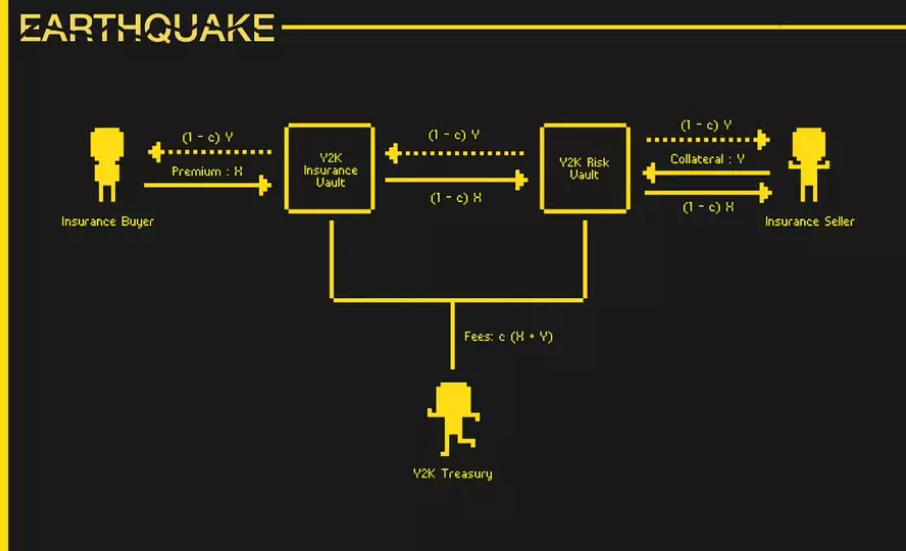
Here, vaults are created to represent a pegged asset (e.g., FRAX), monitoring its price over a set period. For example, if I hold FRAX, I can choose to hedge by spending ETH to buy insurance. If I believe FRAX will stay pegged, I can deposit ETH as collateral to earn yield.
Suppose a vault tracks FRAX for 100 days with a strike price of $0.97. If FRAX drops below $0.97: the insurance buyer receives the ETH collateral deposited by the counterparty speculator, but they do not get back the ETH used to purchase the insurance.
If FRAX remains pegged throughout: The speculator gets back their collateral plus the ETH paid for the insurance. If FRAX de-pegs: The speculator still receives the ETH paid for the insurance premium, but forfeits their collateral upon settlement.
Where else can speculators earn yield during this period?
1) Part of the collateral is deployed into money markets (via governance voting).
2) Token emissions (size depends on the amount of insurance purchased in the vault).
All cash flows settle at the end of the period, with asset prices sourced via Chainlink oracles. Throughout the vault's duration, speculators must lock their collateral until maturity.
This leads us to the next product:
Wildfire
Speculators receive a semi-fungible token representing their share of collateral in the vault, which can be traded—increasing liquidity and reducing capital inefficiency from locked collateral.
Users can provide liquidity by purchasing these tokens and, in return, receive a portion of proceeds from liquidation events. However, details about this mechanism have not yet been fully disclosed by the team—DYOR.
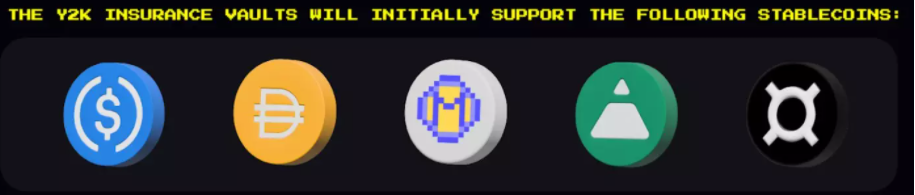
The following tokens will be available in Y2K vaults:
- $DAI
- $MIM
- $USDC
- $FEI
- $FRAX
Additional stablecoins will be added in the future through governance.
Y2K also plans to launch its own utility token with the following use cases:
- Governance
- veY2K
- Fee revenue (5% from risky collateral yield, 0.25% from insurance premiums and collateral deposits).
Join TechFlow official community to stay tuned
Telegram:https://t.me/TechFlowDaily
X (Twitter):https://x.com/TechFlowPost
X (Twitter) EN:https://x.com/BlockFlow_News
 Thor Hartvigsen






