








DeFi "New Narrative"? A Guide to DeFi Protocols with Real Yield
TechFlow Selected TechFlow Selected
DeFi "New Narrative"? A Guide to DeFi Protocols with Real Yield
DeFi is brewing a hot new narrative called "real yield," where protocols pay users returns based on actual revenue generation.
 Navigating Web3 tides with focused insights
Written by: Miles Deutscher
Translated by: TechFlow intern
DeFi is brewing a hot new narrative called "real yield," where protocols pay users returns based on actual revenue generation. So, I've handpicked several projects in this growing sector to explore how they could become pillars in the next cycle.
Real yield means earning returns from generating "real" income, rather than from token emissions. Real yield operates reflexively: more revenue = higher payouts to users, and vice versa.
Therefore, betting on "real yield" projects becomes a bet on a project's ability to: a) acquire new users, and b) increase revenue over time to reward token holders.
But before making any picks, I believe it’s most important to first understand where this narrative comes from.
Let’s go back to 2021, when the most common form of user acquisition was offering generous APRs to attract more TVL. Examples of DeFi protocols include $TIME, $SUNNY, $AXS, $ANC...
Almost all DeFi protocols in 2021 used aggressive token inflation models to quickly attract liquidity. Why? Because the race had already begun—retail interest and greed reached unprecedented levels. Just like investors, projects felt FOMO and didn’t want to miss out.
The problem is, this model is unsustainable. Projects can only offer artificial yields for so long before being forced to shift toward sustainable models. Once these artificial incentives for deposits were removed, many DeFi protocols suffered varying degrees of collapse.
This also caused significant losses for many investors, with LUNA and UST being the most extreme cases. PTSD and the subsequent DeFi crash led to massive retail attrition, exposing key weaknesses in today’s DeFi landscape.
a) Inflation "fills" TVL by incentivizing liquidity; once incentives expire, the "real" value across many chains gets exposed.
b) Many protocols lack well-designed underlying value accrual mechanisms.
What’s the result? A sharp shift from "fake" to "real" yield protocols as markets turn risk-off. Evidence of this shift includes recent growth in derivative DEXs and ecosystem recovery driven by expectations around the ETH merge.
So I’ve picked my favorite "real yield" projects. I’ll briefly introduce what they do, how they generate revenue, and why I think they have potential.
The first category of tokens belongs to the "decentralized perpetual exchange" segment. They offer leveraged trading with deep liquidity and low fees, while combining all the positive aspects of DEXs and CEXs:
-
No KYC
-
No counterparty risk
-
Security
-
Sovereignty
So, first up on my list is $DYDX. According to TokenTerminal, it's the largest and most actively used perpetual DEX, generating over $321 million in annualized protocol revenue, placing it among the top three dApps overall.
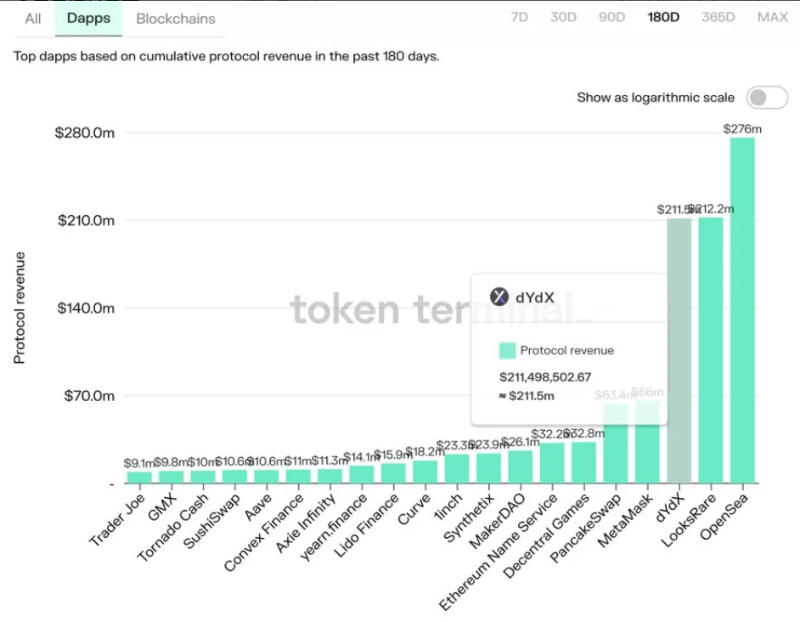
$DYDX currently retains this revenue (and does not directly distribute to token holders), but they plan to change this model with V4 launching by the end of 2022.
So for now, DYDX doesn’t have the best tokenomics among its competitors—but...
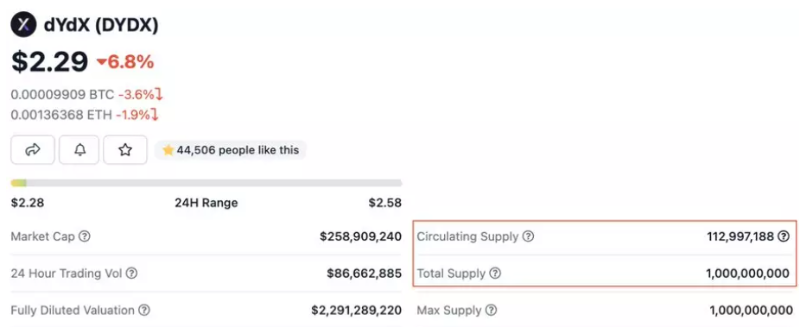
I believe Dydx’s biggest upside comes from launching its own chain on Cosmos—this flexibility gives them a unique advantage over other DEXs and is one reason I’m bullish long-term.
$GMX is the largest project on Arbitrum ($250M TVL) and ranks seventh on $AVAX ($90M).
GMX is built on a unique multi-asset pool that earns fees for liquidity providers, enabling 30x leveraged trading on spot assets with low slippage.
$GMX arguably has the best tokenomics of any perpetual DEX. Staking GMX tokens entitles you to 30% of platform fees paid in $ETH, along with an esGMX model designed to incentivize "sticky" liquidity.

$GNS operates on $MATIC, and its flagship product "gTrade" recently surpassed $15 billion in trading volume. It boasts a sleek user interface, strong tokenomics, and a relatively "modest" market cap of $60 million compared to peers.

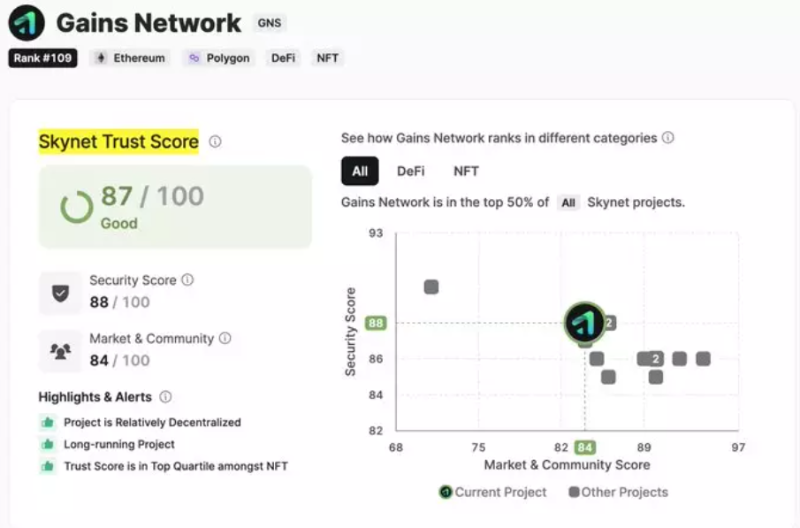
CertiK gave $GNS a high security rating with a trust score of 87 and a community score of 84. Given recent DeFi exploits, it’s always good to know a project is trustworthy before investing.
A friend modeled $GNS price based on its revenue structure. If daily trading volume reaches $1 billion, $GNS could theoretically be worth around $100 (currently ~$2.50).
I believe all three DEXs above are solid long-term assets. This comparison should help you understand their differences and inform your capital allocation strategy.
$SNX is a decentralized synthetic asset protocol built on $ETH and $OP. This means you can trade real-world assets such as gold, silver, cryptocurrencies, euros, oil, and stocks.
You can stake $SNX to earn $sUSD and $SNX, with yields generated via protocol fees (from minting/burning synthetic assets). $SNX currently generates $100 million in annualized protocol revenue, ranking as the 9th highest-earning dApp on TokenTerminal.
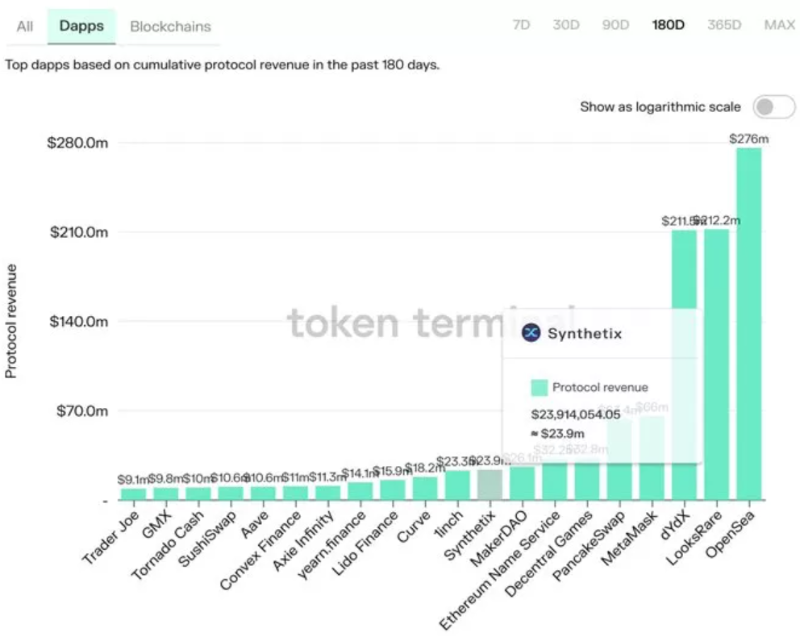
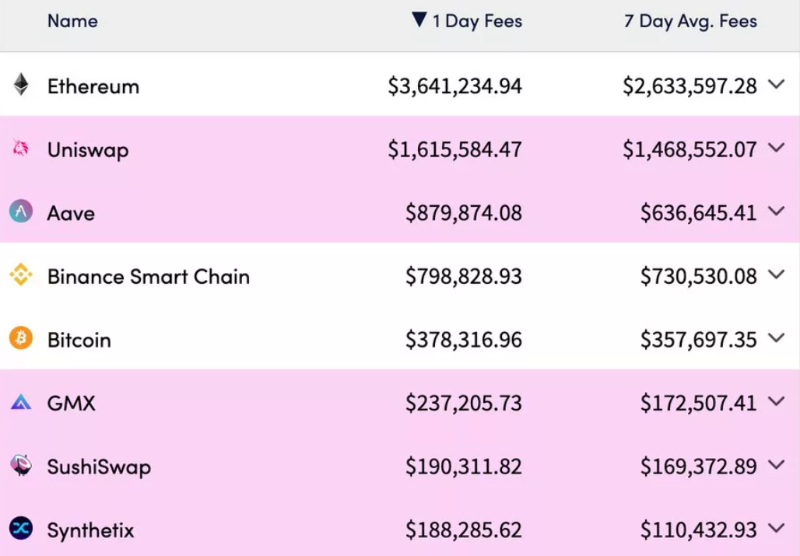
We can also observe that both $SNX and $GMX rank in the top 10 for fees, exceeding $100 million in average weekly fees across the entire crypto space.
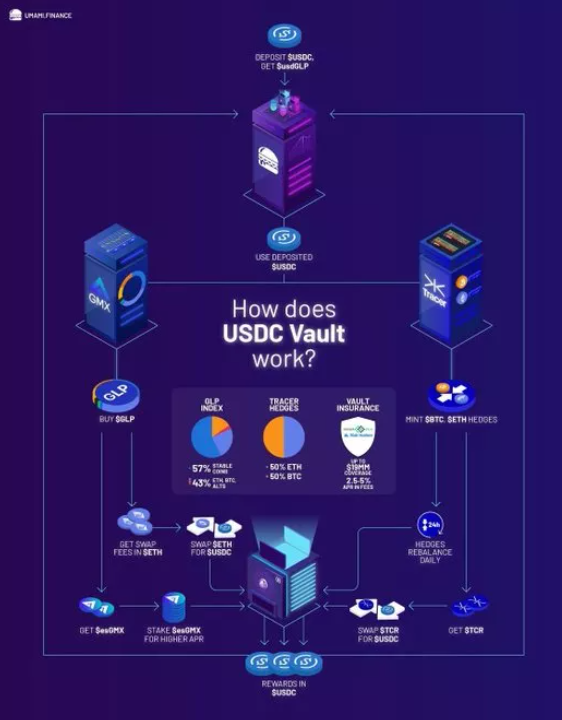
$UMAMI’s biggest innovation is its USDC vault, which pays a sustainable 20% yield generated from minting GLP and collecting trading fees. They also plan to launch $ETH and $BTC vaults soon.
A few caveats
I think it’s a misconception that "real yield" is objectively better. Inflation served its purpose—many protocols successfully attracted large numbers of new users by increasing APR through token emissions and built great communities.
Many tokens that started with aggressive token programs are gradually shifting toward fee-based models. Ultimately, only protocols generating real revenue will succeed—hype and inflation only benefit short-term price action.
Thus, although this list may represent what’s currently considered "real yield," many DeFi protocols will transition into this model. Some will fail, exposing fragile tokenomics; others will succeed by adapting to the new architecture.
Nevertheless, "real yield" increasingly looks like the future of DeFi. Projects that successfully implement features driving adoption and revenue generation will grow rapidly in the coming years. As the sector matures, investors will favor protocols that generate real and sustainable income, especially under volatile market conditions. For institutional DeFi, longevity and risk-adjusted growth are becoming the next critical considerations.
Join TechFlow official community to stay tuned
Telegram:https://t.me/TechFlowDaily
X (Twitter):https://x.com/TechFlowPost
X (Twitter) EN:https://x.com/BlockFlow_News
 Miles Deutscher






