Bankless: 5 narrative themes that could become bull market catalysts
TechFlow Selected TechFlow Selected
Bankless: 5 narrative themes that could become bull market catalysts
Why will decentralized finance (DeFi) drive the arrival of the next bull market?
 Navigating Web3 tides with focused insights
Author: Jean-Paul Faraj
Translation: TechFlow intern
For newcomers to cryptocurrency, watching prices plummet can be painful. But even for veterans experiencing their second bear market, seeing life-changing money dwindle isn't easy—especially since we're here for the technology. Bear markets are often called the time when you can make real money. Why? Because opportunities to buy into projects at extremely low prices vastly outnumber actual project activity, development, and utility across the space. Picking the right ones isn't easy, but the opportunity is clear.
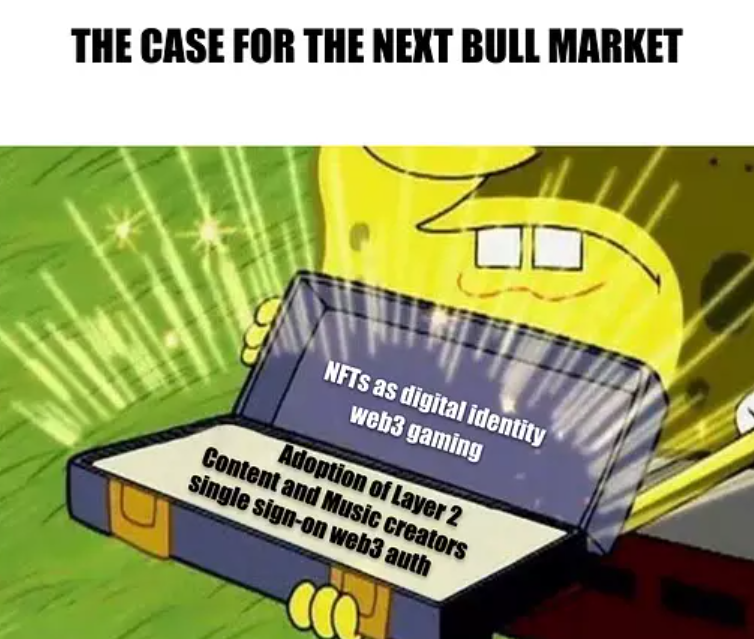
This article isn't a get-rich-quick guide, but if you spend this bear market learning and observing, you’re likely to make serious gains in the next bull run. This piece outlines surface-level trends in the crypto market and explores which narrative themes may gain traction in the next major bull cycle.
1. L2 Adoption
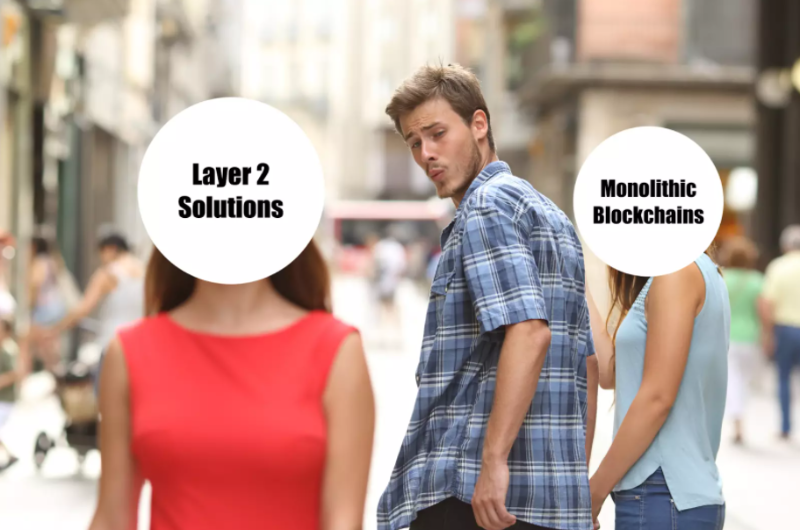
In blockchain, there's a clear push toward scalability and increased transaction throughput. During the last bull run, we saw massive interest and speculation around projects like Solana and other "Alt L1s." This was largely because Ethereum wasn’t yet capable of handling the bull market’s demand for block space.
However, many of these blockchains, despite boasting high speed and throughput, frustrated users with frequent downtime or poor performance during peak demand. Ultimately, many of these "Alt L1s" failed because they were monolithic rather than modular—they tried to deliver security, decentralization, and throughput all within a single product.
This simply doesn’t work at scale—an opinion that’s biased but well-supported. So what’s the solution that offers high throughput, strong security, and high decentralization?
Layer 2 solutions provide the ability to increase throughput, thereby enhancing blockchain scalability while inheriting the security of the base layer. Solutions like StarkNet and zkSync enable “batching,” bundling thousands of transactions into one and posting it to the main chain (Ethereum). This reduces per-transaction costs by several orders of magnitude and increases the speed and total volume of transactions the chain can process.
So why is this so powerful, and why should you care? For this transformative technology to permeate the mainstream and become the backbone of the new internet, it needs to be fast, secure, and decentralized.
Layer 2 solutions solve the speed issue, while the main chain provides security.
This will allow a wide range of use cases to operate according to the standards needed for global adoption. Examples include video games processing thousands of microtransactions per second, instant and affordable media sharing, and financial transactions completed in the blink of an eye.
Without Layer 2 solutions, it’s likely that the full potential of blockchain won’t be realized for a long time. If we want mass adoption, we need a layer that enables seamless transactions at scale—Layer 2 delivers exactly that core requirement.
Currently, Layer 2 solutions such as zkSync, Starknet, Polygon Hermez, Optimism, and Arbitrum are under active development and have made significant progress, quickly approaching the baseline requirements for widespread adoption.
2. Maturation of DeFi and NFTs
The previous bull run was largely driven by two things: DeFi and NFTs. Both are incredibly powerful tools, yet both remain in their infancy—with NFTs even earlier than DeFi.
With the market calm, now is the time for these products to refine their capabilities and retest product-market fit.
So why might decentralized finance catalyze the next bull run?
DeFi is an open financial system that allows anyone, anywhere, regardless of capital size, to participate.
The existing centralized financial system (CeFi) is a walled garden controlled by banks and governments. They decide who gets in and who receives how much. Even if you meet all their criteria, they can still easily shut you out—and often do.
DeFi lending protocols and services bypass this permissioned gatekeeping, offering the same financial services banks currently provide—but accessible to everyone.
It’s 100% transparent and trustless—anyone can view each other’s positions (via their addresses) and assess the financial health of lenders/borrowers based on their own criteria. This opens a world of financial innovation, introducing new utilities and new opportunities for people to earn or borrow money.
But what about NFTs? Aren’t they just JPEGs? Why would they trigger the next bull run?
You couldn’t be more wrong. Non-fungible tokens (NFTs) are the Trojan horse into a world of true digital ownership. During the last bull market, monkey pictures and pixelated punks ruled the space. That was merely the beginning—a simple demonstration of digital ownership’s fundamental utility.
When you buy a shirt from a physical store, it’s yours—you own that specific shirt, and you have a receipt to prove it. It’s “non-counterfeitable” in every sense.
But until NFTs, this was impossible in the digital realm. Sure, you could buy collectibles X, Y, or Z online, but they were stored on servers rented by the company you bought them from. With NFTs, the assets live in wallets you control.
The number of industries this technology could—and likely will—disrupt is vast, spanning gaming, music, mortgages, and lending. Its scope is unimaginable, and many other products and solutions in the next bull run will rely on this key technology.
In short, pay attention to innovation within the NFT space and the teams striving to unlock its full potential.
3. Web3 Login
Web3 login enables using a single password and account across millions of new websites and existing major news outlets and platforms, without attaching personal details.
Another major topic constantly making headlines is privacy and data. Companies like Meta, Amazon, and Google practically own your identity. They know everything about you—your passwords, birth date, SSN, and every move you make online.
They claim it’s secure, but how many times has your data been breached? None of us know, and we can’t stop it because there’s no better alternative. The big data market is worth billions—that’s how these companies profit.
These multi-trillion-dollar companies are in the business of selling you—not just random data about a 25-year-old white woman living in Ohio, but your name, email, location, purchase history, and more.
Web3 login solves this. It allows companies to collect data, understand your preferences, and serve personalized content they think you’ll like—all while keeping your identity secure.
But they only access this data if you permit it. In my view, the future looks like this: create a Web3 wallet/identity and link it to any hundred accounts you have. When visiting any site, click a button—“Log in with Web3 Wallet”—and you’re in. One password to rule them all, protecting your data and identity while making web navigation easier.
4. Rise of GameFi
Currently, in traditional gaming environments, players either pay upfront, subscribe monthly, or buy assets in free-to-play games.
Yet no matter the game, every action taken and every item/character earned does not belong to the player. It’s stored by the game, and if they quit or stop paying, it remains trapped on servers beyond their control. Most game studios enforce strict terms of service prohibiting any form of “real-money trading.”
This means all the time invested and value added to the game universe by players doesn’t belong to them. The current system prevents players from benefiting—if they try to circumvent rules, they face permanent bans.
This market is ripe for disruption. Players investing time and money into NFT-driven games will create opportunities for both games and gamers.
Today, the gaming industry generates more revenue than all other media industries combined, yet until now, players have been excluded from this equation. Web3 gaming isn’t fantasy—it’s a reality already taking shape.
Unfortunately, fully playable Web3 games are still scarce. But during this bear market, watch for those that are actually playable and have strong communities—these are the ones worth exploring.
A few games I’m closely following:
-
Influence: A space strategy MMO;
-
Parallel: A sci-fi card game;
-
Loot Realms: A large-scale on-chain multiplayer game;
-
Guild of Guardians: A mobile RPG;
5. Music NFTs
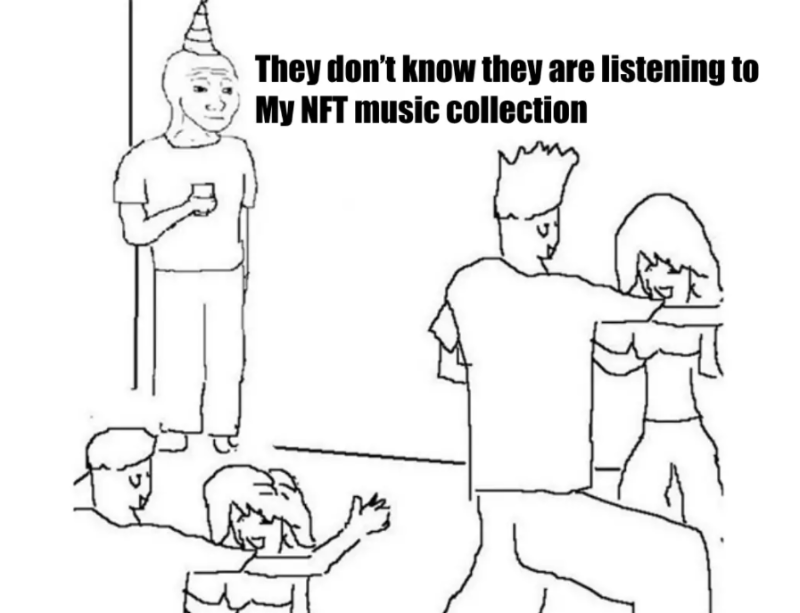
Today, it’s harder than ever for artists to survive—even though the ability to distribute music has never been greater. Why? Simply put: streaming services and record labels take most of the money, leaving artists with scraps.
As an artist, you must be among the lucky few chosen by record labels or favored by social media algorithms to earn content income. And even with creator revenue, you need to be at the top tier to sustain a living.
In Web3, artists can monetize music more effectively through new revenue streams, stronger community ties, and fuller ownership of their work.
NFT monetization can happen through several paths:
-
Selling exclusive membership NFTs that give fans access to the artist—VIP shows, limited-edition merchandise, face-to-face meetings, etc.
-
Issuing revenue-sharing NFTs that entitle holders to a share of future sales, allowing artists to work freely without the heavy bureaucracy tied to record labels and streaming platforms.
Ownership of Their Music
Artists’ ownership of their music is the crux of today’s market problem. Record labels capture most profits, followed by streaming platforms, leaving artists with minimal returns.
With NFTs and Web3, artists can release music directly as NFTs—whether singles or full albums—allowing fans to buy directly from them instead of through intermediaries.
A Closer Community
With Web3 authentication and NFTs, artists can sustain themselves through smaller fan bases. You don’t need a global audience to fund a world tour—you only need 100 loyal fans.
Gramatik is a prime example—he’s been a long-time advocate of crypto and blockchain, empowering artists to own their catalogs and create freely.
Empowering creators to produce content on their own terms and platforms, while owning their audience relationships.
In Web3, artists and creators are no longer bound by the platforms where they built their audience, nor reliant solely on ads for income.
Offering followers a basic—or even free—NFT grants them access to private websites, content, forums, and communities. This allows creators to stay closer to their audience, bring followers to new platforms seamlessly, and unlock unique Web3 monetization opportunities.
In Summary
The road ahead is long—Web3 is still early. Significant development and user experience design are required to reach the next level. Still, several critical elements must support this evolving ecosystem:
-
Layer 2 solutions must mature, unlocking the base layer’s capacity for far more transactions to support mass adoption.
-
Successful Ethereum merge.
-
Improved user experience to onboard new users, matching the Web2 experience we enjoy today.
We don’t know when the next bull run will arrive, but we’re working our way out of the bear market and can expect the next cycle to offer greater utility and broader adoption.
Join TechFlow official community to stay tuned
Telegram:https://t.me/TechFlowDaily
X (Twitter):https://x.com/TechFlowPost
X (Twitter) EN:https://x.com/BlockFlow_News