








Comparison During Economic Downturns: Which Historical Period Is Today Most Similar To?
TechFlow Selected TechFlow Selected
Comparison During Economic Downturns: Which Historical Period Is Today Most Similar To?
How is this time different from the most recent five downturns in history?
 Navigating Web3 tides with focused insights
Written by: Miles Deutscher
Translated by: TechFlow intern
The U.S. is now officially in a technical recession, following negative GDP growth in the second quarter: -0.9%. Let's take a look at the past five recessions and how this one might be different.
A recession is defined as “a temporary period of economic decline during which trade and industrial activity are reduced, typically identified by two consecutive quarters of negative GDP growth.”
There are two types of economic recessions:
-
Recession: A prolonged period of economic decline.
-
Technical recession: Back-to-back declines in GDP over two consecutive quarters.
Based on today’s GDP data, the U.S. is now in a "technical recession."
1. 1980–1982
There were two recessions during this period, with the worst occurring in 1982.
• Duration: 22 months total
• S&P 500 performance: -25%
• Recovery: 15 months
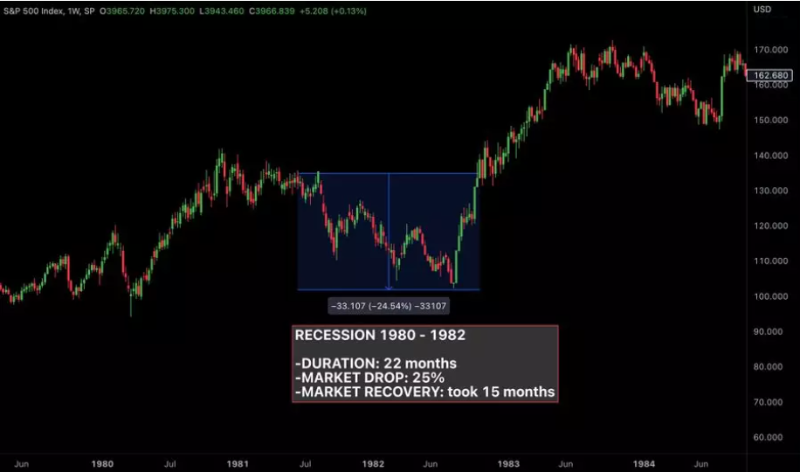
This recession was caused by the Federal Reserve raising interest rates to combat inflation. High interest rates put pressure on borrowing-dependent sectors such as manufacturing and construction, triggering the downturn. This sounds very similar to the current situation.
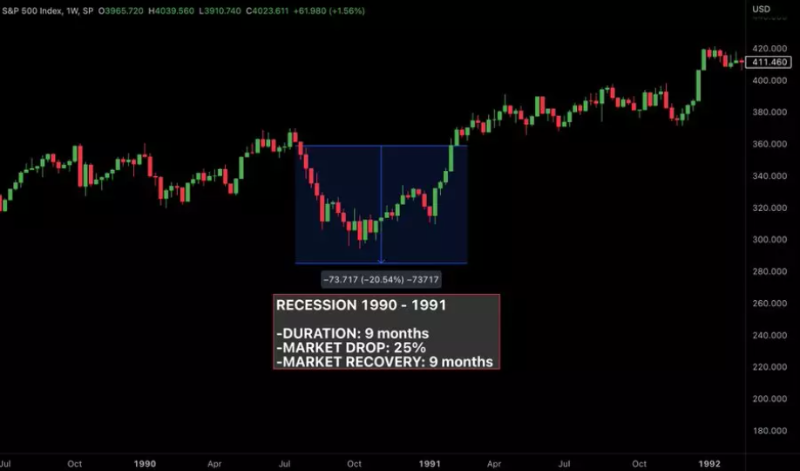
2. 1990–1991
This was considered a "lightning" recession, followed by a sharp V-shaped recovery (similar to the 2020 COVID crash):
• Duration: 9 months
• S&P 500 performance: -25%
• Recovery: 9 months
3. 2001 (Dot-com Bubble)
A tech stock boom in the U.S. during the 1990s led to massive overvaluation and a bubble that eventually burst in 2001.
• Duration: 8 months
• Nasdaq performance: -71%
• Recovery: 14 years (S&P 500: 7 years)
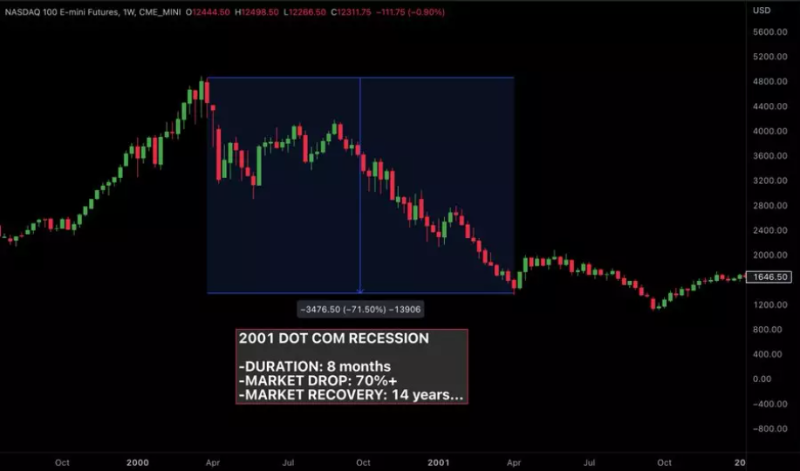
The 2001 crash was severe—the S&P 500 and Nasdaq took 7 and 14 years, respectively, to recover. Some commentators have compared the high valuations in cryptocurrency to late-1990s tech stocks.
4. 2008 (Great Recession)
One of the worst financial collapses in history, triggered by the subprime mortgage crisis beginning in 2006.
• Duration: 18 months
• S&P 500 performance: -55%
• Recovery: 4 years
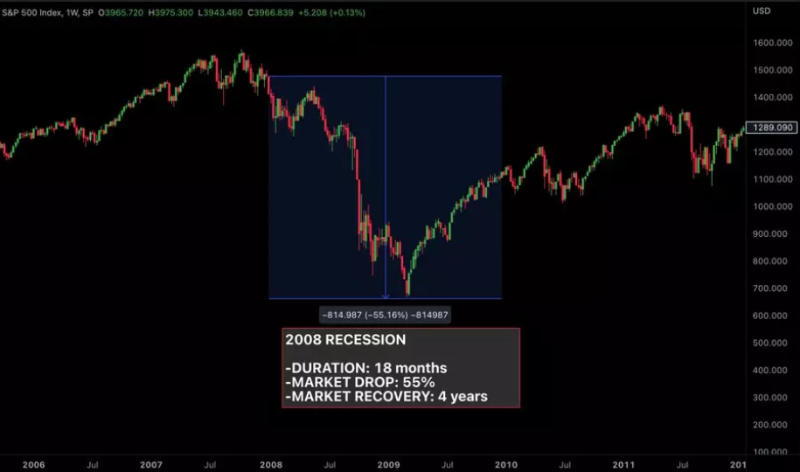
Banks, hedge funds, and insurance companies faced severe liquidity issues. In October 2008, the U.S. Congress approved a $700 billion bank bailout, followed by a $787 billion economic stimulus package to prevent a global depression.
5. 2020 (COVID Crisis)
A brief crash triggered by a global pandemic virus, but unprecedented monetary policy led to a V-shaped recovery.
• Duration: 4 months
• S&P 500 performance: -35%
• Recovery: 6 months
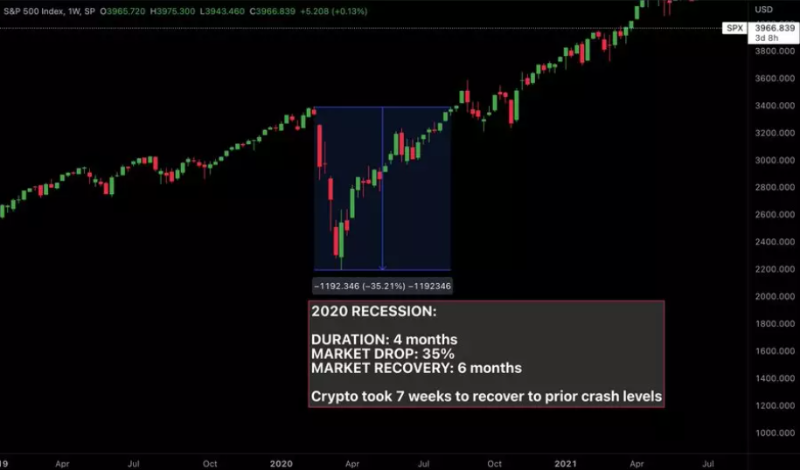
Given the aggressive post-pandemic monetary policy, the current situation is highly unique. Historically, during past recessions, if you invested during the quarter of negative GDP growth and exited when GDP began recovering, your average return would have been 31%.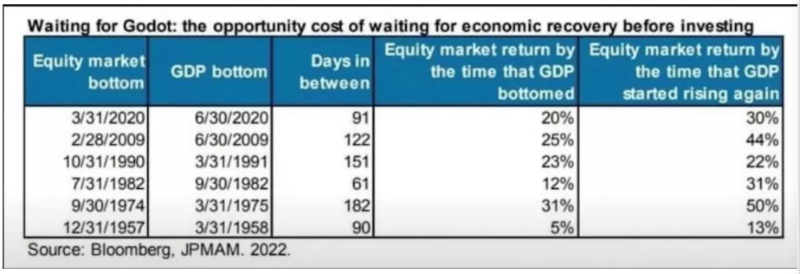
So far, the combination of monetary policy and the duration/severity of the downturn most closely resembles the 1982 recession, which took 15 months to recover.
For reference: It has been 6.8 months since the previous peak in January 2022.
Gareth Soloway believes the confirmation of a recession could benefit stocks and Bitcoin in the short term, as the Fed can no longer aggressively raise rates. However, we should not overlook the fundamental macroeconomic damage caused by a recession, especially when considering long-term impacts.
Join TechFlow official community to stay tuned
Telegram:https://t.me/TechFlowDaily
X (Twitter):https://x.com/TechFlowPost
X (Twitter) EN:https://x.com/BlockFlow_News
 Miles Deutscher


