








LayerZero's Uniqueness: How Does It Differ from Other Cross-Chain Bridges?
TechFlow Selected TechFlow Selected
LayerZero's Uniqueness: How Does It Differ from Other Cross-Chain Bridges?
LayerZero is like Batman, quietly infiltrating our lives without us even realizing it.
 Navigating Web3 tides with focused insights
Author: Bizyugo
Translation: TechFlow intern
LayerZero aims to enhance interoperability between chains, eliminating cost and complexity in cross-chain operations. But if that's the case, isn't this exactly what Layer0, like Polkadot, is supposed to do?
In fact, LayerZero and Polkadot are fundamentally different.
Moreover, LayerZero Labs' technology is highly sophisticated, but here I will only discuss the non-technical aspects.
Disclaimer:
This is not financial advice. Cryptocurrency is a very high-risk investment. Approach everything you read here with caution, and note that this project has not yet launched on the mainnet. DYOR!
LayerZero enables cross-chain communication, allowing protocols and users to move across multiple blockchains instead of being confined to a single chain.
How do they achieve this? Before answering, let’s first look at the methods others used prior to LayerZero: They rely on an intermediary chain as a bridge to receive, verify, and forward messages, granting the intermediary chain full signing authority. This becomes a critical vulnerability—while such designs are cheap, they are also less secure.

Another approach is using on-chain light nodes. These receive and validate every block header from each paired chain, and transaction proofs containing messages are forwarded and verified on-chain against these headers. This method is indeed more secure, but also extremely expensive.

So how is LayerZero designed—it combines the advantages of both approaches.
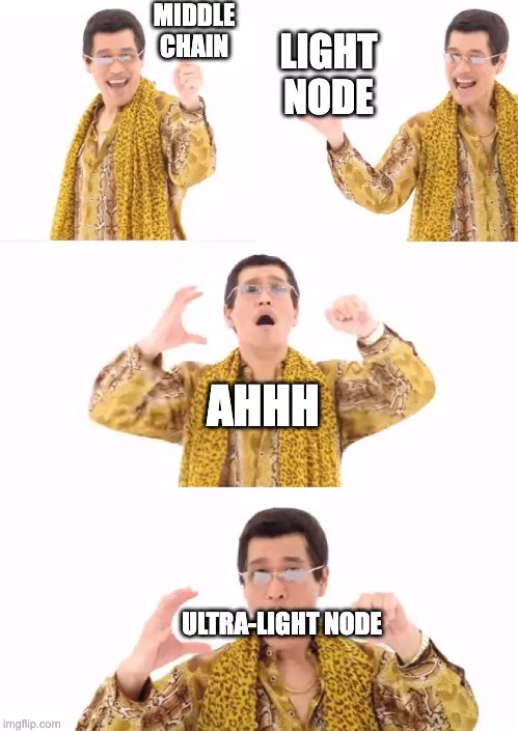
Ultra-light node—performs the same verification as a light node, but instead of sequentially storing all block headers, it retrieves them on-demand via oracles, making it both secure and low-cost.
They have also enhanced cross-chain bridge security through a mechanism called "Pre-Crime," which stops attacks before they happen.

Why go through all the trouble of building multi-chain? Because it attracts more users and protocols, thereby expanding the user base. It enables the following use cases:
- State sharing
- Unified liquidity bridges
- AMMs
- Lending
For protocols operating across multiple chains, state sharing is a nightmare—they need separate codebases for each chain and bridge. With LayerZero, they only need one unified interface and codebase to handle all cross-chain interactions.

LayerZero also enables unified liquidity bridges. Instead of fragmented liquidity scattered across individual chains and protocols, why not connect them and use liquidity across chains, achieving unified liquidity?Liquidity providers (LPs) can accumulate more fees, while protocols gain deeper liquidity.

For AMMs, LayerZero allows existing AMMs to perform cross-chain swaps without modifying their codebase.
Suppose you want to stake on Avalanche, but your assets are on Ethereum. You’d normally need to borrow on Ethereum → bridge assets to Avalanche → swap into staking token → stake → swap rewards back → return to Ethereum → repay loan.

Not only is this process cumbersome, but you also pay bridge and swap fees at each step. With LayerZero, you simply deposit collateral on Ethereum → directly borrow on Avalanche → stake → repay, saving all bridging and swapping costs.
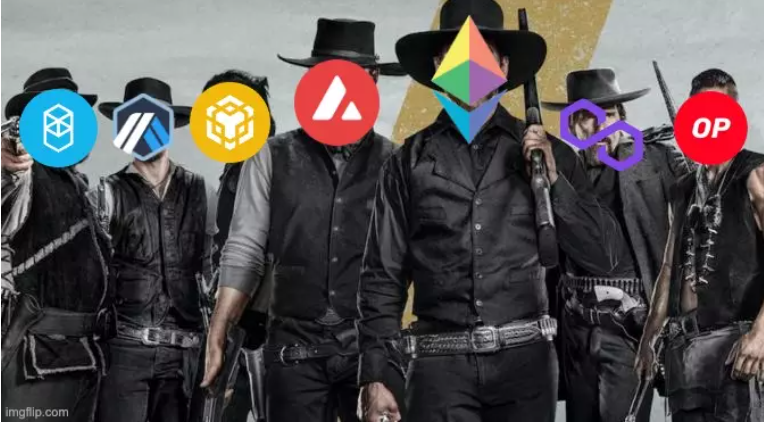
The following chains are compatible with LayerZero:
- ETH
- AVAX
- Polygon
- BNBCHAIN
- Fantom
- Arbitrum
- Optimism
As users, we don’t interact directly with LayerZero, but it is connecting all public chains and protocols. LayerZero is like Batman—working behind the scenes without us knowing, shaping our blockchain experience and quietly integrating into our lives.
Join TechFlow official community to stay tuned
Telegram:https://t.me/TechFlowDaily
X (Twitter):https://x.com/TechFlowPost
X (Twitter) EN:https://x.com/BlockFlow_News






