








Mechanism Capital: Play and Earn will lead crypto gaming astray
TechFlow Selected TechFlow Selected
Mechanism Capital: Play and Earn will lead crypto gaming astray
It's time to break the trance of "Play and Earn" and "perpetually paying players."
 Navigating Web3 tides with focused insights
Author: Eva Wu
Too many founders are in a trance, believing:
"For years, gamers have poured their hard-earned money into games with nothing to show for it. Thanks to crypto, players can now earn NFTs and tokens with real value. Anyone can—and will—get paid just for having fun playing, because they're helping the game succeed!"
Unfortunately, crypto is not a magic solution that allows everyone to make money. It's time to rethink the "earn" philosophy underpinning so many short-lived game economies. Previously, I categorized crypto games as either "earn-first" (focused on earning) or "play-first" (focused on gameplay). In this article, I'll revisit these terms, explain why "Play and Earn" misleads us, explore better business models for "earn-first" games, and outline a future design path for "play-first" games.
Play and Earn Misleads Us
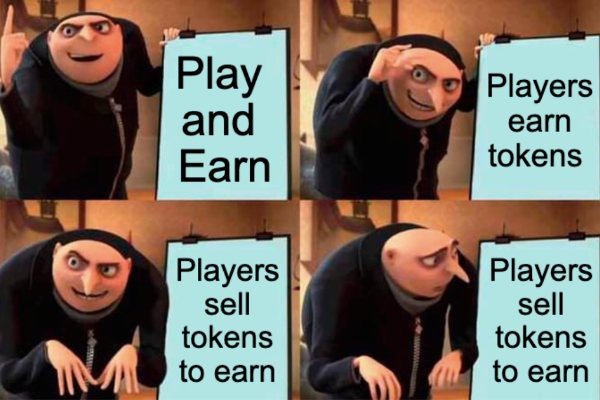
"Play and Earn" is a numbing label describing games that first get players to enjoy themselves, then allow them to earn rewards. In reality, like its predecessor "Play-to-Earn," these games still heavily emphasize "earning" and use short-term economic incentives to mask a lack of genuine player engagement. The problem starts with the name itself: using the word "earn" is poor branding—it’s like calling poker a “Play-and-Earn card game” instead of letting the game shine on its own merits. Yet most games introduce themselves with an "X-and-Earn" slogan. Most importantly, the pervasive use of “earn” encourages developers to build economies doomed to fail and attracts yield-seekers rather than real gamers.
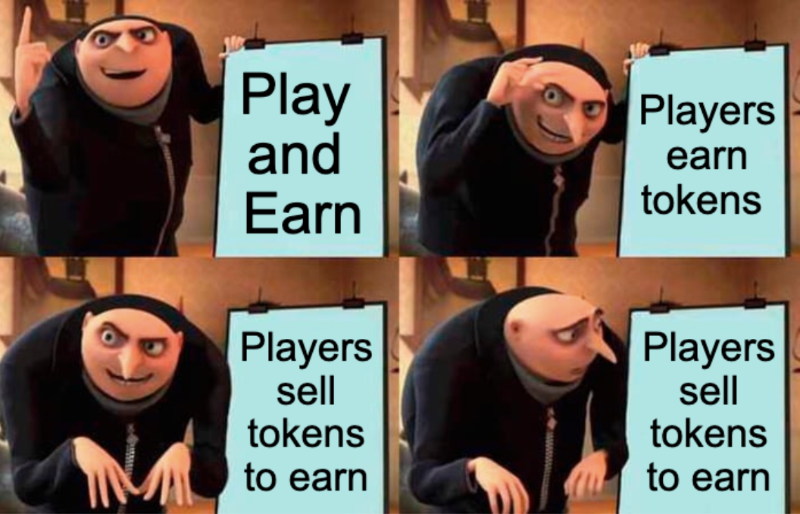
When players are told they can “play” and then “earn,” unrealistic expectations are set, which continuously puts downward pressure on the game’s native token. Game economists would be better off re-evaluating whether “Play and Earn” makes sense at all, rather than spending most of their time figuring out how to increase sinks or manage sell pressure. At minimum, games should consider removing “Play and Earn” from their vocabulary and replace it with terms that accurately describe what the game actually offers. Otherwise, they risk alienating players with unrealistic financial expectations, unstable economies, and weak branding.
Paying Players Forever Is Unsustainable
The idea that “most players should profit” is unhealthy, and we need to confront it—permanently paying average players is unsustainable.
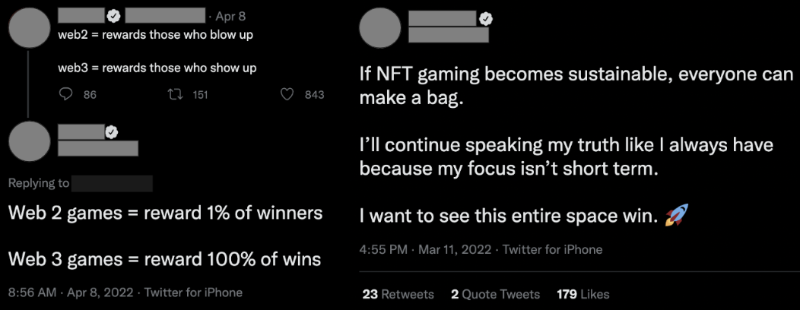
No matter how many sinks are added or how much capital an NFT or token raises, if the core assumption and selling point is paying the majority of players, the economy will quickly become unbalanced. Both crypto and traditional games must pay attention to their economic flows. The uncomfortable truth is that any game issuing tradable tokens or NFTs is paying players with someone else’s money. Developers drawn in by phrases like “player ownership” have been overpaying early users in hopes of building a loyal community. These early adopters are mostly speculators and airdrop hunters—their inflows represent the fleeting success we’ve seen across various games. But the capital spent on NFTs and tokens is highly opportunistic; if it doesn’t net them more money, they’ll leave the ecosystem.
As a result, games not only overpay mercenary players but also deter true gaming enthusiasts—those who play primarily for the game and its intrinsic enjoyment. Moreover, if players expect to earn more than they invest, are these assets or liabilities? The net losers will always be latecomers—game creators and token/NFT investors who arrive after the party ends.
Should Games Be Play-First or Earn-First?
Founders must remain vigilant about the gap between the game they say they’re building and the one they’re actually creating. Many game developers believe they’re making a “play-first” game, yet employ all the outward marketing and strategies of an “earn-first” game. A useful litmus test is the ratio of game-related tweets versus crypto-related tweets from the project team. Developers hoping to build in this space should be aware of a common trap: they assume a game can start with earn-first players and somehow transition into a play-first game. While boosting early metrics is tempting, this idea is flawed—monetary incentives deter genuine gamers, while reducing or removing rewards deters earn-first players. This is akin to building a new blockchain and then trying to “decentralize” it later—a transition that rarely happens.
If a game aims for short-term success, building an earn-first crypto game makes sense. However, if developers want to create a true play-first game, they must either change the crypto-gaming community’s hostility toward such projects or prepare for resistance. Overemphasizing financial rewards to boost DAU is more likely to harm long-term viability for play-first games.
The Future of Earn-First Games
For earn-first games to succeed, profitability must be central—the pursuit of income becomes the entertainment. Historically, people have always found joy in the potential to earn money. Direct financial gains strongly activate our dopamine systems. Such players often treat small losses as equivalent to the cost of a night out.
In the short term, we may see more X-to-Earn projects attempting to replicate StepN’s brief financial success. While these games are undoubtedly unsustainable, Ponzi-like schemes will persist as long as there’s interest. Why? Because they spin up quickly, aren’t taken too seriously, and remain fun—until you lose money. In other words, pursuing revenue *is* the entertainment. Furthermore, every game has a shelf life, and some expire far faster than others.
For longer-lasting earn-first games, proven business models like esports or casino gaming may provide guidance. Generally, if there's sufficient solvency to fund rewards, earn-first games can endure. Revenue might come from:
1. Players willing to fund prize pools;
2. Sponsors hosting tournaments;
3. Spectators tipping or betting on the sidelines;
4. Any other users taxed to fund rewards.
Poker and sports serve as useful analogies for earn-first games: People engage socially and competitively in earn-first formats; companies sponsor prize pools and host tournaments; players earn by winning; coaches get paid to teach; talent earns by producing gear; speculators watch, tip, and bet. This economy works because there's a direct, understandable value exchange among players, sponsors, and spectators. It supports both earning and spending. In these games, earning is the goal, and monetary incentives form the core loop around which a self-sustaining economy is built.
What About the Future of Play-First Games?
Over the past year, we've tried to make "earning" the killer feature of play-first games—but it hasn't worked. We haven’t demonstrated how crypto improves traditional gaming; instead, we've over-financialized it in every aspect. In this section, I’ll share high-level frameworks that could help us design smarter game economies.
Games vs. Financial Games
First, introducing tokens at any point inevitably brings financial gaming. Traditionally, games simulate aspects of life but operate within guardrails and closed economies. Introducing tokens or NFTs removes a key barrier, opening the system to the full spectrum of real-world financial dynamics.
Over the past year, we’ve seen how tightly blending these two types of games leads to poor outcomes. For example, Axie Infinity appears on the surface as a cute turn-based strategy game, but integrating NFTs and tokens shifted player behavior toward financial gaming. What players were actually engaging in was a money-making scheme resembling a pyramid structure. Each new player bears the cost of NFTs, hoping to sell before others and cash out. When earning money becomes intertwined with gameplay, it becomes the de facto scoreboard and motivator—not the game itself.
Given this, perhaps the future lies in finding ways to separate gaming from financial gaming. Regardless, the next generation of game developers must find new ways to connect crypto and its embedded financial mechanics without overwhelming the core game experience.
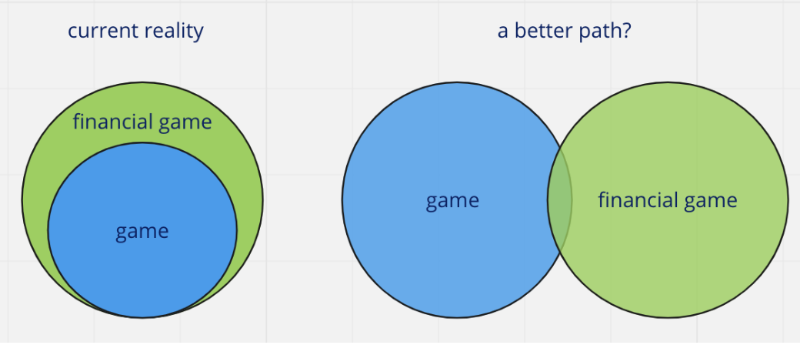
A useful analogy is the Pokémon Trading Card Game, which exists both as a collectible card game and as a financialized collector’s market. Similarly, in sports, money flows through the ecosystem without affecting the integrity of the sport itself. If athletes chose moves based on how much money they’d earn per action, it would be abhorrent for most sports. Players’ focus should be on the game, not external forces like money. This is what distinguishes play-first games from earn-first ones.
Sustaining Game Economies
Playing the game is different from participating in the game. Increasingly, it’s clear that innovation in crypto gaming may not lie in rewarding players for playing, but in rewarding those who create value for the game and its community. In many ways, game creators act like central banks and treasuries—designing reward programs is akin to levying taxes and deciding how to spend or distribute revenues. This analogy also helps explain how players lose when the game excessively inflates its native token. With this in mind, developers should only reward actions that directly or indirectly generate greater financial returns and increase the ecosystem’s GDP. Currently, most game economies allocate 30%-60% of total token supply to reward every player in the ecosystem (see left image). But a vibrant economy should enable players to exchange goods and services directly with each other (see right image).
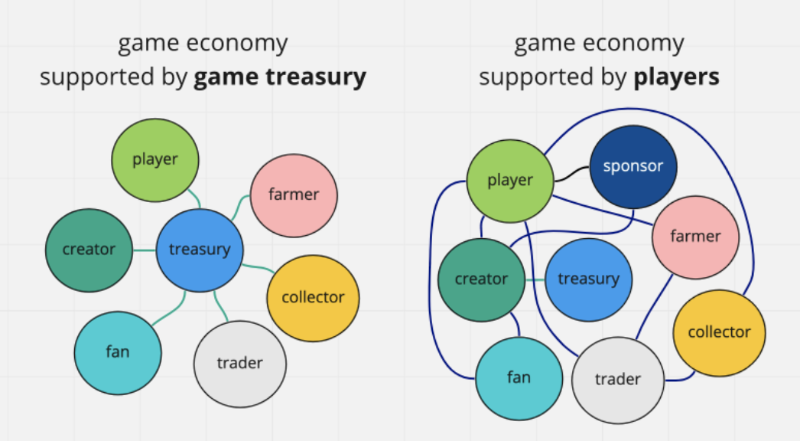
Games should aim to create ecosystems where player groups generate and directly exchange value, rather than relying on treasury funds to drive the economy. This supports the token as a genuine medium of exchange. For instance, if a game wants designers to build worlds, the system should reward creators with shared benefits tied to future profits. Likewise, games should support models where successful KOLs are paid directly by fans, rather than adopting an "influence-to-earn" model where the game pays influencers.
In this way, people earn repeatedly through creation of virtual goods and services, rather than farming unsustainable upfront rewards. Additionally, direct exchange creates real earning opportunities for those willing to pay and fosters a more efficient economy. After all, game economies are complex. Like real economies, they thrive when there’s strong employment and growing GDP.
Final Thoughts
Last year, retail users and investors rushed to chase the next big crypto game. Now, as the tide recedes, we must ensure we’re not left naked—forced to confront the assumptions we made during euphoric times when numbers only spiraled upward. It’s time to break free from the trance of “Play and Earn” and “permanently paying players”. We must soberly acknowledge the inevitable financial gaming introduced by crypto and design smarter game economies.
I hope this article helps game developers step back from the noise and reconsider how they build their crypto games. As I conclude, I find myself critical—but also optimistic—about what’s possible. If you’re building something and find yourself in this mindset, I’d love to talk and share ideas.
Special thanks to Zaheer, Nicholas, Shual, and Nix for their feedback and suggestions, and to Brooks for helping shape and validate my thinking.
Join TechFlow official community to stay tuned
Telegram:https://t.me/TechFlowDaily
X (Twitter):https://x.com/TechFlowPost
X (Twitter) EN:https://x.com/BlockFlow_News






