








Embrace the Absurd | The "Externality" of Web3 Matters More
TechFlow Selected TechFlow Selected
Embrace the Absurd | The "Externality" of Web3 Matters More
In a unique world, at a special point in time and within a particular industry, excessive "rationality" is dull and ineffective.
 Navigating Web3 tides with focused insights
Author: FMResearch
"Absurdity is what miracles look like in childhood."
Rationality VS Absurdity
In our research, we often encounter two types of products: the rational good kids and the absurd bad kids.
The Rational Good Kids
They solve existing urgent needs, have clear product-market fit (PMF) and business models, along with obvious moats. Everyone loves such companies—Coinbase, Opensea, Nansen, Chainlink—they are darlings of venture capital, topics for data analysts, and shining stars.
The Absurd Bad Kids
They seemingly don't address any pressing need, generating only minimal revenue from transaction fees or arbitrage/speculative activities. Their user acquisition methods appear crude, making them feel like they could collapse at any moment. Yet, they are often category definers—the pioneers of new trends. They include PFP NFTs, Meme Coins, Algorithmic Stablecoins, x-to-earn models, etc.—they're controversial, dismissed as jokes, yet also enviable trends.
We believe the absurd bad kids are more interesting—their externalities are underestimated.
1 Exploring: Externalities
1.1 All Economic Activities Have Externalities
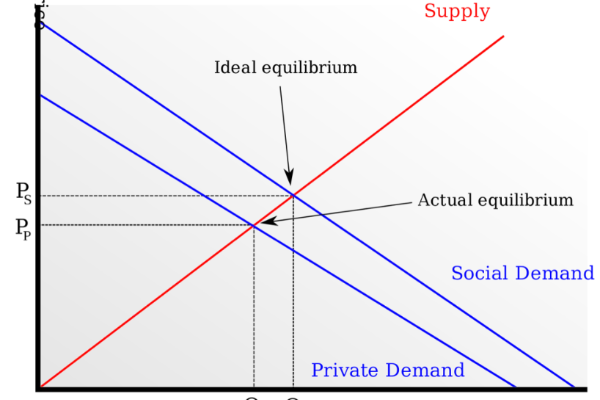
In economics, the impact of a private economic activity on social welfare is called an externality. Whether this private act is consumption or production, it may generate externalities.
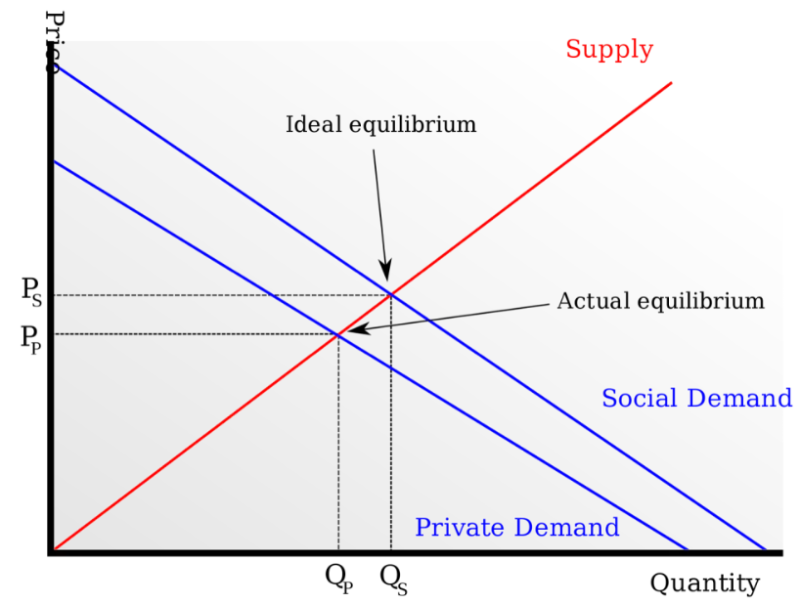
What are externalities?
As shown in the figure above, the magnitude of externality can be calculated between the two Pareto equilibria. Externalities can be negative (losses) or positive (gains).
For example:
Negative Externalities of Technology
-
— Factories: Environmental pollution, noise
-
— Robots: Job displacement
-
— Internet: Information overload, loss of privacy and security
Positive Externalities of Technology
-
— Factories: Increase surrounding area rental prices
-
— Robots: Enable humans to focus on creative work
-
— Internet: Promote free creation, enable oversight of power and illegal behavior
In a closed market, participants are poorly connected, information and capital flows are blocked, externalities cannot dissipate, and regulators typically intervene.
In an open market, participants are highly interconnected, information and capital flow efficiently, so the externality of each economic action becomes more significant, creating a rippling effect of externalities.
However, Web3 is the most radical open market in history—and thus generates even greater externalities.
1.2 Bitcoin Was an Absurd Bad Kid
Go back to 2008. You see Bitcoin—a product without PMF, slow payments, no credit backing. Its early users were niche computer enthusiasts, underground traders, and speculators. Compared to PayPal, it was a terrible "payment company"—an absurd and even dangerous bad kid.
Yet over the next 14 years, amid rising inflation and shrinking financial freedom, Bitcoin’s externalities grew stronger and evolved into a massive industry. It now has 81 million users, daily liquidity around $18 billion, and has become a digital asset favorable for storage and value preservation—potentially a future replacement for gold. What sustains this value and belief isn’t any official Bitcoin organization, but all the external economic activities surrounding it.
Bitcoin’s Negative Externalities:
-
High energy consumption
-
Difficult to regulate
Bitcoin’s Positive Externalities:
-
Spurred the mining hardware industry (e.g., Bitmain)
-
Spurred the exchange industry (e.g., Coinbase)
-
Added a new asset class to financial markets
-
Stimulated blockchain technology R&D and applications
-
Adopted by some small governments/nations
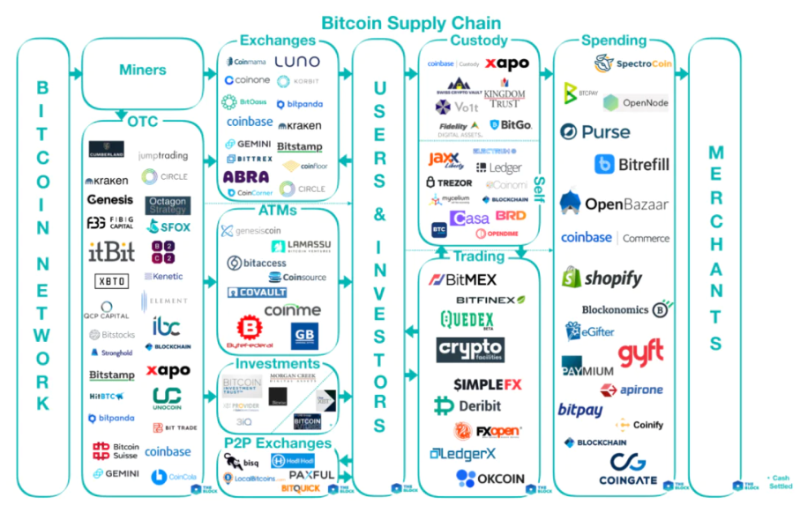
Bitcoin’s externalities
According to Stanford researchers in “Can we mitigate the externality of cryptocurrencies,” over 75% of Bitcoin transactions come from “external financial activities,” and these externalities in turn contribute to Bitcoin’s value.
If we only analyze Bitcoin’s internal technology and product demand, we might never find the right answer.
You can’t judge the future performance of an absurd bad kid by its test scores.
2 Exploring: Externalities
2.1 What Is an Externality Market?
Among liberal economists like Hayek, rather than suppressing externalities, they advocate building a market that absorbs participants and forms an economy.

Hayek advocates using market mechanisms to absorb externalities
New Species A → Externality Economic Activity → New Externality Market, New Species B
We call such markets “externality markets.” We should seek out new species with massive externality markets.
2.2 Web3 Has Abundant Externality Markets
Future worlds will be more interconnected than ever before. From a Web3 perspective, token liquidity is extremely high, with deep openness and composability—so products and protocols generate unexpected externalities.
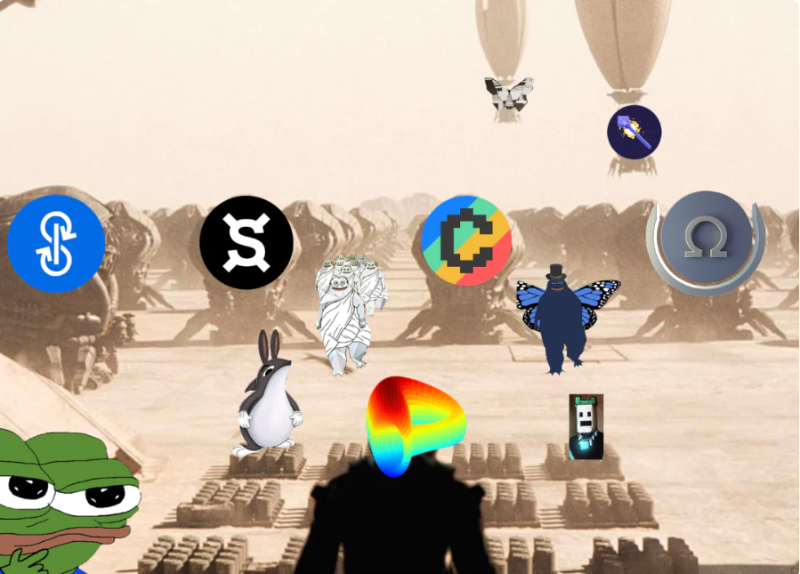
The Curve Wars stem from Curve’s massive externalities
For instance:
-
— Curve has massive externalities. It’s not just a simple trading protocol—it’s a major launchpad for stablecoins.
-
— Axie has massive externalities. It’s the primary soil for guild economies, with some guilds evolving into inclusive financial service platforms across Southeast Asia.
-
— Terra has massive externalities. It sparked lending and arbitrage activities around UST, attracting more users and liquidity with every rebase.
-
— BAYC has massive externalities. It used NFTs to build a vast community of high-net-worth investors—from athletes to artists.
We must recognize a product’s externalities to assess its true potential.
2.3 Summarizing Crypto and Web3 Externality Markets (2018–2022)
Classic Externality Markets (Pre-2018)
-
Miner market
-
Hashrate market
-
Trading market
-
Exchange market
Externality Markets After DeFi Emerged (2018–2021)
-
Liquidity Provider market
-
Staking market
-
Insurance market
-
Curator and Liquidator market
-
MEV market
-
Bribery market
Emerging Externality Markets (2022 and Beyond)
-
Guild market
-
Governance market
-
NFT creation market
-
Data market
-
Advertisement market
We observe that since blockchain’s inception, externality markets have continuously expanded—even spawning new externality markets themselves, almost uncontrollably.
These externality markets reinforce the original platforms from which they emerged, collectively building a value network. When a network contains multiple externality markets, it becomes increasingly robust and powerful, delivering greater externalities to the real world.
Conclusion and Vision
In a unique world, at a special time, within a particular industry, excessive "rationality" is dull and ineffective. Leave room for randomness. Listen to absurd startup ideas—they may be precious opportunities worth cherishing.
Because absurd bad kids are closer to miracles than the well-behaved "good kids."
Join TechFlow official community to stay tuned
Telegram:https://t.me/TechFlowDaily
X (Twitter):https://x.com/TechFlowPost
X (Twitter) EN:https://x.com/BlockFlow_News
 @fmgroupxyz






