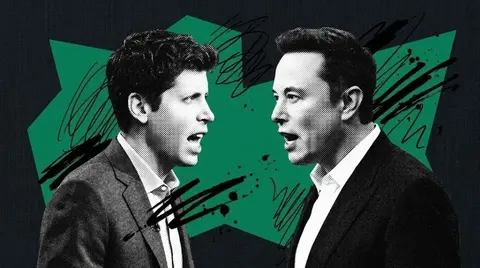
Musk won, and the Pandora's box has been reopened
TechFlow Selected TechFlow Selected
Musk won, and the Pandora's box has been reopened
Whether it's Starlink, Tesla, or Twitter, Musk will transform the world—from transportation and communication to social discourse—this is the ultimate narrative of individual heroism.
 Navigating Web3 tides with focused insights
By Ma Bangde
Musk has won.
On April 26, Beijing time, Twitter announced that its board had accepted billionaire Elon Musk's $44 billion offer to acquire and take the company private. Musk acquired the company at $54.20 per share, the same price as his initial offer earlier this month.
The deal is expected to close in 2022. Upon completion, Twitter will become a privately held company.
Musk immediately released a statement saying, "Free speech is the bedrock of a functioning democracy, and Twitter is the digital town square where matters vital to the future of humanity are debated. I also plan to improve the product with new features, make the algorithm open source to increase trust, combat spam bots, and authenticate all human users to help make Twitter better."
However, just days before, things didn't look like this.
In response to Musk's acquisition proposal, Twitter's board had initially shown resistance through a "poison pill" defense strategy. Under this poison pill plan, if an outside investor acquires more than a certain percentage of shares, the board would issue preferred stock to existing shareholders, significantly diluting the acquirer’s ownership stake and voting power.
This did not “scare off” Musk—he started raising money aggressively.
Institutions such as Morgan Stanley offered $13 billion in loans, $12.5 billion was secured via Tesla stock collateral, and $21 billion came from cash reserves… Musk met continuously with Twitter’s major institutional investors to win their support.
After securing funding and winning over key stakeholders, Twitter’s board entered negotiations with Musk late Sunday night—and on Monday, the board relented.
Equity Vulnerabilities
Why did Twitter appear so weak against Musk, practically defenseless?
Perhaps Musk had already identified two fatal weaknesses within Twitter.
First, unlike internet giants such as Alibaba and Meta (Facebook), when Twitter went public in 2013, it did not adopt a dual-class share structure granting founders and executives super-voting rights; instead, it maintained a one-share-one-vote system for allocating voting power.
After JD.com went public, Tencent became its largest shareholder, yet founder Richard Liu retained absolute control due to his super-voting shares—each carrying twenty votes per share.
Compare this to Twitter’s co-founder Jack Dorsey, who doesn’t even have super-voting rights and is about to be forced out of Twitter’s board by activist investors.
Second, Twitter’s equity structure is overly fragmented.
At the time of Musk’s acquisition offer, he owned 9.2% of Twitter. The top shareholders—Vanguard, Morgan Stanley, Blackstone Group, and State Street—held 8.8%, 8.4%, 6.5%, and 4.5% respectively.
Although Vanguard later increased its stake to 10.3%, Morgan Stanley—the financial advisor and financing partner supporting Musk’s acquisition—is itself Twitter’s third-largest shareholder. Together, they wield decisive influence.
Now consider their opponents: Twitter’s board of directors. The combined holdings of its 11 members total less than 2.5%. Excluding co-founder Jack Dorsey’s 2.253%, the remaining ten directors collectively own less than 0.1%.
With insufficient voting power, Twitter’s board stood no chance against Musk.
Political Battle
Why does Musk want to acquire Twitter?
Musk claims he isn’t doing it for profit. In his statement, he said: “I invested in Twitter because I believe in its potential as a platform for free speech, and I believe that free speech is a cornerstone of a functioning democracy.”
Musk argues that Twitter’s current state “neither enables nor serves free speech.”
But freedom has boundaries—what may be freedom for one person could mean oppression for another.
Currently, Musk can be considered an absolute libertarian. After acquiring Twitter, he is likely to loosen content moderation and allow previously banned content back onto the platform. For instance, Musk has publicly stated he would never ban Russian state propaganda.
Additionally, what types of content has Twitter strictly restricted?
Look at former President Trump’s banned account: false information about the pandemic and vaccines, conspiracy theories about election fraud, far-right rhetoric inciting social conflict and hatred, Russian state media propaganda…
You want freedom? Is spreading rumors like “the coronavirus was invented by Bill Gates” or “the vaccine is toxic—don’t get vaccinated” also freedom? Will you, Musk, defend the freedom to spread misinformation?
Politically speaking, Musk’s acquisition of Twitter has won support from American conservatives. The biggest conservative supporter, of course, is Trump himself—whose 90-million-follower account was suspended by Twitter. So, after Musk takes over, will Trump’s account be resurrected?
I think it’s very possible—the Pandora’s box will eventually be reopened!
Conservative figures are now stepping forward in support of Musk. Conservative radio host Buck Sexton declared: “Liberate our country from these neurotic Silicon Valley liberals.”
Republican Senator Marsha Blackburn noted: “Musk has clearly stated his opposition to tech censorship—a position all freedom-loving Americans should support.”
Musk himself is something of a “political enthusiast.” SpaceX is launching tens of thousands of satellites into orbit, forming a global high-speed internet network called Starlink—providing seamless coverage worldwide and breaking down information barriers imposed by specific countries. During the Russia-Ukraine war, Starlink provided critical support to Ukraine… Starlink is political.
Starlink is the “protocol layer” of global communications, Twitter is the “application layer” of global social interaction, Dogecoin is the “global currency”—all that’s missing is Musk becoming U.S. president, though that’s theoretically impossible.
Whether it’s Starlink, Tesla, or Twitter, Musk intends to reshape the world—from transportation and communications to social discourse. This is the ultimate narrative of individual heroism.
Musk, you truly are something else.
Join TechFlow official community to stay tuned
Telegram:https://t.me/TechFlowDaily
X (Twitter):https://x.com/TechFlowPost
X (Twitter) EN:https://x.com/BlockFlow_News