Interview with Solana's Founder: How to Use Hackathons to Bring Those Sexy Ideas to Life?
TechFlow Selected TechFlow Selected
Interview with Solana's Founder: How to Use Hackathons to Bring Those Sexy Ideas to Life?
Solana-compatible wallet and payment experience development, Solana's scalability roadmap, cryptocurrency adoption and fee markets, Solana's KPIs, etc.
 Navigating Web3 tides with focused insights
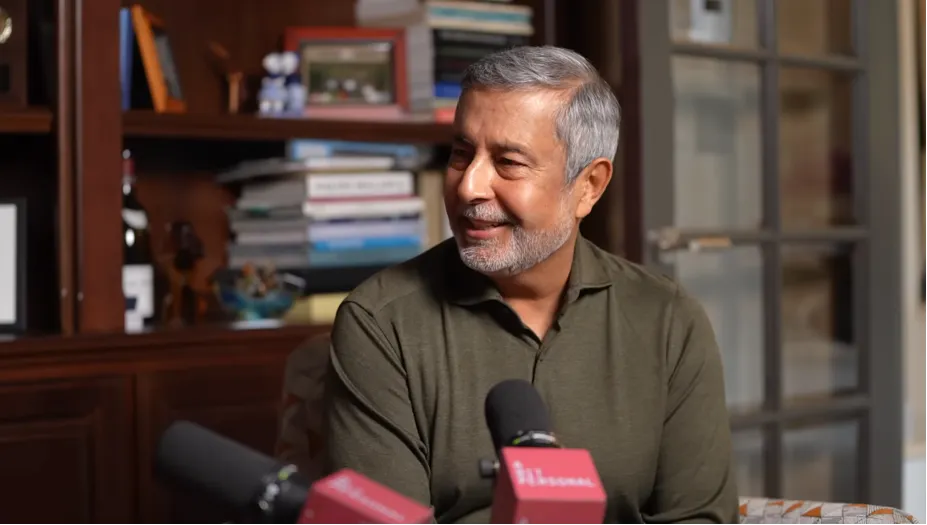
This is a transcript from Money Movement, a podcast by Circle. This week, we're joined by Anatoly Yakovenko, co-founder of Solana, a blockchain partner of Circle, to discuss wallet and payment experience development on Solana, Solana's scalability roadmap, crypto adoption and fee markets, KPIs, and more.
DeepTide TechFlow has been authorized by Circle to translate and republish this content.
Transcript
Interviewer: Hi everyone, welcome to Money Movement. Today we have with us Anatoly Yakovenko, co-founder of Solana Labs. Great to have you here to discuss many important topics.
Anatoly Yakovenko: Great to be here. Thanks for having me.
Interviewer: It’s been a pivotal year for Solana. When you think about the state of Solana and your KPIs, what are the key metrics you’re focused on? What really matters? Where do you stand today?
Anatoly: The most important metric is real users—people actually using the network. We’ve seen around 2 million monthly active users on Solana, driven by fan engagement and on-chain activity. Daily active users sometimes even surpass Polygon and Ethereum’s typical ~300,000 daily active users. We usually refer to them as signers.
Interviewer: Active signers.
Anatoly: Yes. To me, active signers are a crucial indicator because they show that more real people are engaging in meaningful activities—doing things on the chain that matter to them. That’s exciting. Last year, we saw some projects grow extremely fast, accumulating large user bases in under a year. For example, Metaplex launched in May last year and now over a million wallets hold NFTs minted through it. I believe there are nearly 8 million NFTs minted on Solana—multiple times the number of NFTs minted on Ethereum when considering actual volume. That’s one of the most surprising things across everything we've seen.
Interviewer: I know Metaplex is hot. But seriously, scalability is where Solana truly shines. High-performance UX combined with economic feasibility has attracted a lot of DApp developers and creators.
Anatoly: Another important factor is the volume of stablecoin issuance, such as USDC. This is critical because it shows users have real demand for hard currency. Someone has to park those dollars in banks, and doing so at scale is very difficult.
Interviewer: I agree. We’ve been working together for over a year and a half now, and I believe more and more projects will build on top of USDC and Solana. People will start seeing this as the foundation for mainstream applications and payments. I know we can talk about Solana Pay—we could dedicate an entire discussion to this use case—but it seems people care deeply about fulfilling the promise of making digital cash and digital payments usable on the internet. And right now, USDC on Solana is a perfect example. How are you solving for user experience, not just transaction settlement?
Anatoly: Fundamentally, many users want the safest possible payment method—they want the safest dollar. The word “safe” encompasses many layers: platform risk, contract risk, wallet custody risk, risks on your side (USDC), and others.
Interviewer: Yes. We’re working hard to do our part—building trust, credibility, and providing the market with robust infrastructure for reliable access. I’m also interested in what’s happening within the developer community. I think much of your success stems from active engagement there—supporting developers, hosting hackathons, bringing people together. That might even be a great KPI in itself. Could you expand on how you started these events? What was your first hackathon like, and where was it held?
Anatoly: Real exponential growth in developer activity began with our first hackathon, which had 100 teams—about 14 of which built something useful.
Interviewer: Yes, I remember.
Anatoly: Since then, the number of participating teams has basically doubled every hackathon. More teams completed projects than all previous hackathons combined. That was around 370 teams. That felt really powerful.
Can we break 1,000 teams with Riptide? Can we get 1,000 teams building things, competing for prizes, receiving funding and support? At first, it was almost easy—just copy what Ethereum was doing. We knew we needed DeFi, NFTs, etc., so we followed the blueprint. But now we’ve matured into the next phase, and I believe Solana is leading in innovation.
Solana Pay is one such example. We haven’t yet seen a breakthrough payment application in crypto. Why isn’t there a true Venmo competitor in crypto? There should at least be attempts.
Interviewer: Our first product was Circle Pay—it was like putting dollars on Bitcoin. There were scalability issues initially, but it’s now widely available. We definitely see startups using our APIs to build wallet products. Do you think Riptide will see many payment-related projects in the future?
Anatoly: Yes, we anticipated this when launching Solana Pay. Solana Pay is very simple—it’s literally BIP-21. Do you know what Bitcoin’s BIP-21 is?
For those who don’t, it’s a simple URL specification defining how to request payments from a wallet. It’s how merchants generate QR codes. First, it’s a URL link. Then, the link tells the wallet: “Hey, I want to pay this amount to this specific merchant for this item,” and it displays that in the user interface. This integration makes it easy for merchants to send payment requests. It’s not rocket science—anyone can do it.
We found that whenever we had the chance to establish a standard—like incubating Metaplex on Solana—it led to massive innovation and growth far beyond our initial expectations. Amazing things happened.
Right after announcing Solana Pay, we saw people hacking Square POS systems to accept Solana Pay and similar solutions. There’s huge demand for alternative payment rails. I think this happens because the current payment system setup largely disadvantages merchants throughout the payment process.
Interviewer: We could talk a lot about this, but it’s like the early internet—if you were a content creator, you couldn’t have a direct relationship with your audience. You had to go through channels: publish in magazines, work with book publishers distributed at Barnes & Noble, or go through record labels, TV networks, cable companies, etc. Distribution worked the same way. So in the early internet era, it was hard for creators and audiences to connect directly. Businesses face the same issue. If you build a product, you need retail distribution, but later you could build a website for direct sales or use marketplaces for global reach. These kinds of shifts began appearing across all fields.
In some ways, payments are the same. A business may seem able to accept direct payments, but actually cannot. For example, if I walk into a store and hand over a $20 bill, that’s truly direct—no intermediaries, final settlement. But if a business wants to accept a digital payment, between you and the actual money received, there might be seven middlemen, each layer adding incentives and complex processes. In some ways, even though scanning a QR code with your Phantom wallet and confirming a transaction feels like Apple Pay or another channel—“I’m just paying”—for the merchant, it’s as good as cash. That’s incredibly powerful.
Anatoly: That’s exactly the feedback we’re hearing—merchants really want this capability. I was surprised. I hadn’t connected the two because I wasn’t deep in payments, but it makes sense. This is clearly a space dominated by intermediaries. Who do these intermediaries actually hurt? The entire financial system favors sellers, right? Users don’t realize this—the intermediaries are hidden. Ultimately, users pay higher prices.
Interviewer: Right, yes. Businesses have strong incentives to adopt this. Maybe we can tie this back to Riptide and your hackathons—what are you seeing in terms of payment-related projects? If you were speaking to developers and listeners here, what problems should someone building a Solana-compatible wallet or payment experience solve? What should developers focus on? I have some thoughts, but I’m very curious about yours.
Anatoly: I think UX needs to be simple enough for ordinary users to use. That means being careful about security—telling users they probably shouldn’t store thousands of dollars in such a wallet. The simpler the security assumptions, the more you must communicate the limits of trusting that specific security model. It’s a tough challenge. From a UX perspective, you need a reason for consumers to choose your product over Venmo—a very difficult task. Venmo is everywhere; breaking its dominance is hard, so positioning is key.
There are also users completely outside Venmo’s reach. Surprisingly, Cash App is popular in many places where Venmo isn’t.
Interviewer: I think Cash App’s monthly active users actually exceed Venmo’s.
Anatoly: I didn’t know that—it surprises me.
I think the advantage lies in—where can you start using the app? What can you do that Venmo can’t? Maybe yield products, or reward points for your SIM—click next, now you’re giving everyone rewards, right?
Interviewer: Yes. I completely agree. It seems this is one of the counterarguments I’ve heard before—that if you solve fast, cheap payments, users won’t care because they want rewards. But if a business can save 2% or 3% in costs by accepting such payments, they might actually afford to offer rewards. What would those incentives be? Cashback in USDC? Reward tokens? NFT-based rewards—certificates that accumulate value over time, creating different forms of affinity?
It seems at the intersection of stablecoin payments and NFTs, you can create incentive models and build lasting customer relationships—better than abstract models like Chase points. By leveraging NFTs and crypto payments, you can build more durable businesses.
Anatoly: This is where I have many wild ideas. Every time you buy sneakers, maybe a crypto kicker mints the sneaker NFT for you. That would be super cool—but you have to find the right users and products for it to work.
Interviewer: Yes, regarding NFTs—a ticket is an NFT, a coupon is an NFT. All these things are essentially NFTs. Now people could say, “Hey, I’ll build a coupon protocol—anyone can implement it, it supports USDC, and generates a specific type of coupon NFT.” Imagine someone building this at your hackathon. Then you combine these pieces and start doing some pretty interesting things. These interesting combinations are highly likely to happen. Another reason everyone loves credit.
Another reason people use credit cards is they like credit. People like borrowing. I think there’s a broader issue around “buy now, pay later” (BNPL). Is there a way to build BNPL on-chain using verifiable identity credentials, verifiable credit scores, etc., proving them to smart contracts? Then a DeFi protocol could provide credit underwriting for timely payments. That could become a new protocol, woven together by developers building such apps.
Anatoly: I think this is one of the most exciting opportunities—but it’s serious work. It could be a company worth investing in.
This is one of the most exciting areas I see—one that could fundamentally transform finance. I wonder where Circle sees this. Have you ever wanted to build these features yourselves, or are you looking to build on top of what Circle offers?
Interviewer: I think both. Our general view is first, we want to enable broad adoption of USDC and other standards we believe matter—identity, Solana Pay, payment protocol standards. It’s important that developers can use these to build all kinds of things, and we want to support and invest in that. At the same time, we definitely want to solve problems for businesses and serve them via Circle Accounts and Circle APIs, addressing parts of this space.
I think we’re both excited to see creativity flourish around these problem spaces, because ultimately, making it work is highly valuable. Second, we certainly want to keep adding our own value. Today we offer payment APIs and spend APIs. Our payment API handles both crypto and traditional rails. We’d love to see crypto rails payments improve significantly. But our view is this isn’t something you do alone—because it only becomes interesting when there’s high interoperability and freedom to explore.
Anyone creating digital wallets, smart contracts, POS devices, or anything else should avoid proprietary lock-in. I think we’re interested in creating standards—and implementing them ourselves.
Anatoly: What are the challenges in building such a credit system? It’s something I’ve been thinking about, but many required components seem missing.
Interviewer: Yes.
Anatoly: In blockchain?
Interviewer: Yes. I think if you want to do all these things on top of crypto and smart contracts—and enable user-controlled wallets to do them—you need many things. I think you need provable identity—you could get an identity from Coinbase, FTX, Square, or anyone. You go to a service. People just know they’re dealing with a real person. And I think you also need appeal channels—identities cryptographically proven, presented as credentials, verified by smart contracts without revealing privacy. Like, I want to prove my credit score on-chain.
It’s kind of like the oracle problem, but specific to identity. It’s a very important building block. Once you have it, people can start building apps or smart contracts that make decisions based on real-world data and identity—exactly what you need when underwriting credit. In theory, just like DeFi protocols have liquidity providers and risk-bearing insurance pools, you could imagine scenarios where, with a bit more data, they offer unsecured underwriting.
That’s the next thing. If you look at what’s been implemented in DeFi so far, you can spot patterns applicable here. One thing I think is recurring payments—essentially a smart contract accessing a balance, enabling automatic sweeps. Like, if I use a company and link my bank account, they debit a certain amount automatically to pay my balance. Enabling recurring sweeps in smart contracts and digital wallets—I think that’s a problem to solve. These seem solvable.
Anatoly: Do you think consumer protections like refunds are crucial? I’m trying to understand what a credit card really is. In a decentralized world, we could create different protocols for each component that comes together.
Interviewer: Yes. Ultimately, returns, refunds, or seller fraud are all risks. If there’s a market for such risks, you can price them, and someone willing to provide liquidity for that risk could theoretically do it on-chain. You could simply say there’s seller fraud risk. That’s partly why PayPal fees exist. Why is PayPal more expensive? Why are American Express transactions costlier for merchants? Because there’s an insurance product baked in—that’s the price of insurance.
Similarly, why not let these insurance products operate as on-chain protocols, open for market interaction, not tied to closed-loop payment systems but more open? I think that’s the core—pricing and underwriting risk, providing liquidity for that risk. We seem capable of doing this without a fully closed model.
Anatoly: I’m excited to see what developers try at this hackathon.
Interviewer: Me too. It’s an exciting moment when people start tackling these problems. Maybe shifting slightly to conclude—I’m very excited about Solana’s work in this space with USDC and beyond, and about what we can continue doing together.
Basically, in what we see as the scalability race, where are we in this journey? We have resilience and robustness, which are clearly critical. Regarding the architecture of scalability itself, what do improvements in bandwidth and high-performance computing mean for Solana or your architectural work? How openly can you discuss the scalability roadmap?
Anatoly: All source code is open first, then on GitHub. If you look closely, you can see everything happening. Exciting developments are mostly in version 1.9—we’re effectively stress-testing at scale. We redesigned the accounting system—how memory is stored. It no longer relies on RAM. We’ve effectively simulated a set running nearly 8 billion accounts in about 4 megabytes, with around 1 billion accounts representing ~500 megabytes of stable state. You can run SSDs and keep scaling indefinitely.
It’s limited by PCI bus constraints and how much you can run on a single node, but theoretically, we have no reason to limit per-validator hardware. You could distribute it across multiple machines, though we don’t need that yet. I think in many ways, Moore’s Law still outpaces crypto development.
Interviewer: Hardware throughput exceeds adoption...
Anatoly: For now.
Interviewer: We know what happens then.
Anatoly: I suspect eventually we might see nodes when crypto adoption hits a sharp inflection—global monthly active crypto users jumping from 5 million to 500 million. When that happens, I think the focus will shift—we must be software-ready. Why test these things? Why research them if no one needs them? Because we want to deliver on hardware when users flood in. Things like QUIC, which reliable engineers have long monitored.
QUIC looks like a complex TCP but is actually simplified. Developed by Google, nearly a decade ago. The difference between TCP and QUIC is QUIC runs over UDP. It allows out-of-order message delivery. It avoids the latency seen during connection setup, and because it integrates many components, it’s already well-documented. QUIC enables low-latency, rapid response while maintaining TCP-level security. This is a major part of our reliability improvement. Next, we’re advancing dynamic fee markets.
The challenge Solana presents is figuring out how fee markets should operate on such a parallel system. On Ethereum, you have a single virtual machine with shared state—transactions can run anytime. It’s single-threaded. Everything runs in a simple sequence. Solana is different. It runs in parallel, multi-threaded. In fee markets, we genuinely want fees to rise only for hot activities—say, a specific NFT drop—without affecting unrelated markets like BTC/USDT trades. We can observe this on-chain, and I believe we now have a solid design to explore further.
Interviewer: That sounds fascinating.
Anatoly: It’s meaningless if global fees spike just because of an event in one part of the network, especially if it doesn’t touch anything else. What we observe on-chain is that limits on single data writes are rarely breached, but sometimes the rest of the block isn’t full. Fees for all other transactions shouldn’t increase—only fees for that specific market should rise, regardless of who pays.
Interviewer: That’s really interesting! It would help so many things.
Anatoly: One thing I love is how late-stage this is. Two years ago, before these use cases emerged, we couldn’t have predicted the solution. When we didn’t know what apps would be built or how users would use the chain, we couldn’t foresee this. But now, I believe we can solve these issues.
Interviewer: Sounds great. What about tooling? Will we see more tools? Where do you see tooling growing? It’s a hot topic since these are new platforms.
Anatoly: I think choosing Rust as our primary language was the best decision—it’s expressive and rich. It’s a modern language with a modern type system. I’ve been waiting for Armani, an amazing developer not part of Solana but working in the Serum ecosystem, building top-tier dev environments for Dove using Rust. Over the past six months, he’s moved from manual account mapping to building a rich type system—very secure, offering strict safety guarantees comparable to formal verification in smart contract definitions.
You can easily plug it into JavaScript or client-side code and rapidly build apps. Still, it won’t catch all bugs—business logic errors remain, and arithmetic bugs are still a concern. But this incredible team detects some of these, using LLVM super-compilation to build effective automated vulnerability scanners. They treat programs as massive algebraic functions, simulating them in every possible way to check for violations of security assumptions. I think combining these two tools truly empowers people to write large programs and develop highly secure smart contracts quickly.
Interviewer: That’s fantastic! Great to hear. Media reports show talent gradually moving from Web2 to Web3. Both Solana and Circle have hired many talented people from major Web2 companies. I can confirm this—it’s exactly what’s happening right now.
Anatoly: Compared to last year, the biggest change is seeing how many people are coming from big tech—Google, Facebook, etc.
Interviewer: Exactly. From individual engineers to senior leaders, across roles. I think this is a major leading indicator showing how big Web3’s future could be, as we’re all eager to build the next great internet project. At this point, one thing people notice is when mainstream companies decide what to build—and on which platform—they make choices. I hesitate to use the word “mainstream,” though.
You probably know things you can’t discuss, but are there any surprises—things developers or companies love? We’ve done some research—these are some of our observations.
Anatoly: Two surprises. One is how quickly people at big companies grasp NFTs. I think they’re more adaptable to fast action. To them, it seems lower-risk. Another surprise is how hard it is for financial institutions to build simple things like USDC deposits or withdrawals. To me, it’s the flip side—I thought easy things should spread fast in fintech, but regulatory uncertainty makes it hard.
Interviewer: We have great APIs.
Anatoly: It’s very simple to implement. I think for a big bank, it’s a very small step forward. The NFT thing is surprising because even at Rip, many people are sincerely focused on helping smaller creators earn. That’s what my KPI looks like—when I look at my ecosystem, how many of these creators can actually gain economic support from platform activity? They see NFTs as a chance for individual creators to release digital items that generate income, monetizing their work—this aligns well with what many Web2 companies want to do.
It aligns perfectly with what we want. We want artists and musicians who earn nothing from Spotify to get two to three years’ worth of income from a single NFT sale—because it’s a direct sale from artist to fan. That’s incredibly impactful.
Interviewer: Yes. Let me circle back to the ecosystem—or validator node growth. Have you noticed anything about the network itself?
Anatoly: Starting from 40 validators, we should have about 1,500 block producers and 1,300 other network nodes. I think we’re around 2,800 total. Ethereum has roughly 5,000, so we’re over half.
Interviewer: That’s amazing.
Anatoly: Both matter. Network security depends on at least one being authentic and reliable—providing highly available data during catastrophic events. The more you have, the higher the probability of finding one—eventually reaching near-certainty that the data is always there. Even if Yellowstone erupts, I can trust the system. That’s when crypto users undergo a mental shift—around 1,000 nodes, maybe hundreds to a thousand. But I don’t know when a CTO at Bank of America will have that shift.
Interviewer: You know we’re preparing to become a national digital currency bank. We work with regulators and the U.S. Treasury: when they consider dollar market infrastructure, they ask about reliability, security, uptime, and what happens if everything fails—like if Russia attacks the network to undermine the dollar. These are real conversations. Just giving you a small example.
These are real considerations. Maybe we can do this live, but we need people to explain: three or five years from now, when circulating funds reach a trillion dollars and our vision is widely adopted, why will we be the world’s most secure infrastructure?
Anatoly: I think the reason lies in the Layer 1 premise—peer-to-peer networks. Take USDC as a simple example. If I control my keys and secure custody, and Circle runs a single node they can secure, both problems are solvable. You hire brilliant engineers to secure that node. I use cold storage ledgers and hardware devices to secure my keys. Even if the rest of the network collapses.
Interviewer: That’s ultimate resilience.
Anatoly: Exactly. In that case, the money is in your bank—even if the rest of the network collapses.
Interviewer: The money is also in someone else’s database. But as long as you ensure transaction integrity and have actual proof of token ownership, I’ll pay for that.
Anatoly: For certain things, that’s sufficient—it ensures no one can convince you that you spent your own money. Establishing this level of security is critical because only then can you discuss other things. What if a chain split occurs? How do we handle it? If Russia takes down many nodes and creates a chain split, now there are two ledgers—Circle might accept USDC transfers on one or the other. The reconciliation process, required security, insurance amounts—all are finite, calculable numbers based on exposure.
We can start solving these questions: What’s the cost of using this technology? What’s the risk of such events? How do we mitigate them? Fundamentally, at the technical level, if we make the system cheaper, faster, next-gen PCA 5, then the number of tickets, block producers, everything can double or quadruple—making attacks harder. This effectively lowers the system’s usage cost. It becomes more trustworthy. I don’t know when a Bank of America CTO will have that mental shift.
Interviewer: How about Circle CTOs’ banks.
Anatoly: These are questions we should be asking now—and having serious conversations with such people to analyze current weaknesses and how to improve.
Interviewer: These aren’t just conversations to have—I think as more people embrace blockchain, the internet’s scale will keep expanding. Looking ahead, what excites you most? If we reconnect in 12 months—I’m sure I’ll schedule another interview within the year—what will excite you most then?
Anatoly: We’re actively working to help new entrepreneurs launch their projects and products. That’s our top priority. We’re negotiating with larger companies to help them make tech choices. I want to see if we can really hit 1,000 teams building something at a hackathon—maybe even 10,000—can we scale this bigger? Because if this momentum continues, if thousands of developers are building, then 100 million users isn’t a dream. No one can stop that wave.
We can build products internally—we do sometimes—but maybe two or three a year. Multiply that by 1,000—that’s where it gets interesting, right?
Interviewer: I agree. One of my favorite points is that when people think about USDC, they often say, “Oh, payments are faster, cheaper, safer,” but that’s not the point. The point is USDC is programmable money on the internet—adaptable to any app. We don’t actually know what people will invent, what creativity will emerge. Thinking about what else people are building—and being able to interact with it—that’s what excites me most.
I’m fascinated by things I don’t understand but possess—so a big part of our work is helping people realize they have these tools, these capabilities. I think USDC is like giving the dollar superpowers on the internet. What can you build with it? Whatever you build will surely be cool. Great talking with you—looking forward to our next conversation.
Anatoly: Of course, anytime.
Join TechFlow official community to stay tuned
Telegram:https://t.me/TechFlowDaily
X (Twitter):https://x.com/TechFlowPost
X (Twitter) EN:https://x.com/BlockFlow_News
 @circle